


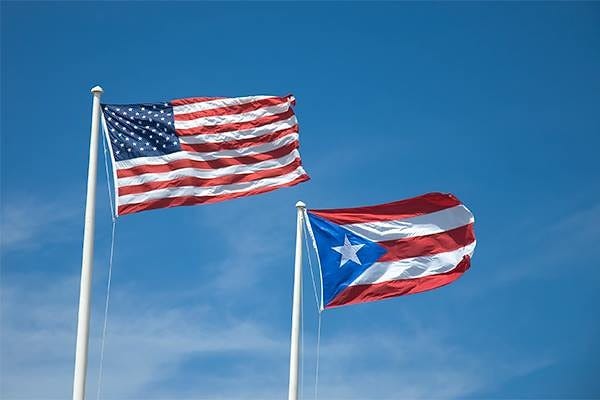
In school, we learn that “taxation without representation” was the cardinal sin of the British crown against its American colonists — the raison d’etre of revolution. But 250 years on, that same affront is still being perpetuated in America, against fellow citizens of our republic. More than 4 million citizens — from the Caribbean to the capital — still have no voting representation in Congress. Ironically, that number is far greater than the population of the 13 colonies in 1776.
The reasons for this affront are rooted in malign neglect and (no surprise!) racism, and are perpetuated for the same reasons. Naked partisanship is also a factor. While most folks can agree that the lack of full voting rights for the American citizens of Puerto Rico and Washington, D.C. is bogus, these unrepresented citizens lean too Democratic for Republicans to stop blocking their full democratic rights.
President Donald Trump, in fact, uses the spectre of statehood for D.C. and Puerto Rico to spook his MAGA base. The president wrote of Democrats’ statehood push in a recent Truth Social post: “If they pull off adding these two States, these Country Destroying Sleazebags will dominate politics in America, if we even have a Nation left, for 100 years.”
The GOP’s top megadonor, Elon Musk, recently posted that D.C. and Puerto Rico statehood is his “biggest concern” about a return to Democractic control of federal government.

Here’s what you need to know:
Puerto Rico
The outrage starts in Puerto Rico, a U.S. territory since 1898, whose residents have been citizens since 1917. Puerto Rico is home to about 3.2 million people. If it were a state, it would be neck-and-neck (population-wise) with Iowa and Nevada, and outclass Arkansas and Kansas. Its population is more than five times that of the least populated state, Wyoming, and greater than the populations of Alaska, Vermont, and the Dakotas, combined.
Yet Puerto Rico’s “representation” in Congress is a joke. The island sends a single “resident commissioner” to the House as a nonvoting voice in that chamber. States of similar population currently have four voting members in the House, not to mention two seats in the Senate.
Moving to full statehood aligns with the will of the people. The territory passed a non-binding referendum in 2024 that favored becoming a state by a wide margin. And the island’s government issued a formal petition for statehood in August, calling on Congress to admit “Puerto Rico as a State of the Union on an equal footing with the several States.”
Why are Puerto Ricans currently denied federal franchise? You don’t have to scratch very hard to find bigotry. As this piece in the academic publication The Conversation explains, a series of Supreme Court cases dating from the turn of the 20th century carved out the territories won in the Spanish-American War for separate, unequal treatment.
In one such case about Puerto Rico, the court’s majority advanced a logic only Stephen Miller could love: “If those [territorial] possessions are inhabited by alien races, differing from us in religion, customs, laws, methods of taxation and modes of thought,” the majority wrote, “the administration of government and justice, according to Anglo-Saxon principles, may for a time be impossible.” The abhorrence of this thinking was apparent at the time; a dissent in that case blasted the majority for giving Congress the power to keep Puerto Rico, “like a disembodied shade, in an intermediate state of ambiguous existence for an indefinite period.”
That indefinite period has now stretched on for 126 years, and the U.S. citizens of the island territory are still denied full federal representation. The good news is that incorporating Puerto Rico as a state only requires a new law by Congress. The Puerto Rico Status Act would do just that; it passed the House by a wide margin in 2022, but stalled out in the Senate.
The bad news is that Donald Trump still wields a veto pen, and reportedly sought during his first term to “trade” the island for the object of his own territorial expansion dreams: Greenland.
Washington D.C.
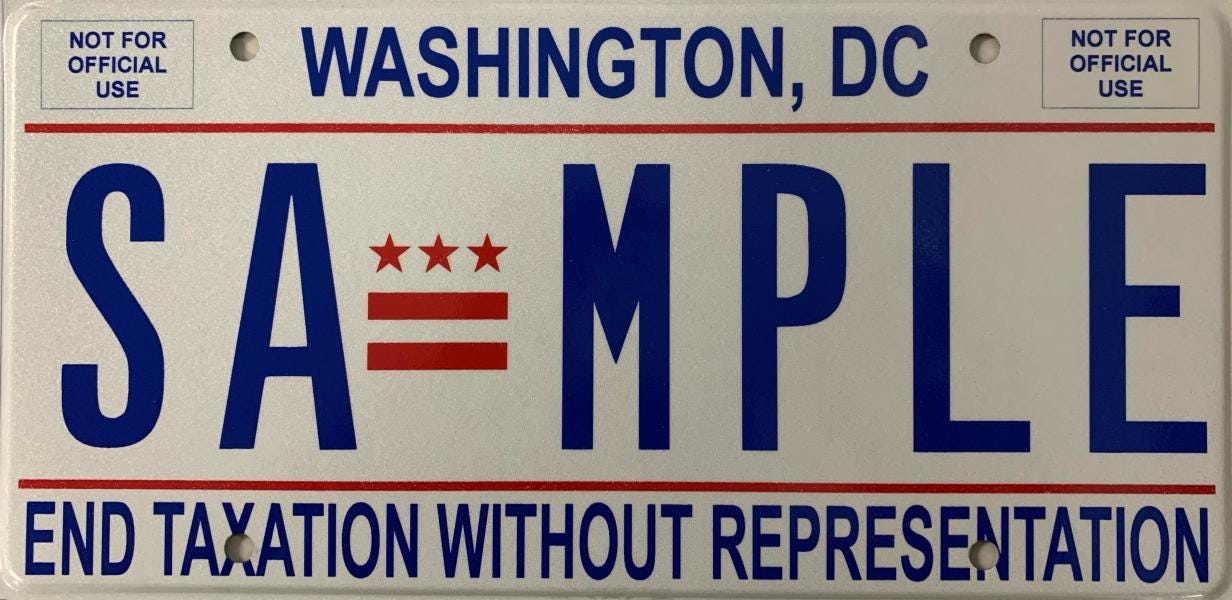
There are close to 700,000 residents in Washington, D.C. — more than in either Wyoming or Vermont. Yet D.C. residents, similar to Puerto Ricans, have a single non-voting “delegate” to Congress. (Since the 1990s, D.C. has also sent a separate “shadow” delegation to both the House and Senate, where these members act like elected lobbyists; they have no official powers, but promote statehood and other issues key to D.C. voters.)
The lack of voting power for D.C. residents stems, in effect, from a constitutional oversight. The Founding Fathers called for the establishment of a capital district in the Constitution, but didn’t specify any representation for the inhabitants. So when the District of Columbia was carved out of Maryland and Virginia in 1801, the people living there actually lost their federal franchise.
This injustice was only partially remedied in 1961, with the ratification of the 23rd Amendment, which granted D.C. three electoral college votes in presidential elections — the equivalent of the “whole number of Senators and Representatives in Congress to which the District would be entitled if it were a State.” A separate amendment, proposed in 1979, would have given D.C. full, statelike representation in the House and Senate; it cleared Congress but stalled out in the state legislatures, unratified.
Incorporating D.C. fully as a state does not require constitutional tinkering, and can be achieved with the passage of a new law. A statehood act passed the House for the first time in 2020, but was blocked by then-majority leader Sen. Mitch McConnell.
As a result, the District remains under the yoke of a federal government it can’t formally influence. This includes being subject to an occupation by National Guard troops under the direction of Trump, now in its second year. (Read more about the D.C. statehood movement here.)
Statehood for Puerto Rico and D.C. would give federal voting power to millions of minorities. Puerto Rico remains about 99 percent Hispanic. And D.C. is nearly 40 percent Black and majority-minority, besides, with large Hispanic and Asian populations.
Trump is not the only Republican leader standing in the way of granting statehood. Speaker Mike Johnson, inveighing against relinquishing control of Congress, warned in 2025: “You would have D.C. and Puerto Rico made into states, which would give four additional Democrat senators there in the count, and make us a permanent minority.”
Don’t threaten us with a good time, Mike.
Smaller Island Territories:
The franchise situation gets cloudier in America’s smaller island territories of Guam (population: ~150,000), American Samoa (population: ~50,000), and the Northern Mariana Islands (population: ~50,000) in the Pacific; the U.S. Virgin Islands (population: ~90,000) in the Caribbean. These island territories exist in a limbo similar to Puerto Rico. Each has a non-voting delegate in the House of Representatives. These islands are small in territory and population, and there is currently little serious movement toward statehood. With the exception of American Samoans (who have the complicated status of U.S. nationals, not citizens), these island residents can only participate in federal elections by moving to one of the 50 states, where they would immediately enjoy full voting rights.
Tim Dickinson is the Senior Political Editor for The Contrarian.
"Elon Musk, recently posted that D.C. and Puerto Rico statehood is his “biggest concern” about a return to Democractic control of federal government."
Mr. Overstayed His Visa had better worry about prison and/or deportation instead.
Whoa, we white god-fearing racists can't possibly have these Democrat loving places be voting parts of this country. But of course we'll take their tax money any time to relieve these poor gazillionaires of their tax burden.