

By Frederic J. Frommer
When the Golden State Warriors met the Washington Bullets in the 1975 National Basketball Association Finals, it marked the first time two Black coaches went head-to-head in a championship in American professional sports history.
That series, 50 years ago last month, also offered a snapshot in how far the NBA had come in providing opportunities to Black coaches – and how far Major League Baseball and the National Football League lagged in this area.
The ’75 Finals pitted the heavily favored Bullets, led by K.C. Jones, against the Warriors and their coach, Al Attles. The Bullets had finished with a 60-22 record – a .732 winning percentage, tied with the Boston Celtics for tops in the NBA. But the Warriors, who went 48-34 (.585), swept the Bullets in a stunning upset.
News coverage at the time didn’t play up the Black coaches’ storyline. There were already five Black coaches in the league that year, and the Bullets’ assistant coach, Bernie Bickerstaff, was Black, too. (This season, Bickerstaff’s son, J.B. Bickerstaff, led the Detroit Pistons to an incredible turnaround, as they became the first team in NBA history to triple its win total from the previous season.)
Bernie Bickerstaff told Andscape’s William C. Rhoden last year that although the African American coaches recognized the significance of two Black coaches meeting in the ’75 NBA Finals, “we didn’t talk a lot about it, because the bottom line is that you belonged. You didn’t need to beat your chest, you were there.”
The same couldn’t be said for professional baseball and football. In 1972, a dying Jackie Robinson, who had broken the sport’s color barrier in 1947, publicly pleaded with MLB to hire a Black skipper. Three years later, Frank Robinson (no relation) debuted as MLB’s first Black manager, homering in his first game as the Cleveland Indians’ player-manager, leading to a 5-3 victory over the New York Yankees.
And it would be another 14 years before Art Snell became the first modern-day Black NFL coach in 1989. By then, there had already been 18 Black NBA head coaches, starting with Celtics player-coach Bill Russell in 1966. (The NFL did have a Black player-coach, Fritz Pollard, in the 1920s, the league’s first decade.)
Meanwhile, the NBA of the mid-70s was far different than today. Since 1975, several teams have changed names or cities, or both. The Washington Bullets, for example, are now the Washington Wizards. Other retro names from the ’75 season include the Buffalo Braves (now the Los Angeles Clippers), the New Orleans Jazz (Utah Jazz), the Kansas City-Omaha Kings (Sacramento Kings), and the Seattle Supersonics (Oklahoma City Thunder). And there were only 18 teams back then, compared with 30 today.
Both Jones and Attles had been NBA point guards before their coaching careers. Jones, who had been part of the league’s first all-Black starting lineup in 1964, spent all nine of his seasons as a player with Boston. He started his head coaching career with the San Diego Conquistadors of the old American Basketball Association, and was in his second season with the Bullets when the team made the ’75 finals.
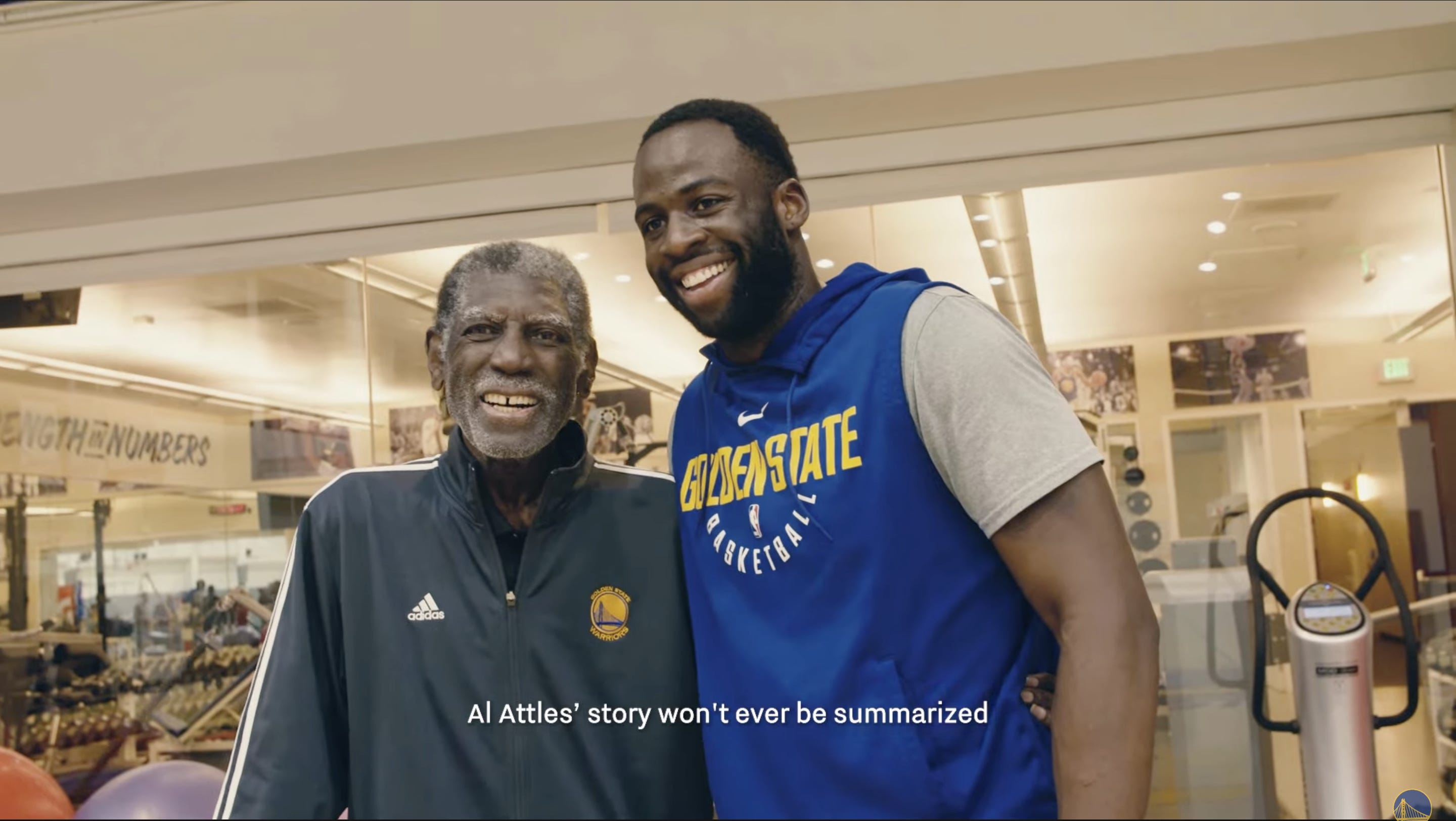
Attles played 11 seasons in the NBA, all with the Warriors, dating to when the team was in Philadelphia. He became the third Black coach in NBA history in the 1970-71 season and was in his sixth season in 1974-75.
Both teams had star players. The Warriors were led by small forward Rick Barry, who finished second in scoring that season with 30.6 points per game. Washington had a dominant frontcourt, led by power forward Elvin Hayes, who averaged 23 points and 12.2 rebounds a game; and center Wes Unseld, who led the league in rebounds with 14.8 per game.
Barry sparked Golden State’s championship upset, averaging 29.5 points per game, and earning the series MVP. The Warriors closed out the series with a 96-95 win in Game 4 on May 26, 1975.
Attles finished second in the Coach of the Year voting that season, and wound up coaching 14 years in the NBA, all with the Warriors, compiling a .518 winning percentage.
Jones, despite leading Washington to a 60-win season—still the highest in franchise history—saw his reputation take a hit in the series when the TV broadcast showed his assistant coach, Bickerstaff, drawing up a play while Jones looked on in silence.
That led to criticism that Jones hadn’t mastered the finer points of game strategy – which wasn’t true.
“I was there. I know what happened,” Unseld told The Washington Post in 1989. “K.C. controlled the huddle, controlled the timeouts, told us what he wanted done. He didn’t have to pull out a board and draw things for the TV crew. I never understood why that got so much play or what was so important about that one incident, that perception.”
Jones removed any doubts about his coaching skills by leading the Celtics to NBA titles in 1984 and 1986. He finished his NBA career with a .674 winning percentage, one of the best coaching records in history.
Frederic J. Frommer, a writer and sports and politics historian, has written for the Washington Post, the New York Times, the Atlantic, History.com and other national publications. A former Associated Press reporter, Frommer is the author of several books, including “You Gotta Have Heart: Washington Baseball from Walter Johnson to the 2019 World Series Champion Nationals." Follow him on X.
Two great coaches, but I note that the series was 50 years ago last month, in May. Should the NBA (and NHL) still be playing in June? (Yes, I’m an old curmudgeon.)