


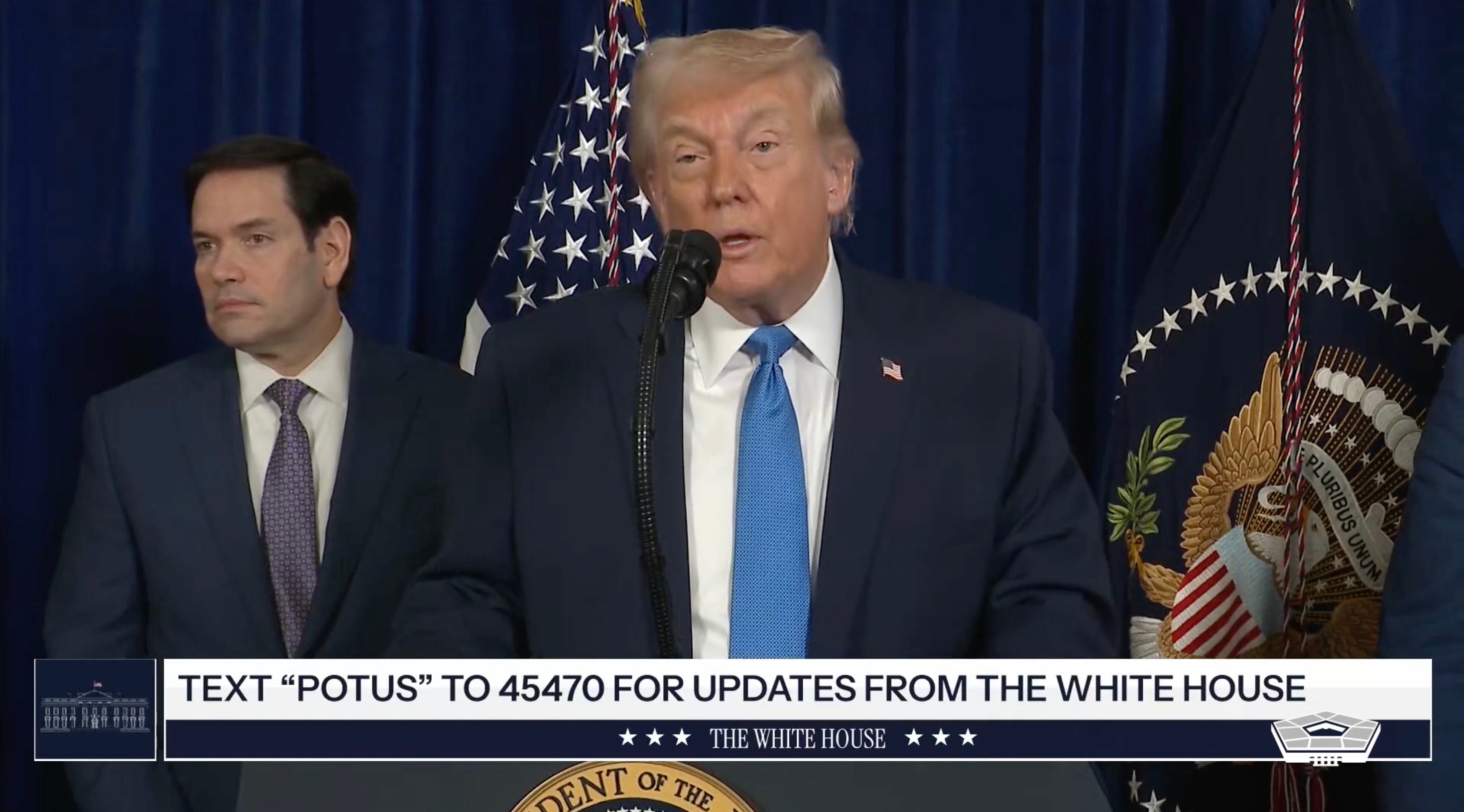
President Donald Trump today turned a raid into a doctrine. He didn’t just announce that U.S. forces struck Venezuela overnight and captured President Nicolás Maduro and his wife. He declared Saturday that the United States will “run” Venezuela until his regime judges the country is ready to be returned to Venezuelan control.
Those are not tactical details. They are a statement that the United States has moved from punishment to a claim of governing responsibility. If Trump is now taking ownership of what happens inside Venezuela, the real test won’t be whether the first wave succeeded. It will be whether the United States can define—and exit—an end state that Venezuela and the region will accept.
Replacing a regime—without breaking the country, splitting the region, and handing adversaries a new propaganda script—is a protracted campaign of statecraft, governance, diplomacy, and coercion that tends to punish improvisation.
Here are eight takeaways.
Decapitation is not transition—and occupation talk is a strategy claim, not an end state.
The administration’s own messaging is already pointing toward a dangerous gap: a strike, an extraction, and then … what, exactly? Earlier signals suggested the action might stop at capture and trial. The president’s new language points the other way: toward U.S. control on the ground and the option of follow-on waves until Washington decides a proper transition has been secured.
That logic treats the regime as if it were a single node. It isn’t. “Chavismo” is a system of patronage, coercion, and military buy-in designed to survive the loss of any one man—and there is no shortage of power-hungry, Maduro-linked leaders ready to step in, especially if they can frame it as resistance to an American occupation. One plausible—and potentially destabilizing—near-term outcome is not democratic handover but a tightened internal clampdown, with remaining leaders claiming they can hold the line, identify “collaborators,” and deter any split within the security services.
Trump’s insistence that the United States remains ready to strike again only reinforces that bunker logic.
A successful foreign snatch operation doesn’t necessarily frighten an authoritarian system into negotiation; it can also convince it that softness is fatal. Senior Venezuelan figures are already performing defiance in public, signaling that cooperation with the “enemy” is treason.
If the goal was to pressure insiders to cut a deal, the countervailing pressure is immediate: close ranks, purge faster, and shift key assets and personnel into deeper concealment. The United States can remove a person. It cannot do that from offshore—and if it tries to do it by running the country, it inherits the burdens and backlash of governance without any guarantee the armed forces—or the public—will accept the transition.
The drug-war rationale doesn’t cleanly match the public threat picture—so the strategic motive will be questioned.
The administration frames Venezuela as a “narco-state” and has built its justification around cartel-linked armed conflict. But the U.S. Drug Enforcement Agency’s own 2025 national threat messaging puts its emphasis where the fentanyl crisis actually lives: Mexico. On cocaine, too, public assessments often complicate the claim that Venezuela is the central node; reporting around the “Cartel de los Soles” notes it is not a conventional cartel so much as a label for corrupt networks, and U.N.-linked data suggests only a limited share of Colombian cocaine transits Venezuela.
That doesn’t absolve the regime; it does mean the White House has chosen a target that is politically vivid and symbolically useful—while the principal drivers of overdose deaths and narcotics violence remain elsewhere.
Latin America will split—not neatly into left and right but into “sovereignty-first” v. “Maduro-must-go,” and the U.S. will own the fracture.
Early reactions underline the fault line: condemnations from leaders who view this as a precedent that can be used against any state, and applause from those who see Maduro as a criminal aberration. The problem for Washington is that even governments that loathe Maduro may recoil from an intervention that echoes the region’s darkest Cold War precedents—Chile in 1973, Nicaragua in the 1980s.
A divided region means less intelligence cooperation, less legitimacy, and fewer practical levers to shape an end state. And that matters because Venezuela’s problems do not stop at its border: migration, energy disruption, and armed-group spillover become regional burdens, not Caracas talking points, within days.
This operation fits the administration’s stated hemisphere doctrine—so critics will read it as ideology, not necessity.
This operation is no longer merely consistent with the administration’s hemisphere doctrine; the president is now openly framing it that way. The 2025 National Security Strategy spells out that predicate: “reassert and enforce” the Monroe Doctrine through a “Trump Corollary” that keeps foreign competitors out and refocuses U.S. instruments—including military posture—toward “urgent threats” in our hemisphere.
Seen through that lens, Maduro’s capture is not a counternarcotics action; it is meant to project a worldview in which Latin America is the primary theater where U.S. power should be seen and felt. That may energize domestic supporters who want visible dominance close to home. It also guarantees that skeptics—abroad and at home—will ask whether Washington is enforcing a doctrine because it can, not because an underlying threat demanded this particular use of force.
A Monroe Doctrine With an Oil Clause
Maduro’s circle is alleging an “oil grab,” and that charge will travel well in Latin America, fair or not. Trump’s own comments help confirm that claim: He has tied U.S. control to American companies fixing infrastructure and “start making money for the country,” turning oil from an inferred motive into a declared feature of the intervention.
If the administration’s definition of “success” quietly becomes “Venezuela can’t monetize its reserves,” then the strategic logic shifts from counternarcotics to economic strangulation. That is a coherent tool—but it tends to produce humanitarian collapse, refugee surges, and regional instability faster than it produces compliant elites. Colombia is already mobilizing forces near its border while warning of refugee flows.
Selective anti-corruption is a strategic own-goal, and the Honduras pardon makes that harder to ignore.
If the administration argues it is removing a corrupt autocrat for criminality tied to drugs, it will be judged by whether that standard is applied consistently or selectively. Trump’s pardon last month of former Honduran president Juan Orlando Hernández—who had been convicted in a U.S. court on major cocaine-trafficking-related charges—will be cited across the region as proof that Washington’s morality is transactional.
That contrast is strategically corrosive: It tells partners and adversaries alike that U.S. “justice” can look like a political instrument, not a rule. Even governments that quietly welcomed Maduro’s removal may hesitate to align publicly if they suspect the next enforcement decision will be driven less by threat than by loyalty, convenience, or spectacle.
The tactical “good news” is real—military and covert action capability remains high—but the opportunity cost is the bill that may arrive later.
This operation, if the basic facts hold, is a reminder that the United States retains a formidable ability to find, fix, and finish a target deemed a national security threat. That’s a real asset in a world where deterrence often rests on whether threats believe Washington can act.
The public will hear about the bravery and the brilliance—accolades that are truly deserved. However, it will hear less about what was paused, what was deprioritized, or what coverage went thin to sustain the effort. Those tradeoffs rarely announce themselves in real time. They surface later—when a different adversary moves, or a different risk matures, and the government has to explain why the warning came late.
Brian O’Neill, a retired senior executive from the CIA and National Counterterrorism Center, is an instructor on strategic intelligence at Georgia Tech. His Safehouse Briefing Substack looks at what’s ahead in global security, geopolitics, and national strategy.

I appreciate these knowledgeable insights. I would be interested to know whom the author believes is in charge in this country, because it's a head-scratcher. Even the George Bushes understood the context of military aggression, but Donald Trump does not. What is the impetus? To make investment money for his sons? To be like Vladimir Putin? Or is it Marco Rubio sensing a lifelong achievement in Cuba, with this move as precedent? Stephen Miller or a donor outside of the government with imperialist motives? Because it sure ain't the will of the people at play here. And Donald Trump has issued conflicting rationales for what others are pulling off.
As I said elsewhere, Congress STAND UP! This is no time to be pusillanimous. Can we see Russia being involved in this? Do we see T calling for martial law? Can we see him trying to go after Mexico or Canada or Greenland? Can we see elections being canceled? Too many questions. Too few answers. Absolutely no solutions to his traitorous behavior. (imho)