


“Juries want to believe that women who are victims of violence are all good people,” a jaded FBI investigator tells her junior colleague in the new crime series, Furious, “but in my experience, being a victim of violence just makes you colder, more calculating. Victims of violence are the most violent.”
It’s a provocative comment that acknowledges the impossible scrutiny survivors of gender-based violence face when trying to bring perpetrators to justice, while also questioning the notion that trauma necessarily makes survivors more virtuous people. At least in Furious, the process isn’t so neat.
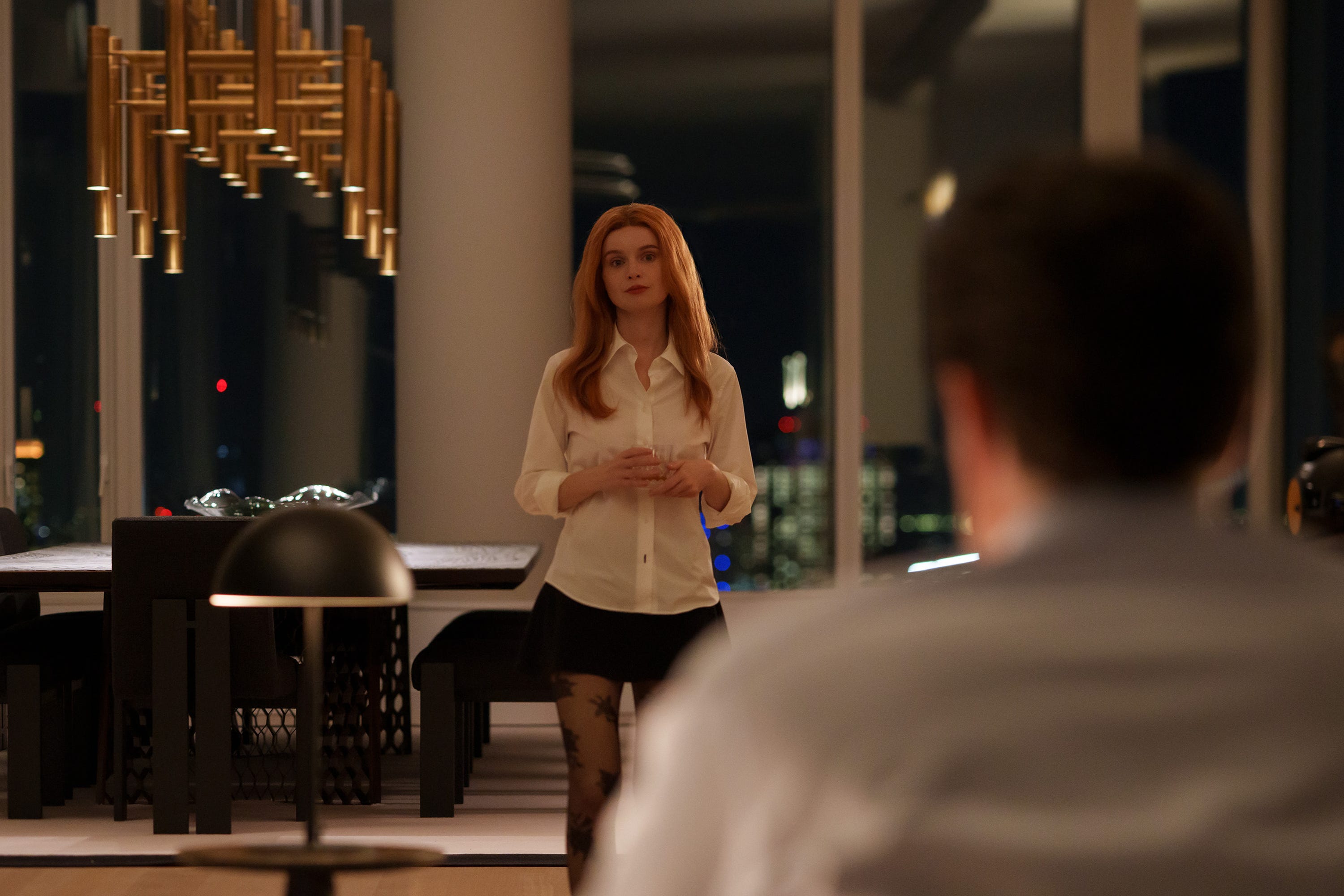
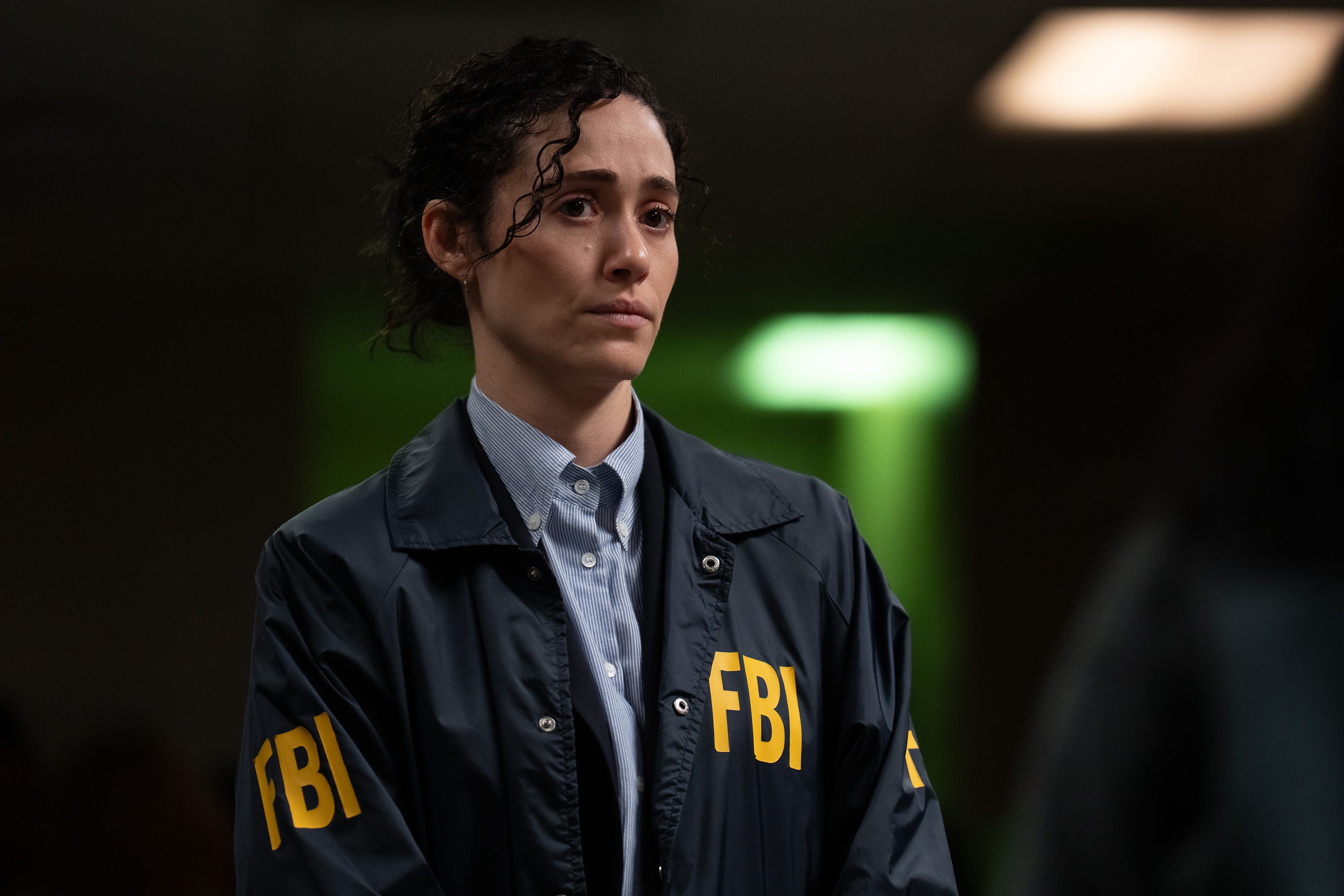
Created by Elizabeth Meriwether and loosely based on Bob Rafelson’s 1987 film Black Widow, the series offers a tangled look at the long-term impact of violence against women and girls. At the center of the story are two characters who initially seem to have very little in common. Alice Black (Rossum) is an FBI agent and former New York City police officer on the hunt for Catherine (Petticrew), a woman who was trafficked as a teenager and is now targeting the high-profile men who exploited her in acts of vigilante violence. As Alice digs deeper into the case, we learn more about her tormented past, including her relationship with an abusive cop (Jake Lacy).
Moving between luxury Manhattan real estate and dingy public shelters — the extreme ends of New York’s wealth spectrum — Furious delves into relevant issues like the prevalence of domestic violence within law enforcement and the way the justice system too often allows the Jeffrey Epsteins of the world to go unpunished. In a culture rife with (often glamorizing) portrayals of notorious male murderers, Furious is the rare TV drama to probe the psychology of a female serial killer.
Though she is a longtime fan of the genre, writing a dark crime thriller was a departure for Meriwether, known for the cheerful millennial sitcom New Girl and the acclaimed Elizabeth Holmes docudrama The Dropout.
“I would come home from the New Girl writers’ room, and I’d only want to watch the darkest crime thrillers,” she said in a joint interview with series stars Lola Petticrew and Emmy Rossum. “That was how I relaxed.”
The creator and stars spoke to The Contrarian about their new series, which premiered on Hulu this week. The following conversation has been edited and condensed for clarity.
Liz, this is loosely based on Black Widow, but you’ve made some major changes to the story and the killer’s motivations. Tell me about why that film intrigued you and how you decided to update it for 2026.
I was so drawn into the strangeness of the movie. You think it’s a simple cat-and-mouse story, and then in the second half, it’s just a female serial killer and a female FBI agent hanging out at the beach.
Then I got really interested in female serial killers and — if they exist — who are they? What would make a woman get to a place where she is killing multiple people? Not surprisingly, almost all female serial killers are victims of violence. I felt like this was an opportunity to tell a story about what happens to you as a victim of violence. What if violence that is inflicted on you makes you want to inflict violence on other people, and how is that even deeper if you’re a woman? If you live in a world where you’re expected to be the victim and not the perpetrator? That led me to create these two characters who have both been victims of violence, and dig into them making different choices in their lives and finding their way to each other — unfortunately, not on a beach.
Emmy and Lola, what sort of research did you do to understand your characters — survivors of child sex trafficking and the investigators who are tasked with looking into these cases?
Rossum: The first step of understanding a character is the script, because that’s the blueprint. I generally play characters that are more open, friendly, big, bubbly. Alice is somebody who got very high up in the NYPD, became a detective, and had to leave that because of the violence in her life, and start over at the FBI. It was really important for me to understand women in law enforcement, both at the police and in the FBI. I got the chance to train and shadow current and former NYPD and FBI agents to do weapons training, interview tactics training, and then go through the scripts with them.
Meriwether: And Lola got a chance to shadow a female serial killer.
Petticrew: I can’t tell you who; she’s still on the loose. [laughs] I think what’s complicated is that you have to obviously be well-researched, but without feeling like you’re exploiting people. Liz gave me a lot of cool things to read and things to watch, and I explored from there. As Emmy said, the biggest gift of all is that a lot of what we needed was there on the paper. And of course, you have your own lived experience and the rage that lives inside of you.
In the first episode, Alice’s supervisor at the FBI [played by Quincy Tyler Bernstine] says that juries want women to be perfect victims — but that most of the time, they’re not. I’d love to hear more about this idea and how it informed your writing, Liz, and your performances, Emmy and Lola.
Meriwether: One of the people that I spoke to was an assistant district attorney in Brooklyn, [Michelle Kaminsky], who focuses on domestic violence. She wrote a book [Reflections of a Domestic Violence Prosecutor] about how flawed the justice system is when it comes to domestic violence. The justice system wants things to be black and white a lot of the time. It’s her job as a prosecutor to paint this very clear picture for a jury: this person did something wrong and this other person did nothing wrong. It’s always — especially when it comes to domestic violence — so emotionally complicated. It’s so important to rethink the expectations that we have for victims of these crimes. But it’s also really hard.
When I spoke to these female law enforcement officers and FBI agents, they knew the system was flawed, but they were still trying to find justice within it. That’s an interesting, complicated problem to have. I also spoke to trafficking victims. The relationship that trafficking victims have with law enforcement is [marked by] a lot of anger, a lot of betrayal, and a feeling of you just want me to build a case. You’re not actually seeing me as a human. You don’t actually care about my healing or anything about me emotionally.
Petticrew: In the world that we’re currently in, quite often things are stripped of their nuance. It’s an exciting academic and philosophical exercise for the audience of this show. We present these women who are complicated and messy and gray, and are allowed the space to just be that. Then the audience comes in with their own moral lines drawn in the sand. Maybe they get pushed further and further as they begin to empathize with these women. Maybe they start justifying things that they would never have justified before. I think not only is that an interesting conversation, but one that’s very timely.
The Epstein case is literally in the headlines today — and has been consistently for the past several years. Was it present in your mind when you were making this series, which is set in similar elite circles and centers on a sex trafficking survivor?
Petticrew: I understand why people draw that parallel. Of course, and yes. But also to boil it down to it being a mirror of this one specific case does a disservice to both this show and to just how deep-rooted these problems are. We talk about that case almost as if it’s an outlier. It’s the rule.
Meriwether: I did The Dropout and that was a limited series about real people and real events. This is not that. Like, yes of course [the Epstein case] was on my mind. Unfortunately, there’s a lot of things to draw from right now, but I wanted to dig into these two women. I think if it becomes about the perpetrator, the abuser, then the women and the long-term effects of the violence and all of those very human parts of the story get lost in all of the sensationalism.
Petticrew: It runs so deep, and it has for so long. People keep framing questions like, “Well, talking about misogyny is having a real moment,” and “women’s anger is having a real moment,” as if this hasn’t been the case from time gone by.
Meriwether: Even the title of the show, Furious, comes from Greek mythology, so it’s definitely been around for a while. It’s a very old conversation of vengeance versus justice. Then when you bring women into that conversation, it just gets more complicated in a good way. If any of us had simple answers or simple feelings, it wouldn’t be a good show.
Rossum: What’s so exciting about these two characters isn’t the men who have hurt them, but how the historical violence against them has shaped them. Society wants to paint women as angel or devil, hero or villain, good guy or bad guy. Our show starts giving you that opportunity — an FBI agent is hunting a killer. Seems pretty easy. But the more that we learn about these women, the more we learn that the fabric of who they are is actually more similar than different. They are both forced to go outside the normal lanes to get justice — or vengeance — for themselves.
Meredith Blake is the culture columnist for The Contrarian
I watched the first three episodes back to back. It is riveting and thought-provoking, speaking to the trauma on multiple levels of the abused and the abuser. I did not at all get the message that victims become murderers, but I have read multiple times through the years that people who grew up with abuse can turn to a life as abuse. As the episodes unfold, you get a bird's-eye view of what the original trauma of the main character was. And she has every right to be furious. I highly recommend this show. It's multi-layered with several story lines running at once. So far, we've been let in on what some of the intricacies and relationships are, but not all. I definitely have a show to look forward to now after our last day back at school. I can't wait to talk to my teacher friends about this show.
Congratulations! You are helping to make it harder for victims of domestic violence to be taken seriously. As a woman who was stalked and terrorized for seven years before law enforcement would do anything, I can tell you that such a life is a nightmare. And no, I did not become a serial killer. I just learned to keep my doors locked.