


The ongoing—and illogical—drama surrounding Greenland continued this week. President Donald Trump brushed aside objections from Denmark and Greenland, including the obvious fact that Greenlanders have no interest in being acquired, and treated the dispute as if U.S. desire is its own justification. A White House meeting produced the usual artifacts—handshakes, a photo, carefully chosen phrases—and little evidence that anything fundamental shifted.
Then came the visuals. Over the past day, images circulated of a small number of Danish troops arriving in Greenland, paired with talk of a “more permanent” allied presence. Not a torrent of reinforcements. Not a change in the military balance. A symbolic gesture—made to travel, made to be seen.
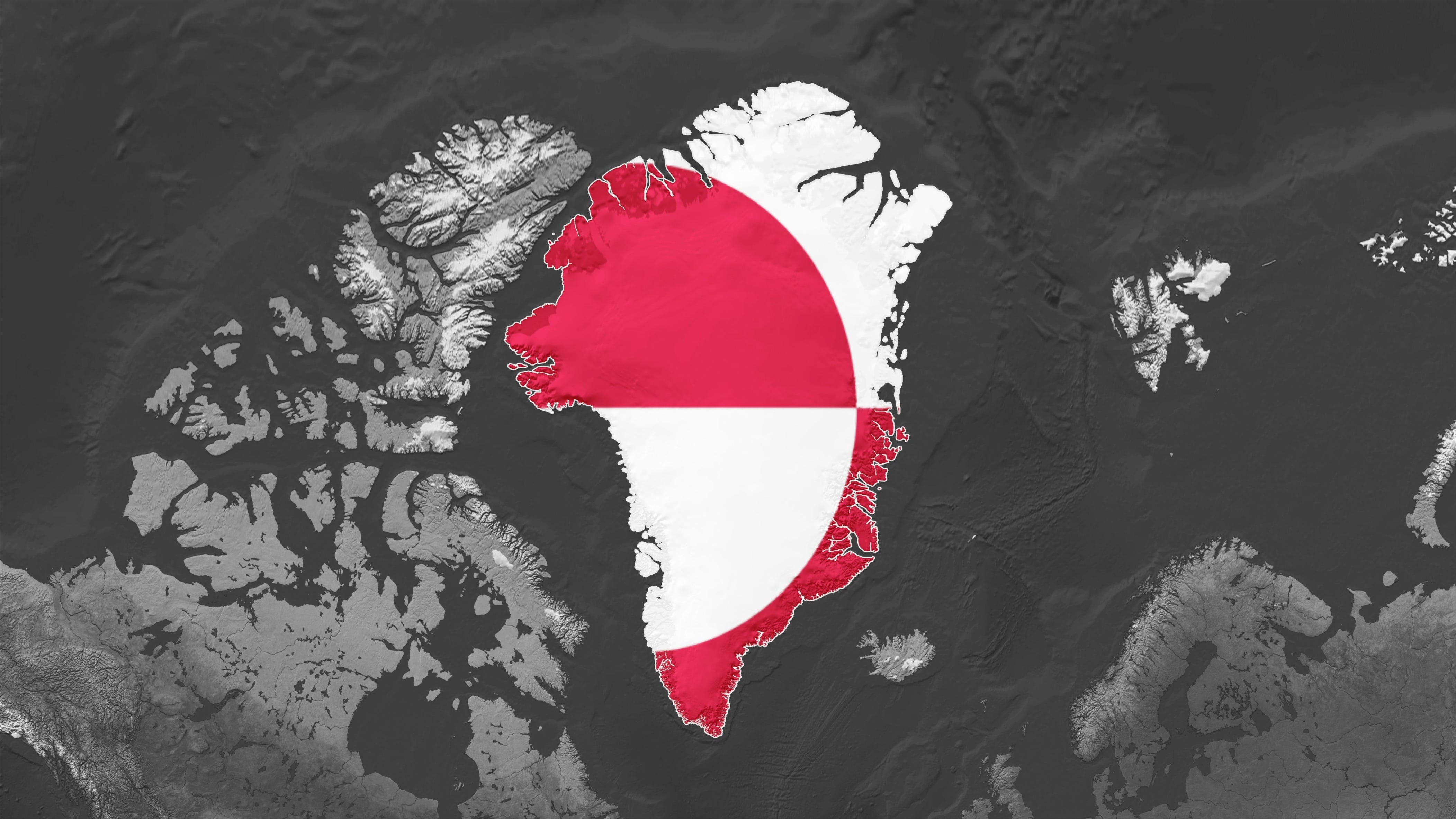
Symbolism is doing most of the work now. It’s what allies can muster quickly, in public, without breaking their own budgets or their own politics. It is also what Washington can ignore with a shrug.
So, as of today, the situation has not changed. Europe’s pushback is real but largely declaratory. The rhetoric about taking Greenland “the hard way” remains in the air, unanswered by anything resembling a constraint. The allied posture assumes that leverage still comes from norms, that embarrassment still bites, that allied unity creates friction in Washington. This White House has shown little respect for any of that.
Trump’s Greenland fixation is not best explained as a defense requirement nor as a distraction. It reads more cleanly as taking because he can—an assertion that power doesn’t need justification if resistance looks manageable.
If the argument were about security, it would be boring. Greenland’s strategic value is obvious and has been for decades: early warning, missile tracking, air and maritime domain awareness, and undersea monitoring across the GIUK gap—the maritime funnel between Greenland, Iceland, and the United Kingdom. Those missions are already being performed under existing agreements and basing arrangements.
The limitations are not sovereignty. They are capacity and resilience—modernization timelines, infrastructure, communications, logistics, and sustained investment in systems that function in brutal conditions and still matter in a crisis.
Ownership does not improve any of that. More infantry does not make radar see farther. More uniforms do not harden networks or expand sensor coverage. More flags do not add redundancy to brittle Arctic supply chains. Systems do. Integration does. Money spent over years does.
For Russian president Vladimir Putin, Greenland is also a prize—even if Russia never intends to touch it—because a unilateral U.S. seizure would deliver to Russia a strategic windfall without a single move. NATO’s core premise would crack: that alliance members respect one another’s sovereignty and treat borders as settled facts. If the strongest member demonstrates that it can coerce, threaten, or take an ally’s territory, then the alliance’s promise becomes conditional and transactional. That is the kind of rot Russia has sought for years: not NATO defeated from outside, but NATO hollowed out from within.
The implications would not stay in the Arctic. They would wash immediately into the Baltics and Eastern Europe—not as an invitation for Russia to invade tomorrow, but as an invitation to pressure. Deterrence erodes when commitments look discretionary. Once the world sees that alliance rules do not bind the powerful, smaller members begin to look like they live under a different kind of protection: one that depends on mood, not obligation.
Ukraine sits in the middle of that lesson. Russia’s approach there has never depended on quick victory. It depends on endurance and the steady erosion of Western will. A devastated Ukraine that survives is still a strategic win for Moscow if the alliance that backed it emerges weakened, divided, and unsure of its own red lines.
There is a way out of this that does not require theatrics. Treat Greenland as what it is: a platform for capabilities that already protect North America. Invest in the systems that matter—sensors, infrastructure, redundancy, integration, logistics—and do it with Denmark and Greenland as partners, not as targets.
The danger is not that Greenland is insecure. The danger is that Washington is handing Moscow the one thing it wants most: proof that NATO can be weakened from the inside without Russia firing a shot.
Brian O’Neill, a retired senior executive from the CIA and National Counterterrorism Center, is an instructor on strategic intelligence at Georgia Tech. His Safehouse Briefing Substack looks at what’s ahead in global security, geopolitics, and national strategy.

Thanks for this nuanced analysis. It deftly separates reality from sophistry.
WE need one hell of a lot more that nuanced analysis. We are headed for a civil war.
Another one.