


Turn on any true crime documentary these days—whether it’s about a serial killer, a scammer, or a cult leader—and you’re likely to see a slew of familiar storytelling devices.
There will be interviews with eyewitnesses and law enforcement officials, stylized reenactments, explanatory captions, and copious trial footage. There’s often a lot of bloat: stories that could have been told in a single two-hour feature are stretched to fill six episodes or more.
But The Perfect Neighbor, a documentary released earlier this month on Netflix, shows the power of a more restrained approach.
Directed by Geeta Gandbhir, the film chronicles the events leading up to the fatal 2023 shooting of Ajike “A.J.” Owens, a 35-year-old Black woman and mother of four who was killed by her neighbor, Susan Lorincz, a 58-year-old white woman.
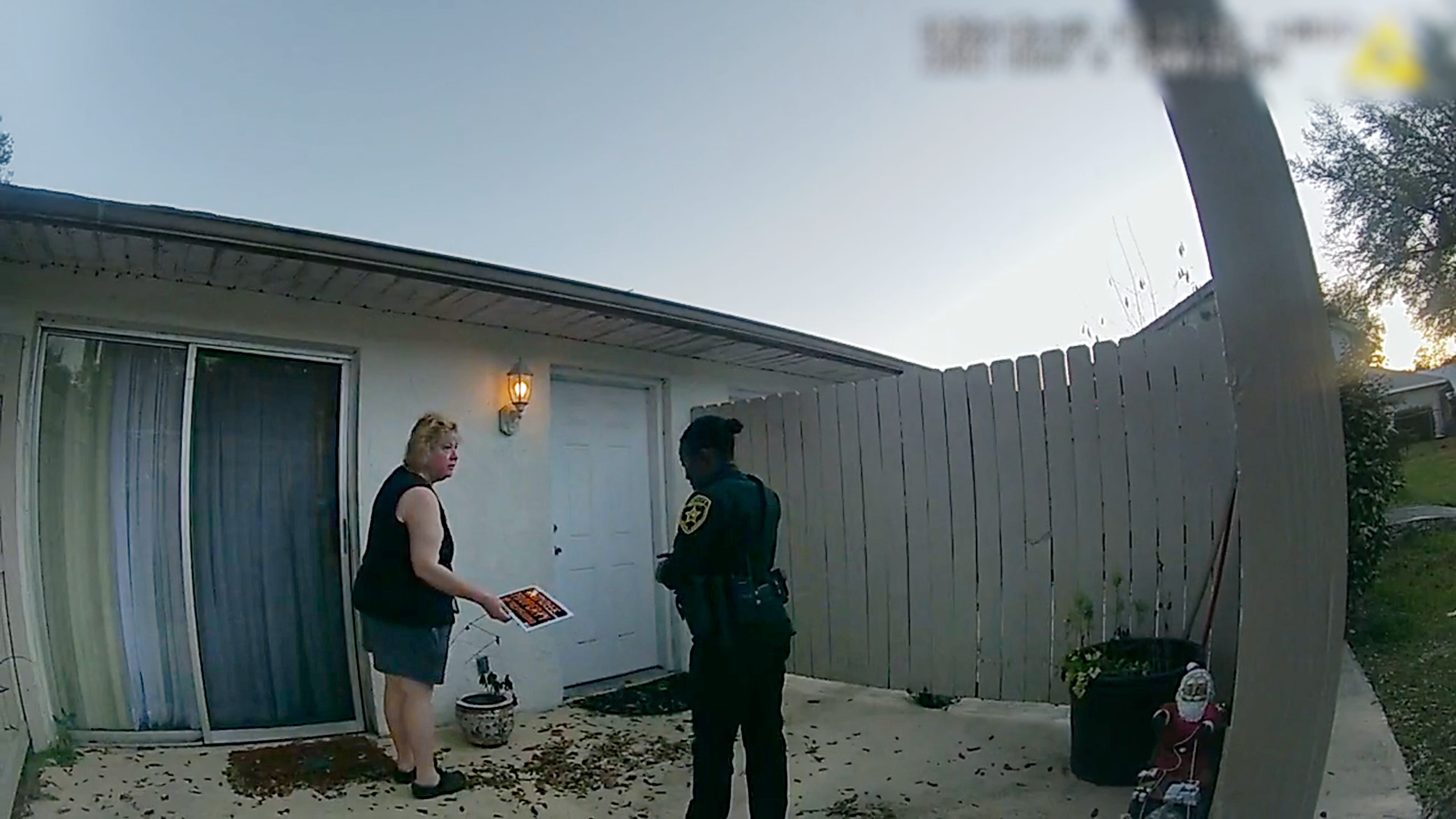
In a stark departure for a documentary in a more-is-more era of nonfiction filmmaking, The Perfect Neighbor consists almost entirely of police body camera footage and interrogation video. It has no narration or talking-head commentary. There are only a few captions listing dates, but not names or locations. It is a film that requires viewers to pay close attention, and never tells them what to think. It paints a damning picture of the Stand Your Ground laws that empower paranoid racists and wannabe vigilantes—and remain on the books in more than half of the country—but it’s also far from a polemic. Instead, The Perfect Neighbor unfolds like a particularly harrowing found-footage horror movie, with tension steadily building until a mundane dispute turns deadly.
The film covers a period of about two years, during which Lorincz makes numerous calls to the police to complain about Owens’ children playing in an open field next to her rented home in Ocala, Florida. Lorincz claims she is “the perfect neighbor—you barely see me.” But clearly, she is quite the opposite: the epitome of a racist “Karen” who seems to resent the very existence of her Black neighbors and treats law enforcement like a personal concierge service. “That lady is always messing with people’s kids,” one neighbor tells the police, who also seem to regard her as a nuisance.
Lorincz paints herself as the victim, but she is verbally abusive. She admits to calling Owens’ children “retards” and, during a police interrogation, says it’s possible she referred to them using the N-word.
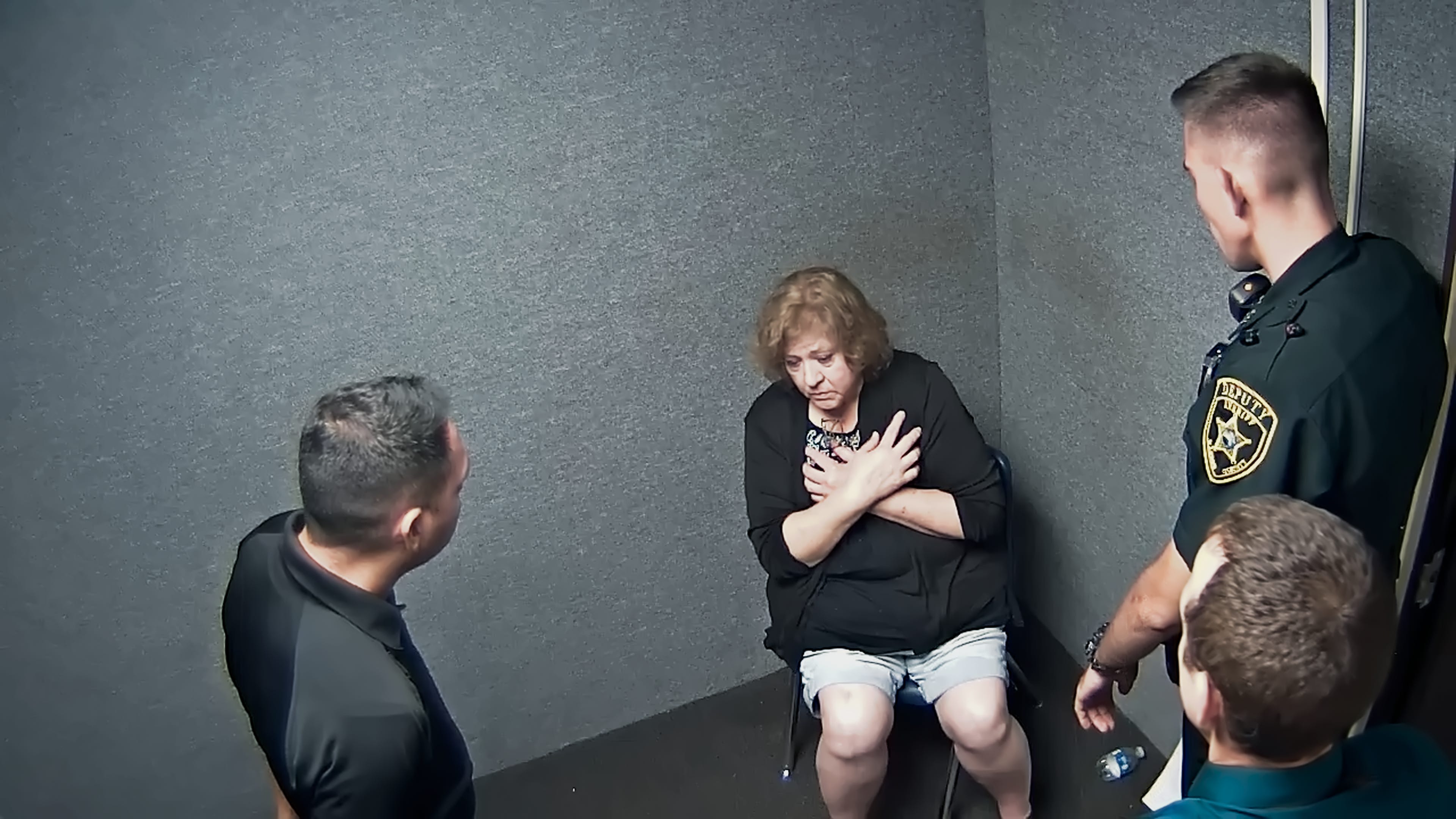
“It could have slipped out,” she says. “I was always taught that the N-word meant you were being unlawful, dirty…generally being not pleasant.”
The situation comes to a head on June 2, 2023, when Lorincz throws a pair of roller skates at Owens’ son. Concerned for her child’s safety, Owens crosses the street and knocks on Lorincz’s door. Lorincz shoots Owens through the locked front door, hitting her in the chest. Owens is taken to the hospital and pronounced dead.
The film captures the utterly wrenching aftermath, as Owens’ children learn their mother will not be coming home, and police investigate the shooting. It culminates with a devastating 20-minute, nearly uninterrupted stretch of footage from a police interrogation room, filmed a few days after Owens’ death. Under questioning by detectives, Lorincz claims she feared for her life, but her story quickly falls apart. When police attempt to arrest her, she refuses to comply—a galling final act of entitlement. The film concludes with a postscript noting that Stand Your Ground laws have been linked to an increase in gun homicides. Footage from Lorincz’s manslaughter trial, which resulted in a guilty verdict and a 25-year prison sentence, plays over the closing credits.
With a running time of just 90 minutes, The Perfect Neighbor is documentary filmmaking at its most devastatingly efficient. In style and subject matter, it is similar to Incident, an Oscar-nominated documentary short that used body camera and surveillance footage to reexamine the fatal shooting death of Harith Augustus by Chicago police in 2018.
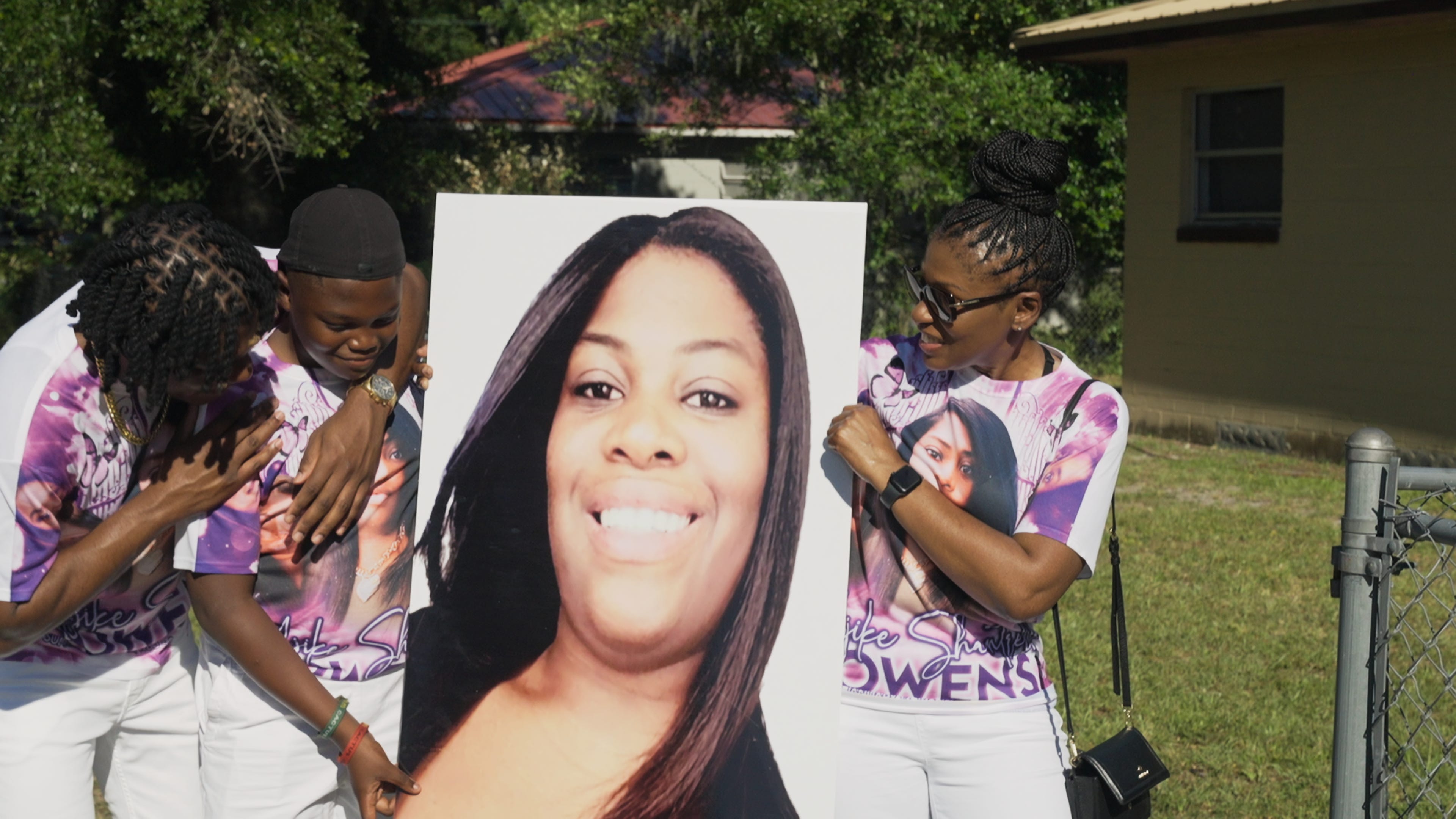
The film premiered earlier this year at the Sundance Film Festival, where Gandbhir received the documentary directing award. Despite the industry’s growing apprehension toward politically-charged documentaries, Netflix acquired The Perfect Neighbor for a reported $5 million and released it on October 17, where it racked up nearly 17 million views within a few days. It has earned wide acclaim and sparked conversation about the case and across social media. A GoFundMe campaign for Owens’ children has raised nearly $600,000.
But there has also been some pushback. The New York Times critic Alissa Wilkinson wrote a column about the “ethical concerns” supposedly raised by the film. She argues that Gandbhir, whose sister-in-law was friends with Owens, should have disclosed her connection to the case. But documentarians aren’t bound by the same rules as traditional journalists, and never have been.
Gandbhir’s understandable desire for justice actually seems to have inspired intense storytelling discipline rather than bias. She approaches the case with the passionate rigor of a prosecutor, using video and audio recordings she diligently obtained through Freedom of Information requests, instead of leaning on commentary and anecdotal opinions.
This verite, show-don’t-tell style feels objective. Even Marion County Sheriff Billy Woods praised Gandbhir for using raw footage because “you can’t really make up anything.” But the technique also allows viewers to see Owens and her neighbors from the (literal) perspective of the law enforcement officers sent to question them. And what emerges is a portrait of a tight-knit, supportive community where kids felt safe and free to play—until Lorincz changed all that.
I was initially uneasy about the film’s inclusion of Owens’ children. The scene where they learn their mother is dead was so excruciating to watch, I was tempted to fast-forward through it. But looking away from their pain is a kind of luxury not everyone can afford. In an interview with the Los Angeles Times, Gandbhir recalls how Owens’ bereaved mother, Pamela Dias, urged her not to shy away from graphic material:
Pam was inspired by Emmett Till and how his mother had an open-casket funeral and told the photographers to take pictures because she wanted the world to know what had happened to her baby. Plus, we thought about George Floyd and [how footage of his killing] sparked a movement. It is a terrible thing to bear witness, but if we let these things continue to happen in the shadows, then they will happen forever. It’s only by bearing witness that things might change.
There’s also a powerful irony in Gandbhir’s decision to use body camera footage. In doing so, she is leveraging the tools of the surveillance state to humanize the people most often targeted by it.
Meredith Blake is the culture columnist for The Contrarian.
"It is a terrible thing to bear witness, but if we let these things continue to happen in the shadows, then they will happen forever. It’s only by bearing witness that things might change."
What we all need to hear right now. Heartfelt wishes to the Dias and Owens families as well.
Meredith is a great journalist with no frills storytelling. I really like her articles.