


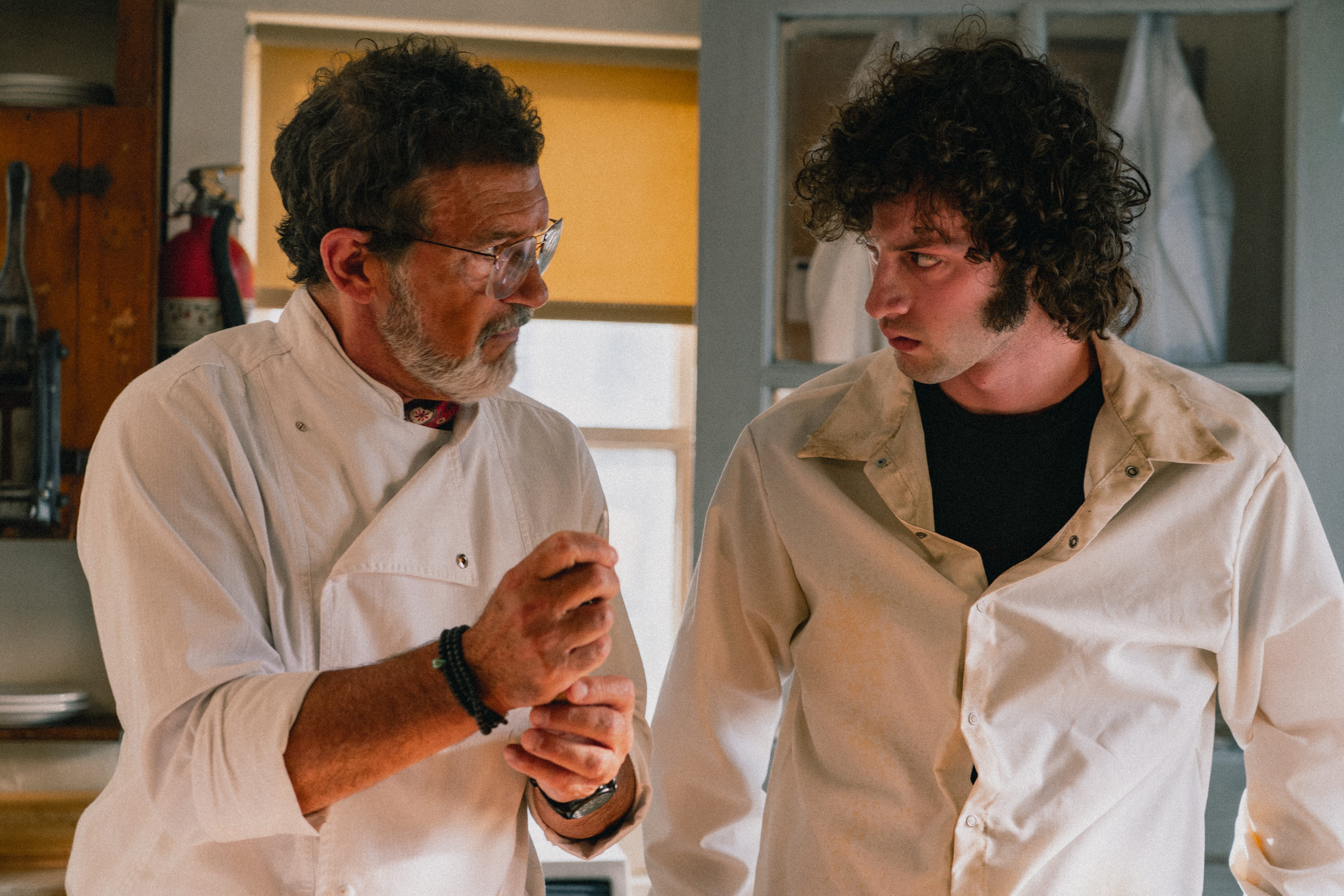
When Anthony Bourdain died by suicide in 2018, he was widely eulogized as a writer, chef, and TV host who changed how millions of people thought about food — and even how they viewed the world. To the millions of people who admired Bourdain but didn’t know him personally — which is to say most of us — his death was as tragic as it was confounding: here was a guy who seemed to be living the dream: traveling to exotic locations across the globe to share delicious meals and meaningful conversations with his many fascinating friends. It was hard to understand why someone so passionate and curious — so intensely alive — no longer wanted to live.
Morgan Neville’s 2021 documentary Roadrunner: A Film About Anthony Bourdain grappled with these unanswerable questions. Made just a few years after his death, it is raw with grief and rage. Tony, a new film starring Dominic Sessa as a young Bourdain (now in select theaters), paints a more hopeful portrait of the budding culinary rock star. Instead of focusing on Bourdain’s tragic end, director Matt Johnson takes us back to where his unlikely journey began — the pivotal summer of 1975, when an obnoxious nineteen-year-old kid from New Jersey got a job at a dilapidated seafood joint in Provincetown and discovered he wanted to be a chef.
Loosely inspired by a few early chapters in Kitchen Confidential: Adventures in the Culinary Underbelly, Bourdain’s massively popular memoir, the film is anything but hagiography. Befitting a subject known for his self-deprecating wit and blunt candor, it paints the young Bourdain as a colossal pain in the ass — or, to quote Bourdain himself, “a spoiled, miserable, narcissistic, self-destructive, and thoughtless young lout.”
(A few descriptors I’d add to the list: arrogant, pretentious, and a chronic bullshitter.)
We first meet Tony — only his overbearing mother calls him “Anthony” at this point — as a student at Vassar College. An aspiring writer, he brims with confidence in his abilities, likes to throw around big words like “insouciant” and “bildungsroman,” and carries nunchucks around in his pocket. He lacks discipline, so it’s not surprising when Tony gets rejected from the writing fellowship he hoped would occupy his summer.
But no matter: Tony lies to his parents and impulsively runs off to Cape Cod to pursue Nancy (Emilia Jones), a slightly older girl from school with whom he is besotted. In Provincetown, he is crestfallen to discover that Nancy is already dating someone else — a guy from the pizza place where she works. With no money for rent or a ticket home, he lucks into a job washing dishes at the Flagship, a rustic seafood restaurant run by a mysterious, monk-like figure known only as “Chef” (Antonio Banderas), who takes pity on broke Tony and lets him crash on his hammock.
At first, Tony struggles to keep up with the frenetic pace in the kitchen — and with the constant razzing of his profane, pugnacious co-workers, especially Sal (Leo Woodall), a hard-partying cook who has seemingly slept with half of Provincetown and introduces Tony to the exhilaration of cocaine. When Sal gets fired for showing up late to work after a binge, the newbie gets promoted and begins working more closely with Chef, who enforces a kind of militaristic discipline on his debauched employees (especially Tony, whom he wakes each morning with an ice-cold bucket of water).
Over the course of a boozy summer spent prepping seafood stew and partying in the dunes, the wayward college student falls for the restaurant lifestyle, and it’s not hard to see why. Unlike The Bear, which makes working in a kitchen seem about as enjoyable as storming the beach at Normandy, Tony makes it seem like a chaotic blast. (There’s a particularly great montage that follows Tony as he works up the courage required to put a potato through the french-fry cutter.) Sessa, who starred as a maladjusted boarding school student in Alexander Payne’s The Holdovers, is phenomenal as Tony, playing him as a cocky young man whose bluster can’t really mask his gaping insecurities.
But Tony’s newfound infatuation with the culinary world presents a few problems. He has repeatedly lied to Nancy about what he’s doing in P-town, which makes it awkward when she figures out he’s actually working in a kitchen. But for Tony, the biggest conflict turns out to be internal: didn’t he already decide he was going to be a writer? How does cooking fit into that plan? What’s he going to do when the summer ends and he has to return to college?
Johnson, whose previous credits include BlackBerry, a darkly funny movie about the creators of the bygone mobile phone, has a gift for scrambling fiction and real life to wildly entertaining effect. Many of the details in Tony are rooted in reality: Nancy is a version of Bourdain’s first wife, the Flagship was a real restaurant where he got his start, and he did attend Vassar for a while. Johnson has also taken meticulous care to recreate 1970s P-town, filming on location using vintage lenses, and loading the soundtrack with gems by Shuggie Otis and the Stooges. But you don’t have to be steeped in Bourdain lore, or know anything about the history of Cape Cod, to enjoy the movie.
Biopics are a tricky business. The formulaic three-act structure of a Hollywood movie doesn’t leave space for the contradictions, the complexities, the weird digressions that make people interested. And it’s not entirely clear that audiences always want nuance when it comes to their idols. (See: Michael, an image-laundering exercise by Michael Jackson’s estate which has raked in more than $1 billion worldwide.)
Tony is less concerned with relaying the chronological facts of Bourdain’s biography than capturing a relatable truth about being young, horny, and massively confused about which path to take in life. It has less in common with Oscar-baiting biopics about towering cultural figures like Stephen Hawking or Winston Churchill than the bawdy teen movies of the ‘80s and ‘90s. Tony works as a biopic because it isn’t really trying to be one at all. It’s a biopic smuggled inside of a raucous coming-of-age comedy — an apt tribute to someone with a profound capacity for joy and reinvention.
Other culture recs for the week ahead:
The Drama
Robert Pattinson and Zendaya play Emma and Charlie, an engaged couple whose seemingly perfect relationship is put to the test in this ultra-dark comedy from writer-director Kristoffer Borgli. Days before they’re set to say “I do,” Emma reveals a shocking secret from her past; a confession that sets off a comic chain of events and forces everyone in their circle of intellectual friends to consider whether we should be judged by our darkest thoughts. (HBO Max)
The Bombing of Pan Am 103
This series, from Netflix and the BBC, follows the decade-long investigation into the 1988 crash which killed 270 people and put the tiny village of Lockerbie, Scotland on the front page of newspapers across the world. Written by novelist Jonathan Lee, the six-part drama is a gripping detective story, but also a moving exploration of communal grief. (Netflix)
Meredith Blake is the culture columnist for The Contrarian