


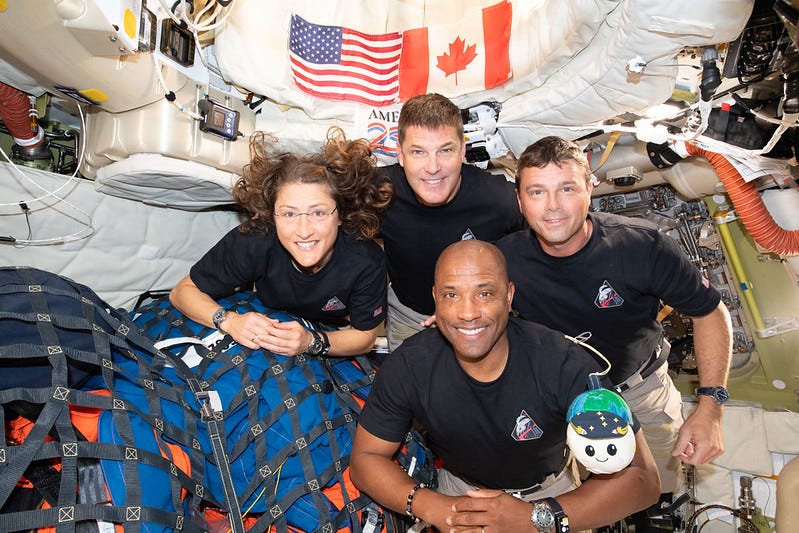
On Friday at around 5 pm PT, Artemis II is scheduled to splash down in the Pacific Ocean near San Diego, bringing an end to the 10-day mission in which four astronauts traveled to the dark side of the moon and journeyed farther away from the Earth than any other humans in history.
In an increasingly fractured media landscape, the Artemis II mission has been a rare unifying event. It is historic not only because of the many milestones reached by Commander Reid Wiseman, pilot Victor Glover, mission specialist Christina Koch, and mission specialist Jeremy Hansen. It is also remarkable because of how it has brought together so many people who would otherwise be scrolling through different timelines and consuming entirely cultural content. A year ago, Katy Perry, Gayle King, and Lauren Sanchez Bezos were (justifiably) mocked for their brief, vanity-driven mission to the edge of space in service of a private company. By contrast, the past 10 days have been a celebration of what’s possible when the government invests in science.
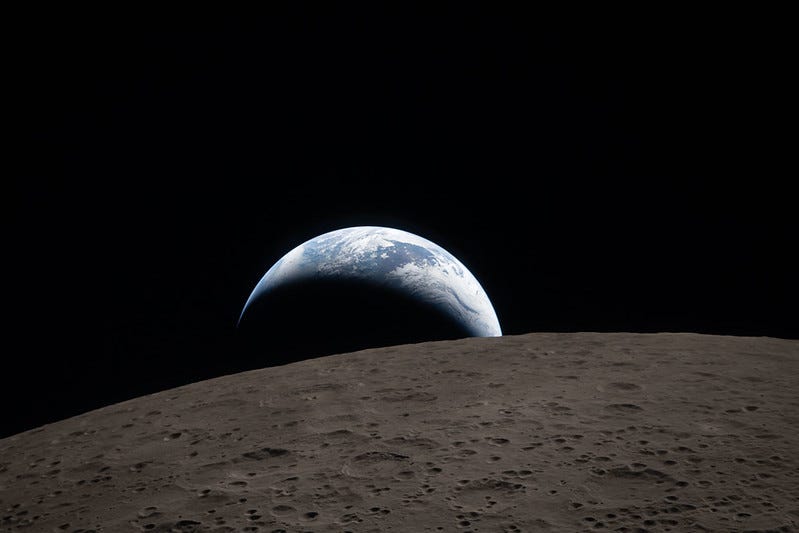
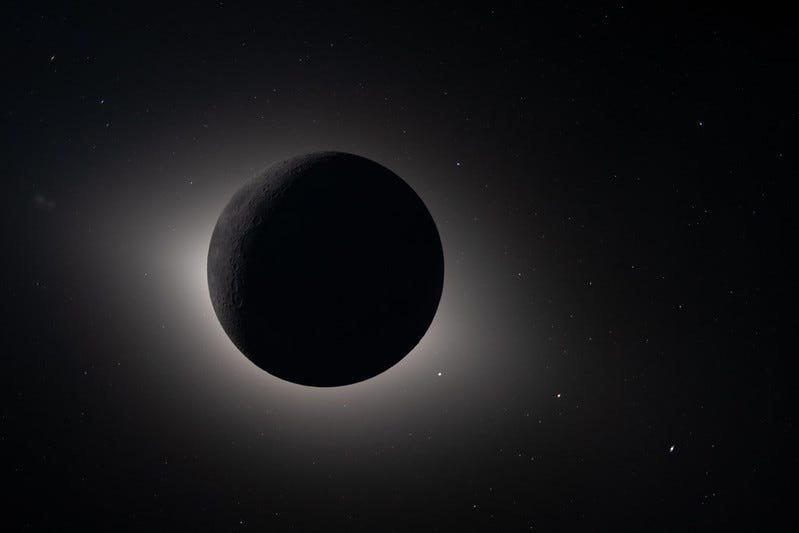
Since taking off last week, Artemis II has also produced some of the most awe-inspiring images in recent memory. There’s the moon eclipsing the sun. Earth setting over the cratered surface of the moon. The aurora australis glowing over the Indian Ocean. The terminator line — yes, that’s actually what it’s called! — dramatically enveloping the planet in darkness. Along with these majestic tableaus, there were humanizing moments, like the jar of Nutella that floated perfectly into frame during a livestream of the mission, just minutes before Artemis II broke a record set by Apollo 13 56 years ago. (Even the most accomplished scientists in the world occasionally crave nutty sweetness.)
These pictures are so powerful they’ve been able to evaporate our collective cynicism in an era when rampant AI fakery, endless CGI imagery, and distorting Instagram filters can make us question the very real beauty of the world around us. (The Artemis II astronauts could probably get a lucrative side gig teaching normies how to take better pictures of the sunset on our smartphones — the struggle is real!).
Yet it’s difficult to think about the Artemis II mission, and the indelible imagery it has produced, without also thinking about what’s going on down here on Earth — specifically, the fact that while a handful of American and Canadian astronauts were making history in outer space, Donald Trump was bringing our home planet frighteningly close to the brink of nuclear war. On Monday, April 6, Artemis II completed a lunar flyby, capturing never-before seen images of Earth and the moon. The very next day, Trump threatened a country of 90 million people with genocide.
Photographs that left us feeling humbled by the scale and beauty of the universe, and unified in our shared humanity, also became terrifying reminders of our vulnerability to the whims of an increasingly unhinged narcissist.
This contrast became glaringly obvious when the president made a congratulatory call to the Artemis II crew members that turned into a nonsensical, self-obsessed diatribe about his friendship with Wayne Gretzky. (At least he didn’t say anything about Arnold Palmer’s penis?) Whether they were stunned into silence, or simply didn’t want to engage with a guy openly waging war on science, the astronauts said nothing in response to Trump’s soliloquy about “the Great One,” leaving the supposed leader of the free world hanging for more than a minute — the dead air a void as potent as any black hole. The moment went viral, prompting a million social media jokes about how it’s impossible to escape Trump, even in space.
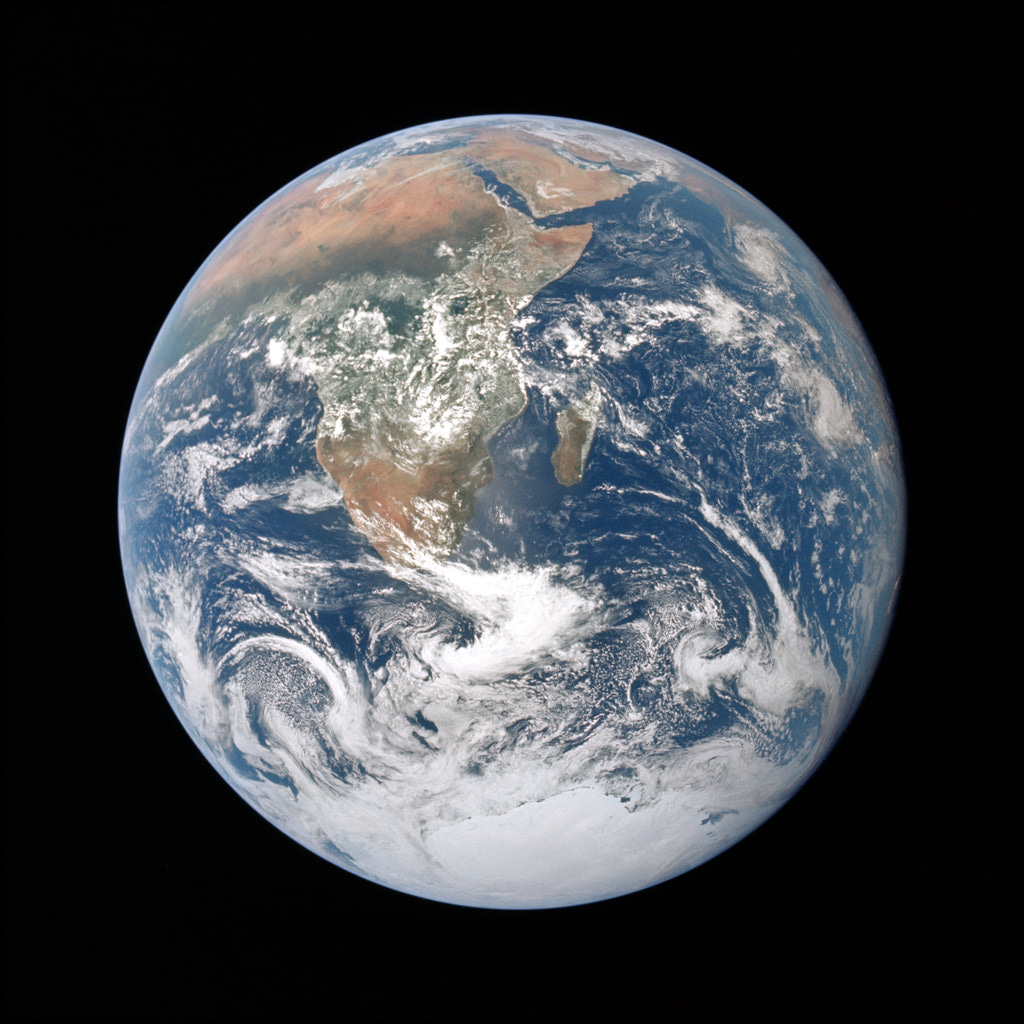
As deliciously funny as the moment was, I hope that the other images of the week are the ones that linger in our collective memory, and perhaps spur us into action to preserve our precious spinning orb (and its inhabitants). Other photos from space have done just that. “Earthrise,” taken by Apollo 8 astronaut William A. Anders in 1968, emphasized the planet’s relatively small and finite scale, and has been called the most important environmental photograph of all time. Taken four years ago by astronauts onboard Apollo 17, “The Blue Marble” became a symbol of Earth Day and a galvanizing image for the environmental movement. It’s encouraging, then, that these pictures were taken in a turbulent moment much like this one.
Christina Koch, one of the Artemis II mission specialists, recently spoke about her time on the International Space Station and the (literal and figurative) perspective it gave her on life on Earth.
The thing that changed for me looking back at Earth was that I found myself noticing not only the beauty, but how much blackness there was around it, and how it just made it even more special. It truly emphasized how alike we are, how the same thing keeps every single person on planet Earth alive. We evolved on the same planet. We have some shared things about how we love and live that are just universal, and the specialness and preciousness of that really is emphasized when you notice how much else there is around it.
Meredith Blake is the culture columnist for The Contrarian
I watched just now the capsule/parachute splash down. A beautiful sight, a beautiful project, a beautiful crew, a beautiful endeavor. What can be accomplished when people work together. Thank you all of you for the beauty.
NASA and the astronauts gave the world a beautiful gift during the last 10 days, lifting our eyes to what they saw and experienced and giving us a break from the awfulness happening in the world below. I'm only aware of the malfunctioning toilet and poor communications once they were bobbing on the Pacific waiting to exit the capsule. What an astonishing accomplishment and many congratulations to them!