

By Carron J. Phillips
I would bet money that Cheryl Reeve isn’t part of the 53 percent.
The head coach of the WNBA’s Minnesota Lynx seems like the kind of woman who would have worn a pink hat at the 2017 Women’s Day March because the fashion choice aligned with her beliefs, not because it was “cute.” As the WNBA becomes a platform for political discourse, Reeve’s presence exemplifies the kind of white woman this country needs — and they’re usually the kind who challenge ESPN’s Stephen A. Smith.
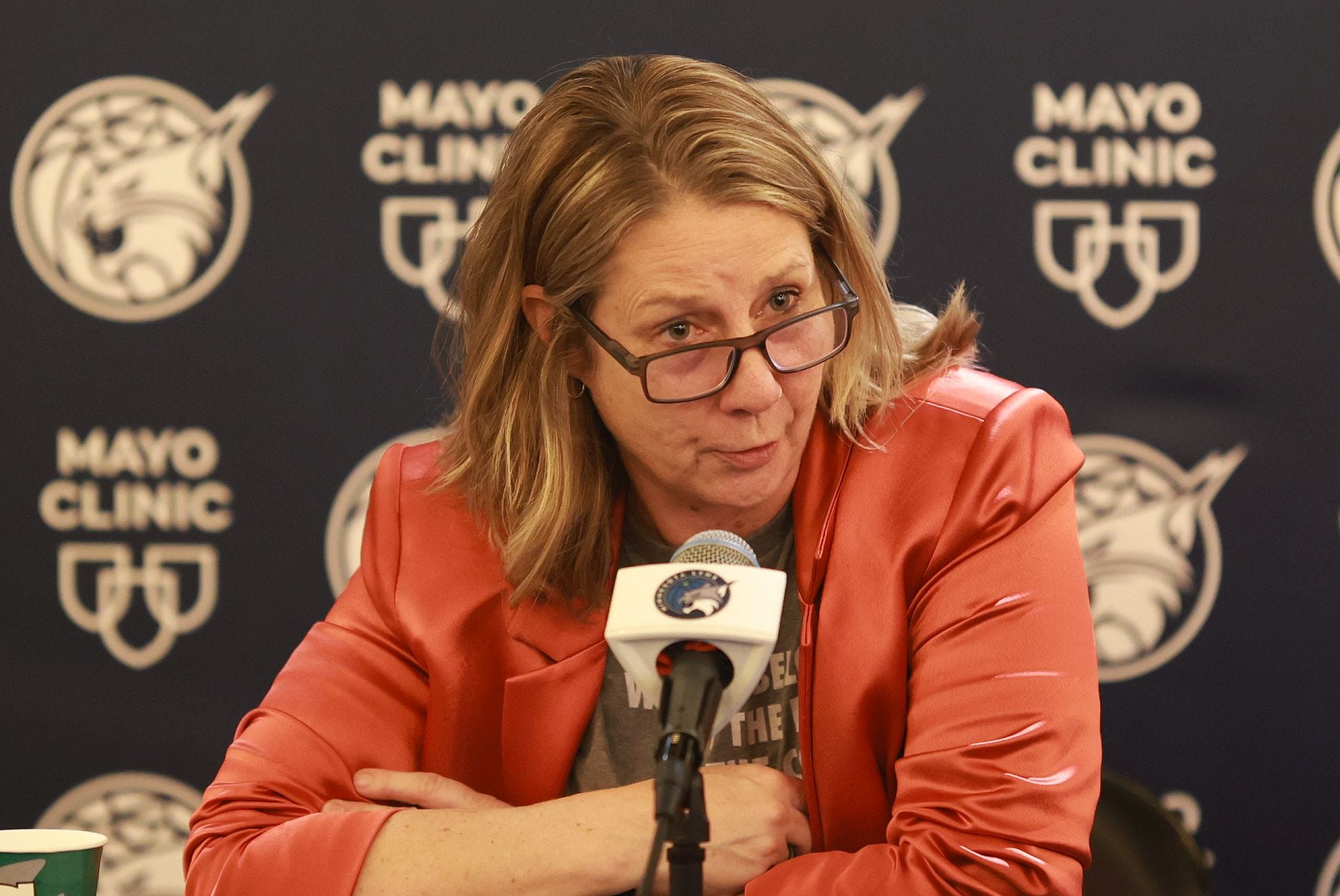
“You are Cheryl Reeve. The head coach of the Minnesota Lynx. That is an irresponsible thing to do,” Smith exclaimed during a 14-minute rant about her on his show. The former journalist turned overpaid corporate spokesperson/wannabe GOP mouthpiece was upset that Reeve wore a “Trans Kids Belong” t-shirt when she coached against Sophie Cunningham’s Indiana Fever. In case you missed it, Cunningham’s anti-trans remarks sparked a controversy engulfing the league. And now the heat is on a role player on a one-year contract who all of a sudden wants to “get back to basketball,” or as The Contrarian’s Shalise Manza Young put it, “arsonist says ‘just ignore the fire.’”
“You are a coach for a female basketball team. Do you not think that the females are being screwed over if they have to compete against an individual born as a male? What are you talking about?!,” Smith continued. “You trying to tell me that a college player, for the men’s, should transition to a woman and be allowed to play in the WNBA or on a collegiate level to a women’s college program? What the hell are you talking about?”
Somehow, women’s sports have become a sacred ground for those who disparage the trans community, even though they rarely provide evidence of trans athletes dominating the field. In June, the Supreme Court upheld a Trump administration directive that allows states to ban transgender women and girls from participating in women’s and girls’ sports.
Smith is beating a dead horse. Reeve wants people to be informed.
“I come from a space of inclusion,” Reeve explained about her advocacy. “The narrative that I think is problematic is to suggest that transgender athletes are the biggest problem in women’s sports. This is what’s bothersome. There is a faction of people in our country that are making this a massive issue.”
When at least 53 percent of the women who look like Reeve are among the reasons we have been dealing for a decade with a regime that stands against all things inclusive and diverse, Reeve’s support is at a premium.
“This is at the forefront of our minds. Playing basketball is what we do. The other part of us is wanting to make the world a better place for everybody,” Reeve said in 2020 when former Lynx guard Renee Montgomery took a year off to work on social and racial justice issues. And after the police shot and killed Philando Castile in 2016, Reeve supported her team captains wearing Black Lives Matter T-shirts before a game, a move that led to thin-skinned officers working security walking off the job. “That’s where the ideas of ways that we were going to be thoughtful and inclusive came about,” Reeve recalled. “The change starts with us. Justice and accountability. They came up with those.”
Though Reeve coaches in a city and state that have never been mistaken as epicenters of diversity, the local sports teams, athletes, and coaches have a history of using their platforms to challenge the status quo. Beyond the more notable events of 2016 and 2020, in 2021 the Minnesota Twins, Timberwolves, and Wild all postponed games after a white police officer shot and killed a Black driver, Daunte Wright. And this year, when ICE agents took the lives of Renée Good and Alex Pretti, teams signed an open letter calling for peace.
“For the second time in less than three weeks, we’ve lost another beloved member of our community in the most unimaginable way…. We just stand in support of our great community here,” Timberwolves head coach Chris Finch said before his team took the court for a game that had been postponed because of the tragedy.
Whether because of grassroots efforts or convenient adaptation, sports figures in Minneapolis have been at the forefront of memorable acts of social and racial justice demonstrations over the past decade. Cheryl Reeve’s commitment to being central to these movements should be highlighted and remembered. Though examples of white women championing causes that do not benefit them are rare, history demonstrates that when they do support minority causes, the potential for meaningful change increases significantly.
Carron J. Phillips is an award-winning journalist who writes on race, culture, social issues, politics, and sports. He hails from Saginaw, Michigan, and is a graduate of Morehouse College and Syracuse University. Follow his personal Substack to keep up with more of his work.
Compared to the entire universe of female athletes, the percentage of trans women is estimated to be two one-hundred-thousandths of one percent.
It's a non-issue. And it's just sports.
If someone is ranting about trans athletes, ask them what else they do to support women. Crickets.