


Is the Great American State Fair not filling you with semiquincentennial pride? Worried the new golden eagle on the front of the White House feels a little too, what is it, Reichstag-y? Concerned your July 4 barbecue will be accompanied by one long, sad trombone sound as you and your guests ponder why you’re even celebrating what feels like the end of the American experiment?
Then let me offer you something that should fill you with pride in America, something that reflects the hardworking innovation and quality that the United States has been known for — something that brings joy on the daily to people around the world.
Is this magical thing telephones? Lasers? The internet? Vaccines?
No, my friend and patriot, I believe America’s greatest contribution to the world is the chocolate chip cookie.
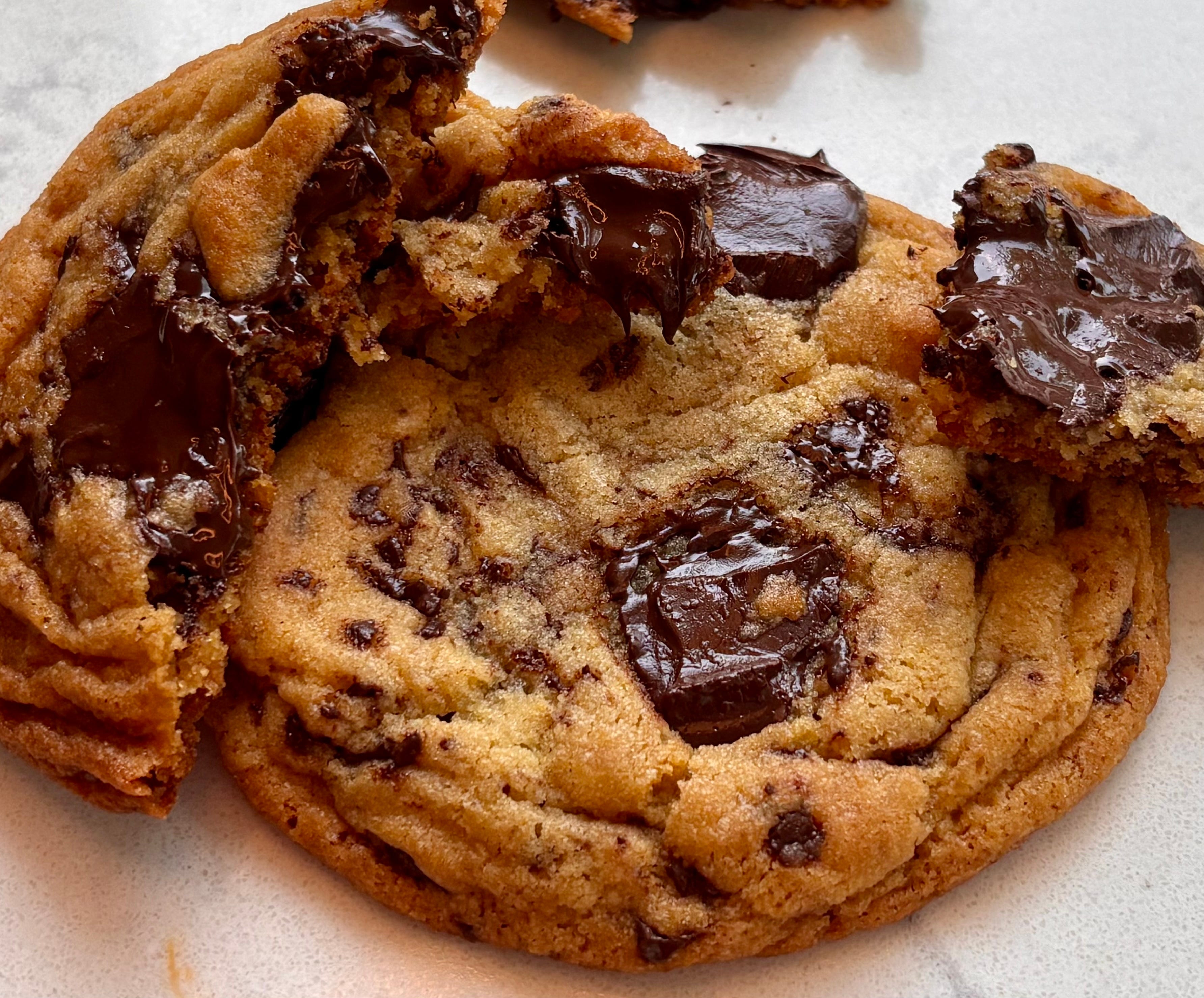
This humble butter cookie is now eaten around the globe, from Japan to England and back ‘round again. In Nigeria, you can pick up a pack of “Royalty Chocolate Chip Cookies” at the supermarket. At a cafe in Tashkent, order an “American cookie” to go with your cup of qahva, and you’ll receive a chocolate chip cookie.
And in case you were worried, as one 5-year-old girl was, whether they are chocolate chips at research stations in Antarctica, there are. This entire subreddit is worth the read, but if you don’t have the time, rest assured there is a little girl who will continue to pursue a science career in Antarctica because chocolate chip cookies will be available.
Ruth Wakefield, the creator of the chocolate chip cookie and owner of the Toll House Inn, would probably be amused, in a quiet New England sort-of fashion, to discover how her simple cookie has brought joy to the farthest corners of the globe. Developed in 1938, the cookie was intended to be an accompaniment to bowls of ice cream served to guests at her popular inn in Whitman, Massachusetts.
The Inn, which she owned with her rarely mentioned husband, was popular with celebrities, including Frank Sinatra, Ella Fitzgerald, and even Duncan Hines. It wouldn’t be an American story without a Kennedy involved, and apparently patriarch Joseph Kennedy was a big fan of the Inn’s Boston Cream Pie (which is a cake, not a pie, and a dessert enigma for another day).
News of the cookie spread across New England after Wakefield appeared on the Betty Crocker Cooking School of the Air and the recipe was printed in several newspapers. The Second World War cemented the cookie’s popularity, as GIs from New England received care packages of chocolate chip cookies they shared with their buddies. Soldiers would write home and ask to have these cookies sent to them. Soon Nestle, who had seen a spike in sales of the new chocolate morsels (the original bars had to be broken apart with a small pick) began directing ads to women on the home front.
The chocolate chip cookie is a classic All-American story full of imagination, innovation, and marketing know-how. It even features World War II soldiers, Kennedys, and seemingly greedy corporate overlords. The common story is that Wakefield was ripped off by the Nestle company, which alleged to have bought the recipe from her for $1. However, Wakefield was no idiot. A trained home economist and smart business woman, she cared most about her inn. To this day, each and every bright yellow bag of Nestle’s chocolate chips includes a recipe for Toll House cookies. That kind of marketing is worth millions of dollars, and it cost her almost nothing.
My cookbook, The Secret Life of Chocolate Chip Cookies, has over 60 different takes on the chocolate chip cookie, from thin and crunchy to soft and gooey, and a variety of flavors from ginger-rye to triple chocolate. In honor of the 250th anniversary of the United States and a thank you to all you Contrarian readers, I have a brand new chocolate chip cookie recipe for you, which my very opinionated family claims is my best one yet. Of course, I leave it to you to judge.
The cookie is large and chewy-on-the-inside, crunchy-on-the-outside. Made with browned butter and (secret ingredient) malted milk powder, the caramel flavor reaches out and grabs you before you have time to think, and the cookie is studded with large chunks of hand-cut semi-sweet chocolate.
A few ingredients and techniques make this cookie stand out:
Brown butter: Browning the butter does two wonderful things. First, the process removes the water from the butter, leaving only the tasty milk solids behind. This helps make the cookie tender and, best of all, adds a nutty caramel flavor to the cookie.
Malted milk powder: Whisk the malted milk powder into the brown butter, where it will caramelize in the heat. You don’t have to be a malted milk fan to like these, it’s there to enhance the rich, caramel flavor.
An extra yolk: Along with an egg, an extra egg yolk is added to ensure chewiness, thanks to the additional moisture and protein in the yolk.
Chopped semisweet and milk chocolate bars: Cutting up chocolate bars creates a variety of shapes and sizes of chocolate chunks. The more chunks, the more gooey chocolate in every bite. Use the best quality chocolate you can find. On the more affordable end of the range, Ghirardelli and Lindt are great choices.
The challenging part: Refrigerate the dough for at least eight hours before baking, and 24 hours if you can wait that long. This allows for the flour to properly hydrate and the flavors to deepen.
What You’ll Need:
1 cup (227 grams) unsalted butter
3 tablespoons malted milk powder
1 cup (213 grams) light brown sugar
½ cup (99 grams) granulated white sugar
2 ¼ cups (270 grams) all-purpose flour
1 teaspoon baking soda
1 teaspoon kosher salt (or ½ teaspoon table salt)
1 large egg, room temperature
1 egg yolk, room temperature
1 tablespoon vanilla extract
8 ounces (227 grams) semisweet chocolate, cut into chunks
4 ounces (113 grams) milk chocolate, cut into chunks
What You’ll Do:
1. Brown the butter: Melt the butter in a saucepan over medium heat. As the butter begins to froth, reduce the heat to low and cook, stirring frequently. (This is not a time to check your phone, as the butter can go from “Mmmm. Smells like nutty caramel,” to “Uh-oh, I don’t think it’s supposed to be that color” very quickly.) When the milk solids in the butter turn golden brown and the mixture begins to smell irresistibly nutty, remove the pan from the heat. Pour the mixture into a large heat-proof bowl, and make sure to scrape in the lovely brown bits from the bottom of the pan. Whisk in the malted milk powder, and let the mixture cool for 20 to 30 minutes.
2. To the cooled melted butter, add the brown and white sugars, the flour, baking soda, and salt and stir by hand until blended. The mixture will look like wet sand.
3. Add the egg, egg yolk and vanilla extract and stir until incorporated. Mix in the chocolate chunks. Cover the dough and refrigerate for at least 8 hours and up to 3 days. (Although I certainly wouldn’t object if you baked off one or two now. That’s what I do.)
4. When ready to bake, heat the oven to 375°F/180°C. Line two baking sheets with parchment paper. Portion the dough about 3 tablespoons of dough. Form the dough into a round-ish shape, pinching the top to make it taller than it is wide. Leave 2 inches (5 cm) between cookies as they spread. Bake for 10 to 12 minutes, switching the pans top to bottom and back to front halfway through. Bake until light golden. The center should look soft and set but no longer damp. They will continue to cook out of the oven. Let the cookies rest for 5 minutes on a baking sheet, then transfer to a wire rack to cool.
Marissa Rothkopf Bates writes about food for the New York Times, Newsweek (RIP) and Publishers’ Weekly among others. Her newest book, “The Secret Life of Chocolate Chip Cookies,” is available wherever fine books are sold. Find her on Substack here.

you had me at malted milk powder...
This is a totally delightful piece celebrating with humor, and more than one extra "yolk", and marvelous story on the typically American under-credited woman who created the Toll House cookie my own grandmother used to bake. Marissa's new recipe looks so creative, and spectacular that Ruth Wakefield would be proud! But, even more importantly, it suggests that on this anniversary of our nations founding, we celebrate the individual contributions that have made us great. Contributing something special to those we love, and passing that down, from generation to generation, may be how we preserve a semblance of democracy in our own families, and share it with others.