


You did not misread Donald Trump. You misread the fight. You brought an épée — process, nuance, and the belief that rules still matter in the room. He brought a shotgun — deadlines, threats, and punishments designed to end the argument, not negotiate it. One style wins quickly. That is not an accident. It is the method.
For a year, much of Europe treated his return as a familiar problem: a petty, self-focused man who wanted praise, attention, and the appearance of winning. The wager was that careful engagement would blunt the edge — keep him inside the guardrails, keep the alliance intact, keep the temperature down. That wager has failed.
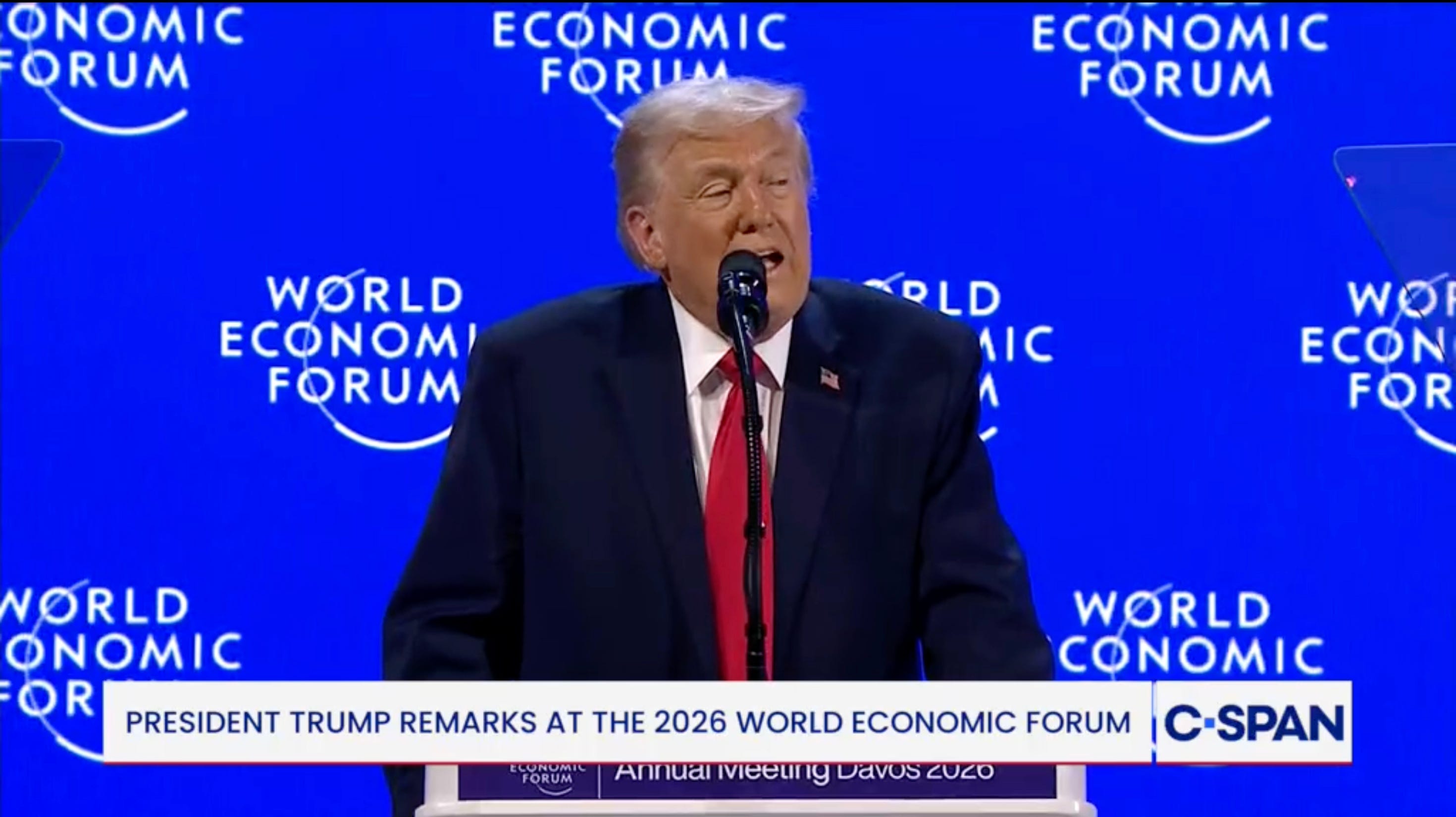
Trump’s first term offered the warning: He reads accommodation as permission. Adjustments in the second term have fared no better: Flattery has not led to cooperation. Concessions have not produced stability. When resistance looks fragmented, he escalates — not because it is required, but because it pays.
Greenland has laid bare this reflex. Over the weekend, the president took a sovereignty issue—an autonomous territory tied to a NATO ally — and treated it like a shakedown: accept U.S. acquisition or face punitive tariffs on a defined list of European countries, on a schedule, with bigger penalties baked in.
But retaliation is no safe harbor either. Retaliatory tariffs may be necessary, but tit-for-tat is a treadmill. It invites a contest of endurance — and Europe is not structured like China, able to absorb prolonged economic pain with limited political blowback. A sustained trade war will strain unity, empower opportunists inside your own democracies, and give outside actors a front-row seat to Europe’s internal fractures.
That leaves you with the harder question: whether you will lead under conditions that guarantee pain. Not symbolic pain. Real pain — industrial disruption, political backlash, street anger, and months of ugly headlines. The world does not need better statements. It needs a Europe that can take a hit and stay standing.
There is an old lesson here, and it is not romantic. In 1930s Europe, delay and accommodation sounded reasonable until they didn’t. Time was purchased at the expense of leverage. Leadership later required more than moral clarity; it required a public prepared for sacrifice and a political class willing to say, plainly, that the price of resisting coercion is paid up front.
This era is harder. The information environment is faster, uglier, and more easily manipulated. Unity will be attacked daily. Disinformation will not be a side effect; it will be a weapon. And European reserve — the instinct to keep things quiet, technical, diplomatic — will not meet the moment. The opponent you face does not fear embarrassment. He uses it.
Now for the part that matters most: If you choose to stand firm, do not expect a return to normal. Expect escalation. Not subtle escalation. Not bureaucratic games. Escalation designed to be understood by ordinary people in one glance.
Expect Trump to target individuals, not just countries. That means naming European leaders and officials as “obstacles” to peace and security, then attaching consequences: visa bans for ministers and senior civil servants; public accusations of corruption; threats to “review” personal financial ties; and pressure campaigns aimed at making political life personally risky for anyone seen as defying him. The goal will not be conviction. The goal will be intimidation.
Expect him to weaponize the U.S. legal and regulatory system against European firms. Not quietly. Loudly. Announced as “law enforcement” and “fairness,” timed to moments when Europe is trying to show unity. Antitrust actions against marquee companies. Export-control accusations. Sanctions-related investigations. Pressure on banks that clear dollar transactions. The point will be to show that Europe’s economic champions are vulnerable and that defiance has a price that lands in boardrooms and pension funds.
Expect him to turn security cooperation into a public protection racket. Not a NATO withdrawal — too clean, too accountable. Something cruder: threats to redeploy forces, threats to halt the transfer of critical munitions or spare parts, warnings that intelligence sharing will be reconsidered — all cast in his habitual grievance as a response to coercion. The mechanism is simple: make allies wonder, out loud, whether they can rely on the United States next month.
Expect intelligence to be used as a club. That means threats to declassify information that embarrasses allies — real or selectively framed — sold as transparency. It means publicly hinting that he knows damaging things about European leaders or European policies. It means turning what should be private alliance trust into a stage prop.
Expect him to widen the pressure beyond Europe to show that no region is exempt. In the Americas, he will test whether he can punish governments openly for political alignment: tariffs and trade restrictions tied to leaders he dislikes; praise for opposition figures he wants to elevate; threats of border or migration measures used as punishment for disobedience. In Asia, he will push allies into public loyalty tests — over U.S. troop presence, on China, on Taiwan — while framing protection as charity and hesitancy as betrayal. The objective is not coherent strategy. It is dominance through forced choosing.
Expect “emergency” to become the default setting. Trade emergency. Border emergency. Cyber emergency. Each one will justify faster action, fewer constraints, and more sweeping measures sold as temporary. Once that door is used repeatedly, it becomes a hallway.
None of this requires cleverness. It requires only the confidence that escalation carries no lasting cost — and the evidence of the past year suggests he has that confidence.
Europe cannot medicate that reality away. You can only decide whether to meet it with unity and preparation, or continue reacting episode by episode, hoping each crisis is the last. Hope is expensive. It costs leverage first, then options.
Your task is not to panic or posture. It is to act as if you understand that today’s absurdity is tomorrow’s precedent — and to lead accordingly.
And if Trump blinks on Greenland, do not confuse retreat with conversion. Do not go hunting for a middle ground that makes everyone feel reasonable again. The habits that brought you here —soothing language, procedural compromise, faith that the temperature can be lowered — are the very habits his method exploits. The hard posture, and the self-inflicted pain it requires, is not a one-off response to one crisis; it has to be the new baseline, because the next demand will come whether this one ends quietly or not.
Brian O’Neill, a retired senior executive from the CIA and National Counterterrorism Center, is an instructor on strategic intelligence at Georgia Tech. His Safehouse Briefing Substack looks at what’s ahead in global security, geopolitics, and national strategy.

This is the best thing I have read all day. Europe needs to stand firm against Trump. He is a fascist and they need to see this. Europe is remarkably diverse and has the capability to remain resolute, while facing Trump and his unqualified and corrupt team that he has assembled. The lessons from the past century should be guiding them. Hopefully, they will unanimously refute all of Trumps unhinged demands and show him, and the world that there are those who will defend democracy, freedom, and the sovereignty of all NATO nations.
You have elucidated the sad truth of appeasement folly contained in my favorite old gospel lyric: “Don’t let the devil ride, for if you let the devil ride, soon he’ll want to drive.”