

By Maria L. Quintana
César Chávez is an icon for a movement of farmworkers, demonstrating that through non-violent protest, strikes, court cases, mass meetings, boycotts, and marches, economic justice through labor unionization is possible. His community-based methods to secure rights for farmworkers, most notably in the Delano grape strike and the creation of the United Farmworkers Union (UFW) achieved the first enduring and successful union contracts for farmworkers in U.S. history. His persistence, tactics, and leadership also led to the passage of the California Agricultural labor relations Act of 1975, which guaranteed farmworkers the right to collective bargaining.
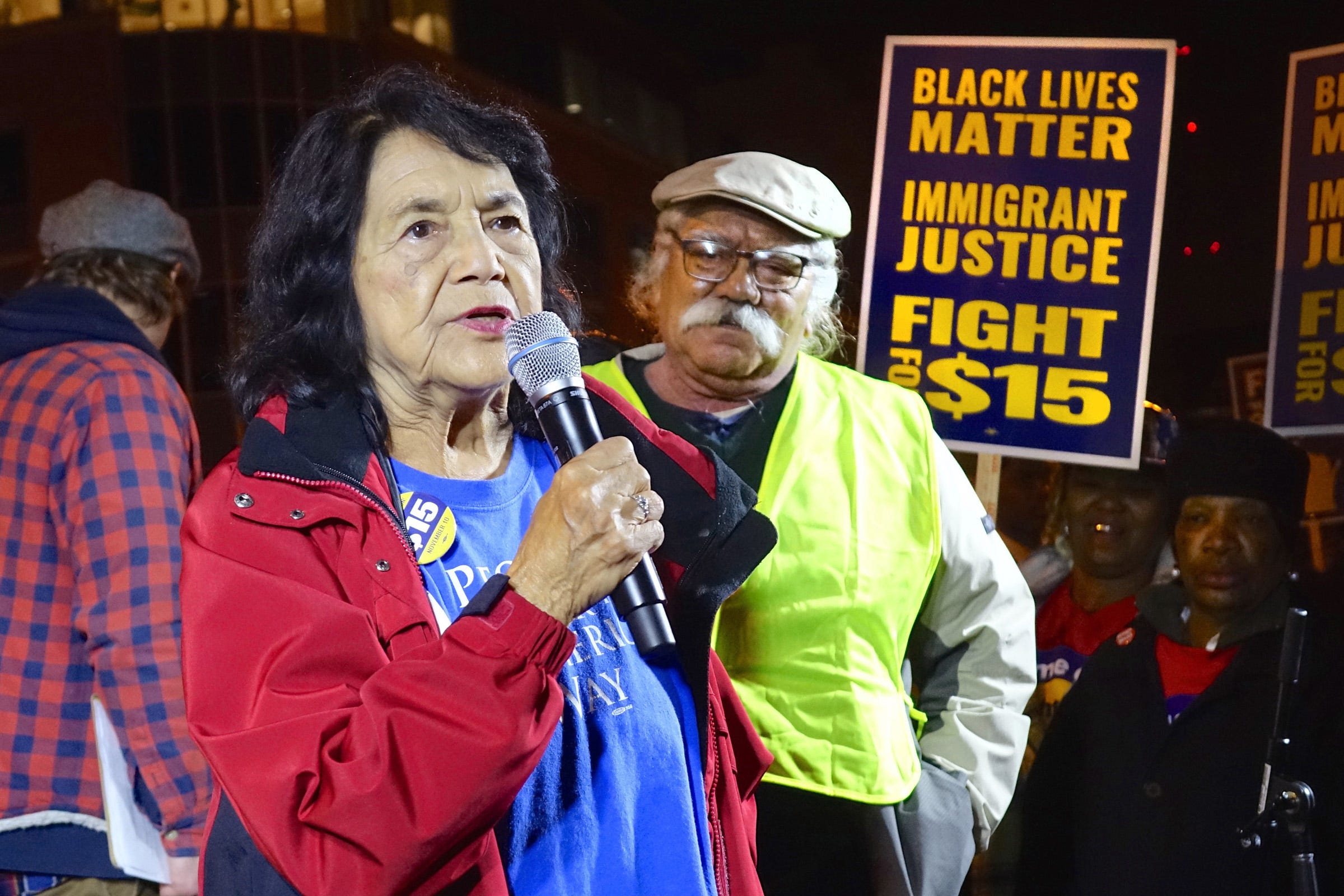
Chávez was not alone in his efforts. In 1962, Chávez co-founded with Dolores Huerta the National Farm Workers Association (NFWA), which later became the UFW. Huerta’s recent allegations of sexual violence and rape have called into question Chávez’s legacy. This is an important opportunity to think about how movements for civil rights and social justice are not immune to the patriarchy and all its violence. There is no place for violence against women and gender non-binary people in the fight for economic and racial justice.
Huerta was co-director of the UFW with Chávez and responsible for originating the UFW’s phrase “sí, se puede.” Sadly, Chávez has received most of the recognition for the farmworker movement’s success. In 2014, President Barack Obama proclaimed March 31 a national holiday to commemorate Chávez as the leader behind the UFW’s successes. Casting Chávez as the sole proprietor of a movement when Huerta was co-leader shows is a clear example of how the patriarchy is reinforced through the way we remember history.
Early in the the five-year Delano grape strike, Huerta relocated to New York City to organize a nationwide boycott, which led to over 17 million Americans refusing to buy grapes. Huerta became connected with the growing feminist movement in the United States. She met Gloria Steinem and became interested in the links between gender equality and fair labor practices. She spoke before the National Organization of Women (NOW) and helped found the Coalition of Labor Union Women. By 1970, with Huerta’s leadership, the UFW forced grape growers to accept union contracts and effectively organized most of that industry, at one point claiming 50,000 dues-paying members. The conflict was a watershed struggle for civil and labor rights, and it breathed new life into the labor movement and opened doors for immigrants and people of color.
Filipino farmworkers were also integral to the UFW’s successes. The UFW formed in 1966 when the NFWA united with the Agricultural Works Organizing Committee (AWOC), a Filipino farmworker union created in 1959 by Filipino leader Larry Itliong. Itliong, who arguably gave the UFW its radical bent, actually started the grape strike to demand farm workers’ rights. Today, California celebrates October 25 as “Larry Itliong Day,” but it is not yet a national holiday.
Officials across the United States have pushed to remove Chávez’s name from streets, parks, and holidays. But the process of bureaucratic renaming is complicated. Until then, this March 31we will commemorate this national farmworker’s movement holiday, in appreciation for the contributions that Filipino, Mexican, and other workers make to the U.S. economy and to putting the food we eat on our tables. We should take this as opportunity to remember that the fight for social justice continues even today in the farm fields. And we should continue open dialogue for healing and building a liberatory world in the fight for an antiracist, social justice framework against sexual violence, harassment, and exploitation at work and in our movements. It will take all of us to stay united and create a safer world for the generations that will come after us.
Maria L. Quintana is a professor at Sacramento State University. She is the author of “Contracting Freedom: Race, Empire, and U.S. Guestworker Programs.”
Dolores Huerta held the United Farm Workers together throughout its existence, through Cesar Chavez' fussy high drama periods and controversies, all the while being abused by him. Dolores Huerta richly deserves to be held in highest regard for what the UFW accomplished.
The most meaningful action now would be to finally acknowledge Huerta's legacy and honor HER with street names, school names, accolades. She did the work and paid a massive price.
It is beyond obvious that NO MOVEMENT or ORGANIZATION of any kind can tolerate sexual violence. I think it would be excellent if individuals were not named or given statues or buildings. Without the usually nameless people that did the work, whether farmers or laborers or casting directors, the "big" names would not have their achievements. Perhaps it is best to honor such groups instead of individuals. The American Farmworkers Building; the Electrical Workers Building, etc.