


Up until World War II, the Santa Clara Valley of California was known as The Valley of Heart’s Delight, and, at its peak, it was home to over 100,000 acres of land covered in fruit trees, with more than 600,000 apricot trees being farmed by 2,000 apricot farmers.
Visitors would come during spring to see the valley transformed by millions of white blossoms. From above, the valley looked snow-covered. The smell must have been rapturous.
After the war, an influx of returning veterans and post-war migration coupled with a boom in electronics research at places like Stanford encouraged companies like IBM, Lockheed, and GM to build corporate centers in the valley. The employees needed nice suburban homes to live in, so orchards were bulldozed and housing tracts were built. It was the dawn of Silicon Valley.
Wallace Stegner wrote “Silicon Valley is probably good. The Valley of Heart’s Delight was a glory. We should have found ways of keeping one from destroying the other.“
Though 95 percent of apricots grown in the United States come from California, the news from the the U.S. Department of Agriculture is grim for apricot lovers. Apricot acreage in California has fallen 62 percent over the past 20 years, which naturally impacts the number of varieties of apricots grown.
Those of us without a nearby farm stand to buy lush, ripe apricots fresh off the tree probably have never experienced apricot perfection. The apricots we get at the supermarket are shipped unripe and are often mealy. Luckily, baking them transforms an apricot’s flavor and texture.
Today’s recipe honors the California apricot in an Austrian style, because there are few places crazier about the humble apricot than Austria, which has a Protected Designation of Origin order on apricots from the Wachau region. Archduke Ferdinand insisted on eating apricot dumplings every day, but that’s an apricot story for another day. For now, let’s enjoy an apricot torte.
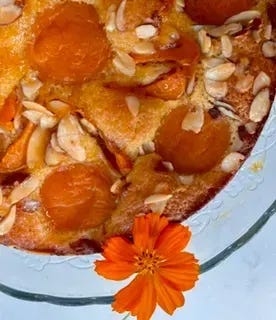
This apricot almond torte is made with almond flour, and the result is a tender, buttery cake that is naturally gluten-free. It’s easy to make by hand and is the kind of cake that gets better with age, an idea I can really get behind.
Marissa Rothkopf Bates writes about food for the New York Times, Newsweek (RIP) and Publishers’ Weekly among others. Her newest book, “The Secret Life of Chocolate Chip Cookies,” is available wherever fine books are sold. Find her on Substack here.

Years agoI enjoyed the generous harvest of a neighbor's Blenheim apricot trees when living in Palo Alto . Later, I could buy the dried fruit at Trader Joe's but now they no longer carry that heritage variety. Blenheims have a complex rich flavor that can't be beat.
Takes me back about 30 years ago while traveling through California and seeing all the apricot groves!