


“Good news is rare these days, and every glittering ounce of it should be cherished and hoarded and worshipped and fondled like a priceless diamond.” — Hunter S. Thompson
The tv is on in my living room, and I’m watching images of Paris, Limoges, Lyon, Marseilles, cities around France, in the beautiful golden sunlight of a crisp autumn day. But this is no ordinary fall day. Saturday’s massive student demonstrations turned violent; buildings and monuments were destroyed and set on fire, shops and offices were ransacked and looted, leaving behind a landscape of broken glass, scattered papers, smashed furniture, smoldering debris, and the wreckage of people’s life and work. The calm after the (fire)storm.
We watched in horror as French cities went up in flames. To a certain degree, the country of Revolution is no stranger to this whenever the people take to the streets. Anger and clashes between protestors and law enforcement aren’t as uncommon as they should be, and the “casseurs” — the masked vandals who use protests as cover for gratuitous destruction - sprint screaming out of the woodwork to do their thing.
There is a meme going around, a drawing of protesters holding up signs — “For my future,” “Life is too expensive,” “We just want to live” — while a vandal in a hoodie, a crowbar sticking out of his back pocket, his arms filled with looted goods, dashes by. The protesters say to the vandal, “Because of you, tomorrow no one will be talking about us.”
But there was something particularly unexpected and shocking about the weekend’s events (which continue, albeit to a much lesser extent, as I write this). It was more violent than usual. Images and videos that flooded social media, made all the major news outlets around the globe, and were splashed across the front pages of newspapers shocked the world. Granted, some images were AI generated, so we must be very careful in sharing them, but the violence, both the level and its extent, was distressing. Distressing, shameful, and horrifying. As was the president’s watery response.
Once the dust settles, once the broken glass and debris have been swept away, the government will have to answer for this and to this. We living in France not only watch what is currently happening but remember everything that has been building up to this moment for years. Things in the streets will calm down, and probably pretty quickly, Paris will return to its beautiful self, the terraces will fill, the holiday lights will be strung up from elegant façade to elegant façade, and the city will resume its daily rhythm and vibrancy.
Just to be clear, neither the protests nor the violence was widespread; both were concentrated in certain areas in certain cities. France has a long history of mass demonstrations, general strikes, and episodes of urban violence — May ’68 and the student uprising, the Yellow Vests of 2018-19, the pension reform protests of 2023, the 2024 farmers’ protests. Social unrest comes hand in hand with public discontent. In France, one can say it’s practically tradition. And thank heavens we have a democracy that allows the public to band together and air grievances, voice discontent, and push for change. It’s a part of the French way of life. It’s the uncontrolled violence that has to be understood and dealt with.
Unrest doesn’t appear out of nowhere, and the deeper fractures will remain unless the underlying longstanding, long-simmering problems are resolved.
And it will die down. It always does. But we’re living through a strange and uncertain moment in history, and not just in France. Political and social tensions are leading to uncertainty and upheaval all over the globe.
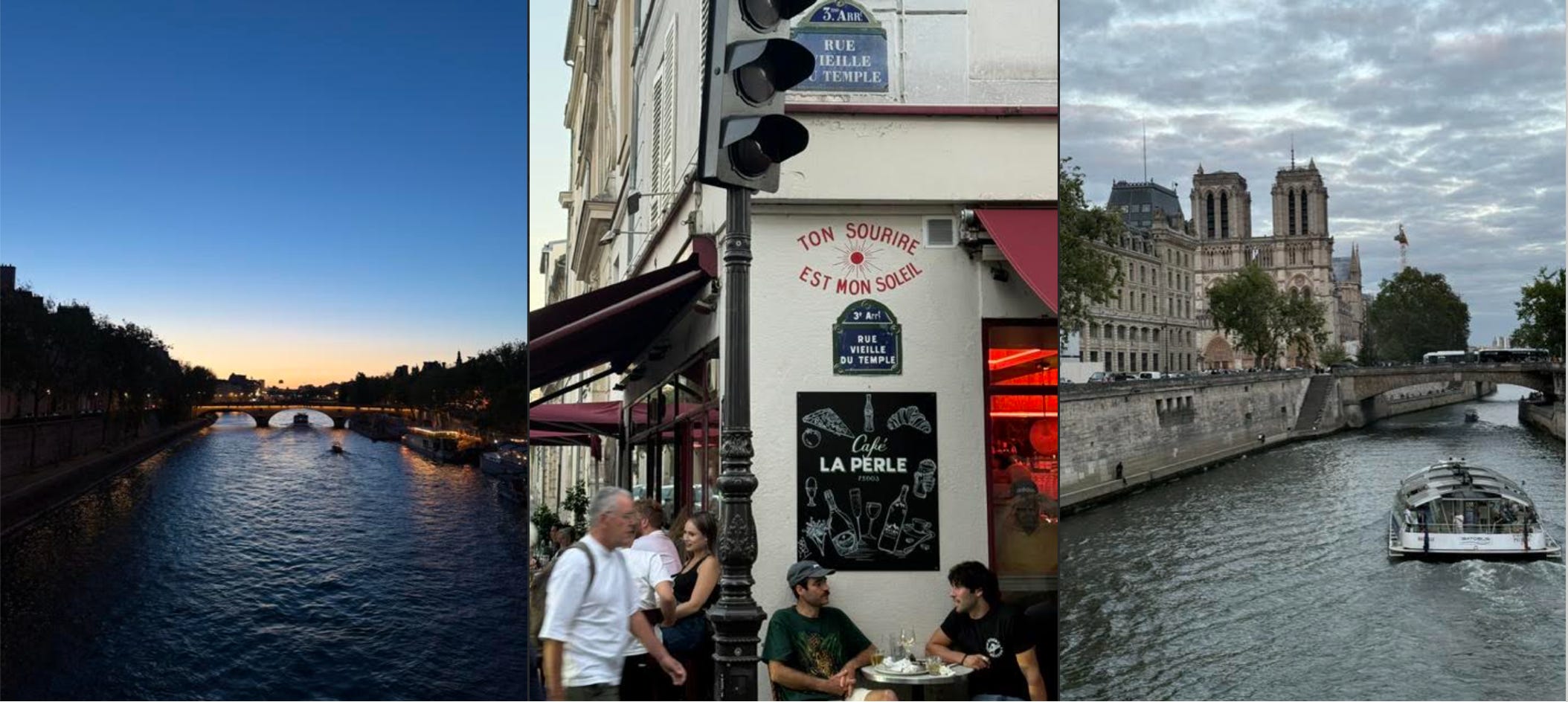
Yet France, for all its problems, remains a lovely place to visit. France, as those of us who live here or have visited know, is rich in art, culture, and history, with an incomparable food culture and a joie de vivre that are a part of everyday life. Even today, Parisians are biking along the Seine, shopping in the Marais, going to work, lunching in local bistros and cafés, and joining shopkeepers and municipal cleaning crews to clear the wreckage and devastation. Those of us outside the big cities are going about our lives and our business as usual. Most of the people who live here, whether French or expat or immigrant, just want to go about their lives peacefully, with smiles on their faces and a friendly bonjour on their lips. No protests or government policy will change that. Of course, none of that means turning a blind eye to what needs to change, and lord knows there are so many things that do need to change here. But there is still so much to enjoy, to appreciate, to live. The golden, sunny, crisp days of autumn are here, and I look forward to my next trip to Paris, even as I worry about next year’s elections and what that could lead to.
But for today, we’ve finally turned off our tv after three days. And we’re taking a pause from the world, looking to find comfort where we can, mostly in the cozy and the familiar. There’s a lot to be said for the French art of living, cooking for loved ones, gathering around the table for coffee and cake. The local bakeries and pastry shops have never been busier, or so it seems. So for today, let’s bake.
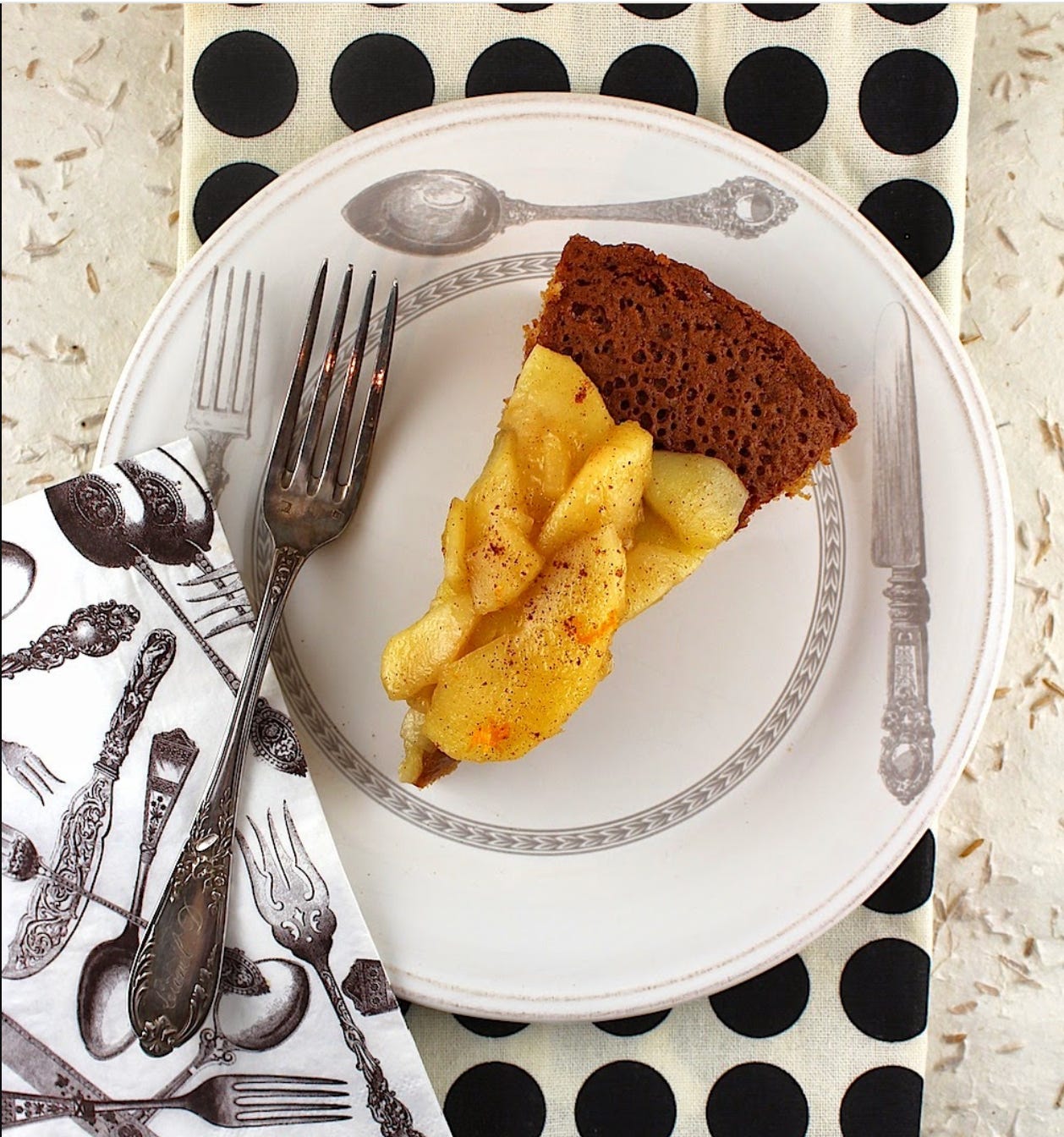
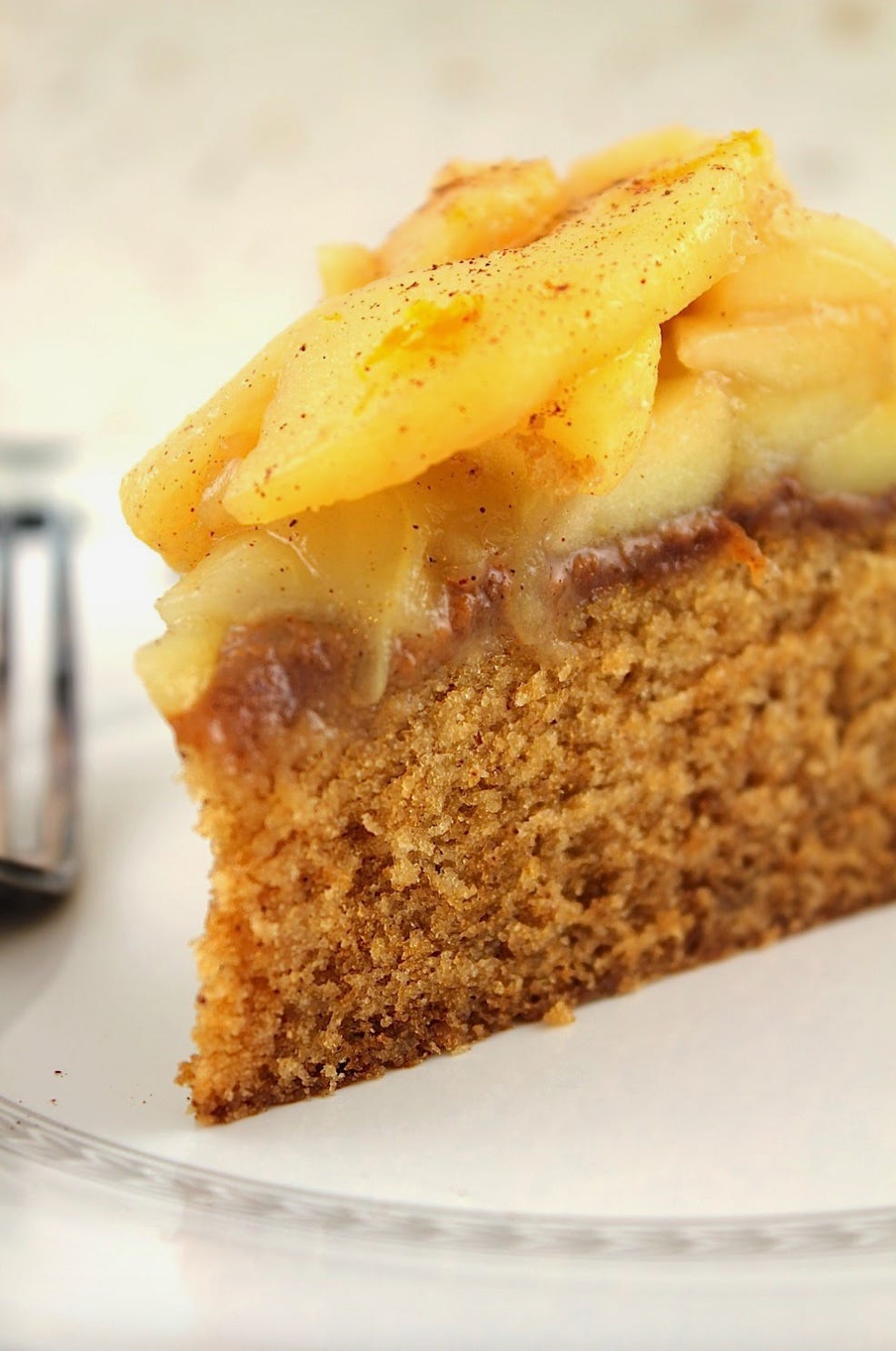
Autumn Honey Cake with Caramelized Apples
This honey cake is the perfect autumn treat. I love the topping made with apples, but you could do the same with pears, if you prefer.
For the cake :
1 ¾ cup (225 grams) flour
¾ teaspoon baking powder
½ teaspoon baking soda
½ teaspoon salt
Rounded ½ teaspoon ground cinnamon
2 large eggs, preferably at room temperature
½ cup (100 grams) granulated sugar
¼ cup (50 grams) packed brown sugar, light or dark
½ cup + 2 tablespoons (150 ml / 215 grams) very good quality liquid honey
½ cup (125 ml) milk
½ cup (125 ml) vegetable oil
¾ teaspoon vanilla
For the caramelized apples:
4 apples, about 1 ½ pounds (750 grams) – I use Royal Gala or Golden
1 ½ tablespoons (25 grams) unsalted butter
1 ½-2 tablespoons granulated brown sugar
1–2 tablespoons very good quality honey
2 tablespoons whiskey or brandy, optional
Preheat the oven to 350°F (180°C). Grease a 10-inch (25/26-cm) cake pan or springform pan with vegetable oil and line the bottom with a round of parchment. Dust the oiled sides of the pan with flour and tap out the excess.
Whisk the flour, baking powder, baking soda, salt, and cinnamon together.
In a separate bowl, whisk the honey, milk, vegetable oil, and vanilla together until the honey is dissolved.
Break the eggs into a large mixing bowl. Add the two sugars and beat on low speed until blended, scrape down the sides, and beat on high speed for about 2-3 minutes until thick. With the mixer on low, add the liquid ingredients and beat until blended. Beat in the dry ingredients in 2 or 3 additions, beating just until well blended and smooth.
Pour the batter in the prepared pan and bake in the preheated oven for about 50 minutes or until just set in the center. The cake should only just be beginning to pull away from the sides of the pan.
Remove from the oven and carefully run the blade of a sharp knife around the sides to loosen the cake from the pan. Allow the cake to cool in the pan for about 10 or 15 minutes before turning it out of the pan and allowing to finish cooling on a rack.
Prepare the Caramelized Apples:
Peel and core the apples and cut into thin slices. Melt the butter in a wide pan until sizzling and stir in the sugar. Stirring, cook until the sugar is well blended with the butter. Add the apple slices and toss and stir until the slices are all coated with butter/sugar. Cook over low or medium-low heat, stirring and tossing carefully for about 10 minutes or so until the apples are very tender, the sugar is completely dissolved, and the juices are thickened. If you want to cut the sweetness a bit, add the whiskey and cook until the alcohol has burned off and the juices are again thickened. Stir in the honey a tablespoon at a time, allowing it to melt into the apples and juices before tasting and adding more if desired.
Allow the apples to cool slightly to warm or tepid before mounding on top of the cake and serving. Adding whipped cream never hurt anybody.
Jamie Schler is an American food and culture writer — immersed in French culinary history — living in France where she owns a hotel, makes jam, and writes the Substack Life’s a Feast.
