


On Saturday, the United States and Israel launched a major military attack on Iran, striking targets across the country and signaling that the conflict may extend well beyond a single round of airstrikes. President Donald Trump justified the operation as necessary to eliminate threats posed by Tehran. Yet he went further, framing the conflict in openly political terms, saying that Iranians should seize their “only chance for generations” to determine their future at a moment when the regime will be most vulnerable and exposed.
With that line, Trump turned a strike into a public bet on political collapse — and might have painted himself into a corner.
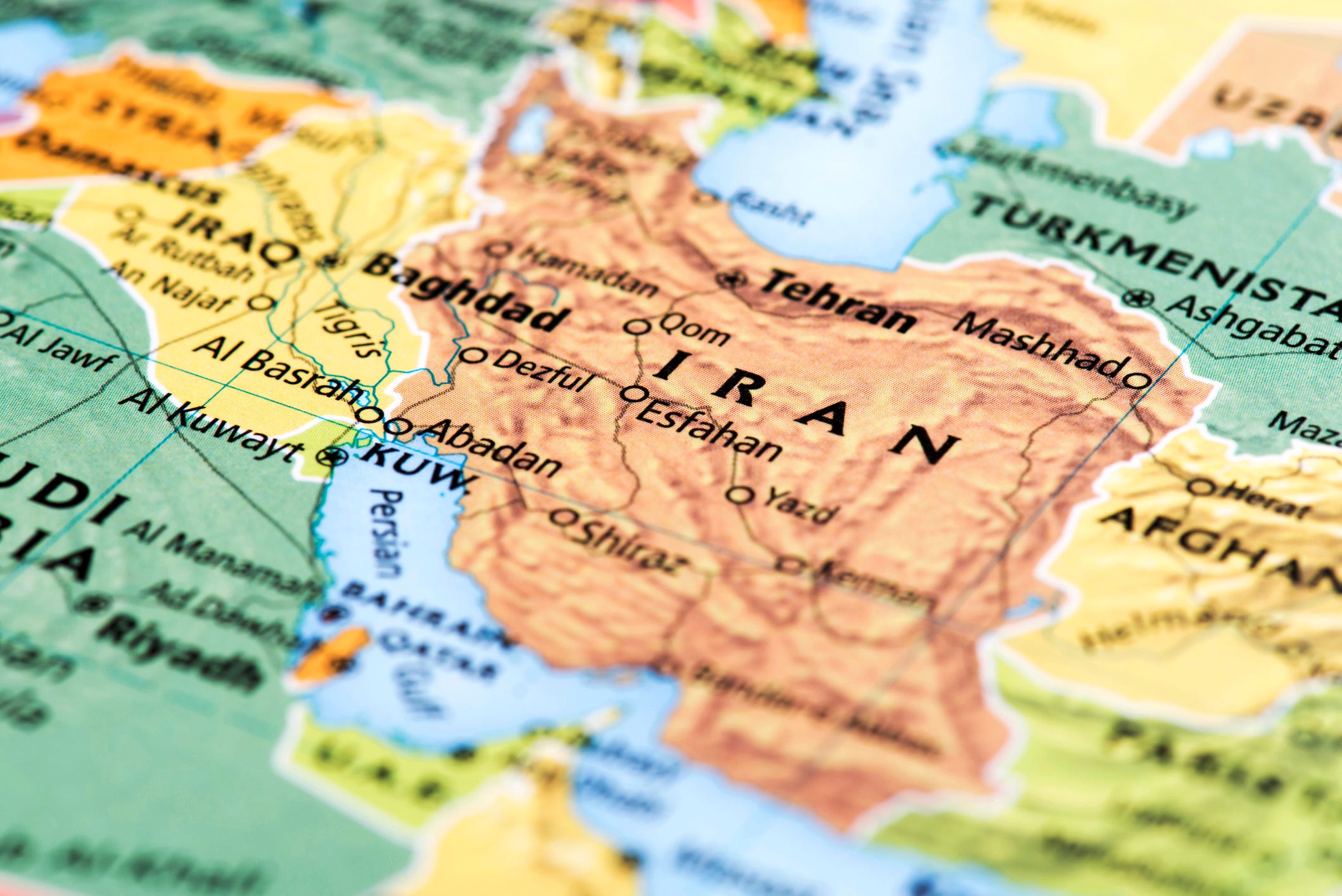
It is too soon to tell whether this becomes a series of strikes against security infrastructure — paired with selective decapitation of leadership, in the style of the strikes last June — or a protracted pummeling designed to crack the regime, regardless of near-term consequences for the civilian population. But Trump’s rhetoric on Saturday blurs the distinction.
Trump regularly papers over the mismatch between rhetoric and reality. After last year’s strikes, he declared the target “obliterated,” even as one U.S. intelligence agency cast doubt on that certainty. That kind of success-storytelling is easiest when the metric is physical damage — arcane, disputed, and quickly buried under the next headline. Regime change is not.
You can claim a facility is gone; you cannot credibly claim a political order has fallen when it hasn’t. It either happens or it doesn’t.
Once the operation is sold as a political opening, it will be judged less by what it destroys than by what political outcome follows. In that frame, even a “limited” operation begins to function like regime-change policy.
Regime change is not a military objective so much as a political wager. It assumes that force can fracture the state faster than the state can rally itself, that key security organs will hedge rather than fight, and that the population will seize a narrow opening and turn it into a durable transfer of power.
That is a seductive wager for Trump. But it is a bet that history rarely has paid out, especially when the outside power can break things faster than it can shape what follows.
States do not collapse on schedule, and when they do, the vacuum does not remain empty. It fills — sometimes with something better, often with something harder to predict, occasionally with something worse.
That is what makes Iran a dangerous place to gamble on collapse. Iran was already under extraordinary strain — economic pressure, elite distrust, and a regional environment less forgiving than in prior decades. A plausible strategy in such a moment is containment and coercion: tighten the vise while keeping off-ramps. Regime change does the opposite. It replaces off-ramps with a cliff edge and dares the regime to choose humiliation over survival. Once that wager is made, it is hard to keep the war bounded, because survival logic pushes both sides toward widening the fight.
Iran cannot match the United States aircraft for aircraft, so it will lean on what it has built for decades: missiles and drones against bases, harassment in maritime chokepoints, and proxy attacks designed to impose steady cost. A regime fighting for survival does not abandon those tools.
That is why the U.S. airstrike’s strategic meaning is less about destroyed facilities than about the escalation ladder that now exists in public view. When regime change is declared, each Iranian response will be interpreted as proof of Iranian malign intent rather than as predictable retaliation, making restraint politically harder on both sides.
Trump’s rhetoric has already made the political aftermath the measure of success — and that is the corner he has built for himself. In that sense, the administration has taken ownership of the aftermath. That is a familiar temptation in American war-making: confidence about how to start, vagueness about what political order is supposed to follow.
That is also why the president’s self-presentation as a “peace” leader does not fit the policy he is advertising. Peace requires a stopping point. Regime change, by definition, replaces it with a promise — one that cannot be cashed with airstrikes alone. If the administration’s argument is that removing Tehran’s rulers is the only route to lasting stability, it should be prepared to say what replaces them, who keeps order, and what — if anything — prevents this from widening while that transition unfolds.
Even if that bet succeeds, the successor landscape is unlikely to be neat. If it fails, it risks hardening Iranian resolve and widening the conflict while teaching every other adversary the same lesson: When Washington declares that you are illegitimate, accommodation becomes pointless and survival becomes the only strategy.
So, the question is not whether the opening strikes are working. It is whether the United States has defined victory in a war it is now framing around regime collapse — and whether the president has told the public what he is willing to own when Iran’s future does not cooperate with his script . . . again.
Brian O’Neill, a retired senior executive from the CIA and National Counterterrorism Center, is an instructor on strategic intelligence at Georgia Tech. His Safehouse Briefing Substack looks at what’s ahead in global security, geopolitics, and national strategy.

People don't seem to get it. We've been here before. In 1953, to be specific. Even if "we" achieve regime change, the new regime will live under the cloud of more western invaders. Sooner or later, it will be 1978 all over again. The only thing we will have achieved in the long term is to hold onto the title of the "Great Satan."
In the short term, though, it keeps the Epstein Files out of the headlines. So that's all good.
But that raises a serious question. Are we, as a nation, too stupid to survive?
It seems the orange dumpster is incredibly easy to manipulate by the money powers behind the throne, who can profit from this war. All they have to do is to appeal to his baser instincts and they get anything they want - more aircraft, more missiles, more anything bringing a lot of money into their - and his - pockets.