


Most Americans of a certain age can rattle off the names of a dozen or more Billy Joel songs, which we’ve enjoyed at weddings, on long car rides, and on karaoke nights for seemingly our entire lives. Many of us have had the lyrics “AIDS, crack, Bernie Goetz” ringing in our ears since 1989, and perhaps even learned about thalidomide thanks to “We Didn’t Start the Fire.”
Joel’s music has been embedded in American culture for so long, it’s easy to take it—and him—for granted. Despite a catalog of hits spanning three decades, the singer-songwriter has never enjoyed the critical praise lavished on many of his boomer contemporaries.
But the recent HBO documentary Billy Joel: And So It Goes makes the case that Joel is an underrated, astonishingly versatile musician whose genius has only become more apparent in the 32 years since he released his last pop album, River of Dreams.
Directed by Susan Lacy and Jessica Levin, the two-part film offers a deep dive into Joel’s life and work, illuminating his creative process while telling the personal stories behind songs like “Piano Man.”
Featuring extensive interviews with Joel, his family, and peers, And So It Goes presents an exhaustive chronicle of his sometimes-messy romantic life and his personal demons, including his ongoing battle with addiction. It also explores his painful family history: Joel, a musical savant and high school dropout, was raised in a working-class Jewish household on Long Island. His father abandoned the family, leaving Joel to be raised by his mother, who struggled with mental illness and alcoholism.
With a running time of nearly five hours, And So It Goes is nothing if not comprehensive. You may be wondering if there is really that much to learn about Billy Joel. It turns out there is.
“This is a guy who has been in the public eye and an important musical figure for over 50 years,” said Lacy, who admits she was not a hardcore Joel fan before embarking on the project. “For me, this film has been a journey of discovering an artist who I didn't really know, except for the top-tier hits.”
As Lacy began to listen to his music in a concentrated way, she came to understand “the degree to which it is totally autobiographical,” she said. “It’s like a road map of his life.”
By contrast, Levin had grown up listening to Joel. But she was unaware that he was so influenced by classical music. (He released a classical music album, Fantasies & Delusions, in 1991.)
“You just don't think that the guy who wrote ‘Uptown Girl’ is actually an incredibly learned classical musician and somebody who knows a lot about history and is an avid reader—a deeply intellectual guy,” Levin said.
She and Lacy scored the film using his music, including some of his classical recordings. Out of 121 songs in Joel’s catalog, 110 are featured in And So It Goes. “Because his music has so much pathos and emotion in it, it really worked well as an underscore to the film,” Levin said.
Then there’s Joel himself, who sat with the filmmakers for 10 in-depth interviews over the course of about two years. Though he did not have control over the film and did not see it until it was complete, he was open and forthcoming.
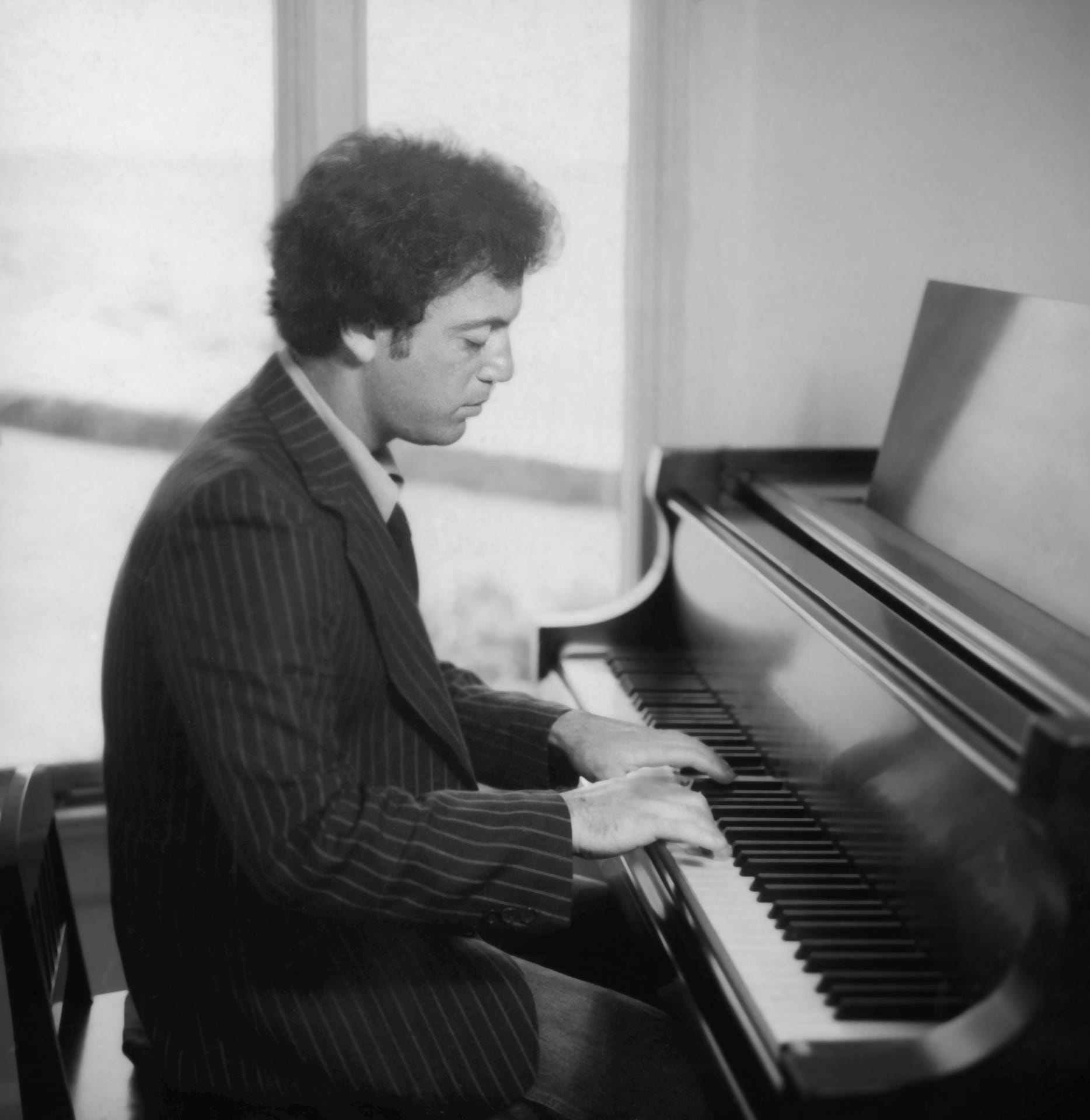
“I asked Billy at the very outset if there was anything that he didn’t want to talk about, and he said, ‘No,’” recalled Lacy. She decided that Joel should always be seated at the piano during their interview sessions. “That’s where he is most comfortable. The piano is almost an extension of him.”
In early conversations, she focused on the things they had in common, including a love of classical music and family connections to the Holocaust. “Because of that, he realized that this was a serious enterprise. We weren’t looking for sound bites. We were really looking for a deep understanding of his craft,” Lacy said.
One of the emerging themes in the documentary is Joel’s estranged relationship with his father, Howard Joel, a thwarted classical musician who had no contact with his son for years. When Joel was in his 20s, he reconnected with Howard, who was living in Austria with a new wife and young son (the experience inspired the song “Vienna”). The elder Joel was born in Germany but fled the Nazi regime as a child. He later fought with the U.S. Army and helped liberate Dachau—information Joel only learned as an adult.
Lacy said Joel wrote to her after watching the film, calling it an “epiphany.”
“He hadn’t realized how much of his life had been about trying to realize the broken dreams of his father,” she said. “For a guy who is so autobiographical, I don’t think he’d ever stepped back and looked at his life as a whole.”
And So It Goes also sheds light on another formative relationship in Joel’s life: his first marriage to Elizabeth Weber, who served as his manager during the breakthrough years of his career and inspired some of his most familiar songs, including “She’s Always a Woman” and “You May Be Right.”
Weber participated in the film and arguably becomes its breakout star, but she was not an easy get. “She has spent 40 years not mentioning Billy Joel’s name,” said Lacy, who was nevertheless determined to include her story. “She had a great deal to do with making Billy Joel Billy Joel.” After numerous dinners and long phone conversations, she decided to come on board.
Ex-wives Katie Lee and Christie Brinkley also sat for interviews, with the latter providing access to home movies and photographs from the ‘80s and ‘90s. Alexis Roderick, who married Joel in 2015 and has two young children with him, also appears near the end of the documentary.
“There are a series of very strong women that have been a part of Billy's life, starting with his mother, who was his champion, but was a super complex woman,” Levin said. “He trusted two women to tell his story. I think it says a lot about Billy that women have been such a cornerstone of his life.”
Joel’s continued ubiquity is especially impressive when you consider that, after churning out a dozen albums between 1971 and 1993, he hasn’t released new pop music since Bill Clinton’s first term in the White House. He has continued to perform, completing a 10-year residency at Madison Square Garden.
As Joel says in the film, “I was tired of the tyranny of the rhyme.”
Meredith Blake is the culture columnist for The Contrarian