


If you have been following Latin American politics these past few weeks, much of the reporting would have pointed you toward the presidential election in Brazil — the world’s fourth-largest democracy. In the first round earlier this month, far-right candidate Flávio Bolsonaro finished ahead of President Luiz Inácio Lula da Silva, secured endorsements from defeated conservative candidates, and emerged as the favorite in several regional analysts’ assessments.
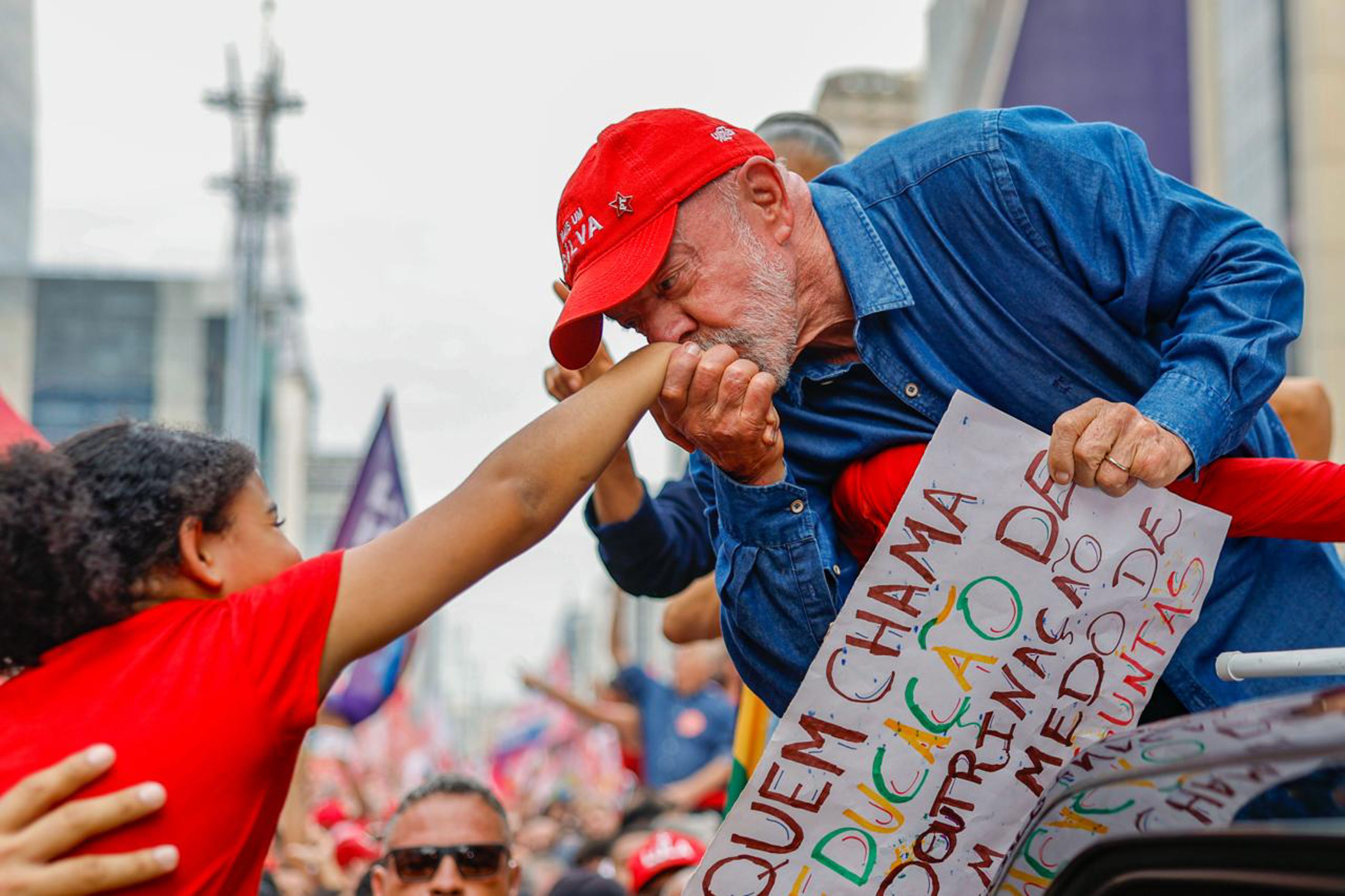
Instead, Lula defeated Bolsonaro on Sunday, winning a fourth term. Like his father, Jair Bolsonaro, did after losing to Lula in 2022, Flávio Bolsonaro is refusing to accept defeat and is demanding that the election be annulled.
Lula’s victory offers no guarantee of better days for Brazilians. For many voters, he remained an imperfect choice, and he now faces mounting public debt, high borrowing costs, and millions of households behind on payments, with a hostile Congress likely to constrain his economic agenda.
But Lula’s victory matters well beyond Brazil. The result and the effort to overturn it have implications for U.S. President Donald Trump’s regional ambitions, American interference in other countries’ politics, and the challenges that can persist after voters have made their choice.
Here are five takeaways:
Trump’s ambition to dominate the Americas through vassals has encountered a substantial obstacle.
Lula’s victory breaks a succession of seven right-wing presidential wins across Latin America over the past 18 months. Brazil’s voters have kept the region’s largest economy under a president willing to resist Washington, even as neighboring countries have elected leaders more receptive to Trump.
The defeat denies Trump a prospective partner whose cooperation would have advanced his security agenda and access to strategic resources. Washington can continue applying pressure, but it must contend with an independently governed Brazil whose economic and diplomatic weight limit how much control of the hemisphere a collection of friendly governments can deliver.
American interference was already underway. Recognition of the result is the next test.
Trump had invested in the Bolsonaro family’s return to power. After former president Jair Bolsonaro faced trial for plotting to overturn his defeat by Lula in the 2022 election, Trump imposed tariffs on Brazilian goods and sanctions on the judge overseeing the case, calling the prosecution a “witch hunt” and demanding that it end.
After Bolsonaro’s conviction led to 27 years imprisonment in November 2025, officials in the State Department worked to bolster his son’s candidacy. These efforts included promoting punitive measures intended to weaken Lula and restore the family to power.
Before the runoff, foreign ambassadors discussed recognizing the winner quickly, concerned that Trump might challenge a narrow Lula victory or prematurely declare Bolsonaro the winner. Washington’s response to Lula’s election could determine whether Bolsonaro’s challenge remains a domestic political dispute or gains the legitimacy and momentum that American backing would provide.
Washington has lost a prospective partner in escalating pressure on Cuba.
Two days before Brazil voted, Trump again raised military intervention in Cuba, suggesting that warships returning from Iran could stop near the island. His administration’s oil blockade has already intensified Cuba’s economic distress.
Lula has condemned the blockade and provided humanitarian assistance, but his government has stopped short of supplying Cuba with oil. In his speech to the United Nations in September, he said that Cuba’s 10 million people were suffering “collective punishment” through an illegal economic embargo and energy siege. He has also explicitly rejected military intervention against the island.
Lula’s reelection preserves a consequential diplomatic opponent of escalation against Cuba. It does not guarantee Havana either protection from American military action or an alternative fuel supply.
Brazil’s minerals will remain harder for Washington to pull away from China.
Lula has shown little interest in allowing Brazil’s mineral wealth to become part of an American containment strategy. His government has instead sought investment from multiple partners while pressing for more processing and industrial development to remain in Brazil.
Bolsonaro’s victory would not have severed Brazil’s economic relationship with China, which already has substantial investments in the country’s mining sector. But it would have given Trump a more receptive partner as Washington tries to build strategic supply chains less dependent on China. Lula’s reelection makes that considerably harder.
The limits of election forecasts are not unique to the United States.
Bolsonaro entered the runoff with more than a narrow first-round lead. He had won roughly 47 percent of the vote to Lula’s 45 percent, while conservative parties had made substantial gains in Congress. Several defeated conservative presidential candidates then endorsed him, strengthening expectations that he could consolidate their voters behind his candidacy.
Some regional analysts interpreted the first-round results as making Bolsonaro the favorite, with his lead and the right’s congressional gains pointing toward another conservative victory. Lula appeared to face both an unfavorable political climate and a shrinking pool of voters available to reverse his deficit.
In the lead-up to Sunday’s election, Lula’s campaign concentrated on reaching supporters who had stayed home in the first round. Roughly 3 million more Brazilians voted in the runoff. Lula’s comeback exposed the uncertainty behind the projections, particularly their assumptions about who would turn out.
Brazil’s election did not stop the region’s rightward shift, but it did show its limits. Trump may have gained more willing partners across Latin America, but the hemisphere’s largest country remains outside that alignment — large enough to complicate what might otherwise have looked like a regional realignment.
Venezuela may offer another test. After the United States removed Nicolás Maduro in January, Washington backed interim president Delcy Rodríguez and a gradual transition that has yet to produce a presidential election date. Nobel Peace Prize winner and opposition leader María Corina Machado’s return to Venezuela on Sunday, after nearly a year abroad, puts new pressure on that arrangement. She is demanding elections and rebuilding an opposition movement that Washington had largely bypassed in favor of working with Rodríguez.
Whether Machado ultimately accepts Trump’s preference for a slower transition under Rodríguez or forces a faster move toward elections remains uncertain. But her return underscores the same point Brazil’s election just made: American leverage in Latin America can shape political outcomes without fully controlling them.
Brian O’Neill, a retired senior executive from the CIA and National Counterterrorism Center, is an instructor on strategic intelligence at Georgia Tech. His Safehouse Briefing Substack looks at what’s ahead in global security, geopolitics, and national strategy.

I appreciated this piece of the puzzle regarding an imbecile's arrogant attempt at controlling a continent and the Latino people whom he enjoys denigrating. I hope we can look back on all this as the hubris of an idiot, signifying nothing.