



In the previous two parts of this series, we discussed the JGG and Abrego Garcia cases and what they teach us about courts’ ability to compel the government to comply with court orders. The past two weeks have seen major developments in both cases: Kilmar Abrego Garcia was set free on Thursday, and a hearing was supposed to be held on Monday concerning potential criminal contempt in the JGG case, but it was stayed by the D.C. Circuit. Today, we unpack each of the developments that brought us to this point and explain them within the judicial framework for holding parties accountable that we previously discussed.
Abrego Garcia
In June, the parties stepped back from the constitutional brink when the government returned Abrego Garcia to the United States from the notorious CECOT prison in El Salvador after he was wrongly deported there. His return was purportedly to face U.S. criminal prosecution (Abrego Garcia vehemently denies these charges, and the court in his criminal case has found a “realistic likelihood” that the prosecution is vindictive and selective).
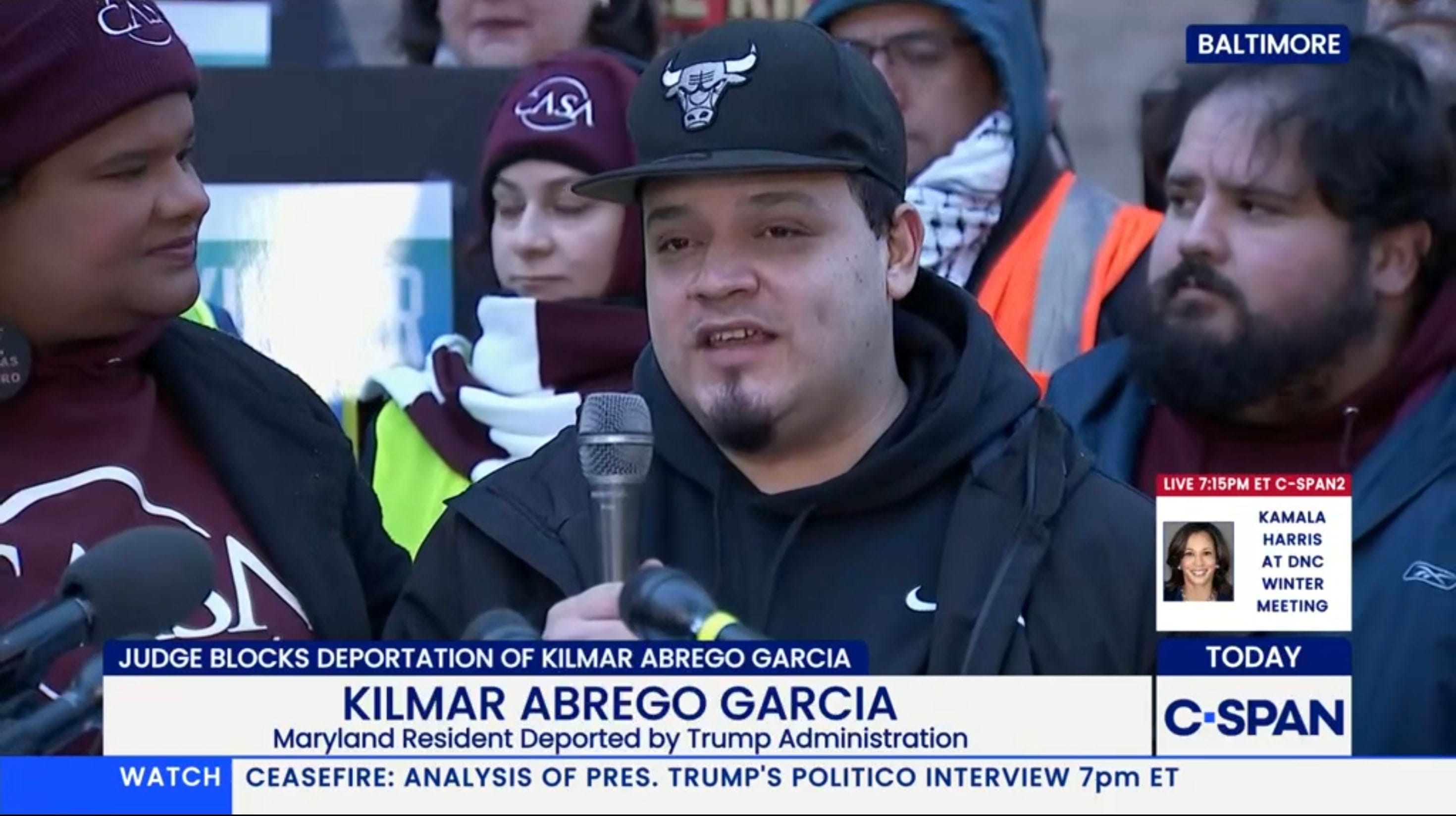
In July, the judge in Abrego Garcia’s criminal case granted his release on bail. The Department of Homeland Security smeared the judicial system and stated that Abrego Garcia “will never walk America’s streets again.” Shortly after his release in August, Immigration and Customs Enforcement detained Abrego Garcia at a mandatory ICE check-in in Maryland. In the ensuing months, Abrego Garcia remained in ICE custody as the government attempted to effect his removal to multiple different African countries to which he had no ties. The United States also rebuffed Abrego Garcia’s offer to depart the United States immediately for Costa Rica, which had agreed to take in Abrego Garcia as a refugee, and then misled the court about which countries were willing to accept Abrego Garcia.
On Thursday, Judge Paula Xinis, in a scathing opinion, ordered ICE to release Abrego Garcia from its custody immediately. Judge Xinis concluded that ICE had no basis to hold Abrego Garcia because no lawful order of removal against him existed. In other words: ICE had arrested Abrego Garcia so it could deport him, but it lacked the authority to deport him in the first place. Along the way, Judge Xinis took the government’s lawyers to task for producing unprepared witnesses or no witnesses at all, in contradiction of the court’s clear orders. On Friday, Abrego Garcia was released from federal custody. But the government tried one more fast one: The day of Abrego Garcia’s release, it had an executive branch immigration judge issue an order for his deportation. Judge Xinis made short order of that, issuing a temporary restraining order prohibiting ICE from rearresting Abrego Garcia.
The latest chapters of the Abrego Garcia saga offer several lessons about what courts, together with the public, can do to make sure the government follows the law.
The Power of Public Opinion
First, scrutiny in both the court of law and the court of public opinion can make even this government obey court orders. Although the government insisted it returned Abrego Garcia to the United States so he could face criminal charges, it is difficult to separate Abrego Garcia’s return from the legal and political firestorm surrounding his deportation. In the preceding months, Judge Xinis had ordered extensive discovery into the government’s compliance with her orders, considered issuing Rule 11 sanctions, and repeatedly chastised government lawyers for misleading the court and failing to comply with its orders. This helped drive the narrative in the court of public opinion, where Abrego Garcia had become a political albatross to the Trump administration: An April poll by the New York Times and Siena, for example, showed that voters disapproved of the administration’s handling of Abrego Garcia’s case by a margin of 21 points (Trump’s approval rating in that same poll was underwater by a margin of 12).
Counsel Counts
Second, the quality of lawyering in these cases matters. Throughout Abrego Garcia’s civil case in Maryland, government lawyers repeatedly showed up to hearings without information on key issues in the case. They also put forward witnesses that were woefully unprepared. For instance, the government put forward a witness to testify that Costa Rica would not accept Abrego Garcia, a crucial piece in the government’s case to remove him to another country. But the witness was unable to answer any of the questions posed by the government and stated that he had taken only five minutes to prepare for his testimony. Judge Xinis noted that the witness’s “lack of knowledge was planned and purposeful.” If that is correct, this was a confusing strategy by the government, to say the least: Putting forward an unprepared witness undermines your factual case, damages your credibility, and enrages the district court judge, three things litigators try to avoid at all costs. Whatever the government’s intentions, this testimony (or lack thereof) led to Abrego Garcia’s release.
Power of the Bench
Third, even when the government brings itself into compliance with a court order, the court retains powers to punish parties and their counsel for misbehavior. Judge Xinis’s opinion included a footnote noting that a motion for sanctions remains pending in Abrego Garcia’s case and that she will revisit the government’s “entire course of conduct” in assessing that motion. That motion also requests the court impose fines based on a finding of civil contempt.
The JGG Case
That tortured procedural tale proves that enforcing court orders and punishing noncompliance is not easy–a conclusion reinforced by the latest developments in JGG.
This is the case in which the government continued to fly a group of Venezuelan nationals to a Salvadoran prison despite a court order that the government halt such removals. In response, D.C. federal judge James Boasberg threatened criminal contempt for the people who acted in defiance of his order. As discussed in our previous installment, this requires the court to gather all the relevant facts. After months of stonewalling by the government and appeals over the court’s contempt determination, factfinding apparently was ready to move forward in earnest. Last Monday, after the court forced some limited but important information out of the government, the court ordered that the U.S. produce the deputy assistant attorney general for testimony. The court also asked to hear testimony from Erez Reuveni, a former DOJ litigator who filed a whistleblower complaint documenting the Justice Department’s refusal to comply with court orders, including in the JGG case.
The prospect that we might finally hear from witnesses in open court about whether there was contempt in this case proved too good to be true. The government immediately sought appellate intervention to halt the order setting a hearing and obtained a stay from the D.C. Circuit. Now, briefing has been set for the end of December and into early January about whether Judge Boasberg has the power to take these steps. It remains to be seen if the D.C. Circuit will schedule a hearing after the briefs come in or get right to drafting an opinion, but even if it decides the case on the papers alone, we are facing a month or more of additional delay. We will keep an eye on that appeal and any district court proceedings that follow.
The Abrego Garcia proceedings remind us that the rule of law is fragile but that courts and the public can still hold it together through constant vigilance. JGG offers some prospect of doing the same. It is paused for the moment, but even the partial contempt proceedings have been striking, commanded headlines, and elicited important information. These two cases are not over, nor are the countless lawsuits against this administration. It takes sustained public scrutiny, coupled with judicial power, to ensure that the government respects court orders in these cases.
Norman Eisen is the Publisher of The Contrarian
Spencer Klein is a voting rights attorney and Senior Legal Advisor at State Democracy Defenders Fund. Make sure to stay connected with Spencer on X and Bluesky
I give myself lets of belly laughs when I think about convicted felon Drowsy Don, homeland security barbie and the CBP bovine, as well as several others,throwing themselves on the floor doing their little two-year-old temper tantrums, when these very brave judges throw another wrench into their wildest wet dreams of the removal of Kilmar Abrego Garcia from the United States.
It's like they are making their last stand against this poor guy. I truly hope Kilmar gets to stay and gets to thumb his nose at these cruel idiots at least until January 20, 2029.
Obey is not in his vocabulary. He wants to push the envelope as far as he can. As long as he can get away with noncompliance he will keep on.