



In 1995, Michael Moore released Canadian Bacon, a political satire about an American president with slumping approval ratings who decides to wage a senseless cold war against Canada. “Surrender pronto,” warns the embattled president, played by Alan Alda, “or we’ll level Toronto!” The central gag of the movie, which featured beloved Canadian John Candy in his final onscreen role, is that turning Canada — a chronically polite and deferential country — into the enemy is a fundamentally desperate and absurd thing to do.
Canadian Bacon was Moore’s first — and thus far only — attempt at making a film that wasn’t a documentary, and he said it was inspired by the unquestioning patriotism generated by the first Gulf War. Ostensibly a work of fiction, it turned out to be alarmingly prescient. Thirty years after Canadian Bacon was briefly released in theaters, an American president with slumping approval ratings has decided to pick a pointless fight with Canada.
But this time around, it’s not so funny — and not even Moore could have imagined retaliatory antics as stupid as renaming Lake Ontario or posting A.I. slop videos of gun-toting geese. Donald Trump’s needless trade war has destabilized one of our closest and longest-standing alliances and pissed off the vast majority of our 41 million, famously even-keeled neighbors to the north.
According to recent polls, nearly three-quarters of Canadians support Prime Minister Mark Carney’s decision to bow out of a trade deal with the U.S. Trump’s gambit reeks of desperation, and seems quite likely to backfire in border states like Michigan and Maine that do extensive business with Canada (and have important Senate races this fall).
As David Eby, the premier of British Columbia, recently told reporters, “If you’re picking fights with Canadians, then you don’t have a friend in the world.”
The talks, which collapsed in late August, focused on tangible products like steel, lumber, household appliances, agricultural machinery, and even hockey sticks. But negotiators also clashed over issues of culture — specifically, Canadian laws that require American streaming giants like Netflix to give prominent placement to French-language content and are designed to serve the country’s large Francophone population.
Trump has outrageously referred to Canada as “the 51st state” and claimed that the country has been “ripping off” the U.S. for years. But the opposite is true, particularly on the cultural front. Despite having a population of just 41 million people, Canada has quietly been punching above its weight for at least a half-century, producing brilliant musicians, actors, authors, filmmakers, game show hosts, and comedians — seriously, so many comedians — who have enriched American life in untold ways (and whom Americans are all too happy to claim as our own). No tariff could ever quantify the value of Margaret Atwood’s novels, Celine Dion’s voice, the CBC’s adaptation of Anne of Green Gables, or Catherine O’Hara’s delivery of the words “dazzling peach crabapple to his riesling rioja” on Schitt’s Creek.
A few years ago, Dave Grohl starred in a Super Bowl ad that paid tribute to Canada’s many contributions to the world. And all the way back in 1986, the country’s quiet yet pervasive influence on American pop culture was the subject of a mockumentary called The Canadian Conspiracy. The film jokingly alleged that performers like Margot Kidder and William Shatner were covert operatives who “had been trained by the Canadian government to infiltrate and take over the American entertainment industry.”
The spoof was an ironic celebration of Canada’s outsized presence in Hollywood. But it’s undeniable that Canadians — some working right out in the open! — have powerfully shaped what we think of quintessential American institutions. Saturday Night Live, which has satirized American politics and culture for 50 years, was created by a wunderkind from Toronto named Lorne Michaels, a man who would go on to launch the careers of comedy superstars like Chris Rock and Kristen Wiig, and produce dozens of shows and movies like Portlandia, Late Night With Seth Meyers, 30 Rock, and Wayne’s World. Not bad for a guy who grew up longing for the American candy bars he saw advertised on TV.
Michaels is just one of the many comedy greats who grew up in Canada, an illustrious group that also includes John Candy, Phil Hartman, Seth Rogen, Samantha Bee, and the entire cast of Kids in the Hall.
Many people, including Margaret Atwood herself, have tried to figure out why the country has produced such a disproportionate number of comedy greats. According to biographer Susan Morrison, Michaels frequently describes comedy as a form of “polite hostility” (a definition coined by Mel Brooks). “You’re trying to get a rise out of someone or critique something, but you’re doing it in a polite way,” Morrison said last year. “I think he would say that is a very Canadian thing.”
Cities like Vancouver and Toronto have long been hubs for TV and film production, earning the nickname “Hollywood North.” Thanks to generous government incentives, a favorable exchange rate, and lower labor costs, American studios can make blockbuster fare (think Deadpool and The Last of Us) in Canada for far less money than they could at home. Quebec’s French-language film industry, which serves a linguistic minority within Canada, has produced world-class filmmaking talent like Denis Villeneuve, the Oscar-nominated director of the Dune trilogy, and the late Jean-Marc Vallée, the Emmy-winning director of Big Little Lies and Dallas Buyers Club.
Canada has continued to share its cultural riches with the United States despite Trump’s increasingly hostile behavior. The most talked-about TV show of the last year is Heated Rivalry, a drama about the illicit love affair between rival professional hockey players, Ilya Rozanov and Shane Hollander (played by Connor Storrie and Hudson Williams). Originally made for the niche Canadian streaming service Crave and partially funded by Canadian taxpayers, the low-budget series was picked up by HBO Max and, propelled by word of mouth, became a full-blown cultural phenomenon. The unknown leads soon after hosted SNL and starred in splashy ad campaigns.
The series is based on books by Rachel Reid, a former stay-at-home mom from Nova Scotia who loved hockey but hated the corrosive misogyny that permeated her country’s most popular sport. Both sweet and steamy, Heated Rivalry is also unabashedly Canadian, featuring jokes about screeching loons, characters who casually speak French, and a climactic getaway to cottage country. Writer-director Jacob Tierney, a child actor turned TV auteur, resisted the temptation to make the series with an American streaming network because he didn’t want to tone down the sex scenes or dilute the story’s Canadian feel. Heated Rivalry’s cultural specificity somehow made its themes resonate more broadly. The series sparked Hollywood interest in creators from the Great White North, and even spawned a tourism boom in Canada — particularly to Muskoka, where the pivotal cottage episode was filmed.
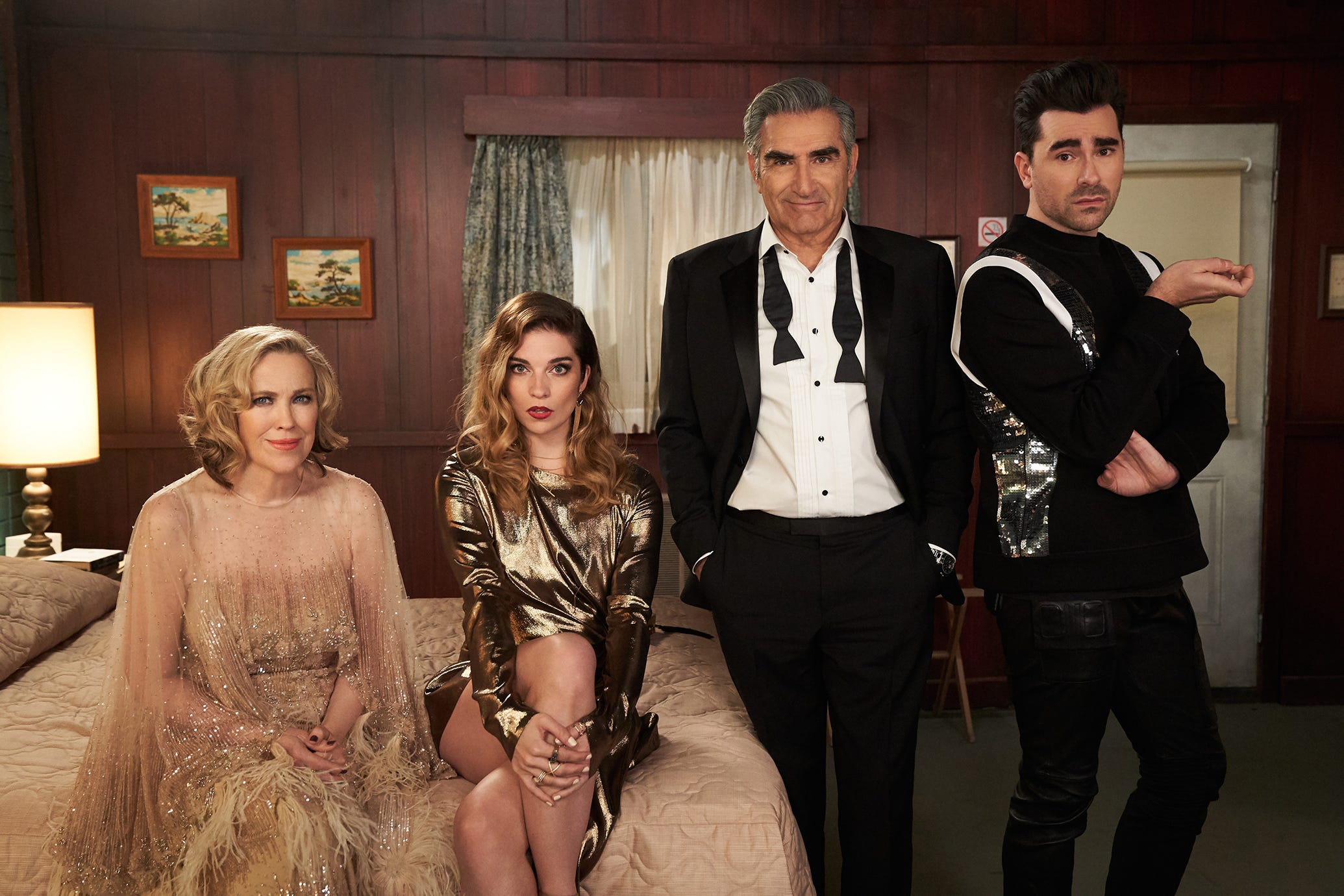
Heated Rivalry is hardly the first Canadian series to break big with American audiences. Schitt’s Creek was created by Dan and Eugene Levy — Canadian showbiz royalty — and followed a once-wealthy family forced to live in a seedy small-town motel when their fortune goes bust. After a slow start on cable, it blew up in the U.S. once it started streaming on Netflix, and swept the Emmy Awards in its final season. It’s the kind of show that American TV used to do very well — a smart, comforting, highly rewatchable family sitcom.
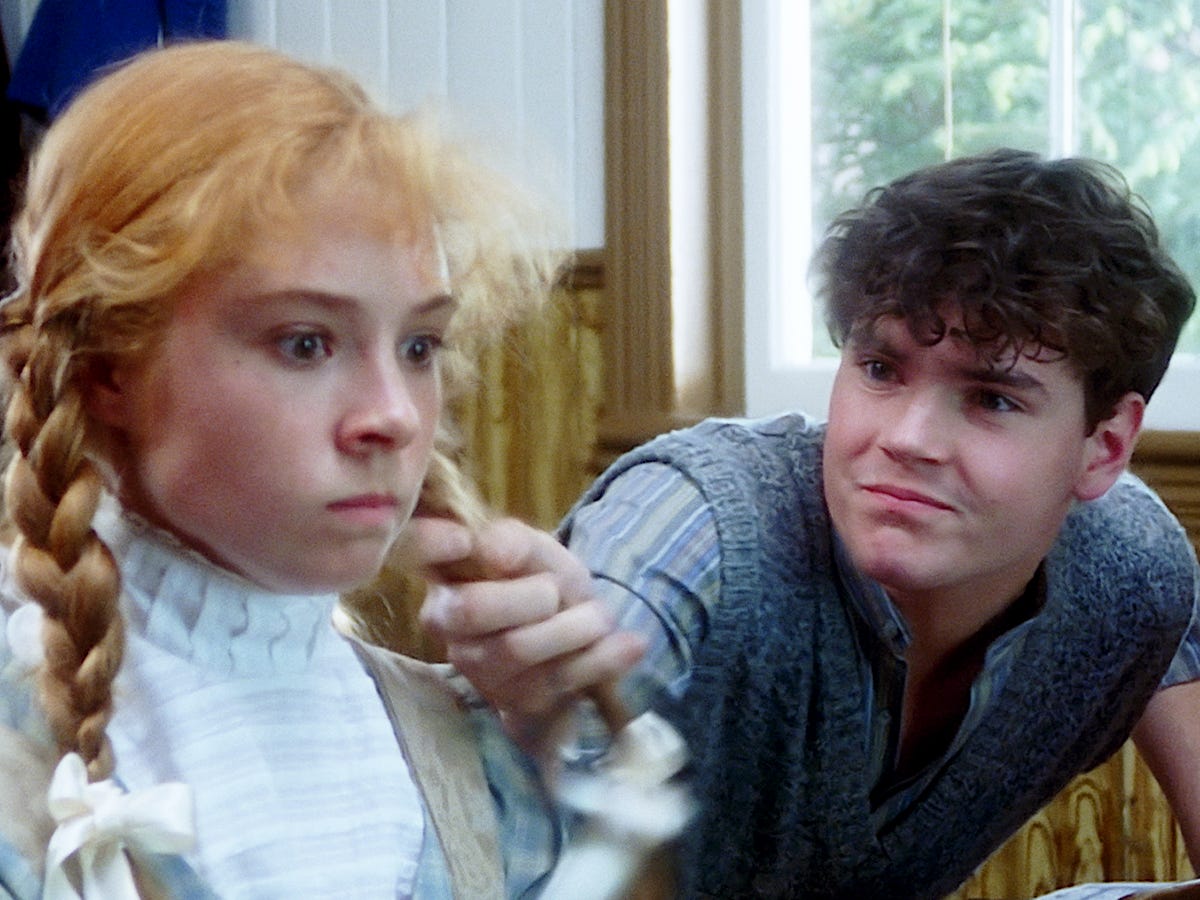
My own love affair with Canadian culture began with the Anne of Green Gables TV series, which was produced by the CBC and was once a staple on PBS. It spurred me and countless others to read the books by L.M. Montgomery and dream of moving to Prince Edward Island (at least during the summer). The popular series led to a spinoff called Avonlea, which starred a young Sarah Polley, who went on to become a visionary feminist filmmaker. (Somehow even the child stars in Canada are well-adjusted.)
Heated Rivalry came along at a particularly vulnerable moment when people, especially a large swath of Americans appalled by the cruelty of the Trump era, were hungry for a story that was joyful and inclusive (and yes, full of gorgeous men with no clothes on). We all wanted to go to the cottage, at least metaphorically. The series became a way for Canada, a country averse to grandstanding, to project soft power on the global stage.
At a conference for the Canadian Media Producers Association in January, Prime Minister Mark Carney posed with Hudson Williams on the red carpet and summed up what made Heated Rivalry — and its country of origin — so appealing in this particular moment.
Shane and Ilya are “two young men who are terrified of being their fullest selves, and we live in an increasingly dangerous, divided and intolerant world,” he said. “A fundamental Canadian value is that people should be able to be whoever they want to be, to love whoever they want to love.”
And, it would seem, to produce art that transcends petty, one-sided trade disputes.
Meredith Blake is the culture columnist for The Contrarian.
Celine Dion is herself reason to champion Canada. Anyone who watched the Amazon documentary where she courageously allowed her battle against Stiff Person Syndrome would marvel at her attempts to sing again. I almost cried when I saw her performance at the Paris Olympics
Such an excellent essay, Meredith. My daughter took 2 degrees at McGill, & i cherished each visit to Montreal. Thank you for detailing these artistic superlatives & celebrating them.