


On Monday, Nov. 10, the U.S. Department of Health and Human Services (HHS) announced that the Food and Drug Administration (FDA) would eliminate the “boxed labeling” requirement for menopause hormone treatments.
For the record: Yes, I welcome this reform.
The “black box warning,” as it is commonly called, is the most stringent FDA classification and applies to drugs that can cause deadly or life-altering reactions. It got slapped on menopausal hormonal prescriptions in 2003 as part of the fallout over the Women’s Health Initiative (WHI) press conference linking estrogen to an increased risk of breast cancer.
Medical experts across the board, from leading associations like the Menopause Society and American College of Obstetrician and Gynecologists, support removal of the black box. A coalition of patient and policy advocates, not Big Pharma or political insiders, recently joined the fight. As someone directly in the trenches, I know firsthand that this is neither a new-fangled nor MAHA-driven demand.
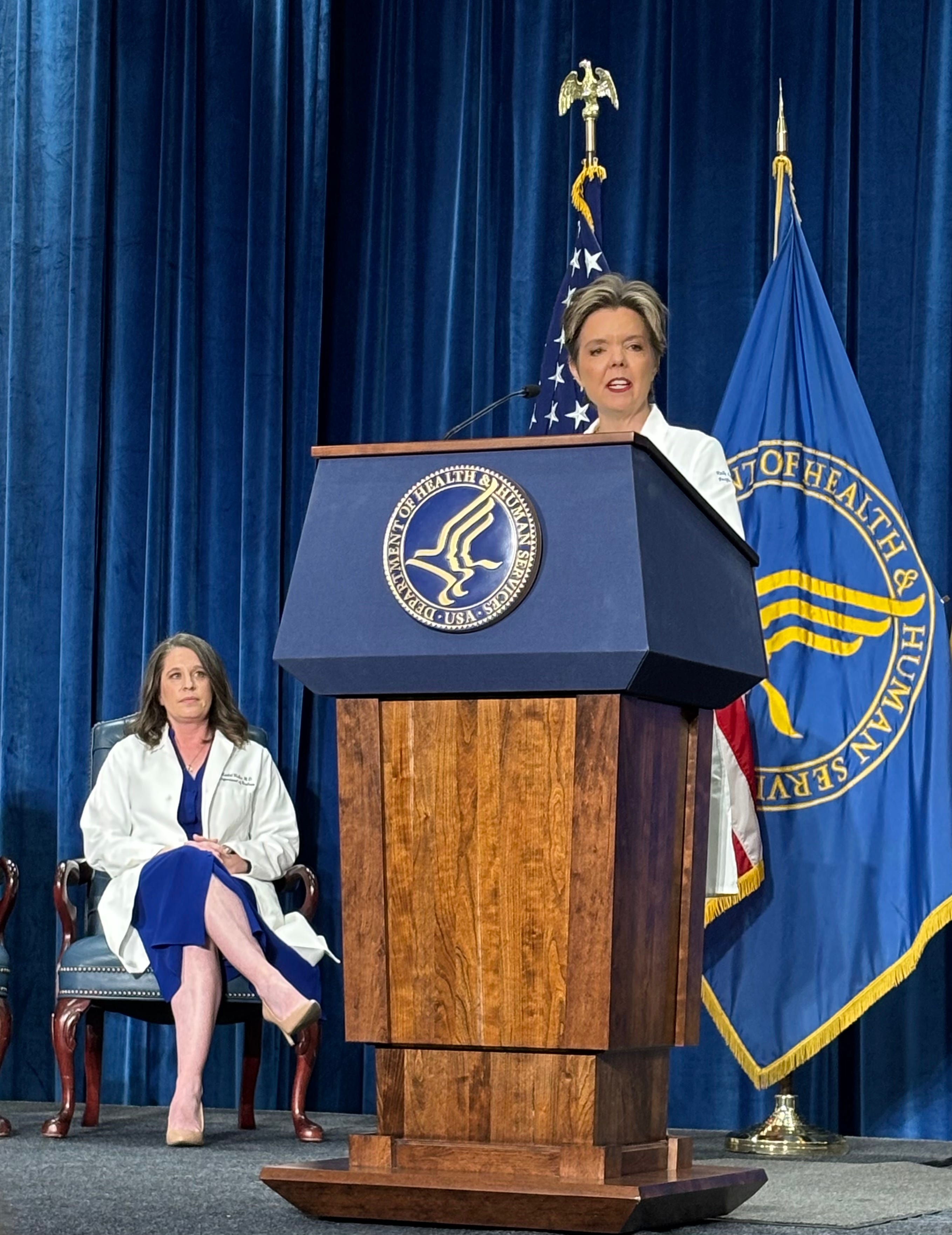
For over two decades, the FDA refused to take action in response to demands for change. Not so much a partisan issue, menopause was mostly ignored by the establishment. But Health and Human Services Secretary Robert F. Kennedy Jr. and FDA Commissioner Marty Makary have heralded what amounts to an honest-to-goodness win for women’s health.
Announced at a packed press conference and with a corresponding Wall Street Journal op-ed, Makary outlined the agency’s decision-making process. In July, the FDA convened its first-ever publicly broadcast roundtable discussion on menopausal hormone treatments. A dozen physicians presented (including several women who were later critiqued in the press for having a robust social media presence or for the rates they charge patients, which smacked of utter sexism to me). The panel was followed by a month-long public comments period in September. Ultimately, the agency’s internal team made the determination; this week, three of its members published an article in the Journal of the American Medical Association detailing the supporting data.
Readers may recall I’ve written multiple times for The Contrarian about equitable menopause policy (my primary advocacy beat). And, indeed, it is an absolutely bizarre experience to now voice support for an outcome issued by any federal player— especially at this moment in time, especially when these same agencies directly impact the fate of so many other women’s health issues.
Of course, I know full well the danger they pose for maternal health and reproductive rights. Both Kennedy and Makary responded to bogus demands from Republican attorneys general to undertake a review of mifepristone, despite its long-proven safety record. They’ve engaged with false claims linking Tylenol to autism in a way that has driven a “mix of blatant misogyny, mom-shaming, and fear-mongering” (my own words). The FDA appears poised to regulate use of antidepressants by pregnant women against the recommendations of experts.
The FDA’s trust gap goes well beyond its current leadership, as the New York Times recently reported: “Americans have always been ambivalent about public health in general and the American regulatory project in particular. We want protection from bad food and bad medicine and other unsafe products, but we also want to draw the line between safe and unsafe for ourselves and to redraw it whenever we see fit. The FDA has always reflected this tension.”
So, what does that mean for how to deliver good news about menopause care in the here and now? My phone blew up with queries from otherwise well-versed friends asking what to make of the FDA announcement about menopause. Were they missing a smoking gun? Could this be a trick, a ruse, a distraction? Here is my response.
First, trust the physicians, the researchers, and the scientists who have advocated for decades against the black box on estrogen products—and who waged that fight regardless of which party held power.
Second, know that regulatory course correction is only half the battle. After two decades of fearmongering and misinformation, the challenge ahead entails helping the public understand what the labeling status change does (and doesn’t) mean. To be clear: Removal of the black box does not equate to no warnings. The FDA’s next step must be to provide appropriately revised language for labels, which will now be inside the box instead of emblazoned on the package.
Third, on behalf of my fellow physician advocates, be aware that all medications have side effects and risks, and hormone therapy is no exception. It is essential that your doctor assess the benefits and risks based on your personal medical history, label or otherwise.
And finally, try not to let politics muddle the message. Reversing the labeling requirement—and righting this 20+-year old wrong—is a bona fide win for all of us.
**********
And, on Tuesday, the day after eight Democratic senators voted to end the government shutdown that had dragged on for 40+ days in an effort to protect health care subsidies, the GOP showed its cruel hand once again: Republicans said they would demand stricter abortion restrictions to extend the subsidies. If this all reminds you of Charlie Brown trying to kick the ball that Lucy inevitably pulls away, it should. But unlike the Peanuts comic, it’s not funny. American lives—and reproductive health—are just another political football.
Jennifer Weiss-Wolf is executive director of the Birnbaum Women’s Leadership Center at NYU School of Law. She also leads strategy and partnerships at Ms. Magazine.

Since this administration has decided that that women and doctors can now discuss the merits of HRT,perhaps it will eventually acknowledge that women and their physicians can also decide for themselves on cobtraception and abortion.
NOT HOLDING MY BREATH
I'd like to know where Dr. Makary got his statistic that in the past 22 years, 50 million women who could have benefited from HRT were denied it, or talked out of it. That sounds like every single American woman who went through menopause in that time, including those, like me, who had estrogen-sensitive breast cancer and had to take medication to suppress estrogen production. HRT is definitely not right for everyone.