



On Friday, President Donald Trump told reporters from the Oval Office that he’s “a very strong person for free speech,” which to him apparently means that “when 97, 94, 95, 96% of the people are against me in the sense of the newscasts are against me. I think that’s really illegal, personally.”
As a matter of law, the opposite is true. The First Amendment exists to protect Trump’s critics from the wrath of the federal government. The government cannot constitutionally target or retaliate against speech just because it comes from a person or group that the president disfavors or expresses a “viewpoint” that he dislikes.
The rights expressly guaranteed by the First Amendment include free speech, freedom of religion, freedom of the press, the right to assembly, and the right to petition the government (all five of which, according a 2024 survey, only 7% of Americans can name). The Supreme Court has interpreted the free speech clause broadly, banning the government from restricting things like symbolic speech and speech that incites hatred (but not imminent violence) against people based on their race, religion, or gender. The Supreme Court has also struck down laws restricting corporations’ ability to spend money on political campaigns, laws criminalizing the personal possession of obscene material, and laws requiring organizations to turn over their membership lists to the government—all on First Amendment grounds.
The court has underscored that government attempts to stop speech before it occurs are especially problematic. In the wake of Jimmy Kimmel’s comments about Charlie Kirk’s death, Federal Communications Commission Chair Brendan Carr warned of “actions we can take on licensed broadcasters” that carry Jimmy Kimmel Live, adding it’s “really sort of past time that a lot of these licensed broadcasters themselves push back on Comcast and Disney, and say, ‘Listen, we are going to preempt, we are not going to run, Kimmel anymore until you straighten this out, because we licensed broadcaster[s] are running the possibility of fines or license revocations from the FCC if we continue to run content that ends up being a pattern of news distortion.’”
Carr’s threat seemed to have an effect. On Thursday, the vice chairman of Sinclair, which is the nation’s largest owner and operator of local television stations that broadcast ABC News’s content, stated that “Mr. Kimmel’s remarks were inappropriate and deeply insensitive at a critical moment for our country.... We appreciate FCC Chairman Carr’s remarks today and this incident highlights the critical need for the FCC to take immediate regulatory action to address control held over local broadcasters by the big national networks.”
ABC News and its parent, the Disney Corporation, are private entities that are not directly bound by the First Amendment. But given Carr’s public statements, there’s no question that the network’s response to Kimmel’s speech— to take him off the air—implicates the First Amendment. In 1980, the Supreme Court unanimously upheld high school students’ right to protest, including distributing literature inside a privately owned shopping mall despite the shopping center’s internal rules prohibiting “publicly expressive” activities. In a concurring opinion, Justice Thurgood Marshall wrote: “Rights of free expression become illusory when a State has operated in such a way as to shut off effective channels of communication.”
The administration’s threats to free speech are already extending far beyond television networks and celebrity hosts.
Last week, Trump used his TruthSocial handle to announce plans to designate “Antifa,” a generic term for anti-fascists, a “major terrorist organization.” There is no antifa entity—no official membership, leadership, structure, or operation base. Even if it did exist, the Trump administration could not legally declare it a terrorist organization because there is no formal legal mechanism for doing so. The State Department can only designate foreign entities terrorist organizations (as Canada did with the Proud Boys, for example). Any official attempt to label a group of Americans a terrorist organization would collide head-on with the First Amendment’s guarantee of freedom of association.
This is not to say that violence by extremist groups of Americans is protected speech. In the famous 1969 Brandenberg v. Ohio case, the Supreme Court held that the government can regulate speech that advocates for the use of violence, but only if that speech is both intended to produce imminent illegal activity and likely to produce imminent lawless action. Otherwise, speech that advocates for violence is fully protected by the First Amendment. To the extent that protests get out of hand, criminal laws prohibiting things like assault and destruction of property are already in place.
What the Constitution says and whether what it says is enforceable are two entirely different questions, however. The Republican-controlled Congress is letting Trump do whatever he wants. The same is true for the majority on the Supreme Court. So if the First Amendment is to have any meaning anymore, it’s up to the rest of us.
Nothing could be more urgent right now. As Ruth Ben-Ghiat, an expert in fascism, has explained: “Authoritarians need to control what people know. That means discrediting the press, silencing critics, spreading lies, and rewriting history — all while claiming to be the true voice of the people.”
The First Amendment was designed to stave this off.
In 1937, in the midst of the Western world’s last serious joust with fascism, the Supreme Court explained that “[f]reedom of thought ... is the matrix, the indispensable condition, of nearly every other form of freedom.” Sixty years later, the court took free speech so seriously that it went so far as to strike down parts of a federal law banning child pornography. “First Amendment freedoms are most in danger when the government seeks to control thought or to justify its laws for that impermissible end,” it wrote. “The right to think is the beginning of freedom, and speech must be protected from the government because speech is the beginning of thought.”
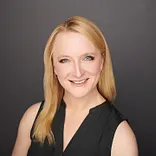
Kimberly Wehle is a constitutional law professor at the University of Baltimore and author of the book, “How to Read the Constitution—and Why.” She writes a biweekly Substack newsletter, The Little Law School.
It has seemed obvious to me for years now that our government simply does not have the wherewithal to defend itself from determined Fascists. It seems the wheels of justice move way too slow, allowing them (autocratic Fascists) opportunity to jump from topic to topic and ambush with impunity.
Remove ABC from your TV's remote control