


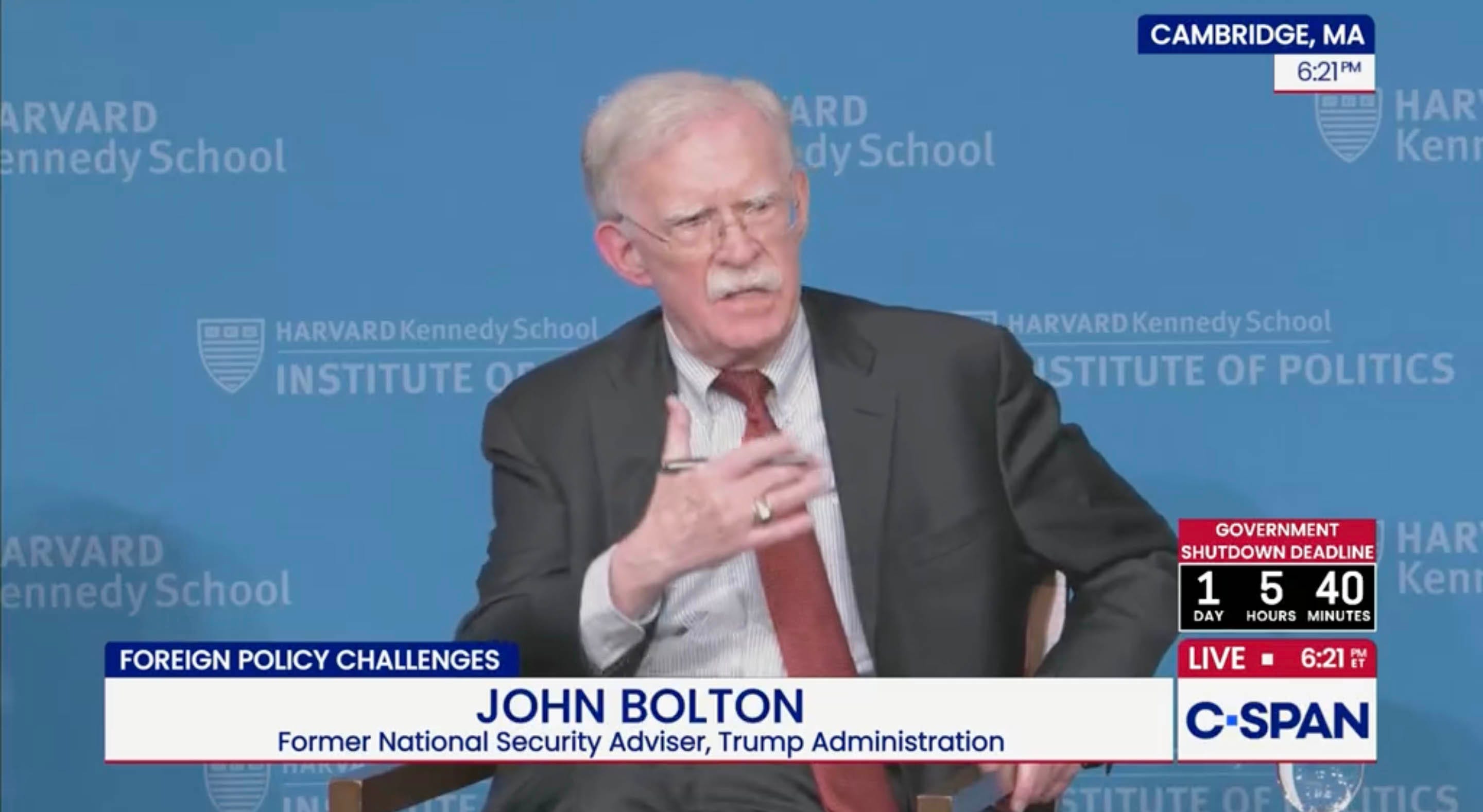
On Thursday, John Bolton, a national security adviser in the first Trump administration, was indicted on 18 counts of transmitting and retaining national defense information. Prosecutors allege he shared more than a thousand pages of “diary-like” entries from his 2018 to 2019 tenure with two relatives who helped prepare his 2020 book, “The Room Where It Happened.” Bolton pleaded not guilty Friday morning.
The indictment is straightforward: eight counts of transmission and 10 of retention under §793(d)–(e) of the Espionage Act. The Justice Department’s press release emphasized that some entries reflected top-secret information drawn from intelligence briefings, deliberations with senior officials, and discussions of U.S. covert action.
If these allegations are accurate, Bolton should have been indicted. This is not about clever lawyering; it is about discipline, duty, and whether senior officials regard national security as a trust or a prop.
Bolton didn’t just write in a diary. He allegedly transferred classified content into an unclassified medium, marked it improperly or not at all, moved it onto an unauthorized system, and shared it with people who had no clearances and no need to know. If that’s what happened, that would not be a paperwork lapse. It would be a chain of decisions that defeats the controls national security officials are required to follow on Day One and enforce every day after, including after departing government service.
I spent a career inside those controls—helping design classification and archiving protocols and enforcing them. The rules are not ornamental. They are the rails that keep sensitive intelligence and operational planning where they belong: in accredited systems and approved containers, accessible only to those formally cleared and read in. There is no “family editor” exception. There is no “memoir prep” carve out. Intent does not legalize exposure.
Notes taken from classified systems do not become personal property because you type them into a personal file. The provenance follows the content. If you extract classified substance into a “diary,” you have created a classified record—one that must be created, stored, and transmitted inside the apparatus built for that purpose. Every supposed harmless workaround erodes the wall.
The handwritten diaries I kept while serving in the U.S. intelligence community never left my offices—all of which were authorized and secured workspaces. When I was preparing to retire from the CIA, I reviewed them for institutional handoff and then destroyed any not being archived. Not because I doubted my integrity but because the system does not rely on anyone’s self-regard. It relies on procedures, logs, and barriers that prevent even well-meaning people from creating risk.
That is the point too many political actors wave away. Classification is not a suggestion. “Close hold” is not a vibe. These are enforceable standards that apply with special rigor to those of us who handled raw intelligence, covert-action deliberations, and sensitive diplomatic communications. If the government can prove that Bolton moved national defense information out of secure channels and shared it with uncleared recipients, he should have been indicted and he should be tried—just as any government worker would be.
I see the hypocrisy as plainly as anyone. Trump administration officials, especially the president himself, are hardly the gold standard for operational security and integrity. Attorney General Pam Bondi’s solemn pronouncements on secrecy following the Bolton indictment ring hollow when viewed against her lack of concern in the spring over the Signal chat leaks as matters for DOJ referral. She quickly insisted the content was merely “sensitive” and “not classified.” Defense Secretary Pete Hegseth and former national security adviser—now U.S. ambassador to the United Nations—Michael Waltz deserve the same scrutiny as Bolton with respect to the Signal chat leaks. Private channels are not secure systems; operational chatter is not cocktail talk.
We put young case officers, analysts, and military communicators through relentless training on these rules. We suspend them for lapses. We end careers for repeated negligence. When principals flout the same standards and don’t suffer repercussions, they don’t just set a bad example, they also teach the workforce that loyalty and volume beat judgment and care.
I understand the political theater. Bolton is a convenient foil. President Donald Trump calls him a “bad guy.” Partisans on both sides find uses for him. But the easiest cases to abuse politically are often the clearest on the merits. If prosecutors can prove that sensitive operational and intelligence details left secure systems and were shared beyond the fence line, then the case is not complicated. If they cannot, it should fail. Either way, the remedy is in court.
I never admired Bolton as a policymaker—his views often struck me as unbalanced and unsettling—but I welcomed him exposing Trump’s foreign-policy instincts for the hat they are: erratic, self-serving, and dangerously transactional. But liking a dissenter doesn’t qualify him to freelance with secrets. The oath national security officials sign is not contingent on our opinion of the president, the policy line, or the publisher’s deadline. It binds us to handle national defense information by the book—every time, even when it’s inconvenient, even when we are certain we’re right.
So, spare the sanctimony. Hold Bolton to the standard. Hold Hegseth and Waltz to it. And if tomorrow it’s a Democrat, hold him to it, too. The country can survive loud politics. It cannot sustain a political class that treats national security rules as optional.
Brian O’Neill, a retired senior executive from the CIA and National Counterterrorism Center, is an instructor on strategic intelligence at Georgia Tech. His Safehouse Briefing Substack looks at what’s ahead in global security, geopolitics, and national strategy.

Stolen documents are going to be the least of our national security problems, the chief one being, well, the president. By wasting our personal and national resources and gutting federal agencies dedicated to protecting our sovereignty, he has thrown the door wide open to any adversary who wants to come in. Although, why they would want to take over a failed nation with a mountain of debt and no future, I don't know.
It's hard to work up sympathy for John ("I never met a war I didn't like") Bolton, but I can't escape the feeling that he's being singled out because he told us the truth about Don the Con.