


“Lemon juice is suitable in hot weather, especially for young people of a bilious temperament. Its peel is suitable at all times, provided it is used in moderation, and only to aid digestion and to revive the blood and the spirits.”— Louis Lémery, Traité des Aliments, 1700
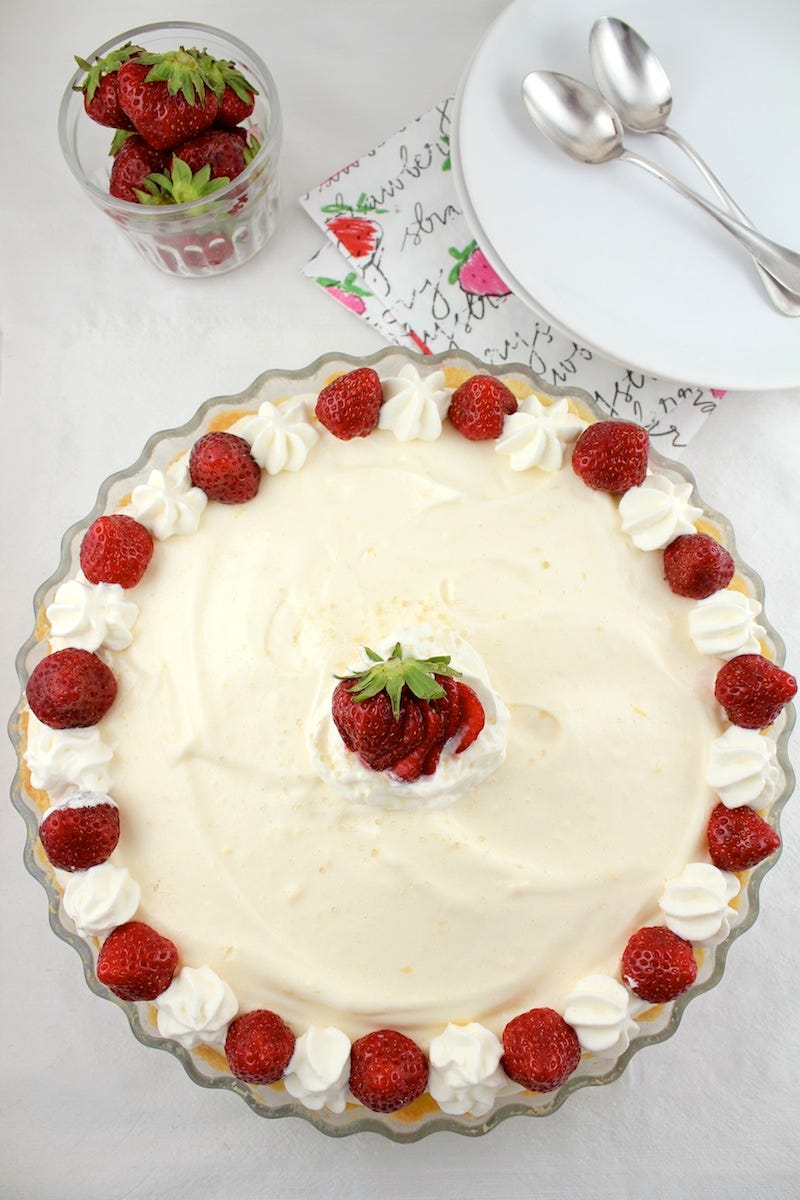
I’ve been thinking a lot about tarts this week. No, not because … well, I won’t go there. I know it’s the weather. It feels like summer, and chilled fruit tarts, from strawberry to those pretty little French tarte fine aux pommes (or even mixed berry cobblers and fruity crumbles) are on my mind. It’s time for lighter, cooler desserts.
It’s funny to me — who grew up in citrus country, the Florida Indian River — that citrus desserts seem to fit summer so perfectly when they are winter fruits. Lemons, with their sharpness and tang, really are the coolest things -- lemon sorbets and lemonade, lemon pudding and posset, lemon curd and lemon bars and lemon glazed lemon cakes. Lemons scream summer.
Lemons have been cooked in sugar, stirred into creams, and used in tarts for a very long time. Bartolomeo Scappi, a chef whose powerful influence on Renaissance cuisine was apparent in his masterly tome Opera dell’Arte del Cucinare (A Masterpiece of the Art of Cooking) of 1570, made no lemon tart, yet he candied lemons — whole, sliced, or just the peel — in sugar and used them to flavor a creamy preparation of ambrosian almonds, creating a kind of compote or sauce.
The French, of course, go two steps further, flavoring the sweetened lemon compote with cinnamon and crushed macarons, accentuating the acidity with a little verjuice, then baking it in a pastry crust ( L’Escole Parfaite des Officiers de Bouche or The Complete Guide for Culinary Officers, 1662). We might also have the first creamy lemony tart filling: a recipe for an amazing pistachio frangipane with lots of cream, eggs, orange, and a quarter pound of fine lemon peel.
Over in Britain, and a century later, a Mr. Borella penned The Court and Country Confectioner: Or, The House-keeper’s Guide in 1770 and included a recipe for lemon tarts, filling tiny pastry shells with boiled lemon compote, a recipe we’ll see over and over again in a multitude of cookbooks. In fact, Amelia Simmons, who wrote the first cookbook by an American and published in America, has the same recipe in American Cookery of 1796.
Lemon puddings and lemon creams were becoming increasingly popular, but lemon tarts themselves were still typically filled with something much sharper — just a simple lemon compote instead of a rich, lemony cream. Then, in 1747, Hannah Glasse’s The Art of Cookery Made Plain and Easy includes a recipe for “lemon cheesecake”: sugar, egg yolks, butter, whipped egg whites, a little cream, all baked in pastry shell. It’s essentially a lemon cream filling in a tart shell, and it feels like a turning point.
By the time Fanny Farmer published The Boston Cooking School Cook Book in 1896, lemon tarts had become a thing. Her cookbook contained five recipes for lemon pie, one sweetened with dates, one thickened with cracker crumbs, the others variations of lemon custard, each topped with meringue.
But America and the world would have to wait until 1926 for Monroe Boston Strause, dubbed The Pie King, who apparently grew up in the family wholesale pie business (also inventor of the graham cracker crust) to invent the lemon chiffon pie.
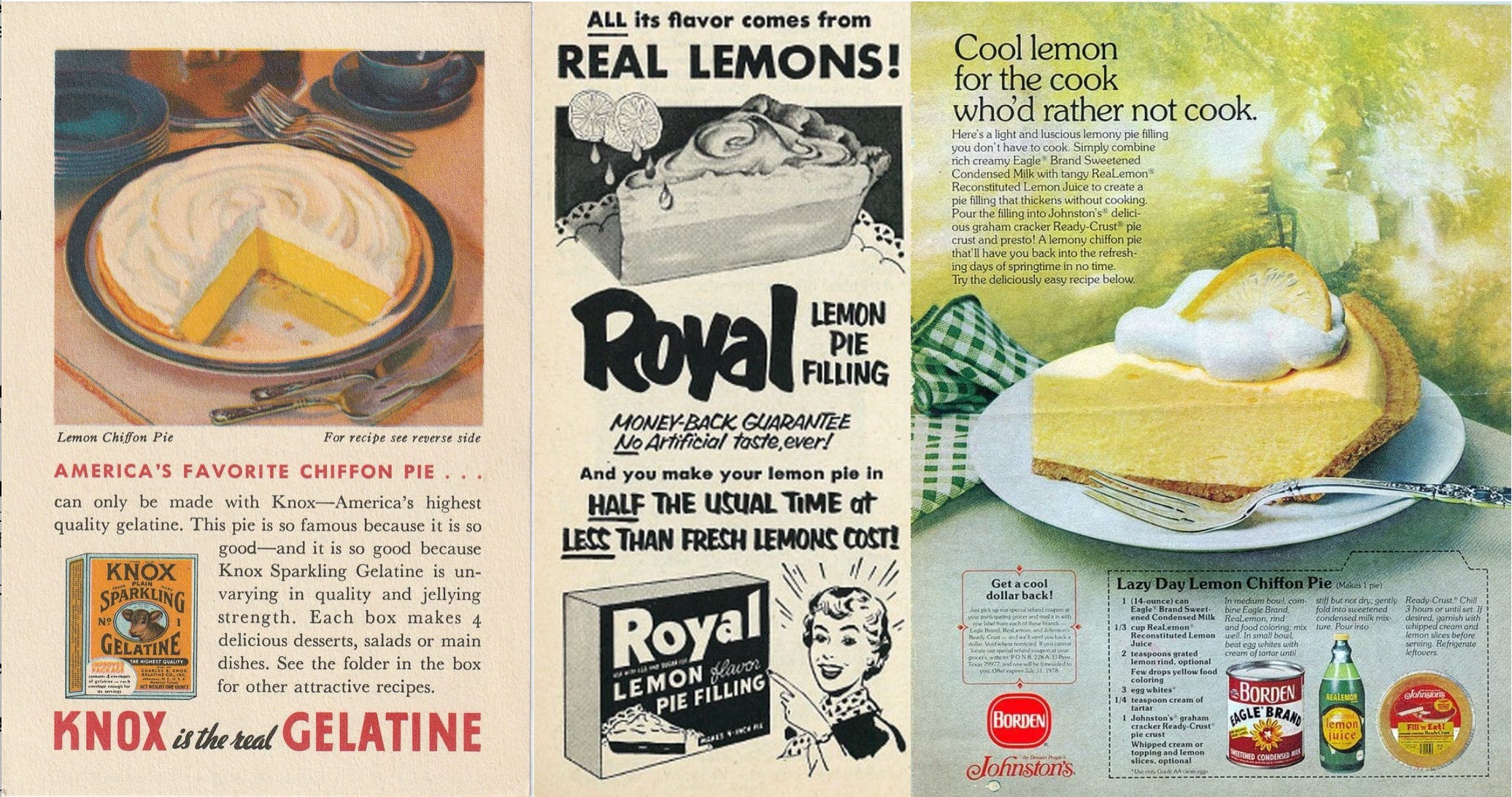
This is a now-classic recipe straight out of the 1950s, its delicate pastel yellow color and light frothy texture reminiscent of our grandmother’s kitchen or Sunday lunch at the neighborhood diner. Or, in my case, my dad’s kitchen and home-baked treats. I found the identical recipe in Abigail Serves, a United Order of True Sisters community cookbook from Albany, New York, circa 1956, which my great-aunt Mae co-chaired, and in my mother’s old copy of Reader’s Digest Secrets of Better Cooking from 1973. It’s a simple recipe perfect for the family’s dinner table every day, although you might certainly want to keep this for a very special occasion.
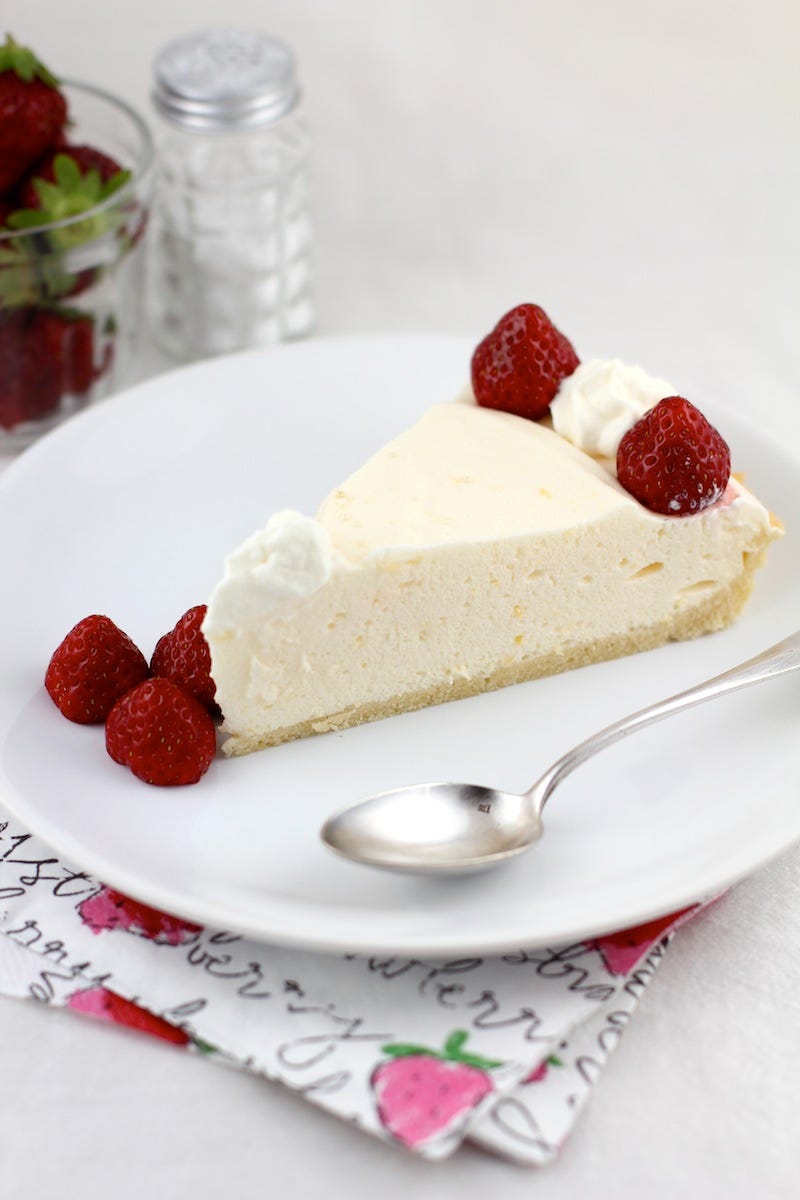
The texture, once chilled overnight, is ethereal, a wisp of coolness on the tongue, a hint of lemon lingering behind, a tart that literally melts in the mouth. Cool and clean, this beautiful pie is the perfect dessert after either a heavy meal or light summer fare when all that is needed, all that is desired is a satisfying bit of sweetness and citrus tang.
Classic Lemon Chiffon Pie
Pre-baked 9- or 10-inch Sweet Pastry Crust
1 envelope (about 1 ¾ teaspoon) powdered gelatine
¼ cup (60 ml) cold water
½ cup (100 grams) granulated sugar
¼ teaspoon salt
4 large eggs, separated
⅓ cup (80 ml) freshly squeezed lemon juice
Finely grated zest of 1 lemon
½ cup (100 grams) super fine sugar
To serve
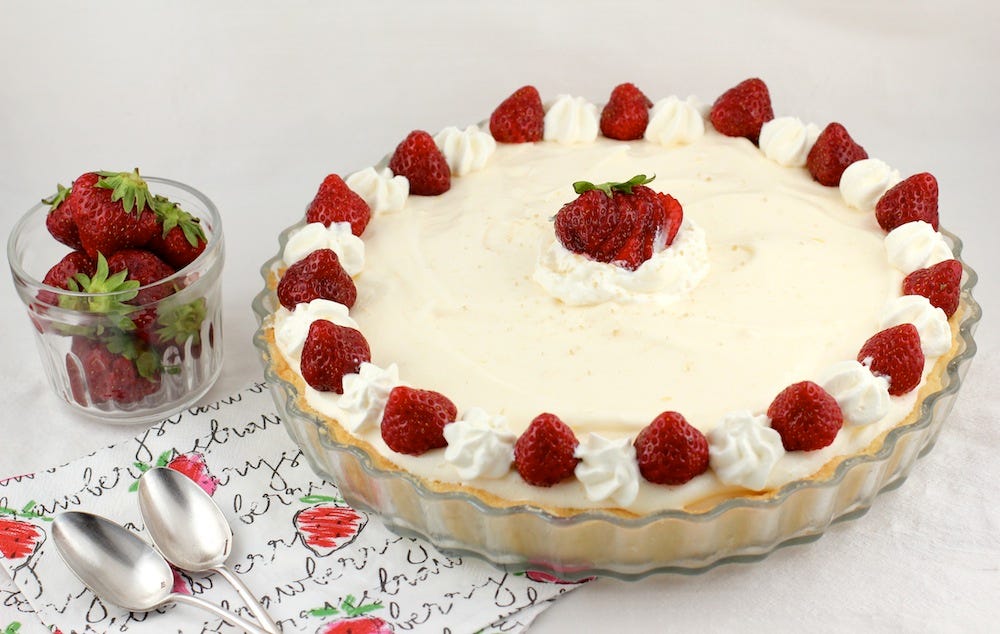
Freshly whipped cream and fresh, ripe strawberries
Prepare the Sweet Pastry Crust
Pre-bake the Sweet Pastry Crust ahead of time to allow it to cool completely: Line your pie plate with the pastry and trim. Refrigerate for 20 to 30 minutes until chilled while you preheat your oven to 375°F (190°C).
Lightly prick the shell with a fork. Place a large piece of parchment (ovenproof) paper in the shell and fill with pastry weights or dried beans. Bake in the preheated oven for 8 minutes and then carefully remove the pie plate to a cooling rack, gently lift out the parchment with the beans (reserve the beans for another use, discard the parchment), and return the pie shell to the oven for an additional 10 - 12 minutes or until baked and golden. Remove from the oven (you can turn off the oven as you won’t be using it again) and allow the pastry shell to cool completely before filling.
Prepare the Lemon Chiffon Filling and Tart
Sprinkle the gelatine over the cold water and allow to soften for 5 minutes, gently pushing the gelatine below the surface of the liquid.
Meanwhile, separate the eggs, placing the yolks in a large heatproof mixing bowl; place the whites in a perfectly clean bowl (preferably plastic or metal) with a drop or 2 of lemon juice and a small pinch of salt.
Whisk the granulated sugar and the salt into the yolks and place the bowl over a pan of gently simmering (not boiling) water. Continue to whisk until just slightly thickened and pour in the lemon juice. Continue whisking for about 6 to 8 minutes or until the mixture thickens to the consistency of a custard.
Add the softened gelatine and the lemon zest and whisk to blend; continue to whisk over the hot water for an additional 3 minutes or so until the gelatine melts.
Remove the bowl from the heat and allow to cool for about 10 minutes, whisking occasionally, and then place the bowl in the refrigerator to chill until cold and thickened, just 15 to 20 minutes.
Remove the bowl from the refrigerator.
Using very clean beaters, beat the whites until opaque and just beginning to hold soft peaks. Gradually add the superfine sugar as you beat the whites on high speed until the meringue is very glossy and the peaks are very thick and stiff.
Quickly beat the lemon custard to loosen, then, using a rubber or silicone spatula, fold the meringue into the custard in three or four additions until perfectly blended and very thick, creamy and luxurious.
Mound the lemon chiffon cream into the prepared pie shell and, with a very light hand, spread the cream evenly in the shell.
Place the pie in the refrigerator for several hours or overnight to set.
Jamie Schler is an American food and culture writer — immersed in French culinary history — living in France, where she owns a hotel, makes jam, and writes the Substack Life’s a Feast.

I'll take this over lemon meringue any day. In fact, I might extrapolate this recipe to sub any tart fruit. Thanks again, Jamie!
Can't wait til I get home and back in my kitchen.