


Appearing on NBC’s Meet the Press, veteran lawmaker Rep. James Clyburn (D-SC) emphatically urged expanding seats on the Supreme Court from 9 to 13 justices. “A baker’s dozen would be a good number to have on the court,” he said. Court expansion, no longer the province of left-leaning academics thanks to the MAGA justices’ radicalism, has become an indisputably mainstream, pro-democracy response.

In truth, increasing the seats on the Supreme Court amounts to rebalancing. Majority Leader Senator Mitch McConnell (R-KY) packed the court when he denied Merrick Garland a hearing during President Obama’s term — yet rushed through Amy Coney Barrett’s confirmation once election voting was already underway in 2020. Rebalancing to establish the proper equilibrium among the branches (i.e., reversing the MAGA justices’ investiture of the authoritarian executive power in Trump and their contemptuous disregard for Congress’s constitutional powers) is fundamental to preserving our constitutional system.
Increasing the number of seats on the court begins with a solid base of support. A June Marquette Law School poll showed the public split 50-50 on adding seats, up from just 42 percent support in 2019. Since 2021, support has varied between 48 and 52 percent, even without a nationally focused campaign on the issue. Simply because other proposals have even more support (the same poll shows term limits has approval from 73 percent of Republicans, 71 percent of independents, and 87 percent of Democrats) does not mean court expansion should be disregarded.
Indeed, fearing that court expansion might be catching on, the MAGA House majority Wednesday introduced a constitutional amendment freezing the number of justices at nine, confirmation that — absent such a measure — court expansion by statute is unquestionably constitutional. (It failed to win 2/3 required approval with only a single Democrat voting wth Republicans.) Ironically, the stunt underscores that nine is an arbitrary number, carrying no historical or constitutional significance. (Unsurprisingly, the GOP, which is beholden to dark money purveyors such as court fixer Leonard Leo, leaves out other overwhelmingly popular reforms, such as a mandatory ethics code.)
In opposing the gambit, the progressive group Demand Justice released a statement explaining:
Court expansion is the only court reform option that would promptly redress the 6-3 supermajority, which is itself the result of a partisan power grab. When the American people are counting on congressional Democrats to be the last line of defense against the Administration’s assault on the rule of law, it is more critical than ever to fight MAGA power grabs.
Noting that MAGA justices’ hugely unpopular and constitutionally flawed decisions in the Callais and Dobbs decisions have prompted trust in the court to decline and support for serious reform to spike, Demand Justice urges Congress to keep expansion as a viable option, observing that the “most persuasive argument in favor of expansion is the aggressive approach of the Court itself: the right-wing majority will continue to dramatically remake the law to favor the oligarchy.”
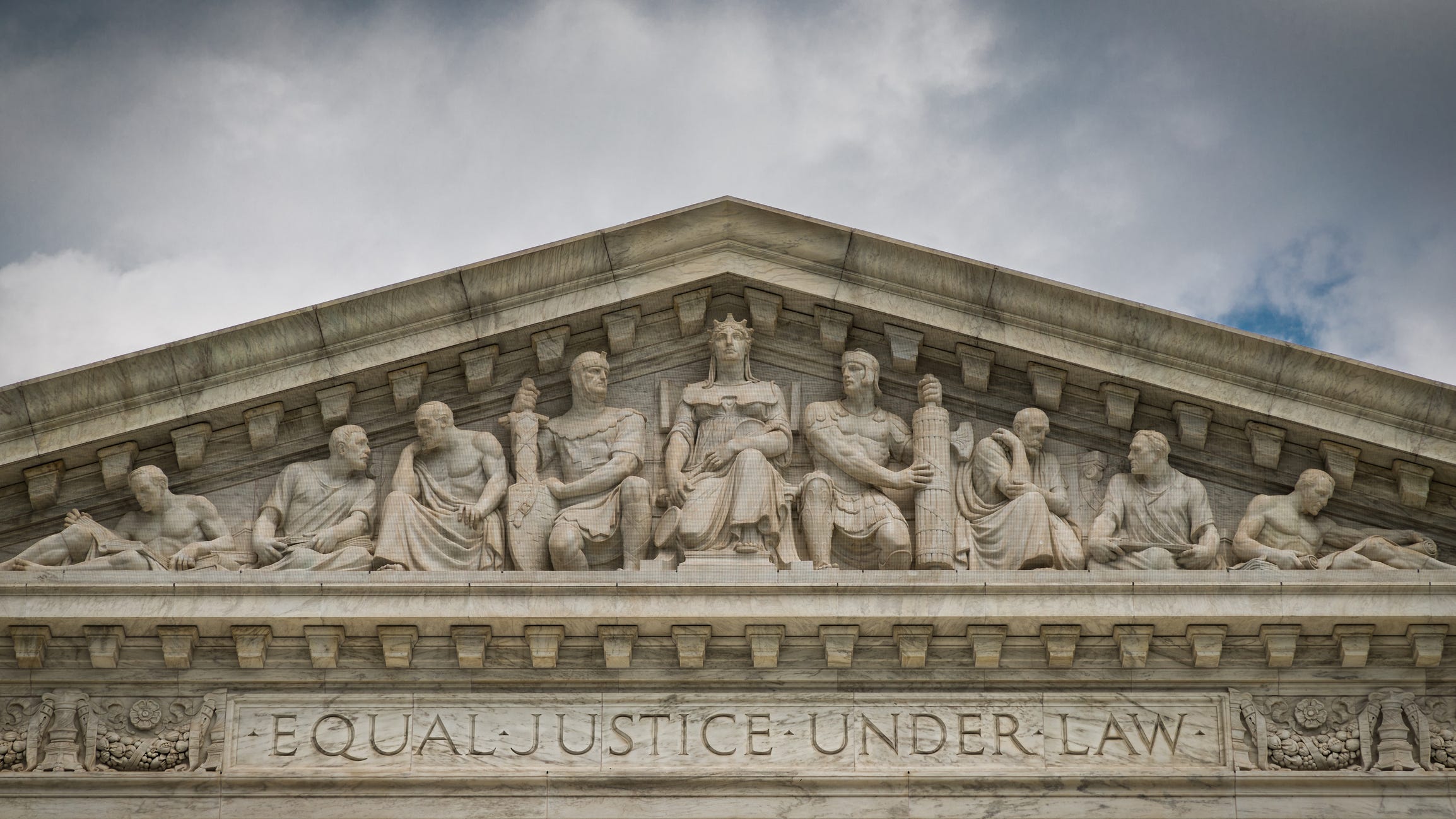
In the current environment, many Democrats nevertheless remain skittish about expanding the court, citing FDR’s failed New Deal scheme some 90 years ago. But as the bipartisan court commission assembled by President Biden recalled, “Soon after [FDR’s] plan was announced, the Supreme Court issued a series of decisions upholding state and federal regulation of the economy. . . . [which] left in place Roosevelt’s existing New Deal and ended an era in which the Court frequently invalidated laws designed to protect workers, consumers, and the public.” In short, it worked.
Democrats too often shy away from proposals such as court expansion for fear of triggering blowback from Republicans — who championed McConnell’s court-packing. Avoiding a meritorious reform simply because it will upset Republicans or does not already have sky-high approval reveals bizarre timidity, and reflects a mindset that ignores the key role that persuasion and debate play in politics. A lengthy list of issues (from data centers to corruption to abolishing ICE) were not “winners” with voters until advocacy groups pushed to educate voters, independent media elevated them, and forward-leaning politicians took the lead.
What is key in the current environment is that dissatisfaction with the MAGA partisan Supreme Court is high (and likely to intensify with each new gift served up to their White House patron). This makes the rationale for serious, substantial restructuring of the court even more compelling.
Taken before the MAGA majority’s latest cringeworthy decision (allowing Donald Trump to build his ghastly ballroom), the Marquette poll found, for example, that 61 percent of Americans understand “the United States Supreme Court is ruling for President Donald Trump ‘almost always’ or ‘most of the time,’” and some 57 percent (including 60 percent of independents) say “the Court is going out of its way to avoid a ruling Trump might refuse to obey.” A captive, quisling court that has distorted the executive branch in direct contravention of the Framers’ vision (shaped by overwhelming fear of creating another monarch) is a court that requires dramatic, immediate repair.
Democrats should emphasize that court redesign is required because the MAGA majority (created by Republican confirmation shenanigans) has arrogantly rejected fundamental judicial norms (e.g., eschewing an enforceable ethics code, abusing the shadow docket to render opinions without judicial reasoning, shredding precedent when it suits them), and taken a sledgehammer to checks and balances (e.g., granting Donald Trump criminal immunity, destroying independent commissions).
Ideally, combining term limits for future justices with court expansion would be the fastest, most comprehensive, and effective way to rescue our democratic structure. Certainly, term limits on justices would help address concerns about diversity, a geriatric court, and hyper-partisanship — with the hope that more frequent appointments with term limits would reduce partisan frenzy surrounding court fights. While proponents are confident it could be done statutorily, this Supreme Court majority might not agree. Moreover, changing the composition of the court only by periodic retirements/replacements would be time-consuming, leaving the country at the mercy of MAGA constitutional destruction for years.
Democrats would do well to think more like the Republicans who readily claim a “mandate” after elections. If Democrats win the trifecta in 2028 under the banner of bold pro-democracy reform, their mandate certainly should include court rebalancing as part of their democracy restoration project.
Only a few of the potential 2028 Democratic presidential contenders (e.g., Pete Buttigieg) have embraced court expansion, but most have not ruled it out. However, Democratic voters have a critical role to play in promoting a wide-ranging debate in the next presidential cycle: What will it take to return the Supreme Court to its proper role and recover our constitutional order? Thanks to Clyburn, that issue is squarely before the party.
Democrats should press candidates who claim to be serious about bold, structural reform to spell out what they think is necessary to revamp the Supreme Court. They should not minimize the threat the current MAGA court poses, nor trim their sails to avoid incurring the ire of those who have pummeled our democracy. As long as the MAGA court majority remains hostile to pluralistic democracy and to the restoration of our constitutional structure, it will block progress on virtually all serious issues —dark money, abortion, voting rights. Democrats must decide if they are resigned to that fate.
Still curious about court expansion? Watch Ben Sheehan’s explainer, posted yesterday on The Contrarian:

Expanding the court to 13 would match the number of federal court circuits, but why stop there? Remove life appointments, rotate the position of Chief Justice every three years, and have a documented and enforceable code of ethics.
That reminds me — where’s Mitch?