


Congress does not reflect the country it serves — a mismatch that poses a real risk for the nation’s economy, competitiveness and democratic stability. Though half of registered voters are under 55, roughly 80 percent of U.S. senators are 55 or older. By the midterms in November, 53 House members will be 75 or older. The problem is even starker among Democrats: the average age of Democrats’ ranking members in committees is 70 — nearly a decade older than their Republican counterparts.
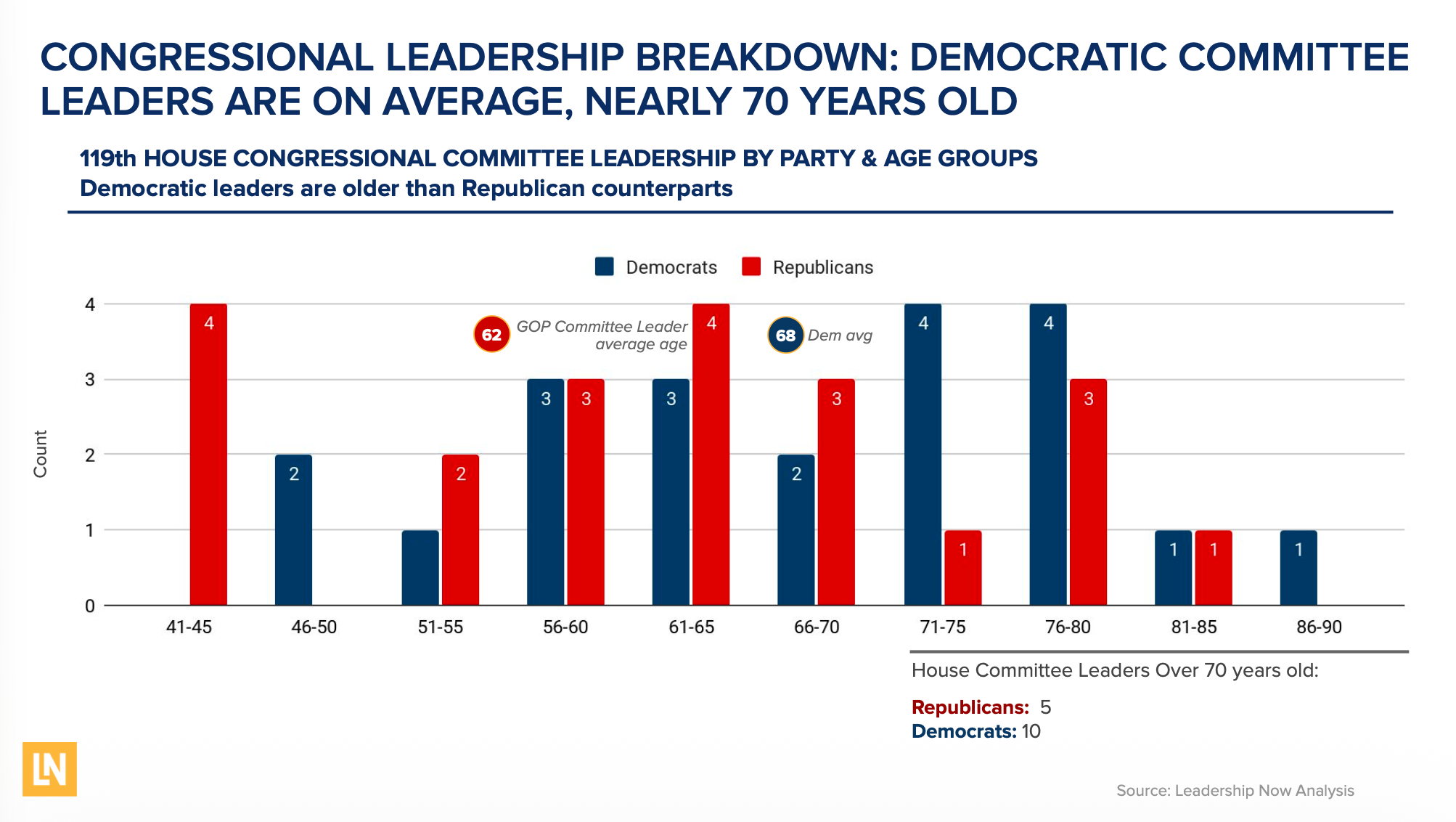
When leadership transition slows, so does decision-making. In Washington, that lag threatens both the policy agility and institutional credibility that underpin economic growth. This is not a critique of individual leaders’ service. It is a structural succession problem — one the private sector learned to manage decades ago.
When we talk about generational change, the conversation tends to fixate on the youngest insurgents: breakthrough millennials, many of whom are now in their 40s, or even Gen Z wunderkinds. But the pool of candidates capable of enacting generational change is much broader and more pragmatic — and it isn’t limited to progressives. At Leadership Now, a membership organization of pro-democracy business leaders, we have focused on Gen X and millennial leaders with practical experience in the military, business, science, and engineering. Consider Abigail Spanberger and Mikie Sherrill, both of whom won governorships in 2025 by roughly 13-point margins on platforms of dynamic, effective leadership, focused on delivering for the people in their state. They exemplify the kind of talent that is ready to serve. There are dozens of candidates like Mikie and Abigail running for Congress this year, but the door to real leadership roles may be closed to them.

The fastest remedy isn’t years of litigation over national age caps — though it is worth noting that North Dakota voters passed an age limit of 81 for congressional candidates with 61 percent of the vote in 2024, and two-thirds of voters nationwide support retirement at 75. What we first need is a norms-based agenda that Congress and the parties can adopt now, including:
A retirement norm at age 75 paired with meaningful succession planning — the stewardship standard at high-performing companies.
Term limits for congressional committee chairs across the board to open paths for new leadership. Democrats should embrace term limits, which Republicans adopted back in 1995, and enforce eight-year limits for committee chairs and ranking members.
Meritocratic appointments to committee chairs and party leadership positions that are not based on seniority.
This matters for the country’s competitiveness. In a Leadership Now-Harris Poll survey released last October, 84 percent of senior executives said today’s political and legal climate threatens their companies’ ability to operate effectively, and 93 percent said they want appropriate pushback on harmful policies. They are asking for competence and dynamism — two of the most valuable products of talent renewal.
For Democrats, renewal can enable a shift toward the center of the electorate, which voters rewarded in Virginia and New Jersey in 2025. Committee leaders with fresh perspectives could better equip the party to focus on issues that concern everyday Americans, including affordability, and regain voters’ trust. For Republicans, whose party is now led by the oldest president ever to take office, a real commitment to passing the torch would broaden its appeal to independents and younger voters. Renewal isn’t partisan. It is how institutions maintain trust.
Is this adoption disrespectful to long-serving members? No. Executives take pride in cultivating successors and timing their exits to preserve institutional memory while enabling future growth. Congress should meet the same standard.
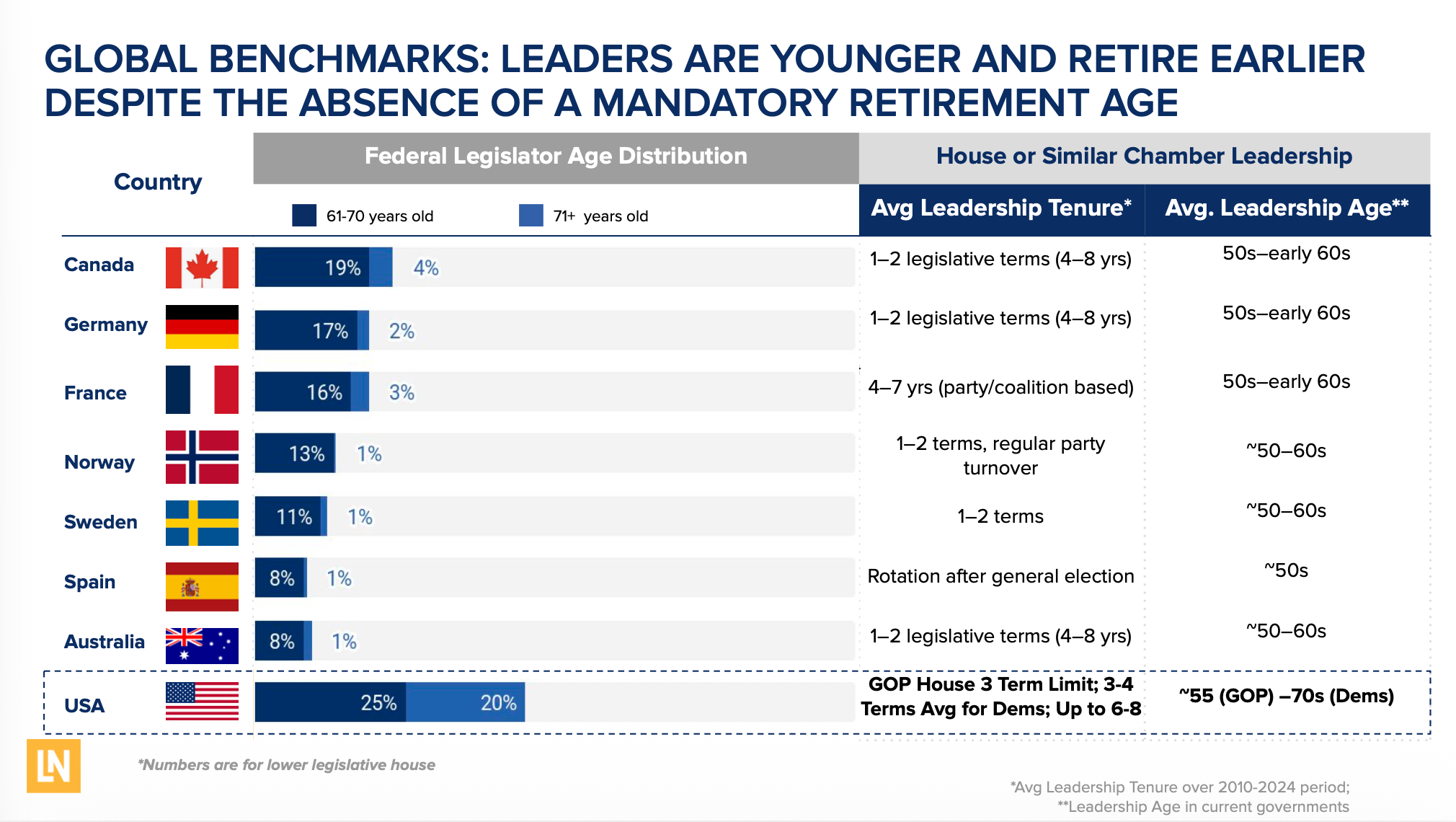
Other nations take succession more seriously, too. The United States has more than twice the share of officeholders over 60 compared to other major democracies. In Canada, senators must retire by 75. In Brazil, all civil servants must retire by 70. Australia mandates that federal judges retire by 70. Even countries with no retirement requirement have norms that lead to far fewer legislators who stay over the age of 70.
The practical path forward is clear: adopt chair term limits, establish a retirement standard, and support strong candidates from outside traditional political circles. People and policy both matter, but right now, expanding the pool of capable candidates is among the biggest opportunities to strengthen and protect the rule of law. By prioritizing stewardship over tenure, we would bring more compelling, capable, centrist leaders into public life and, in turn shape America’s next chapter to deliver broad-based growth and a government that earns Americans’ trust.
Daniella Ballou-Aares is CEO of Leadership Now Project.

We have term limits.
It's called an election.
Selection by choice.
Not fiat.
We need the enthusiasm and new ideas of youth, and the wisdom and historical memory of age. And a pragmatic "do what can be done now" attitude of everyone.