

By Mimi Rocah
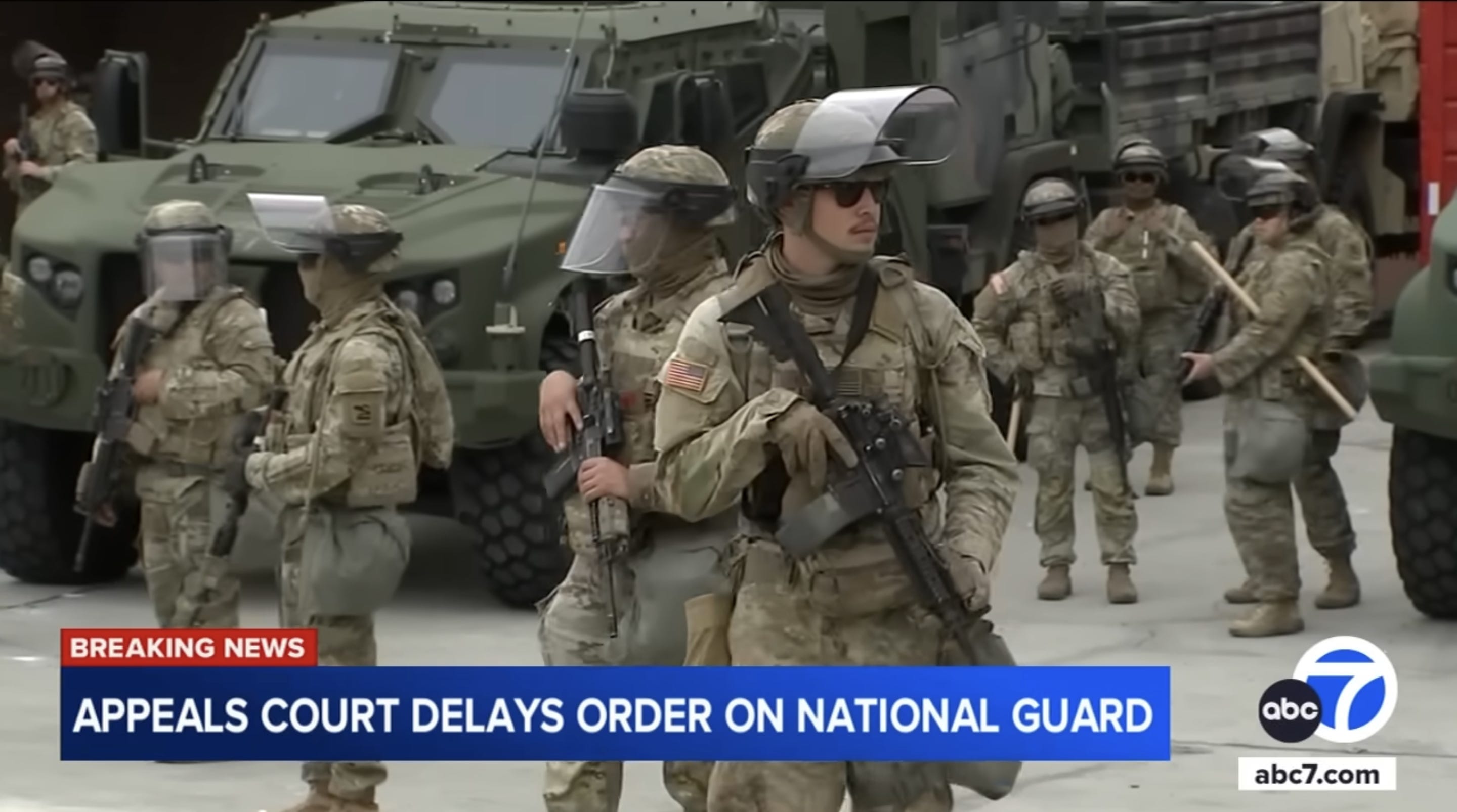
A federal judge in the Northern District of California issued a sweeping opinion and order Thursday evening blocking President Donald Trump from deploying the California National Guard in Los Angeles. It was yet another striking victory for democracy and the rule of law.
Judge Charles R. Breyer did not mince words, stating that the president’s commandeering of the guard was “illegal—both exceeding the scope of his statutory authority and violating the Tenth Amendment to the United States Constitution” and therefore ordered the president to “return control of the … Guard to the Governor of the State of California forthwith.”
One striking part of the court’s ruling was the judge’s finding that the protests did not constitute a “rebellion” as would have been required to justify the president’s actions under the statute. But the court went even further in defending the First Amendment, stating: “the Court is troubled by the implication inherent in Defendants’ argument that protest against the federal government, a core civil liberty protected by the First Amendment, can justify a finding of rebellion.” The Trump administration had taken the position that the judiciary cannot look beyond the president’s conclusion — essentially that the president's determination that there is a “rebellion” justifying the federalization of the national guard is unreviewable by a court. The court said, not so— you can make your factual assertions but the courts still get to decide if those facts meet the law. Significantly, this is part of a developing pattern we have seen, even from Trump-appointed judges, over the past few months with courts pushing back on the administration’s claims of unreviewable extraordinary presidential power.
Not surprisingly, the court also rejected the administration’s claim that the protests could not be dealt with through “regular forces” and that this extreme measure was required. Finally, the court said that the administration did not meet the procedural requirement of issuing the federalization orders for the National Guard be done “through the Governor,” something the administration strained to argue.
The court’s decision is perhaps best summed up in its explanation of the constitutional violation: “It is not the federal government’s place in our constitutional system to take over a state’s police power whenever it is dissatisfied with how vigorously or quickly the state is enforcing its own laws. Quite the contrary, the Founders reserved that power, and others, to the states.”
The Trump administration, not surprisingly, has already appealed the order, and late Thursday night, the Ninth Circuit hit pause on the Friday noon deadline until it can consider the case on June 17. Depending on that outcome, there might be further appeal to the Supreme Court and further stays. So, no one should spike the football just yet — this is round one and there are several more rounds to go, including in the Supreme Court, where Trump’s claims of unprecedented federal power fare well. But it should provide a huge sigh of relief for governors in other states who do not want the National Guard foisted on their states unnecessarily, and it reaffirms (for now) the role of the federal courts as defenders of the rule of law, separations of power and the Constitution at this critical time.
Mimi Rocah was the district attorney of Westchester County, New York, from 2021 to 2024 and was a federal prosecutor from 2001 to 2017.
I’d feel better if the governor was back in control of the Guard this weekend when what are likely to be huge protests occur.
Well, I'm going to "spike the football"!
Celebrate the wins when. they happen and applaud a judge who honored the law and thus himself.