


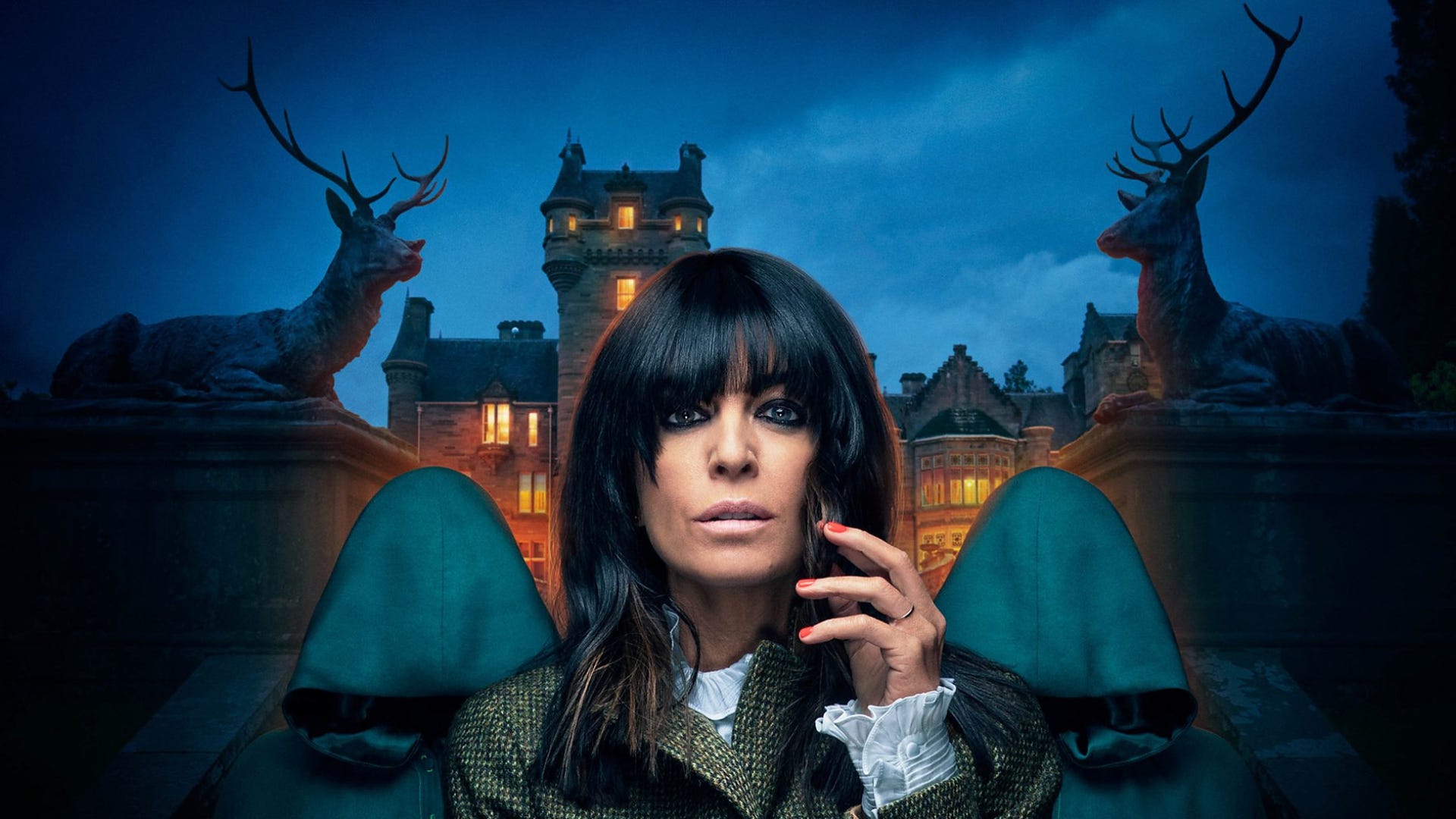
What happens when you take a bunch of marginally famous British people, plunk them down in a 19th-century Scottish castle, and force them to compete in a game of backstabbing and skullduggery?
Possibly the most delightful TV experience of 2025, that’s what.
After binging on potatoes and pumpkin pie over the holiday weekend, I binged The Celebrity Traitors, a reality competition series that broke viewing records in the U.K. this fall (and is now available to stream in its entirety on Peacock).
The show is the latest spinoff of The Traitors, a blockbuster reality format with more than 30 versions around the world. It feels a little like an unscripted version of an Agatha Christie murder mystery—or perhaps a Knives Out movie.
Here’s how it works: A group of contestants arrive at Ardross Castle in the Scottish Highlands. Host Claudia Winkleman chooses a few to be “traitors”: the rest are designated “faithfuls.” Each night, the traitors convene in secret to decide which faithful will be “murdered.” (To state the obvious: No one actually dies; they’re just eliminated from the game.) The faithfuls, meanwhile, try to identify the turncoats in their midst, and vote each day to banish whomever they believe is a traitor. They usually have little to go on other than gut instinct, and they’re often wrong, punishing innocent people with the zeal of 17th-century Puritans.
In the U.K. celebrity version, contestants also have to contend with preconceived ideas based on their public image. Everyone is suspicious of actor Stephen Fry because he’s considered very “clever.” No one thinks that comedian Alan Carr could possibly be a traitor, because he’s just too sweet and bumbling.
The cast of The Celebrity Traitors includes a few people that will be familiar to Americans, like Fry, Olympic diver Tom Daley, actor-you’ve-seen-in-lots-of-things Celia Imrie, and Nick Mohammed from Ted Lasso. But most of the other competitors are broadcasters, singers, and athletes you probably won’t know from a hole in the wall.
Good news: it doesn’t matter! The show is brilliantly cast with a mix of personalities, several of whom emerge as stars over the course of the competition. I became particularly obsessed with Joe Marler, a hulking rugby player who proves to be far more perceptive than some of his more intellectual peers.
The UK version (and the Celebrity spinoff) also has a secret weapon in Winkleman, a long-time TV presenter known for her goth fashion sense and deadpan delivery. (The Emmy-winning American version, which is also filmed at Ardross Castle, is hosted by Scottish actor Alan Cumming, who is quite a bit hammier than Winkleman.)
The Celebrity Traitors is, first and foremost, tremendously good fun, a blend of gripping suspense and raucous unscripted comedy (e.g. when Celia Imrie farts during a stressful challenge.)
But it’s also a fascinating psychological experiment that reflects the era of knee-jerk political tribalism in which we live. Boris Johnson, of all people, recently wrote a column arguing that Traitors “brilliantly exposes the human flaw that makes us blind to villainy, even when it’s staring us in the face.” And who knows more about bad judgment than he does?
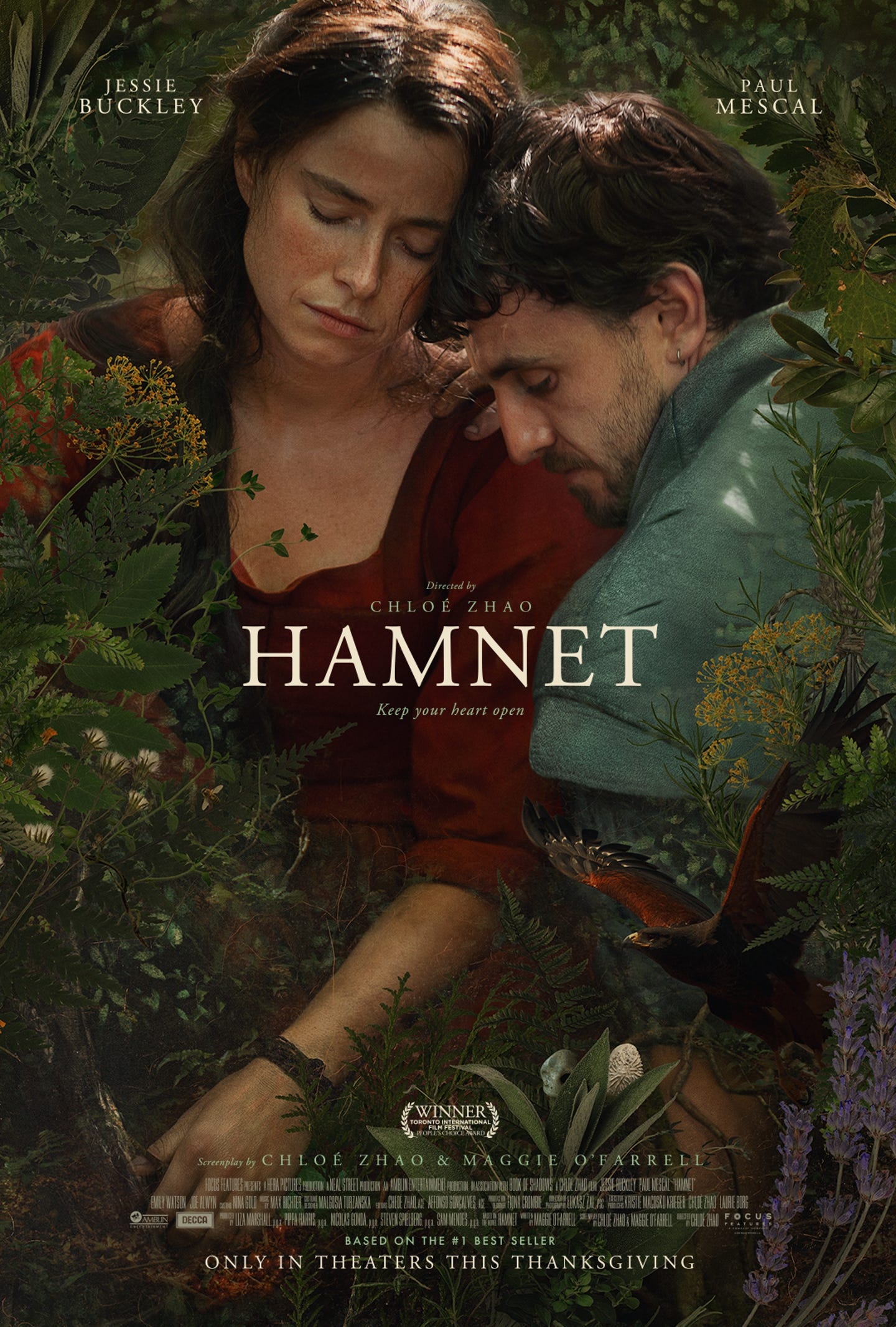
Hamnet (now in select theaters)
This gorgeous, gut-wrenching film will tear your heart out, rip it into a million pieces, then stitch it back together with such tender care you’ll somehow feel emotionally replenished by the end of it. I promise! Directed by Chloé Zhao and adapted from Maggie O. Farrell’s novel of the same name, Hamnet follows an aspiring playwright named William Shakespeare (Paul Mescal) who falls in love with Agnes (Jessie Buckley, devastatingly good), a mysterious, witchy neighbor who spends her free time fathering herbs in the woods. They get married and start a family, then tragedy strikes, and the once-blissful couple is nearly torn apart by unspeakable grief.
Unlike a certain other movie about Shakespeare’s love life, Hamnet is full of gritty details that make it feel authentic to the Elizabethan period — everyone’s fingernails are caked in dirt. Yet its themes of loss, parental trauma, and the healing power of storytelling feel relevant in the present day. Vanishingly little is known about Shakespeare’s actual wife, but Hamnet offers a compelling, if almost entirely imagined, portrait of the mysterious woman behind one of the most towering figures in Western culture.
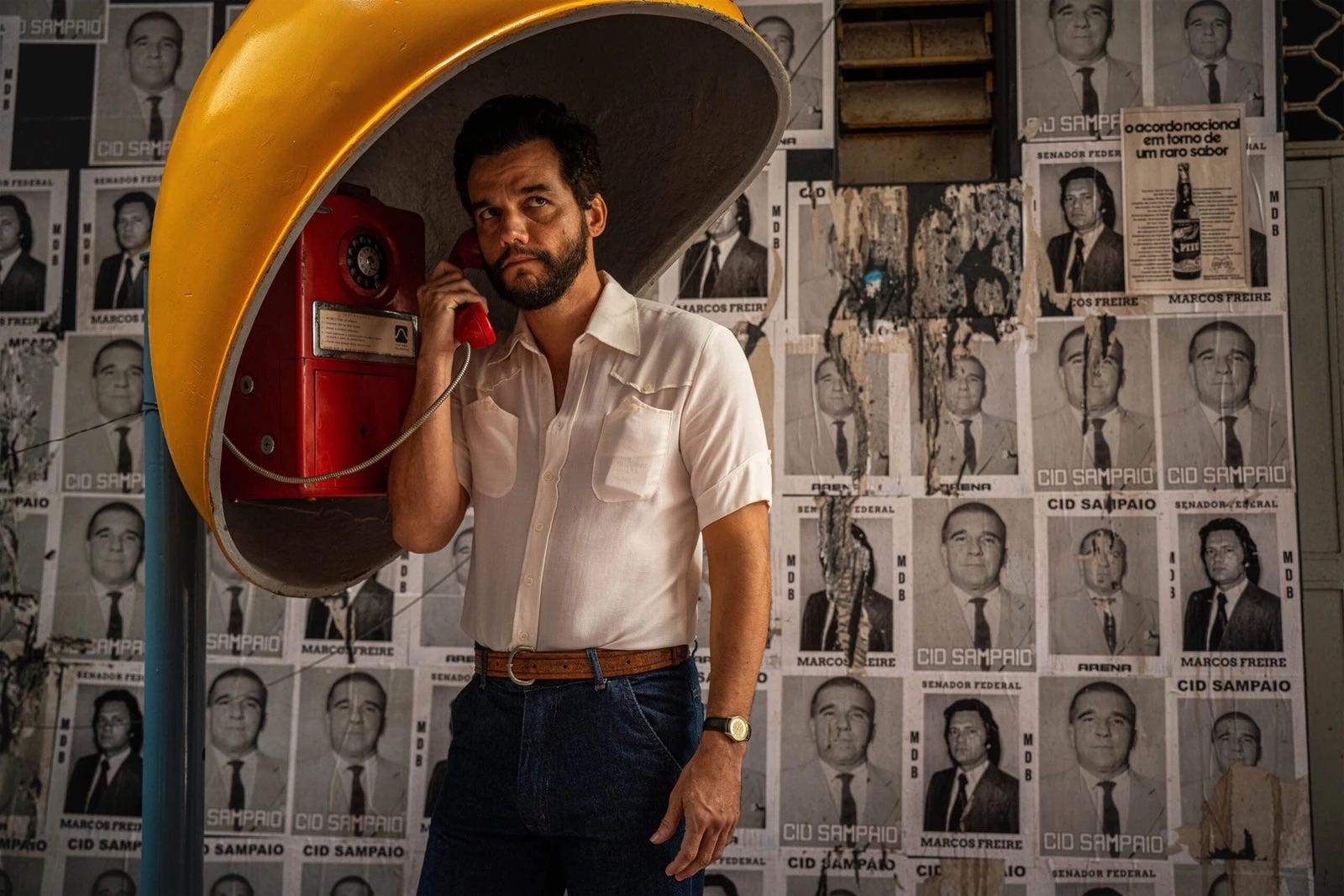
The Secret Agent (now in select theaters)
This slow-boiling political thriller is set in Brazil in 1977 — “a period of great mischief,” according to the film's introductory text. At the time, the country was in the grip of a military dictatorship that disappeared hundreds of people. Written and directed by Kleber Mendonça Filho, The Secret Agent looks at how ordinary people resist authoritarianism by finding pleasure — by seeking out “mischief” — in their daily lives. The drama centers on Marcelo (Wagner Moura), a former professor who is forced to assume a new identity because he crossed some well-connected people years ago. He seeks haven in a community of political refugees in Recife, and hopes to eventually reunite with his young son. The action unfolds during Carnival, so everyone is celebrating while constantly looking over their shoulder. Mendonça’s vibrant film was shot with anamorphic lenses to give it the look of 1970s cinema, and is rich with evocative period details, like brightly colored phone booths, disco beats on the soundtrack, and numerous references to movies like Jaws.
The Secret Agent takes some truly crazy narrative detours—there’s a subplot involving a disembodied leg with a mind of its own—but it’s grounded by Moura’s quietly simmering performance as a regular guy caught in the crosshairs of conflict.
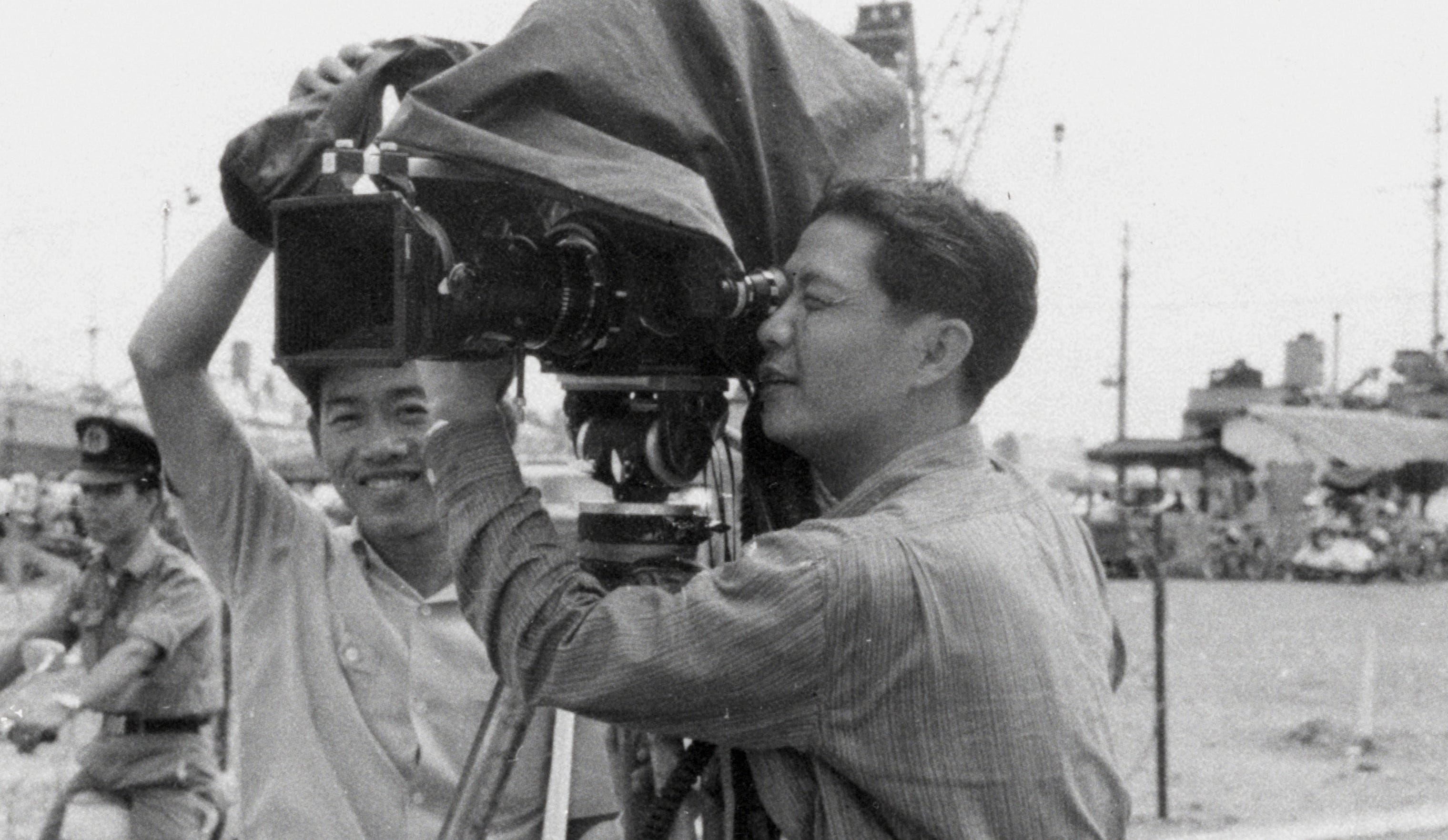
The Stringer: The Man Who Took the Photo (Now streaming on Netflix)
Directed by Bao Nguyen, this provocative documentary investigates the story behind one of the most iconic photos of the 20th century. Taken on June 8, 1972, The Terror of War, a.k.a. Napalm Girl, shows Phan Thi Kin Phúc, a naked, severely burned 9-year-old Vietnamese girl, running down the road following a napalm attack on her village. The image, for which AP staff photographer Nick Ut was awarded a Pulitzer Prize, instantly generated shock around the world and came to symbolize the horrors of the conflict. This film argues that a stringer named Nguyen Thanh Nghe actually took the celebrated photo, and was erased from the historical record by an overzealous editor at the AP. The Stringer prompted furious debate when it premiered at Sundance in January, and the argument over the provenance of The Terror of War remains far from settled. Whatever the truth may be, The Stringer raises difficult question about how Western media companies treated local journalists during the Vietnam War (and countless other foreign conflicts).
In other culture news:
On Friday, Netflix announced it is buying Warner Bros. Discovery for $82.7 billion. The deal has prompted plenty of justifiable concern about how yet another corporate merger will affect an industry already in crisis, and Netflx’s ability to “destroy” the theatrical business by gobbling up a legacy studio. But the alternative, a sale to Paramount Skydance that would have united John Oliver and Bari Weiss under the same corporate umbrella, would almost certainly have been worse. Silver lining, I guess?
Pantone has named its color of the year for 2026 and it’s….“cloud dancer.” Or, as I like to call it, white.
No one asked Quentin Tarantino for his feelings about Paul Dano, but he’s sharing them anyway, for some reason.
Spain, the Netherlands, Slovenia, and Ireland will boycott the 2026 Eurovision Song Contest because of Israel’s continued participation in the annual pop music competition.
Mad Men, one of the most celebrated, visually arresting TV shows of all time, is now available to stream on HBO Max in a “remastered” format. But it turns out that might not be a good thing, thanks to some glaring quality-control issues.
Meredith Blake is the culture columnist for The Contrarian
Why is of this kind of bullshit is called reality?