


When Hurricane Katrina made landfall 20 years ago this week, the storm revealed fissures in American society that have arguably only worsened in the decades since. An estimated 1800 people died, many of them poor, Black, and elderly. Many thousands more were permanently displaced from their homes and communities.
When the levees broke in New Orleans, 80% of the city was flooded, and an estimated 100,000 people were stranded for days without food, fresh water, or adequate shelter. At a time when the U.S. military was fighting two well-funded wars in the Middle East, the inept and indifferent government response to the crisis, which played out on live TV, felt like a conscious, cruel choice.
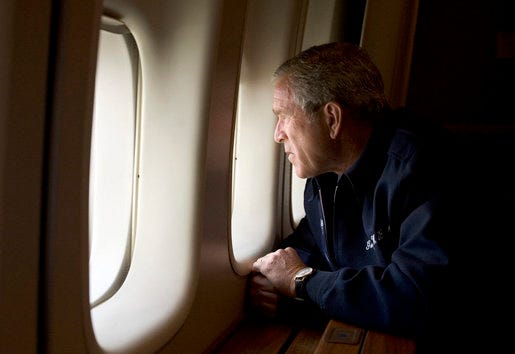
Days into the disaster, George W. Bush, who had been on a month-long vacation at his Texas ranch when the storm hit, flew over New Orleans in Air Force One to survey the damage. Instead of demonstrating the president’s concern, as his handlers intended, the disastrous photo op conveyed a literal and figurative distance from the immense suffering on the ground. (Also not helpful: his praise for the “heckuva job” supposedly being done by FEMA administrator Michael D. Brown, a.k.a :Brownie,” a feckless crony with zero relevant experience in disaster response.)
Katrina was more than just a natural disaster, a human tragedy, a media spectacle, a political fiasco, and an engineering disaster. It was—and still is—a Titanic-like metaphor for the racial, economic, and environmental disparities cleaving American society. Far from a tragic anomaly, Katrina offered a hint of what was to come in future calamities like the economic collapse of 2008 and the COVID pandemic, both in terms of the disastrous government response, hobbled by corruption and rampant cronyism, and the media’s flawed coverage of the entire debacle.
The hurricane struck at a moment of transition in broadcast news. In the months preceding the storm, Dan Rather and Tom Brokaw had stepped down as anchors at CBS and NBC, respectively. Peter Jennings died of cancer three weeks before the storm. The void enabled the rise of new personalities like Anderson Cooper, whose emotionally raw dispatches from the Gulf Coast resonated with audiences appalled by the disaster; cementing his status as a new kind of TV anchor. Many of the personalities involved were outsized, highly quotable, and made for compelling TV, like New Orleans Mayor Ray Nagin (who was later convicted on federal corruption charges) and Army Lt. Gen Russel Honoré, commander of Joint Task Force Katrina.
But cable news also happily fed an appetite for sensationalist coverage of the disaster.
Within a few days, Katrina was quickly reframed as a crime story rather than a humanitarian crisis. Even before smart phones or the widespread use of social media, misinformation was rampant. The media amplified unsubstantiated reports of horrific rapes, carjackings, and snipers on the loose, creating a perception of danger that further slowed the rescue efforts. Racial bias tainted seemingly every aspect of the news coverage—even photo captions. Desperate Black people were “looting” stores for food and other essentials, while white people doing the same had simply “found” their groceries.
Kanye West called out this disparity in an NBC telethon days after the storm. Most people remember his notorious proclamation that “George Bush doesn’t care about Black people,” which caused an enormous uproar at the time. (That includes Bush, who later described the West comment—not Katrina itself—as “one of the most disgusting moments of my presidency.”) But the soundbite overshadowed more extensive, unscripted remarks in which West, nervous but impassioned, called out the racism he saw on TV.
I hate the way they portray us in the media. If you see a Black family, it says they’re looting, you see a white family, they’re looking for food. You know, it’s been five days, because most of the people are Black. Even for me to complain about, I would be a hypocrite because I tried to turn away from the TV because it’s too hard to watch.
Whatever vile, ignorant, antisemitic things West has said and done since 2005, his off-the-cuff Katrina commentary has aged well.
Katrina was a seismic political and media event, and over the last two decades it has spawned a large body of journalistic, literary, and cinematic works that attempt to reckon with the scale of the catastrophe and its long-term effects on the distinctive culture of New Orleans.
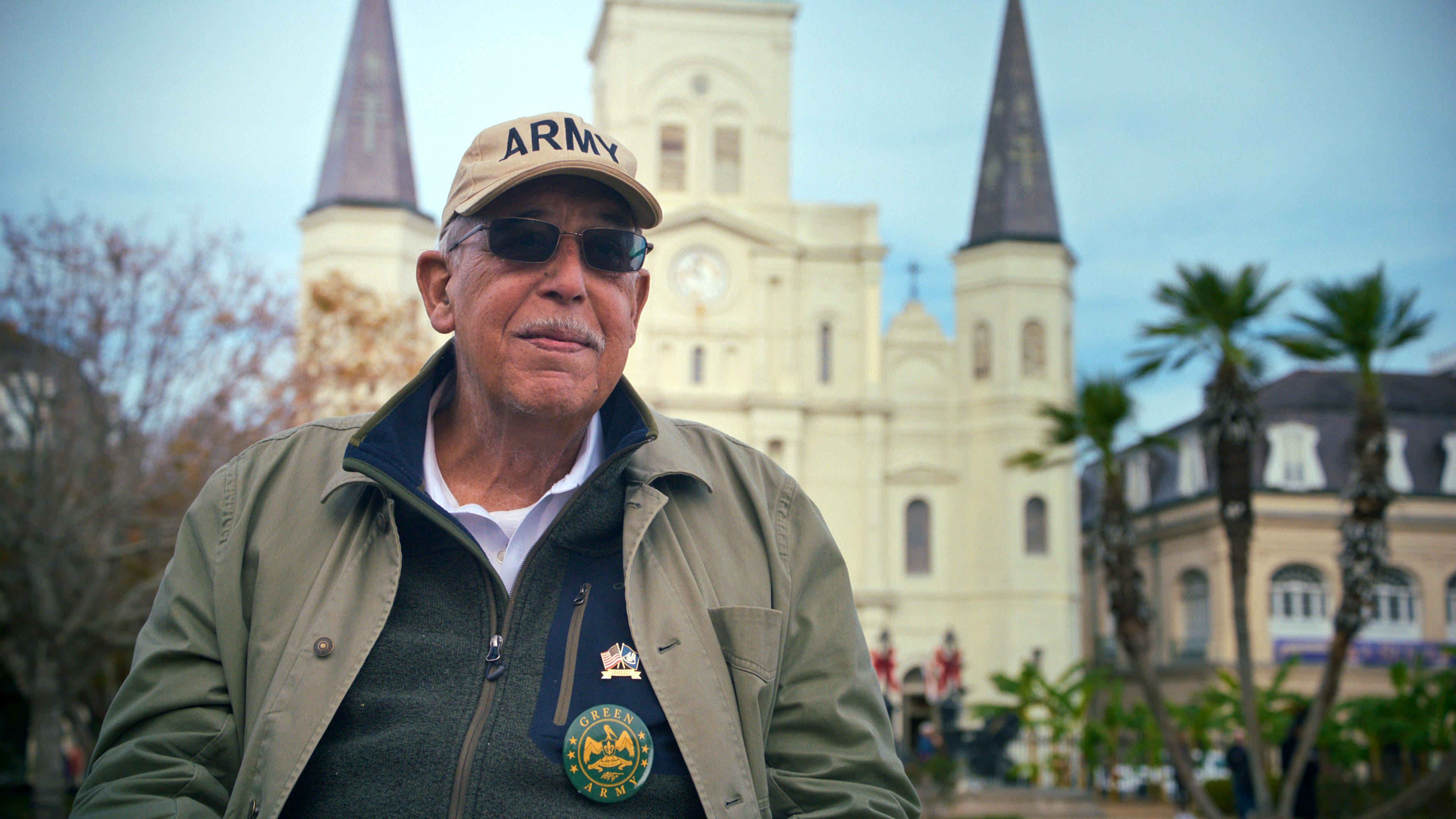
The anniversary has inspired a flurry of retrospective coverage, including the excellent Hurricane Katrina: Race Against Time, which premiered last month on Nat Geo and is available to stream on Hulu. Executive produced by Ryan Coogler and directed by Traci A. Curry, the five-part documentary, provides a riveting tick-tock of the storm and its aftermath using archival footage and the accounts of survivors, first responders, and journalists who were on the ground. Alice Craft-Kerney, a nurse who rode out the storm at her brother’s home in the Lower Ninth Ward, recalls the biased media coverage which painted Black people as “thugs.”
“It’s like they didn’t see us as regular people, law abiding, churchgoing, hard-working people,” she says.
Also featured is Lt. Gen. Honoré, who is every bit as dynamic, colorful, and thrillingly candid as he was back in 2005. “There was some stupid shit happening,” he says of FEMA’s response. The series also stands out for its focus on environmental issues that exacerbated the effects of the storm, especially the depletion of wetlands.
This week brought the premiere of Katrina: Come Hell and High Water, a three-part Netflix documentary from Spike Lee, who has spent much of the last two decades chronicling the impact of Katrina. Just a few weeks after the storm hit in 2005, he began filming When the Levees Broke: A Requiem in Four Acts (available to stream on HBO Max), a sprawling four-hour documentary which argued that Katrina was primarily a manmade disaster caused by racism and shoddy engineering. The series followed a number of charismatic survivors, including Phyllis Montana LeBlanc (who later starred in the HBO series Treme) and poet Shelton Alexander, and painted a lamented the loss of a vital Black community facing an uncertain future. With the goal of making a new documentary every few years, like Michael Apted’s Up series, Lee followed When The Levees Broke with If God is Willing and Da Creek Don’t Rise, which revisited New Orleans five years after the storm (also on HBO Max)
Come Hell and High Water features many of the same survivors, including LeBlanc and Alexander, but takes a slightly different approach to the subject matter. Each episode is directed by a different filmmaker and has a distinct feel. The first hour, directed by Geeta Gandbhir, looks at the run-up to the storm and examines why so many people were unable to evacuate. The second, directed by Samantha Knowles, follows what happened once the levees were breached and the media frenzy set in. “If you’re a one-patch-eye fucking pirate, you can look and see that this shit was racial,” says LeBlanc, demonstrating why she’s such an appealing subject.
Lee directs the final installment, which stretches to nearly 90 minutes in length, and bears his signature mix of outrage and exuberance. (He highlights comments made by interview subjects by showing them in bold onscreen graphics.) The episode looks at the changes to the city over the last twenty years, which has become whiter, less distinctive, and more expensive than it once was. Lee is critical of Brad Pitt’s Make It Right Foundation, which built more than 100 homes in the Lower Ninth Ward, many of which proved to be poorly designed and constructed. “I feel like I was betrayed,” says resident and survivor Robert Green. (A representative for Pitt declined to comment on the documentary.)
Another superb chronicle of Katrina is Floodlines, an eight-part podcast hosted by Vann R. Newkirk III. Produced by The Atlantic, the timely series was released in March 2020, just as COVID was beginning to ravage the country. While it covers much of the same ground as other accounts, it uses meticulous sound design to create a visceral sense of what it was like to be on the ground, wading through toxic water waiting for help that was far too slow to arrive.
If dead trees are more your thing, there is no shortage of non-fiction about Katrina, including Douglas Brinkley’s definitive tome, The Great Deluge: Hurricane Katrina, New Orleans, and the Mississippi Gulf Coast, which clocks in at 700 pages, was somehow published less than a year after the storm, and documents failures at every level by city, state, and federal authorities. Brinkley, who was teaching at Tulane University when Katrina hit, brings an eyewitness feel to his account.
For a more focused, no less harrowing, look at the devastation wrought by Katrina and the disproportionate impact on vulnerable communities, there is Five Days at Memorial by Sheri Fink. Expanded from her Pulitzer Prize-winning New York Times Magazine investigation, the book goes inside a New Orleans hospital where medical professionals faced wrenching ethical dilemmas as they attempted to care for critically ill patients under unspeakable conditions. The book was later adapted into a series for AppleTV+.
David Simon, TV’s foremost chronicler of the urban condition, turned his eyes to post-Katrina New Orleans with the drama Treme, which aired on HBO for four seasons (and can be streamed on HBO Max). The series opens three months after the hurricane, as residents of the titular neighborhood return to the city and attempt to rebuild their lives. Rich with detail and a sense of place, it’s a fictional, if authentic, celebration of the New Orleans spirit.
Finally, for a very different tale of resilience, there is Beasts of the Southern Wild (stream on Hulu), the Oscar-nominated film starring Quvenzhané Wallis as Hushpuppy, a six-year-old girl living in the Louisiana bayou with her hard-drinking father, Wink (Dwight Henry). Blending magical realism with unmistakable Katrina imagery (levees, swamps, floodwater), it takes a poetic approach to the trauma of the hurricane.
Meredith Blake is the culture columnist for The Contrarian
May I recommend the more intimate documentary "Trouble the Water"? It's spectacular. And may I recommend listening to WWOZ fm New Orleans this weekend? The all-volunteer cast of DJs is knowledgeable, passionate, and fun, and they deserve our support on this fraught weekend. Many will be playing flood songs and NOLA musicians. Stream anywhere for free, and be sure to donate if you can; they just lost their public radio funding! https://www.wwoz.org/listen/player/
Commentary and remembrances like this help to underscore the wisdom of moving FEMA out from under DHS and Secretary Noem. Can anyone imagine how totally F**ked up will be FEMA's response to the next Katrina or Andrew or Helene? Their philosophy so far seems to denigrate experience.