



Saturday marks the final day of Banned Books Week, an annual celebration of literature that confronts, challenges, and inspires outrage.
Organized by the American Library Association, the event has been around since 1982 but feels more urgent than ever: According to a report from PEN America, 6,870 book bans were enacted over the 2024-2025 school year in 23 states.
This represents an alarming increase: Just three years ago, the organization counted 2,532 bans across the country.
“Never before in the life of any living American have so many books been systematically removed from school libraries across the country,” said the PEN report. “Never before has access to so many stories been stolen from so many children.”
This surge has been fueled by censorship sprees in conservative-dominated states such as Florida, South Carolina, Texas, and Utah, where books by authors including Judy Blume, Chimamanda Ngozi Adichie, Margaret Atwood, and Sarah Maas have been removed from school libraries—and in some cases prohibited from school grounds entirely.
Trump has accelerated this trend, issuing a slew of executive orders used to justify the removal of hundreds of books in schools on military bases and the Naval Academy library, the majority of which deal with race, gender, or sexual identity.
In honor of Banned Books Week, we’re highlighting a few of our favorite censored titles—and why they make (some) people so mad.
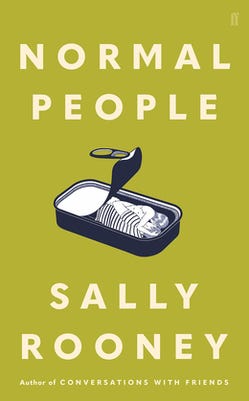
Normal People
Sally Rooney’s second novel has been repeatedly named as one of the best books of the 2010s, but it recently earned the dubious honor of being banned from all school libraries in South Carolina.
The book follows two young Irish people from opposite ends of the socioeconomic divide as they navigate a fraught friends-with-benefits relationship that begins at their small-town high school and continues, fitfully, throughout their years at Trinity College in Dublin.
Does the Palmetto State have something against sad, hot Irish people occasionally having sex with each other? Possibly. The state’s Instructional Material Review Committee concluded that Normal People was not “age and developmentally appropriate” because of its depictions of “sexual conduct.” The summary lists a handful of supposedly inappropriate passages, none of which are particularly explicit by 21st-century standards. But, as argued in this compelling piece, the book is also deeply concerned with class politics, and that could be why it’s considered dangerous.
—Meredith Blake
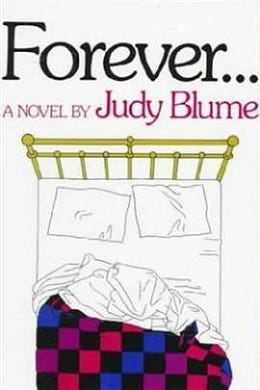
Forever…
There’s something both depressing and inspiring about the fact that Judy Blume’s teenage romance novel still has the power to get banned 50 years after it was published. It was the sixth most-banned book nationwide over the 2024-2025 school year and is one of 13 books banned across the state of Utah last year. It has even been pulled from the shelves in parts of Florida, the state where Blume lives and operates a bookstore.
In case you’d somehow forgotten, the bittersweet young-adult classic follows Katherine and Michael as they fall in love, have sex, and eventually grow apart. It includes frank depictions of sex and conversations about birth control (Katherine decides to go on the pill.) Blume says she wrote the book because her daughter Randy “asked for a story about two nice kids who have sex without either of them having to die.”
But this lack of dire consequences is why Forever… continues to be so controversial. In 1978, a mother complained to The New York Times that Blume had squandered a “beautiful opportunity to teach kids a lesson, if she’d just given an example of suffering or punishment. But the girl doesn’t get pregnant or have a nervous breakdown.” God forbid!
Blume, a fierce critic of censorship, has argued that book bans stem from parents’ desire to control their children’s lives: “They want to believe that if their children don’t read about it, their children won’t know about it. And if they don’t know about it, it won’t happen.” The perennial outrage over Forever… only proves her point.
—Meredith Blake
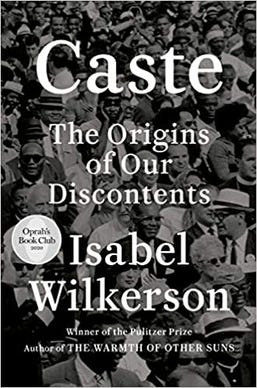
Caste: The Origins of our Discontents
Isabel Wilkerson’s brilliant inquiry into the roots of American racism is one of 596 books pulled from the shelves of Department of Defense schools in July. The Pulitzer Prize-winning author compares white supremacy in the United States to caste systems in India and Nazi Germany. She argues that race “is the visible agent of the unseen force of caste. Caste is the bones, race the skin.” Wilkerson’s bestseller was released in August 2020, just a few months after George Floyd’s murder ignited protests across the country. It addressed a need to understand the origins of white supremacy—one that remains as urgent as ever. As Wilkerson has said, “We’re in a period of backlash and retrenchment, which the book attests to and foreshadows.”
—Meredith Blake
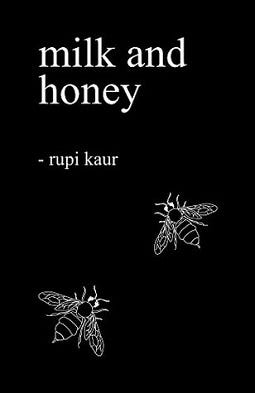
Milk & Honey
Years ago, my very reserved mother utterly surprised me with a gift: Rupi Kaur’s “Milk & Honey.” My mother and I share a love for reading, but our tastes diverge wildly. She prefers police procedurals (Michael Connelly’s “Bosch” series) or historical dramas (anything by James Michener). I devour the likes of Cormac McCarthy, Haruki Murakami (both common targets of book bans), Per Petterson, Richard Powers, and the Russians (Tolstoy, Lermentov, Dostoevsky, etc.). Non-fiction has lately taken the mantle on my bookshelf—“Fire Weather” by John Vaillant should be required reading.
So, unwrapping a book of poems about sexual violence, toxic relationships, and feminism by an Indian-Canadian poet and illustrator was a shock. But it told me, perhaps for the first time, that my mother understood me. She could feel the pain I’d worked tirelessly to hide from her, and she applauded my need to stand up for the oppressed, even though it sometimes bewildered her (or embarrassed her, as when I hollered at fur-cloaked shoppers in a suburban mall). Though I love and admire my mother deeply, we are very different people. Reading through “Milk & Honey,” I came to understand that maybe, just maybe, Mom was proud.
i was not made with a lightness on my tongue
so i could be easy to swallow
That’s the power of sharing a book—it forges a connection across generations and experiences, and it widens understanding beyond lived experience. Sharing a book is an act of love. And, for the books on these lists, it’s a courageous act of patriotism, too.
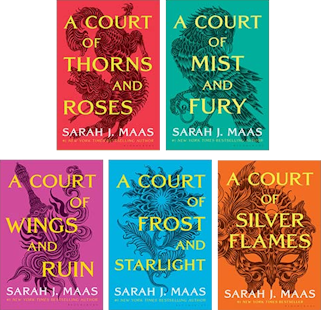
A Court of Thorns and Roses (series)
Why has Sarah J. Maas become the year’s third most-banned or censored author? Choose your own patriarchal adventure. Utah banned six of Maas’ “romantasies” in public schools last year under a draconian expansion of the definition of “pornographic and indecent” material; are the underlying currents here that “the protagonist teen is a sexual being”? The “status-quo-challenging narrative” of a revolt against tyranny? Or just (per Facebook) “its bc theyre adult books in childrens libraries”? As an ACOTAR reader I’d guess the only thing the squares fear more than young women discovering their sexuality might be the idea that they’re having (transportive, earthy, occasionally kinky) fun with it.
—Meghan Houser
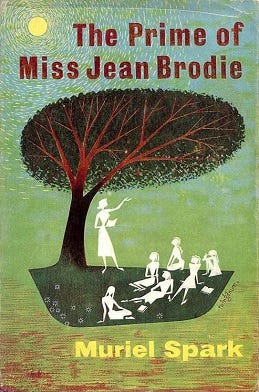
The Prime of Miss Jean Brodie
Muriel Spark’s novel was banned last year in Orange, Florida (along with 672 other books) because of Florida HB 1069, which allows parents to object to school materials. Originally published in 1961, the novel follows the unconventional, magnetic teacher Miss Brodie, who selects a group of girls at her school to mentor and raise as exquisite society girls in the 1930s. It explores loyalty, betrayal, and blooming adolescence as fascism, embraced by Miss Brodie, spreads across Europe. Parents were likely against the references to “sexual intercourse” in the book.
—Ciera Griffin
Meredith Blake is The Contrarian’s culture critic.
Reading Henry Miller in my 20’s opened my mind to the fascinating & invigorating world of banned books - & how much great life I could find in them! So grateful…
My son's school district in VA ranked first place for the most banned books. When we moved to Hanover County for their highly-rated schools, we had no idea it would eventually be rated #1 for most-banned books in the state. We have an unelected school board and the GOP spends big money here to keep it that way.