


This week Frederick Wiseman, the celebrated documentarian who made more than 40 films chronicling American life, died at ninety-six.
Trained as a lawyer, Wiseman turned to filmmaking in the 1960s with Titicut Follies, a dark glimpse at conditions inside Bridgewater State Hospital for the Criminally Insane in Massachusetts. It was the first of dozens of films that primarily examined American institutions and communities — and the people shaped by them — including High School, Welfare, Zoo, Ballet, Public Housing, Belfast Maine, and In Jackson Heights.
Wiseman was known for a stringent vérité style: his films, which ran as long as six hours, included no narration, interviews, explanatory captions, or non-diegetic music. When it came to interfering with what was in front of his camera, he famously once said he’d be willing to replace a light bulb if the shot was too dark — but that’s about it. Of course, Wiseman did manipulate the moving images he captured — through meticulous editing that turned hundreds of hours of raw footage into something resembling a narrative.
“The editing is an effort to impose order on the chaos of the rushes through the creation of a fictional form that provides meaning to the film,” he said in 2016.
Wiseman never presented himself as an activist or muckraker. He considered his documentaries visual novels rather than journalistic accounts, and was not a fan of more polemic documentarians like Michael Moore. “One of my goals is always to deal with the ambiguity and complexity that I find in any subject,” he said in 2007. “Even the simplest human act can be subject to multiple interpretations or have multiple causes.”
But his films often turned a spotlight on social ills and abuses within hierarchical institutions, many of them public. They could also be controversial. Titicut Follies, which depicted rampant mistreatment (including the force-feeding of a naked inmate), was banned from public exhibition until 1991 — the only film in American history prohibited for reasons other than obscenity or national security. (A judge’s ruling in the case described it as “80 minutes of brutal sordidness and human degradation.”) The Garden, a look at Madison Square Garden, was bogged down in legal disputes with the arena’s owner and has never been distributed.
In a statement announcing his passing, Wiseman’s family requested that, in lieu of flowers, admirers support their local PBS station or independent bookstore in his memory. Fittingly, for someone who once made a movie about the New York Public Library, many of Wiseman’s films are available to view on Kanopy, a streaming service that is free to library members.
Wiseman’s purist aesthetic has largely fallen out of vogue in an era of more sensationalist documentaries about poop cruises and chimp enthusiasts, at a time when increasingly few nonfiction films, even highly acclaimed ones, receive a theatrical release in the United States. And while many regard him as the dean of American documentary, this esteem did not translate to huge commercial success (his work was supported by PBS and private foundations) or even awards recognition. The filmmaker never won a competitive Academy Award, nor was he even nominated.
He did, however, win an honorary Oscar in 2016, and offered warm, funny remarks about his career as a documentarian:
Each film is also an opportunity, an opportunity to learn something about a new subject. I’ve been involved in a 50-year course in adult education where I’m the alleged adult who studies a new subject every year, the variety and complexity of the human behavior observed in making one of the films, and cumulatively, all of the films, is staggering, and I think is important to document kindness, civility and generosity of spirit as it is to show cruelty, banality and indifference.
Wiseman’s spirit, if not his direct-cinema style, is evident in this year’s batch of Oscar-nominated documentary features, which cover subjects including a poet confronting death, abuses in the American prison system, Russian propaganda, an Iranian women’s rights activists, and racist gun violence. It’s an eclectic mix of nonfiction films worth checking out before the Oscars on March 15.
Here’s a look:
The Perfect Neighbor
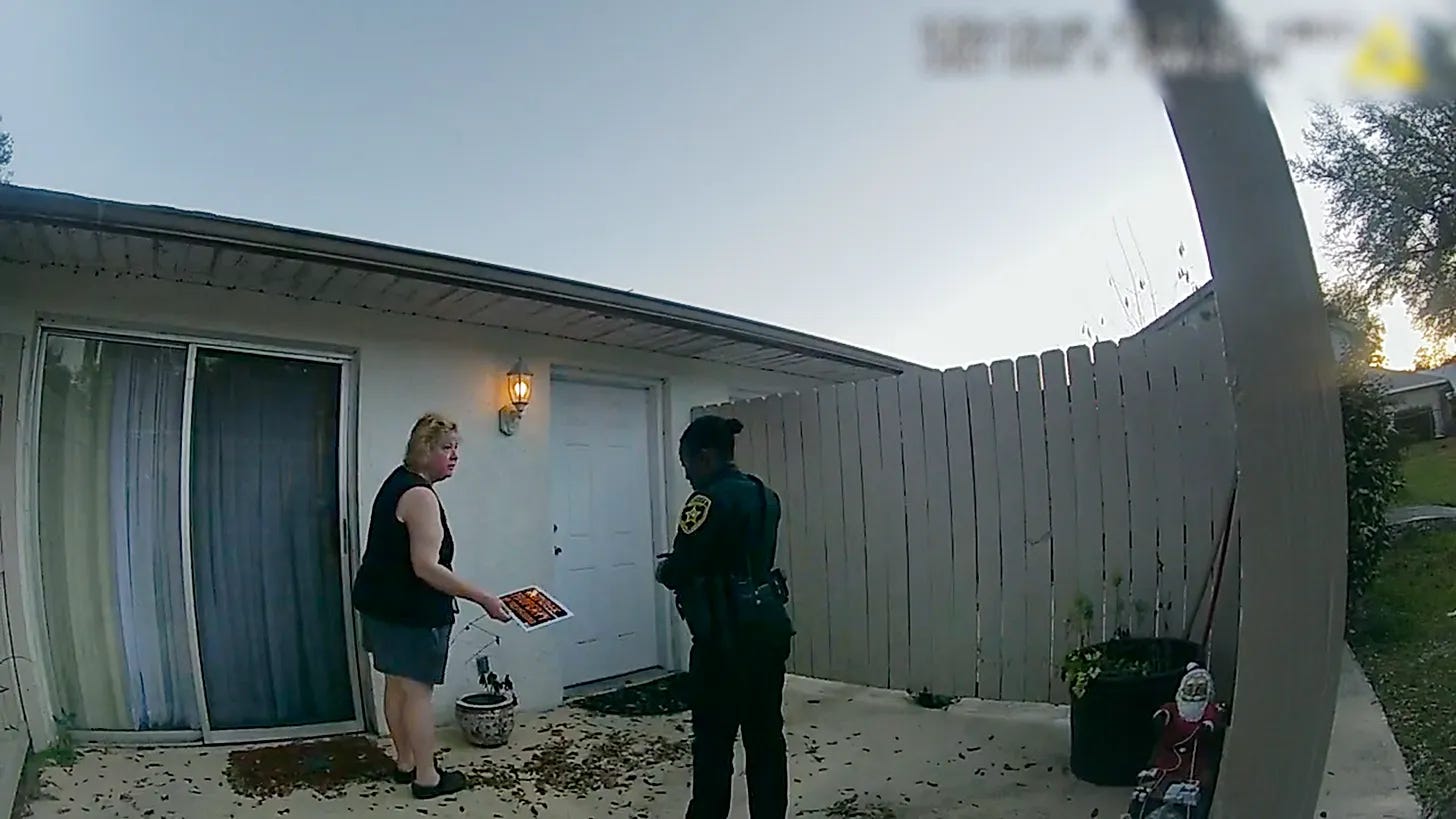
A troubling documentary that makes use of footage from unconventional sources is The Perfect Neighbor. Directed by Geeta Gandbhir, the film chronicles the events leading up to the fatal 2023 shooting of Ajike “A.J.” Owens, a thirty-five-year-old Black woman and mother of four who was killed by her neighbor, Susan Lorincz, a fifty-eight-year-old white woman. It has the formal rigor of a Wiseman film, lacking narration and talking-head commentary, and including only a few explanatory captions. It is a film that requires viewers to pay close attention and, without telling them what to think, paints a damning picture of the Stand Your Ground laws that empower paranoid racists and wannabe vigilantes — and remain on the books in more than half of the country. Rather than a polemic, The Perfect Neighbor unfolds like a particularly harrowing found-footage horror movie, with tension steadily building until a mundane dispute turns deadly.
Watch on Netflix.
Cutting Through Rocks
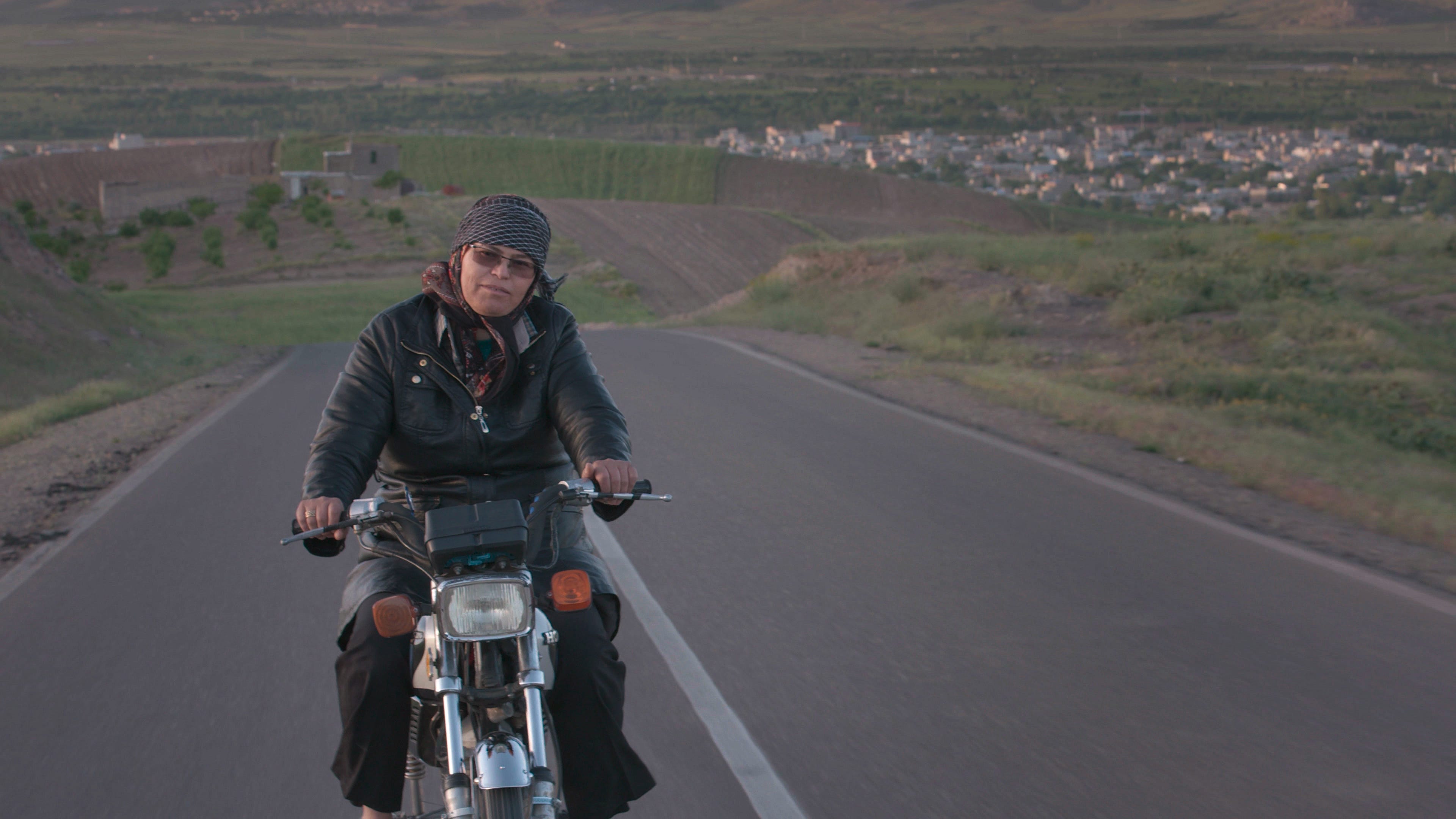
Directors Sara Khaki and Mohammadreza Eyni spent eight years making this film, a portrait of an iconoclast named Sara Shahverdi. A divorced former midwife who loves riding motorcycles and lives alone, she is also the first woman elected to the local council in her rural Iranian village. We first glimpse Shahverdi as she struggles with a heavy metal gate that seems to have fallen off its hinges. It’s a potent metaphor for the work she does on behalf of the women and girls in her community, where child marriage is common and many wives have no property of their own. A proud non-conformist who encourages girls to stay in school — and learn to ride motorcycles — Shahverdi faces intense resistance and entrenched misogyny. Said Khaki, the film’s co-director, “I felt compelled to tell the story of a woman demanding space.” Cutting Through Rocks is the first Iranian documentary feature nominated for an Academy Award.
Watch in select theaters. A streaming release has not yet been announced.
Come See Me In the Good Light
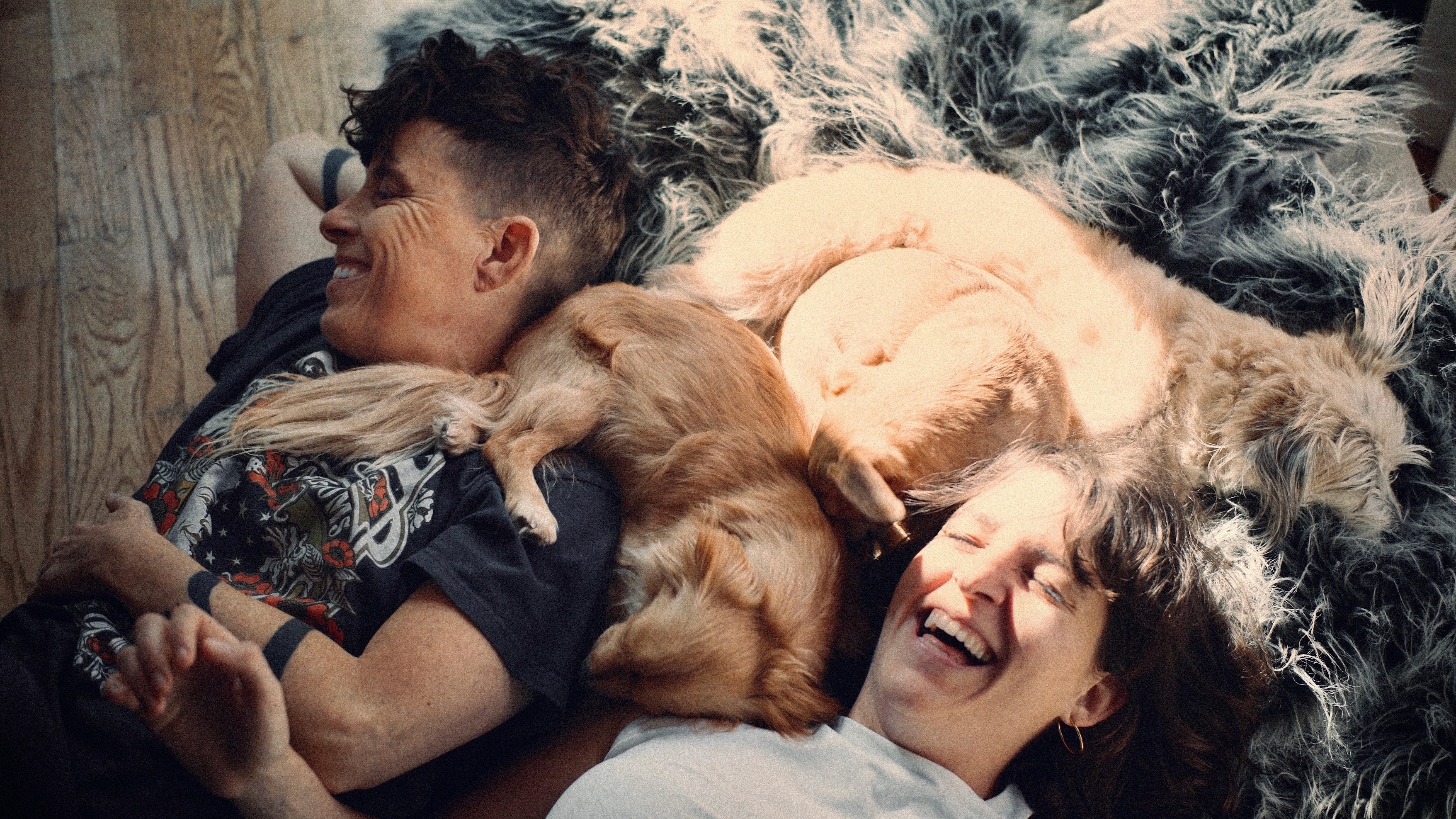
Directed by veteran filmmaker Ryan White (The Keepers; Pamela, A Love Story), this moving, surprisingly funny documentary follows non-binary poet Andrea Gibson as they battle terminal ovarian cancer. Although it is, ostensibly, a film about confronting death, it is also very much about celebrating life. White traces Gibson’s journey from small-town Maine, where they played basketball and felt like a gender misfit, to Colorado, where they became a renowned spoken-word poet. The film also documents Gibson’s relationship with wife Megan Falley, who is also a poet, and their different approaches to writing. Despite the obviously heavy subject matter, the film is full of joy and irreverent humor. “My story,” says Gibson, who died last year, “is one about happiness being easier to find once we realize we do not have forever to find it.”
Watch on Apple TV+
Mr. Nobody Against Putin
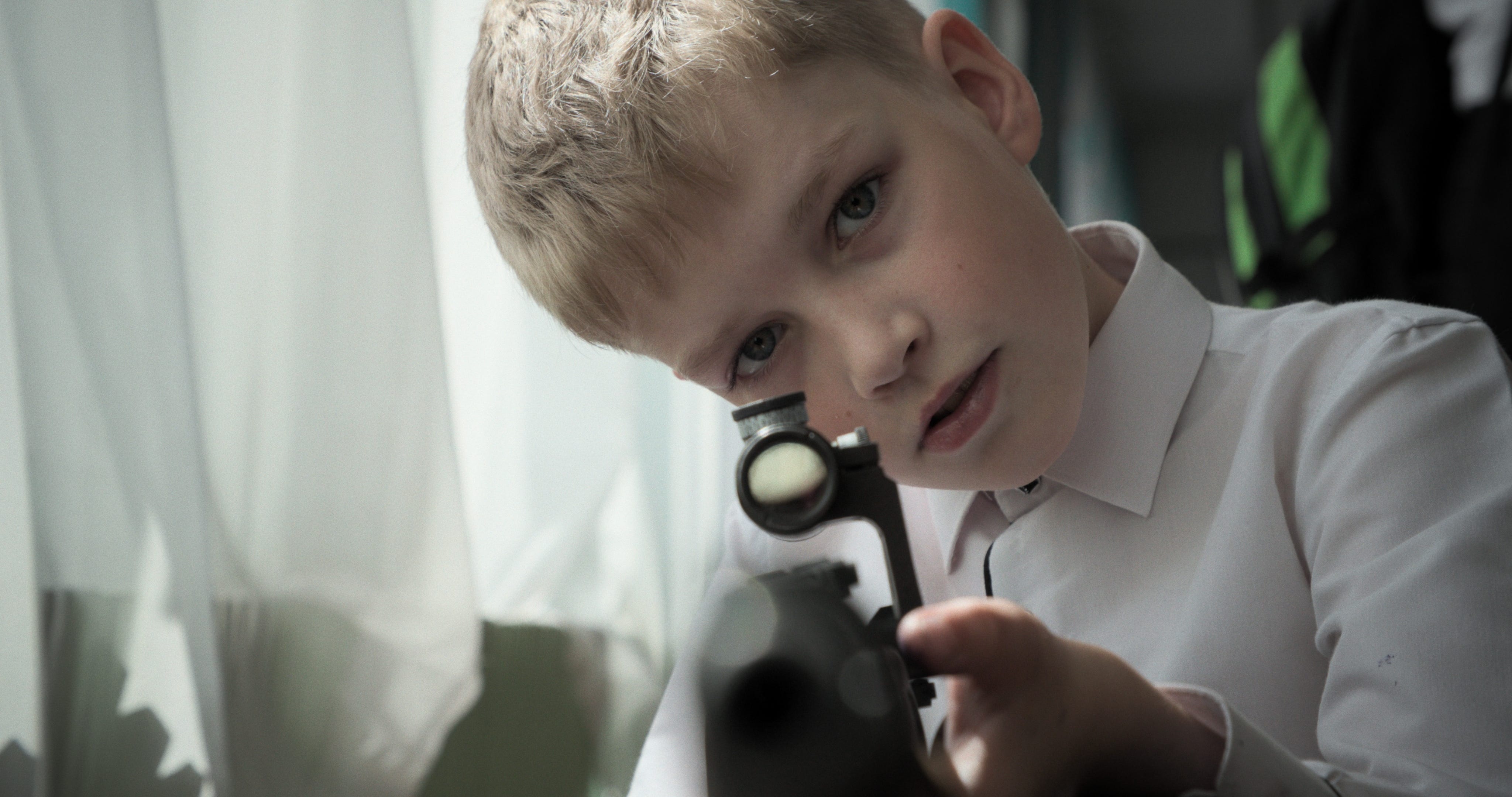
Pavel “Pasha” Talankin is an events coordinator and videographer at a school in Karabash, a town in Russia’s industrial heartland known for its copper smelting plant and intense pollution. In 2022, shortly after the Russian invasion of Ukraine, Talankin is ordered to record classes and various patriotic ceremonies at the school, then upload these videos to a government portal in order to prove their compliance with a state-mandated curriculum. Directed by Talankin and David Borenstein, the film is an absurdly humorous, chilling look at how Putin’s propaganda machine works on everyday Russians — even the youngest ones.
Watch in select theaters or on Kino Film Collection
The Alabama Solution
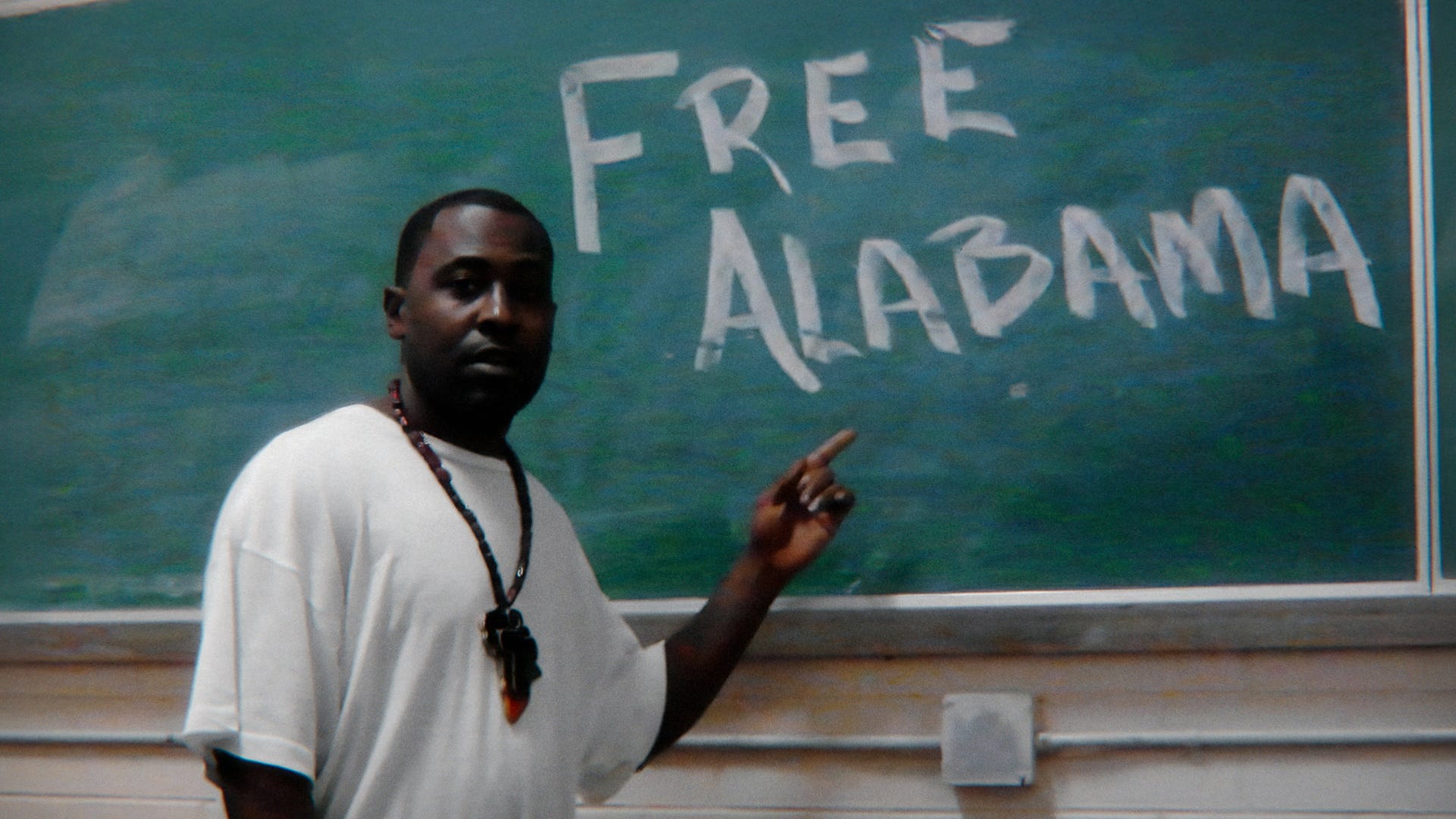
Unspooling like a thriller, this film from directors Andrew Jarecki and Charlotte Kaufman follows incarcerated individuals and exposes the deplorable conditions in Alabama’s overcrowded, understaffed state prisons, which have some of the highest rates of overdose, suicide, and murder in the nation. While a number of documentaries in recent years have taken a critical look at mass incarceration in the United States, including Ava DuVernay’s The 13th, this film takes the unusual step of using footage shot on contraband phones by incarcerated men. Over several years, it follows several of them — Robert Early Council, Melvin Ray, and Raoul Poole — as they document their horrific living conditions and investigate the killing of Steven Davis, who was beaten to death by prison guards in 2019. The cell phone footage, though harrowing, lends the film a powerful immediacy. Most of all, it humanizes these men and enables them to impart their own story.
Watch on HBO Max.
Meredith Blake is the culture columnist for The Contrarian
Thank you so much❣️ Awesome ❣️
I watched "In Jackson Heights". Wiseman told a story like no one else. That kind of story telling is sorely missed today.