


As people prepare to gather in Washington for the March on Washington: Defend the Vote, I keep coming back to the things we are asking people to defend and what we are prepared to do to defend them. The freedom to vote deserves our vigilance. So do the lives of the people we keep asking to exercise it, people whose rent will still be due after the speeches end, whose refrigerators will still need filling, whose circumstances will require an answer long before the next election produces one.
I support the call to defend the vote. But I want us to be careful about the hierarchy we create when we talk about civic engagement, as though every march, every act of solidarity, and every effort to keep our neighbors afloat must ultimately justify itself by how many people it delivers to a ballot box. Voting is one of the ways we exercise power. Gathering in public to challenge injustice is another. Organizing a rent fund, keeping a community fridge stocked, and building a network people can turn to when something goes wrong are also ways we take responsibility for the places we live and the people we live beside. Their value does not depend on whether they are registered to vote. If our commitment to them requires a political return, we should be honest about how conditional that commitment is.
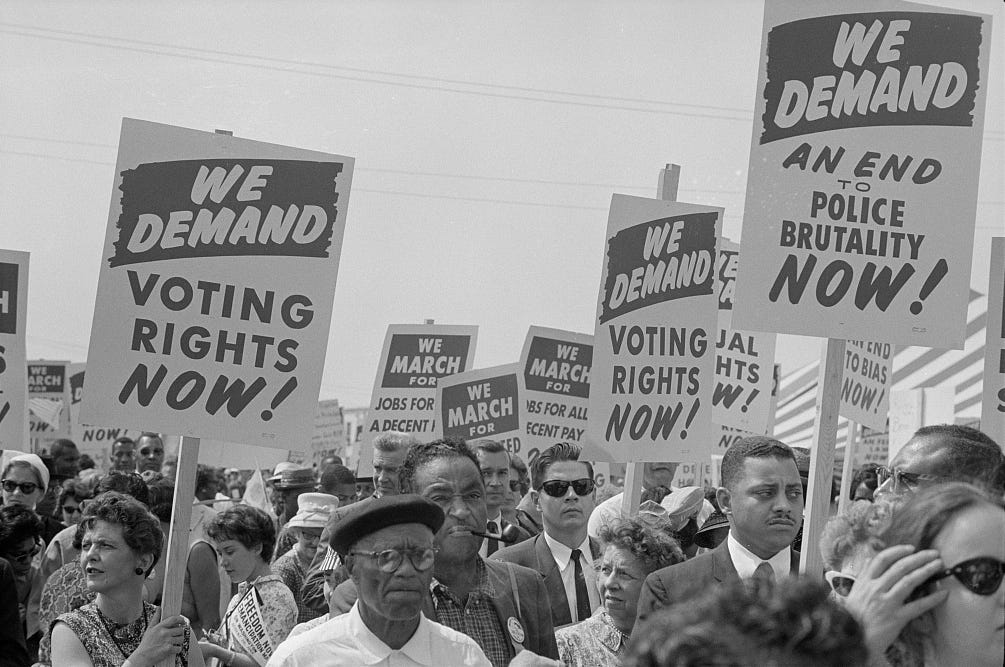
That is part of what gets lost in the recurring argument over whether marches work. There is something powerful about seeing people gather around a shared demand, about watching an injustice that someone hoped you would endure privately become the subject of public opposition. Visibility can matter enormously to the people wondering whether anyone sees what is happening to them. A march can create relationships, give people somewhere to put their anger, and introduce them to work they did not know how to enter.
But we should ask what those relationships make possible. If people give us their time, spend money getting to Washington, arrange care for their children, or take a day away from work, what are we offering them a place in? What can they help shape after the event? Who will remain in touch, and what will we have committed to do together?
I want us to take those questions as seriously as the invitation to attend.
The history we invoke offers a fuller understanding of what that responsibility can look like. During the Montgomery bus boycott, the Montgomery Improvement Association organized a carpool system so Black residents could continue getting where they needed to go while refusing to ride segregated buses. The Library of Congress preserves a carpool notebook from that effort, a record of the practical coordination behind a struggle we often remember through its most celebrated figures. The refusal had to be sustained through ordinary days by people who still had places to be. Someone had to arrange the rides.
The Black Panther Party’s community survival programs included breakfasts for children, food distribution, health clinics and transportation. Its work also included voter registration. Those efforts belonged to an understanding of political responsibility broad enough to include both challenging the conditions people lived under and responding to what they needed to make it through the day.
When we claim a movement’s inheritance, we should pay attention to the work that made participation possible. We should remember the people doing the driving, preparing the food, and making sure someone else’s commitment did not leave them stranded. Their labor belongs in our understanding of how change happens, and it deserves resources in the movements we are building now.
Marches like this can create a standard we should bring to our organizing: when funds remain available after expenses and commitments, put them toward sustained work in the communities whose presence gave the gathering its power. Help establish or replenish rent and grocery funds. Support the local organizations already answering calls for assistance. Better still, make those commitments part of the fundraising from the beginning, so people’s needs do not have to compete for whatever remains after the production is paid for.
The government still has obligations. A grocery fund cannot substitute for policies that make food affordable, and emergency rent assistance cannot resolve a housing crisis. But the need to march for structural change does not suspend anyone’s need to eat tonight. We can demand that public institutions serve people and organize to support those people while we fight. In doing so, we give our promises something they badly need: a form people can experience in their own lives.
This is the meaning I want us to bring to the insistence that every vote matters. Every person matters, including the person who cannot vote, the person who cannot make it to Washington, and the person whose most urgent concern is whether they will have somewhere to live next month. Their circumstances should inform the work we do, and their absence should never be mistaken for an absence of stake in the outcome or indifference.
Defending the vote deserves the energy we are bringing to it. So does building the relationships and support that make solidarity something people can rely on when the crowd has dispersed. The future we ask people to imagine should be recognizable in the way we treat them now. A movement asking people to fight for their future must also help them survive the present.
Michael Franklin is the founder and Chief Thought Leadership Officer of Words Normalize Behavior, a speechwriting, executive communications, and coalition-building agency.

Good ideas when planning marches and rallies and more to continue more inclusion of acts and monies for the community. I had no idea how much this was a part of an earlier time that could certainly be useful now.