


Dictators are people, too — and, like all people, they need to eat. Not just to sustain their bodies, but also, as explored in an unsettling new documentary, to sustain their power.
How to Feed a Dictator, which premiered at the Tribeca Film Festival this week, profiles five ordinary people who cooked for some of modern history’s most brutal tyrants. It offers rare insight into the culinary predilections of men who who were collectively responsible for the execution, starvation, and torture of untold millions:
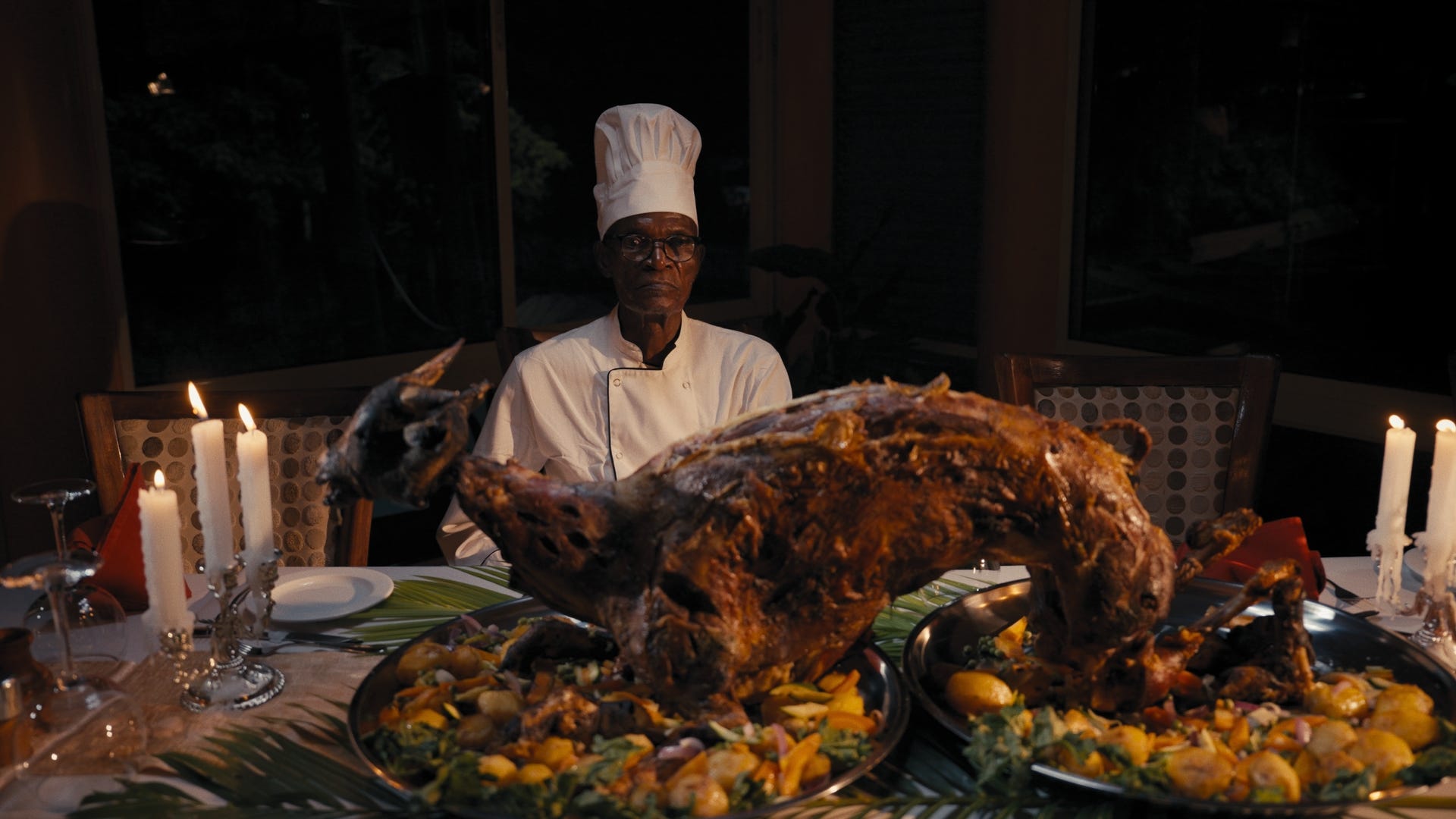
Idi Amin, whose nickname “Big Daddy” reflected his voracious appetite, feasted on whole roasted goat, which was presented standing up and adorned with a beard — as if it were still alive. Augusto Pinochet enjoyed caldillo de congrio, or conger eel stew. Pol Pot liked vegetables and prahok, a fermented fish dip. Kim Jong-il was a pizza guy. Saddam Hussein loved masgouf — carp splayed open and grilled over an open fire — so much that he stocked his many palaces with fish ponds, a clue which helped lead to his capture in 2003.
Directed by Andrew Neel, the film is much more than just Lifestyles of the Rich and Genocidal. It looks at how authoritarians use food as a weapon, dining on elaborate meals designed to signify their wealth (and in the case of Hussein, frequently going to waste) while withholding essential resources from their own people. It also offers stark examples of the impossible choices faced by everyday people under authoritarian regimes, and the willful blindness it can take to simply do one’s job.
“The question that interested me is, ‘How does the everyman survive under these conditions, and to what extent could we all become complicit in a system that is foisted upon us?,” said Neel in an interview this week. “One of the unseen tragedies of dictatorships is that they create a system where moral compromise is a necessity if you want to survive, if you want to thrive.”
Based on the book by Polish journalist Witold Szabłowski, How to Feed a Dictator includes frequently jaw-dropping interviews with these chefs, whose motives, circumstances, and levels of complicity vary as widely as the dishes they prepared.
Keo Samoun was eight years old and already separated from her parents when the Khmer Rouge sent her to work in a kitchen making food for Pol Pot. Jorge “Coco” Pacheco was a successful Chilean restaurateur and fervent anti-communist who became Pinochet’s personal chef. Italian Ermanno Furlanis was recruited to make pizza for Kim Jong-il in North Korea and made up to 30 pies a day for years on end. Otonde Odera was a poor farm boy who rose to the top of Ugandan society by cooking “the kind of food white people ate” for Amin, a terrifyingly mercurial figure known for his sadistic impulses.
Finally, there is the chef, known as Abu Saif (a pseudonym), who began cooking for Hussein in 1996 and was given the following advice: “If you want to get close to the president, learn how to grill.”
Neel was grateful to be able to portray such an array of experiences. “People’s motivations are very different,” he said, “but the trap is the same. You’re forced to either look the other way or find a way to justify it to yourself. Even if you completely don’t agree with it, you still have to survive in a society that is by definition compromised, and that’s what they do.”
Experts like scholar Ruth Ben-Ghiat and author Riccardo Orizio (Talk of the Devil: Encounters with Seven Dictators) offer perspective on how authoritarians acquire and maintain power — and the specific role that food plays in this process.
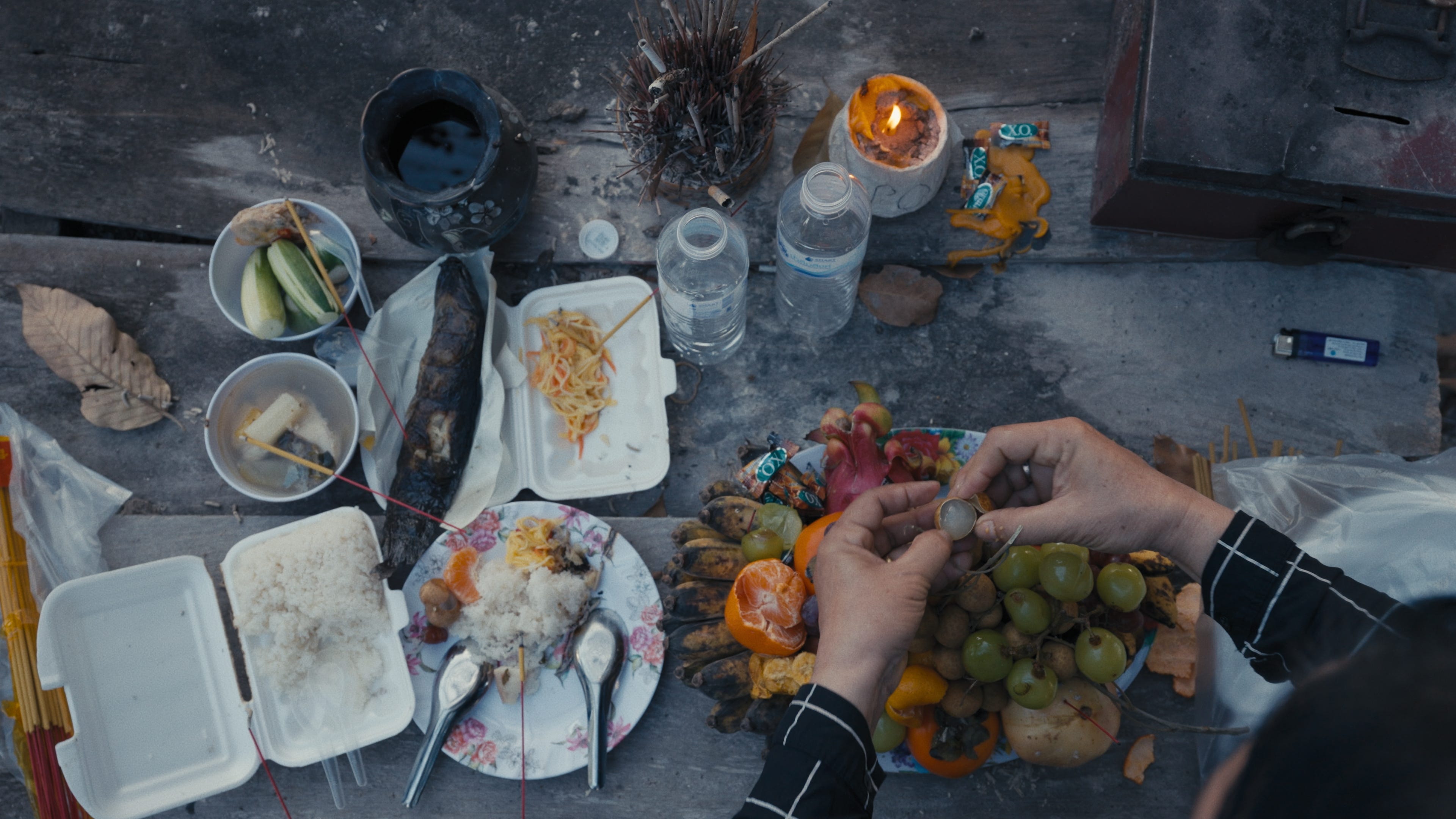
“A nation is a living thing full of resources that you can extract for yourself,” says Orizio. “Since the beginning of humankind, food has been a way to exercise power and to accept submission.”
The documentary took Neel to seven different counties, including many, like Cambodia, “where the detritus of human rights violations is just spread everywhere.”
Even decades after the collapse of these regimes, some of the film’s subjects were apprehensive about talking to Neel and his crew. Furlanis nearly backed out at the last minute because “he thought that maybe we were North Korean Secret Service and we were going to kill him,” Neel said. Fearing reprisal due to his association with Hussein, Saif wears a black mask and clothing that distorts the shape of his body.
Few of these chefs are willing or able to acknowledge the crimes committed by their former bosses. Pacheco says Pinochet, whose regime killed and disappeared thousands of people, “would hug you and you would feel good vibes. He was a patriot, a soldier of this country.” Saif calls Hussein “the father of this country.”
Odera might be the most candid. He speaks freely about working for Amin, who reportedly threatened to kill his kitchen staff because one his children had come down with a stomachache, but it is clear the experience left him deeply scarred.
Others profess ignorance of the horrors unfolding around them. Furlanis worked in North Korea in the 1990s, during a famine that killed between 300,000 and 3 million people. Yet, he claims, “There was plenty of food where I was…I didn’t see the people starving over there.”
Ben-Ghiat offers perspective on this pervasive sense of denial. “Ultimately,” she says, “authoritarians require that you betray yourself.”
How to Feed a Dictator is a film of jarring contrasts. In lushly photographed sequences that would feel at home on a high-end cooking show, the chefs are shown preparing meals just as they would have done for their bosses. This alluring, almost sensual imagery is intercut with harrowing archival footage and photographs.
The idea, Neel said, was “to draw people in with this very relatable human thing, and then trap them in this moral conundrum. The genocide, the war crimes that you see on camera wrap you up inside the process of food preparation. That was literally happening to these chefs, and we wanted the audience to have the same experience.”
Neel was drawn to the subject because it felt all too relevant at a moment when dictators — both real and wannabe — are on the ascent across the globe, and people in war-stricken regions like Gaza and Yemen are facing starvation.
“There are always piles of rice being stacked up in various places, with people waiting to get that rice, and the people who run those countries are either authoritarians or dictators, who are stealing three-quarters of the rice for themselves and reselling it,” Neel said. “I don’t think food is going to stop being a weapon of war.”
Meredith Blake is the Contrarian’s culture columnist.

Join the fight now and get 25% off an annual subscription
Contrarians in Court bring hundreds of cases and legal matters against Trump’s regime — by joining our community today, YOU help STOP the chaos!
I believe you misspelled “carp” in the bit about Saddam Hussein
Who would have ever thought!