


On Saturday, food assistance will run out for roughly 41.7 million Americans because the Republican-led Congress refuses to do its job and resolve the federal government shutdown, headed into its second month with no end in sight.
The loss of Supplemental Nutrition Assistance Program benefits, commonly known as food stamps, couldn’t come at a worse time for the 12% of Americans, about 1 in 8, who rely on them. Food costs continue to rise, access to health care is under threat, and more draconian SNAP cuts—permanent ones, under that Big Ugly Bill signed in July by President Donald Trump—are on the horizon next year. Republican states, some that have higher than average SNAP participation, won’t be spared: Trump can send them federal disaster aid while denying it to Democratic states, but no state will be exempt from the coming SNAP cutbacks.
Here in Chicago, food pantries are bracing for the impact. It’s undoubtedly the same in other cities, too. Meanwhile, my city is already reeling from the aggressive actions of Immigration and Customs Enforcement and Customs and Border Patrol agents; they’ve now run roughshod through immigrant-heavy communities like Pilsen and Albany Park as well as affluent neighborhoods like Lincoln Park and Lake View. Any neighborhood risks being blanketed at any time with clouds of tear gas as masked, armed agents jump out of vehicles—some have been spotted with illegal license plates that have been altered or switched—to chase down and detain people outside schools, a contractor working on someone’s house, or anyone they choose based on “how they look.”
The SNAP cuts are a different blow but add to the burden residents feel. Most of the 1.9 million Illinois residents who receive SNAP live in and around Chicago. The money they receive, about $195 per person, no doubt makes a big difference in budgets as food prices keep increasing under the Trump presidency. Consumer prices were up another 3 percent in September.
Illinois is among the states that have said they can’t replace the lost benefits. As for any last-minute help from Republicans and the Trump administration, forget it; the regime already refused a request from some Democrats to draw on federal emergency funds to keep SNAP payments flowing. Keep that in mind if a pollster calls to ask which political party you most blame for the crises that arise under this shutdown. Just today, more than two dozen states sued the Trump administration over the looming lapse in SNAP benefits, the New York Times reported.
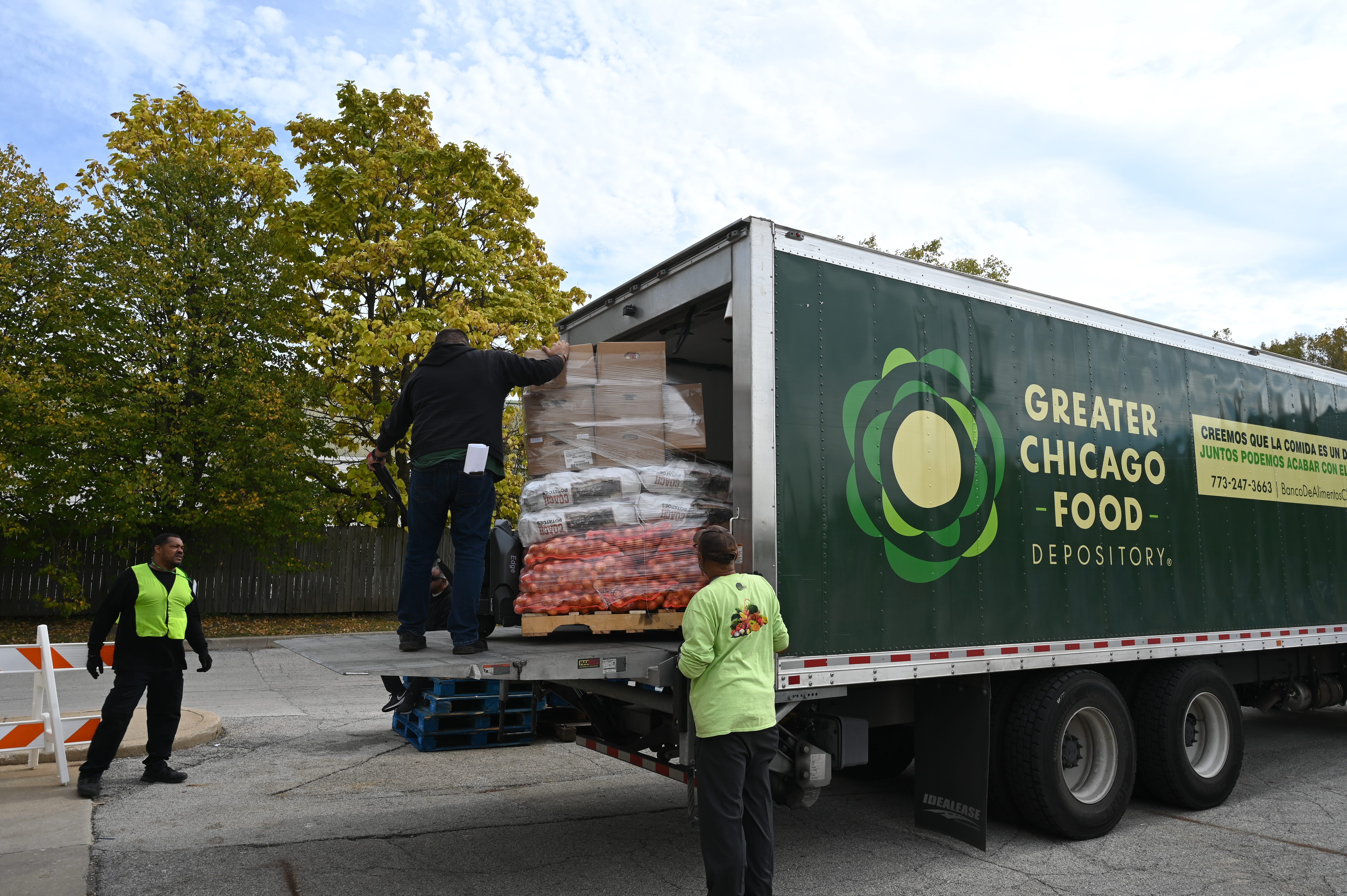
The Greater Chicago Food Depository, the main supplier for food pantries in the area, is already providing meals for 175,000 households, as the organization’s policy director Danielle Perry told me when I asked her about the SNAP situation here in Illinois. That’s similar to what it provided during the COVID-19 pandemic.
”We’re walking toward a new crisis when we’re already at the height of need,” Perry said. “And we know that for every meal we provide, SNAP provides nine. Emergency food programs can’t make up the difference.”
The same scenario is playing out in cities and states nationwide as they brace for an onslaught of visits from those in need. “Everyone,” Perry added, “is dealing with this.”
Next year, another blow
Even if the shutdown somehow is magically resolved soon, Trump’s Big Ugly Bill will make it harder for millions of families, veterans, older people, and others to afford food. It’s not as if SNAP recipients are somehow making out like bandits: as of 2024, “the maximum SNAP benefit did not cover the cost of a modestly priced meal in 99% of counties” nationwide, the Urban Institute calculated.
But November threatens to be just the start of a downward spiral, as Perry explained to me. In March 2026, hundreds of thousands of recipients will lose benefits anyway, regardless of what happens with the shutdown, because of changes to SNAP made under the Big Ugly Bill.
For one, states will now have to pay, on their own, a portion of SNAP costs based on what’s called their “payment error rate”—the percentage of payments made in error, even if the payment error was a data entry mistake or similar inadvertent error. States with error rates of 10% or more will have to pay the greatest share of SNAP costs starting in October 2027: 15%. States with lower error rates will pay a smaller percentage.
That makes sense on the surface, as an incentive for states to be more careful. But if states can’t pay their full share, they get nothing in funding from the feds—a huge, costly hit for states and a potentially devastating blow to recipients who need the help.
The Big Ugly Bill also puts additional work requirements in place. SNAP has always had a work requirement for those who don’t fall into any of the exempt categories, such as those 54 and older, families with children under 18, disabled individuals, veterans, those who are homeless, and people living in states with unemployment rates above the national average.
But the Big Ugly Bill tightened or scrapped those exceptions. Veterans, homeless individuals, and recipients in states with high unemployment rates are no longer exempt from work requirements at all, regardless of circumstances. The age limit for older recipients to remain exempt will be raised to 64, so good luck if you’re 60, lose your job, and can’t find a new one because of age discrimination.
For families, the work requirement exemption will apply only when children are 14 and under.
Altogether, the Big Ugly Bill will cut $186 billion from SNAP over the coming decade. The people who will pay the price are our neighbors, colleagues, friends, and acquaintances, perhaps even family. Many of them are working but just don’t make enough to afford their grocery bill because of low pay or hourly, on-call schedules they don’t control.
Keep in mind: All this is happening at the same time health care, thanks to the expiration of tax Affordable Care Act tax credits, will get harder—or impossible—to afford.
“We’ve been beating the pavement about cuts to SNAP,” Perry told me.
That’s something all of us ought to do.
Lorraine Forte is a Chicago journalist and former editorial page editor of the Chicago Sun-Times.

"Trump can send them federal disaster aid while denying it to Democratic states..."
LET'S JUST RECALL that no president has ever done this before to our own people. It is sick--as sick as cutting off food assistance in a country as wealthy as ours while the jerk builds a fckng golden ballroom.
And all that to save himself and his billionaire owners from paying any taxes, especially on their ill-begotten income. Talking up upside down socialism!