


If you want to see how big money is seeping into American politics, take a look at the big picture surrounding this week’s Illinois primary election.
Political action committees and special interest groups spent more than $50 million to try to influence high-profile congressional and state legislative races, according to one analysis of Federal Election Commission reports. That spending didn’t automatically lead to success for big-money candidates, which is a good sign if we want to keep our elections from turning into auctions among outside interests with fat wallets.
But talk of who-took-cash-from-which-big-donor-and-how-much often overshadowed discussion of policies that voters in Illinois and across the country care about: providing affordable health care, ending the Iran war, stopping Donald Trump’s and Stephen Miller’s brutal immigration agenda, and protecting democracy from the Trump regime’s constant barrage of lies and attacks on the Constitution.
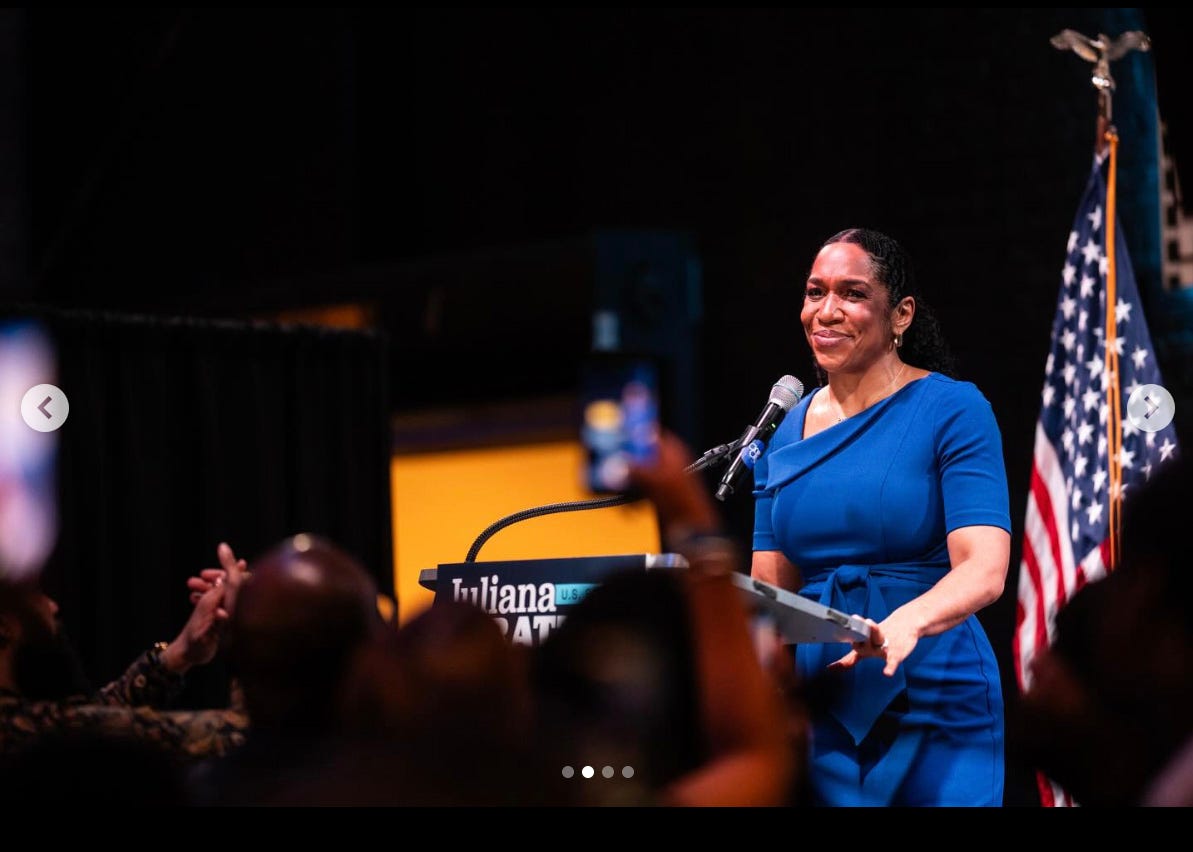
Consider the bitterly contested race to choose the Democrat who will run in November for the Senate seat being vacated by the senior Illinois senator, Dick Durbin, who is retiring. Millions were spent by super-PACs in the race, which had nine candidates on the ballot but quickly became a three-way contest among the state’s lieutenant governor, Juliana Stratton, and two veteran members of Congress, Raja Krishnamoorthi and Robin Kelly.
Stratton’s campaign received $5 million from billionaire Gov. JB Pritzker — Stratton was his running mate in his two campaigns — via a PAC that supported her. She won with just under 40% of the vote; Illinois has no runoffs in a multi-candidate primary election, so the top vote-getter wins even if he or she doesn’t get a majority.
That PAC received an additional $1.1 million from another Pritzker family member. Stratton also took money from corporate super-PACs, including a hefty six-figure donation from a company that contracts with Immigration and Customs Enforcement.
Meanwhile, five-term congressman Krishnamoorthi received millions in support from outside super-PACs – some aligned with right-wing interests, such as Trump supporter Peter Thiel’s software firm Palantir — that spent big to help his campaign. Krishnamoorthi was initially considered the front-runner against Stratton, in part because of the $30 million he initially raised.
Money was a prominent theme throughout the campaign, including in at least one debate. Krishnamoorthi had plenty of cash, but it didn’t help him win. Stratton had a wealthy governor’s financial and public support. Kelly, widely respected among progressives, trailed in fundraising and had little chance in the race.
See how big money can dominate an election, regardless of who wins and who loses? That’s not how American politics should work.
In this heavily Democratic state, Stratton now is the favorite in the Nov. 3 election and would become the second Black woman from Illinois in the Senate. She will face former Illinois Republican Party Chair Don Tracy, a lawyer who said he will make affordability a top campaign issue.
AIPAC and crypto cash
The Senate candidate race wasn’t the only contest that drew attention because of the influence of big money.
As voters pay more attention to Israel’s actions in Gaza and the U.S.-Israeli war against Iran, candidates who took money and backing from the American Israel Public Affairs Committee came under fire. AIPAC spent at least $13.7 million to support four candidates in various congressional races.
In a local public radio station’s questionnaire survey of the dozens of candidates in those races, the four AIPAC-backed candidates declined to answer yes-or-no questions about U.S. aid to Israel and AIPAC lobbying. That’s clearly bad for democracy: When candidates get big money from lobbying groups, voters deserve to know where candidates stand on those issues.
Two of the candidates, Chicago treasurer Melissa Conyears-Ervin and state Sen. Laura Fine, lost their races for Congress. Two other candidates, Donna Miller and Melissa Bean, won.
Other special interests that funneled big money into congressional or state legislative races: Fairshake, a pro-cryptocurrency PAC connected to Trump supporters; and two PACs that support sports betting and want to block municipalities in Illinois from taxing the industry. Some of the candidates won; others did not.
The big takeaway from the Prairie State primary is this: Whether big-money candidates win or lose, democracy is distorted when hundreds of millions of dollars nationwide are spent in elections by corporations, uber-wealth donors and super-PACs.
Congress needs to clean up politics and make American elections fairer and more transparent by reining in this spending.
Lorraine Forte is a Chicago journalist and the former editorial page editor for the Chicago Sun-Times.

It’s always about the money.
Even if Congress did something (not very likely, since they're the ones who benefit from the largess), the Supreme Court would overturn it!