


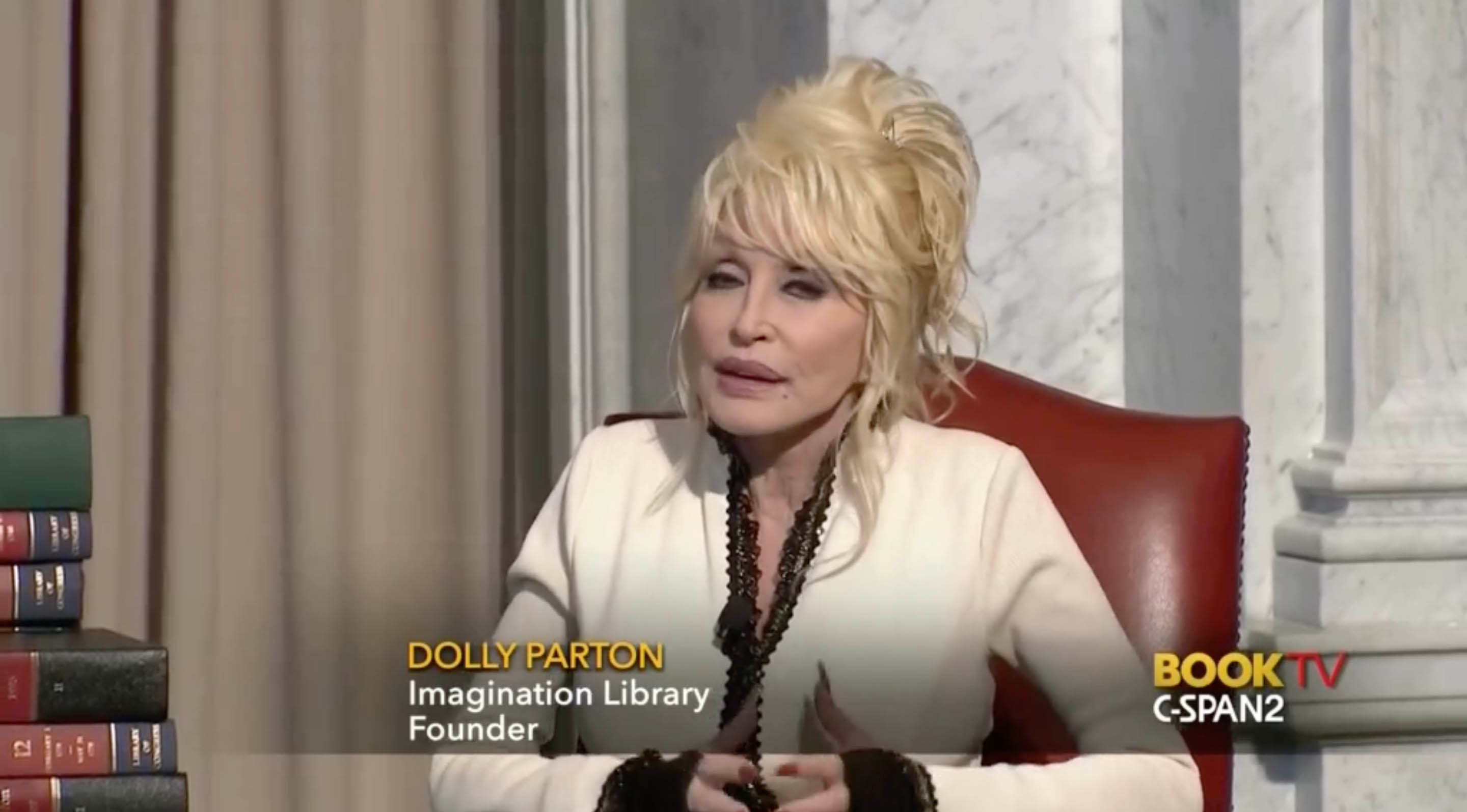
That sound you heard on Wednesday afternoon was 300 million people collectively breathing a sigh of relief at a small but heartening piece of good news in these grim times.
Despite rumors to the contrary, Dolly Parton is still alive.
The country music icon, 79, whose husband Carl Dean passed away in March, recently announced she was cancelling a series of concerts in Las Vegas because of unspecified health challenges.
It didn’t seem like cause for a freakout until Tuesday, when her younger sister Freida Parton inadvertently set off a wave of nationwide panic with a single Facebook post in which she said she’d been “up all night praying” for Dolly.
The response across social media (and my group chats) was instantaneous and unanimous: Not today, Satan. This country can’t afford to lose Dolly right now.
Thankfully, the worry was premature. On Wednesday, Dolly quelled the panic in the most Dolly way imaginable: with an Instagram post captioned “I ain’t dead yet!”
In a two-minute video, she tried to put everyone’s mind at ease. “I appreciate your prayers, because I’m a person of faith, I can always use the prayers for anything and everything, but I want you to know that I’m okay,” she said, explaining that she was simply taking care of some issues she’d neglected in the wake of her husband’s death. Though she was having “a few treatments” at Vanderbilt University Medical Center, she was “not ready to die yet.”
“I don’t think God is through with me,” she said, “and I ain’t done working.”
At a time when it often feels like we’re on the brink of a second civil war, Parton’s physical wellbeing feels like nothing less than a matter of vital national security. She is, by any measure, one of the most widely beloved figures in American life, a woman equally beloved by drag queens and MAGA die-hards, by trad wives and feminists. She might be the only person in the country who would be greeted with a standing ovation if she graced the stage at either party’s convention (even though she never would, because she knows better than to get involved in politics.)
A friend in the U.K. recently asked me who I thought was the most widely beloved celebrity in the United States—someone who transcended the partisan divide and was admired by an overwhelming swath of the public. (This friend argued that David Attenborough, the nonagenarian broadcaster and biologist, fit the bill in the U.K.)
Without hesitation, I told him: Dolly Parton.
Her singular ability to bridge the right-left divide was the subject of the brilliant nine-episode podcast, Dolly Parton’s America, back in 2019. Since it was released, everything from Sydney Sweeney’s jeans to the Cracker Barrel logo has become politicized. Yet Parton remains one of the few things we can all still get behind. Without her, what would we have left? The Super Bowl? (Alas, no.) Chocolate? (Sadly, nope.) Puppies? ( Not even those.)
So how is Parton able to remain above the partisan fray when so many other luminaries, even those once considered undisputed national treasures, have fallen victim to the culture wars?
For starters, there is her remarkable biography, which embodies the rags-to-riches American dream. The fourth of twelve children, Parton was raised in grinding poverty but grew up to become one of the wealthiest women in the country, thanks to her business savvy and preternatural musical talent. (She famously wrote “Jolene” and “I Will Always Love You” back to back, possibly on the same day.)
A deeply religious woman, Parton embraces the seemingly endangered Christian values of kindness, non-judgment, and generosity. Her philanthropic largesse is legendary. Through her organization, Imagination Library, she has given away over 301 million books to children around the world as of October 2025. The organization was founded to honor her father, Lee, who was never able to receive an education. She pledged millions to families displaced by wildfires in the Great Smoky Mountains in 2016.
She donated $1 million to fund Moderna’s COVID vaccine, and also got the shot—which she called “a dose of her own medicine”—as soon as she was eligible, in order to reassure anyone who might be hesitant. “I just want to say to all of you cowards out there: Don’t be such a chicken squat,” she said.
She has also given back to the community through Dollywood, the amusement park she opened in 1986 in Pigeon Forge, a few miles from her hometown of Sevierville. According to one case study, the 160-acre park—which features an assortment of rides plus a church, a bald eagle sanctuary, and a replica of Parton’s childhood home—makes a direct annual impact of $1.8 billion a year in Tennessee. It is Sevier County’s largest employer, with more than 4,000 people working at the park itself during high season.
Also—and this is important—Dollywood has the most delicious, decadent, ooey-gooey cinnamon bread.
On Friday, the winner of the Nobel Peace Prize will be revealed. Donald Trump thinks he deserves the honor, but Parton would be a far more worthy recipient—for the cinnamon bread alone.
While she assiduously avoids partisan politics in interviews, typically deflecting any controversial line of questions with a well-timed joke at her own expense, Parton has always used her music to call out injustice and tell stories about the downtrodden. Her songs have channeled the experiences of coal miners, migrant farm workers, unmarried pregnant women shunned by their families and driven to suicide, Through her lyrics, she’s denounced “greedy politicians” who “wouldn’t know the truth if it bit ‘em in the ass”—an enduringly popular sentiment across the ideological spectrum—and voiced support for gay families.
Perhaps most famously, she wrote “9 to 5,” the theme to the hit movie of the same name about three working women who get revenge on their sexist pig of a boss. Long embraced as a feminist anthem, even if she personally has shied away from the “f” word, it’s an earworm with class-conscious lyrics that could have been penned by Karl Marx: “It’s a rich man’s game no matter what they call it/and you spend your life puttin’ money in his wallet.”
Outside of her music, Parton has repeatedly expressed support for the LGBTQ community and (humorously) came out in favor of same-sex marriage in 2009—years before Barack Obama. According to lore, she once entered a Dolly Parton drag lookalike contest (and lost). “If I hadn’t been a girl, I’d have been a drag queen,” she has said more than once. And she has gently criticized bathroom bills targeting transgender people. “I just know if I have to pee, I’m going to pee. I don’t care where it’s going to be,” she said in 2016.
Parton’s core message has never wavered: she believes in allowing people to be who they are, and treating them with respect.
Long live Dolly—and Dollyism.
Meredith Blake is The Contrarian’s culture columnist.
Thank you for all the reminders of her career and what a generous and giving person she is and has been. I do wish her health to be healed and to continue gracing our TV and music networks!!!
An arsonist was responsible for the fires in Bear Creek crossing Tennessee which had engulfed huge tracts of land including residential areas. Many of those residents did not have homeowners insurance and fortunately Dolly came to their rescue. A true philanthropist indeed!