


“Under the floorboards of Western culture run two streams. One is anti-semitism, the other is anti-Black racism.”
Henry Louis Gates presents this theory early in the first episode of Black and Jewish America: An Interwoven History, a four-part series on PBS.
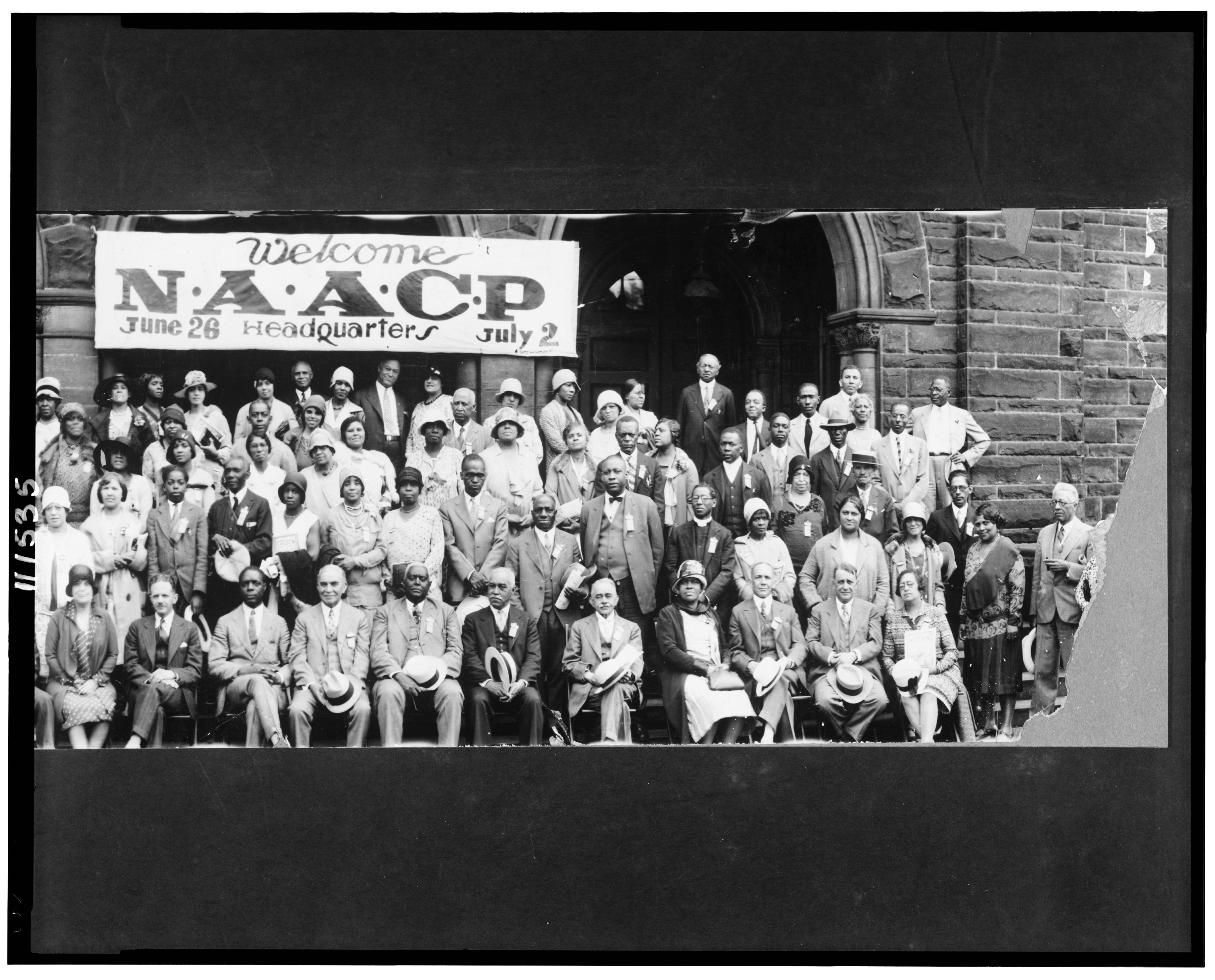
Written and hosted by Gates, the documentary (available to stream at PBS.org) traces the parallel journeys of Black and Jewish Americans, which share a history of persecution but have seen bias against their communities play out in different ways. It spans more than 500 years, from the Spanish Inquisition to campus protests over the war in Gaza, highlighting moments when Black and Jewish people came together to fight for progress, like the founding of the NAACP in 1909 and during the civl rights movement of the 1950s and ’60s. But it also examines moments when these groups were pitted against each, such as the Crown Heights riot in 1991 or the trial and lynching of Leo Frank in 1915.
It’s a vast amount of history to distill into a few hours of television. Directors Phil Bertelsen and Sara Wolitzky looked for moments when the stories of Jewish and Black Americans intersected and the communities either “forged an alliance or found tension,” Bertelsen said.
The idea to explore this subject dates back to the Unite the Right rally in Charlottesville in 2017. The spectacle of torch-wielding white supremacists, angry over the potential removal of Confederate monuments and chanting “Jews will not replace us” offered a stark example of the overlap between anti-Jewish racism and anti-Black racism.
That horrific event “really revealed this emboldened white nationalism in our country,” Wolitzky said. “This was right on the heels of the shooting at Mother Emanuel AME Church in Charleston and shortly before the Pittsburgh Tree of Life synagogue shooting. It felt like the time was really ripe to revisit this very long history of this entanglement in our country of these groups, which, at its best, produced a lot of terrific things for this country and was clearly very much needed in the present moment.”
Black and Jewish America explores many lesser-known chapters in this overlapping history and also finds new perspectives on familiar events. Episode 1, “Let My People Go,” looks at the early history of the United States, when Black people were brutally enslaved but Jewish people were able to find refuge from the persecution they faced in Europe. We hear an excerpt from a letter written by George Washington to a Rhode Island synagogue in which he welcomed “the children of the stock of Abraham” and expressed the hope that “everyone shall sit in safety under his own vine and fig tree, and there shall be none to make him afraid.”
Episode 2, “Strange Fruit,” focuses on Black and Jewish contributions to music, film, and sport.
“We were acting on a supposition that without Black and Jewish Americans, there really is no American popular culture,” Bertelsen said.
Viewers learn how Billie Holiday recorded her haunting protest anthem “Strange Fruit” for Commodore Records, a jazz label run by Jewish producer Milt Gabler (who was Billy Crystal’s uncle). The anti-lynching song, which Holiday’s label, Columbia, declined to release, was one particularly remarkable example of collaboration between Black and Jewish figures in the music industry. But these socially progressive messages could be harder to find in classic Hollywood films. Built by Jewish immigrants like Samuel Goldwyn and Louis B. Mayer, the movie business offered limited opportunities to Black artists and often propagated crude racial stereotypes.
The episode also revisits the 1936 Olympic Games in Berlin, where Black athlete Jesse Owens won three gold medals, but two Jewish American runners, Marty Glickman and Sam Stoller, were kept from participating in the 4x100 relay because U.S. Olympic Committee Chairman Avery Brundage did not want to embarrass Adolf Hitler. (Before the games, Brundage assured American athletes there was no racism or antisemitism in Nazi Germany, and a potential boycott was narrowly defeated.)
The series is itself the product of Jewish-Black collaboration: Wolitzky is Jewish, Bertelsen is Black, and they intentionally paired Black and Jewish producers. (This approach was inspired by Henry Hampton, who made the landmark documentary series Eyes on the Prize, about the Civil Rights movement.) When it made sense, they also paired interview subjects representing each community, like playwrights Tony Kushner and Anna Deavere Smith.
“We hoped would give us a kind of more balanced view of the history,” Bertelsen said.
Episode 3, “The Grand Alliance,” centers on the inspiring Black-Jewish alliance during the civil rights era, when young activists faced violent resistance in the Jim Crow South — most notoriously with the 1964 murders of Andrew Goodman, James Chaney, and Michael Schwerner in Mississippi. The brutal crime garnered national media attention, almost certainly because two of the victims were white, a fact that Schwerner’s widow, Rita, pointed out in a press conference.
This installment also spotlights the lesser-known story of Esther Brown, a Jewish homemaker who fought to desegregate schools in Merriam, Kansas, in a case that laid the groundwork for Brown v. Board of Education.
But after the historic breakthroughs of the 1960s, the Black-Jewish alliance began to fray, in part because of differing views on Israel and the Palestinians. Although leaders like W.E.B. Du Bois supported the founding of Israel, Black and Jewish America identifies the Six-Day War in 1967 as a turning point when Black leaders began to express sympathy for the Palestinian cause.
This shift was epitomized in a photo of the Rev. Jesse Jackson embracing Yasser Arafat in 1979, shortly after Andrew Young, the first Black American to serve as the U.S. ambassador to the United Nations, was forced to resign for meeting with a representative of the Palestinian Liberation Organization. (In a strange coincidence, the episode featuring Jackson aired the day he died last week.)
“I didn’t realize how long the how long Israel-Palestine has played a role, positive or negative, in this relationship,” Wolitzky said. “It has a really long history of being live wire.”
And it continues to be a source of tension.
Wolitzky and Bertelsen were editing the documentary in the aftermath of the Oct. 7, 2023, attack on Israel, as the war in Gaza raged on, and as campus protests erupted across that country. During this period, Bertselsen said, “Our communities were probably more distinct than they had ever been historically.”
Yet the filmmakers remain optimistic about the future of the Black-Jewish alliance, simply because it is necessary at a time when antisemitism and anti-Black racism seem to be bubbling up from under the floorboards with terrifying regularity.
“The threats are so obvious and so extreme,” Wolitzky said, “that there is no other choice.”
Meredith Blake is The Contrarian’s culture columnist.
Thank you.
As with your recent post on documentaries of Frederick Wiseman and current documentaries nominated for Oscars, and with this post on the complicated alliances between Black and Jewish Americans, you make it clear that these difficult stories are being told, we just have to see and listen.
As another commentator has said, it's depressing and hard. But of course that is just why it is so important that these stories be brought to our attention.
Julius Rosenwald, President of Sears, built 5,000 schools, shops and teacher homes for African-Americans across 15 Southern states between 1917-1932.