

By Frederic J. Frommer
A half-century ago, the Yankees returned to the South Bronx after a two-year hiatus in Queens, and found a gleaming, completely renovated Yankee Stadium — courtesy of a city that nearly went bankrupt the year before.
New York City felt it had to fork over a king’s ransom to keep the Yankees from leaving town, two decades after the Giants and Dodgers had abandoned New York. The city wound up spending $100 million for the project — four times the original estimate.
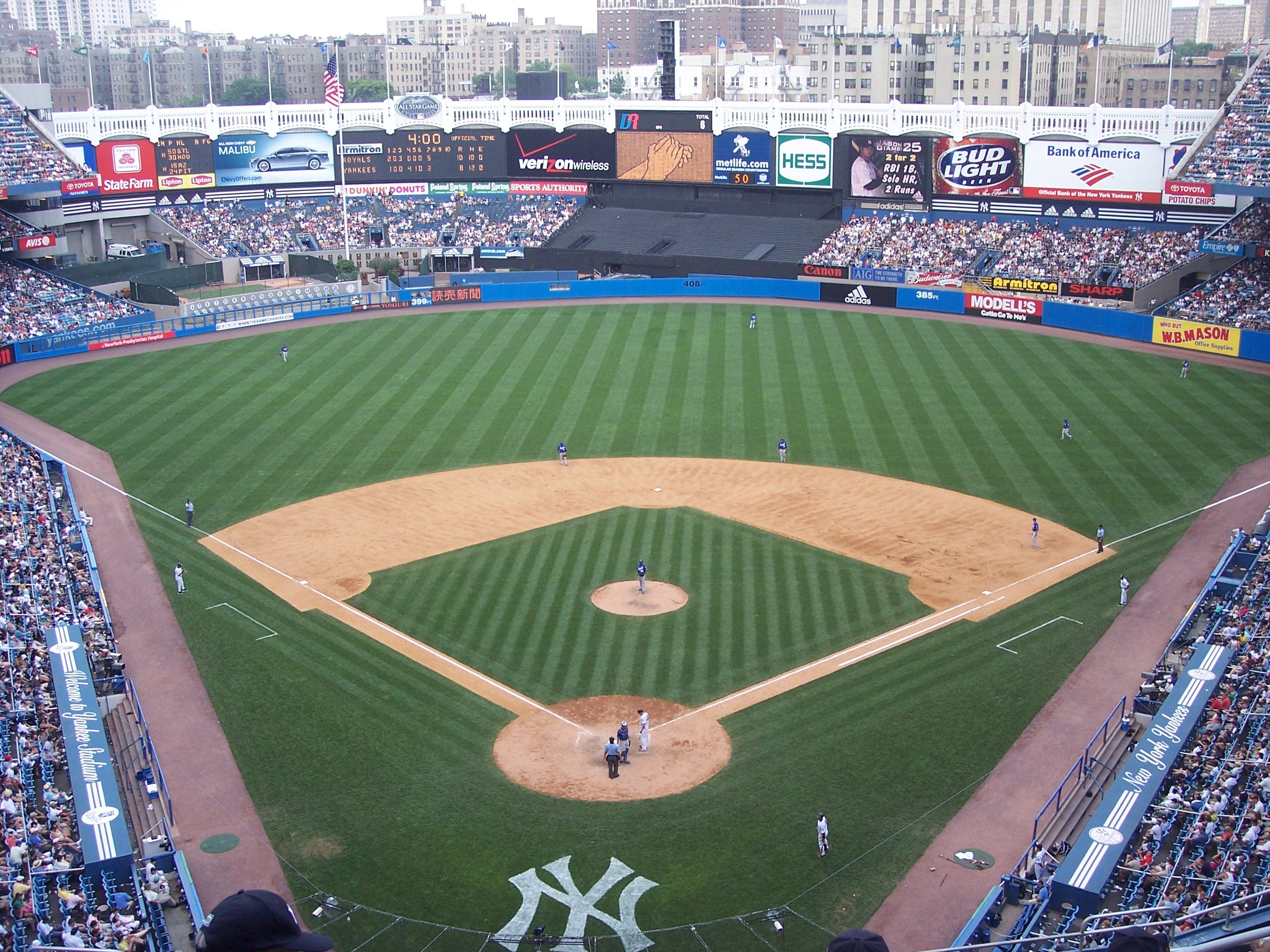
“BASEBALL SPRINGS ETERNAL,” read the headline on an April 1976 Time magazine cover story, showing a parade float-sized Babe Ruth sitting on top of the renovated ballpark. He had homered in the 1923 opener of the ballpark known as the “House that Ruth Built” in the Yankees’ victory over the rival Boston Red Sox.
More than 50 years later, the stadium was packed with dignitaries for the April 15 reopening, including the governors of New York and New Jersey. But the city’s mayor, Abe Beame, was a no-show. Perhaps he didn’t think it was such a great look for a city to be lavishing seven figures on a sports facility a year after New York barely avoided bankruptcy ($100 million in ’76 is worth about $580 million today).
“It was 53 years from Babe to Abe,” Time wrote, “but the difference in what a community will lavish on its sports team could be measured in lightyears. Trembling at the thought that its Yankees might leave town forever, the stone-broke metropolis ponied up an estimated $100 million to provide the likes of 6,900 parking spaces and an electronic Scoreboard for the fans, expansive lavender-carpeted dressing rooms for the players and a plush lounge, featuring overstuffed chairs in the shape of fielders’ gloves, for the owner’s guests.”
Many New Yorkers could still remember the sting of the Giants and Dodgers leaving town for California in 1957. But a fresher memory was the 1971 announcement by the NFL’s Giants that they would be leaving Yankee Stadium for the Meadowlands in New Jersey; they wound up playing their first game in Jersey in the fall of ’76. Could the Yankees follow them across the Hudson River?
Today, sports teams continue to leverage other locales to extract taxpayer-funded stadiums — or just leave town for those massive subsidies. One especially generous recent example is Kansas luring the Chiefs from Missouri with $1.8 billion in public subsidies. That deal “serves as a reminder that economists find little to no economic benefit for taxpayers who foot the bill for new stadiums,” Front Office Sports observed in a December story. In 2024, voters in Jackson County, Missouri, rejected a proposed tax measure that would have helped pay for renovating the Chiefs’ stadium in Kansas City and building a new ballpark for the Royals.
But the Las Vegas legislature approved a measure to entice the Oakland A’s to move. The team will start the 2028 season in a new stadium built with $380 million in taxpayer dollars. Says the Nevada Policy Institute: “In 2022, economists conducted a meta-survey looking at over 120 studies on the economic impact of stadium subsidies and … concluded that ‘recent analyses continue to confirm the decades-old consensus of very limited economic impacts of professional sports teams and stadiums.’”
But politicians have been talking up these supposed benefits for decades. Beame’s predecessor as mayor, John Lindsay, announced the Yankee Stadium renovation back in ’71, touting it as “the centerpiece of another New York City neighborhood renaissance.”
While the city modernized Yankee Stadium, the team played the 1974 and ’75 seasons at Shea Stadium, home of the New York Mets. The Bronx Bombers playing in Queens proved to be an uneasy arrangement.
“It wasn’t a very good experience over there because they said the true Yankees fans wouldn’t go to Shea Stadium to watch it, and I believe it,” Yankees third baseman Graig Nettles recalled years later. “You know, we got some fans over there but most of the fans were booing us. It was like being on the road all season.”
The renovated stadium reduced the capacity from just over 65,000 to around 54,000, but added four inches to the width of the seats. The ballpark’s new “telescreen” blocked views from the 161st Street subway station and rooftops of nearby apartment buildings that previously allowed New Yorkers to get a free view of the action. (The telescreen didn’t work for the opener.)
Yankees celebrities including Yogi Berra, Mickey Mantle, and Joe DiMaggio were on hand for the ’76 opener. Bob Shawkey, who won the Yankees’ first game at Yankee Stadium back in 1923, threw out the first ball. Five of his teammates from that team were there too — Waite Hoyt, Joe Dugan, Whitey Witt, Oscar Roettger and Hinkey Haines. They would win the Yankees’ first World Series title that October, over the New York Giants, their former landlords at the Polo Ground.
In the ’76 opener, the Yankees fell behind 3-0 to the Minnesota Twins but stormed back to win, 11-4. They went on to win their first pennant in 12 years, ushering in a revival that would include three straight pennants and two World Series titles.
But it wasn’t an entirely festive afternoon. Picketers marched across the street from the ballpark, saying New York hadn’t done enough to improve the neighborhood.
“YANKEES $100 MILLION; BRONX ZIP,” scoffed the headline of a New York Magazine article.
In his seminal book, Ladies and Gentlemen, the Bronx Is Burning: 1977, Baseball, Politics, and the Battle for the Soul of a City, Jonathan Mahler called the project “a powerful symbol of misplaced priorities, an outsize admission of urban failure.”
“New York’s conscience has been ruffled for some years,” Thomas Boswell wrote in the Washington Post, “over that blue-and-alabaster bauble — Yankee Stadium — gleaming in the midst of the crushing squalor of the south Bronx.”
Yankees owner George Steinbrenner maintained that the ballpark would be a hit with New Yorkers.
“After people see it, they’ll be enthused. I can’t take credit for it,” he said, in an uncharacteristic comment for the famously egotistic owner. “It was done by the city and the Columbia Broadcasting System when they owned the team. Now we have to make it work.”
But that didn’t stop him from threatening in the early 1990s to move the team to New Jersey when the team’s lease expired in 2002. He also talked to New York Gov. Mario Cuomo about building a stadium in Manhattan.
“Yankee Stadium and its surrounding neighborhood have existed in a kind of uneasy truce,” Malcolm Gladwell wrote in a 1993 Washington Post story, “a largely white and affluent attraction in a largely Hispanic and poor community, each turning a blind eye to the other.”
Of course, the Yankees wound up staying put, with a new, $2.3 billion Yankee Stadium opening in 2009.
According to the New York Times, nearly $1.2 billion came in public money and tax breaks.
Frederic J. Frommer, a sports and politics historian who has written for the Washington Post, the New York Times, the Atlantic and other national publications, is working on a book on ‘70s baseball.
Let me contemplate baseball in Las Vegas in the thick of climate change. It's not just the cost of building a stadium but of maintaining it. I'm sure there will be a retractable roof and energy-sucking air conditioning for a vast space. This seems criminal to me in light of the energy and water strain on the West right now--or any time.
Las Vegas should be atoning for its environmental sins, not piling up new ones.