

By Roberto Valadéz
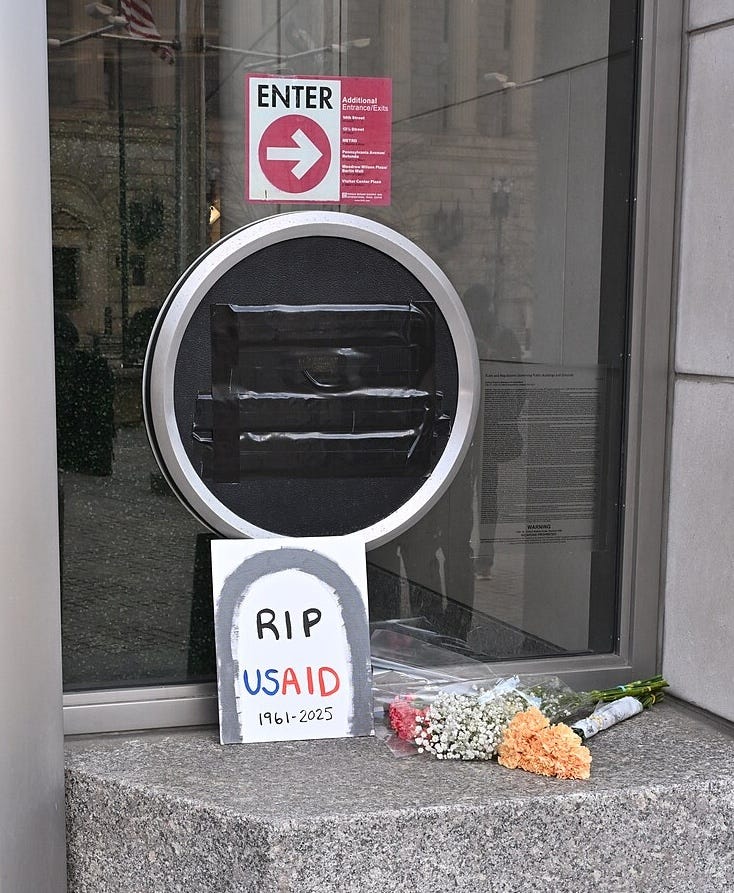
The Trump administration’s recently-unveiled “America First Global Health Strategy” is more than just a reorganization of foreign aid. It overturns decades of tradition, sending a clear new signal about America’s foreign priorities. Emerging from the abruptly dismantled U.S. Agency for International Development (USAID), the new framework replaces humanitarian soft power with the cold transactionalism of an American business-led bottom line. Those of us dedicated to public health and development are rightfully skeptical of this transition—particularly given its already-mounting human toll.
For over six decades, USAID served as the quintessential expression of American values abroad. Established by President John F. Kennedy in 1961 via the Foreign Assistance Act, its original mandate was dual: to streamline U.S. development assistance and to advance American soft power during the Cold War. USAID championed democracy, human rights, and socioeconomic development, operating on the premise that investing in global stability was a safeguard for American security. The agency’s work, which included disaster relief, poverty reduction, and massive global health initiatives, transcended partisan divides, enjoying robust bipartisan support throughout most of its history. Indeed, its impact is undeniable: studies estimated that between 2001 and 2021, USAID was responsible for saving over 92 million lives, 30 million of which were children.
Under USAID, development aid was not only charity; it was also an investment in allyship and a stable international order. The objective was to bring developing nations “on side” with American ideals. The current administration’s dismantling of this infrastructure in favor of transactional bilateralism undoes this legacy, signaling a retreat from the very notion of a shared global interest.
The “America First” strategy explicitly promotes a model in which foreign aid must demonstrate a business imperative and promote U.S. industry. The allocation of funds already reflects these priorities vividly. The State Department has committed a three-year, $150 million grant to Zipline, an American robotics and autonomous drone delivery company, to expand its healthcare operations across five African nations, including Rwanda, Ghana, and Nigeria. Drone delivery can drastically improve access to medicines and vaccines in the hardest-to-reach communities of recipient countries. But it may also make these countries—already financially constrained—beholden to a costly “pay-to-play” relationship with a private American company to access the supply chain.
Equally troubling is the new strategy’s risk of repeating past failures. USAID was not a perfect vehicle for development aid. Among its most controversial initiatives was the abstinence-only funding channeled through PEPFAR (the President’s Emergency Plan for AIDS Relief), which focused on “abstinence until marriage” sexual education programs. These programs proved ineffective at reducing the number of sexual partners among young people, reducing teen pregnancies, or delaying first sexual experience. They also further stigmatized gay and bisexual men—a population highly vulnerable to HIV/AIDS—in favor of ideologically-aligned faith-based organizations (FBOs).
The “America First” strategy risks repeating this error by prioritizing FBOs for guidance and service delivery. While I agree that FBOs possess vital on-the-ground capacity, their historical record in failing to meet the needs of LGBTQ+ communities and young people with competent care presents critical blind spots. The focus on FBOs must not come at the expense of equitable care. To ensure that ideological bias does not undermine public health efforts, there must be a concerted effort to engage secular organizations and partners whose policies are strictly evidence-based and inclusive of all identities.
The “America First” approach also dismisses global health as a security issue. Strong health systems are not only a bulwark against disease but also against instability and radicalization. Healthy communities are less susceptible to the exploitation of extremist ideologies, which prey on the sense of grievance, deprivation, and vulnerability created by failed governance and systemic health crises. This calculus was core to the old USAID model.
As we learned from the COVID-19 pandemic, diseases have no borders. A lack of international collaboration, coupled with weak health infrastructure in any single country, leads to tragedy for Americans and the global population alike. The pandemic stands as a searing indictment of the limitations of national isolationism, proving that unilateral action is a flawed approach to health security.
In place of crucial soft power networks, collaborative goodwill built over generations, national security, and the intrinsic value of human health, the America First strategy prioritizes one thing above all: return on investment for American companies. It is both a moral and strategic failure. The chilling death toll already associated with it is a stark warning that a business-first strategy in the face of global health crises guarantees a less healthy, and therefore less safe, world for all.
Roberto Valadéz is the former director of communications and special initiatives for the United Nations Ambassador for Global Health, where he led high-stakes global campaigns, including the office’s work on COVID-19. As the founder of True You, he now equips underestimated C-suite leaders with the tools to level up their leadership and amplify their impact by harnessing their authenticity.