


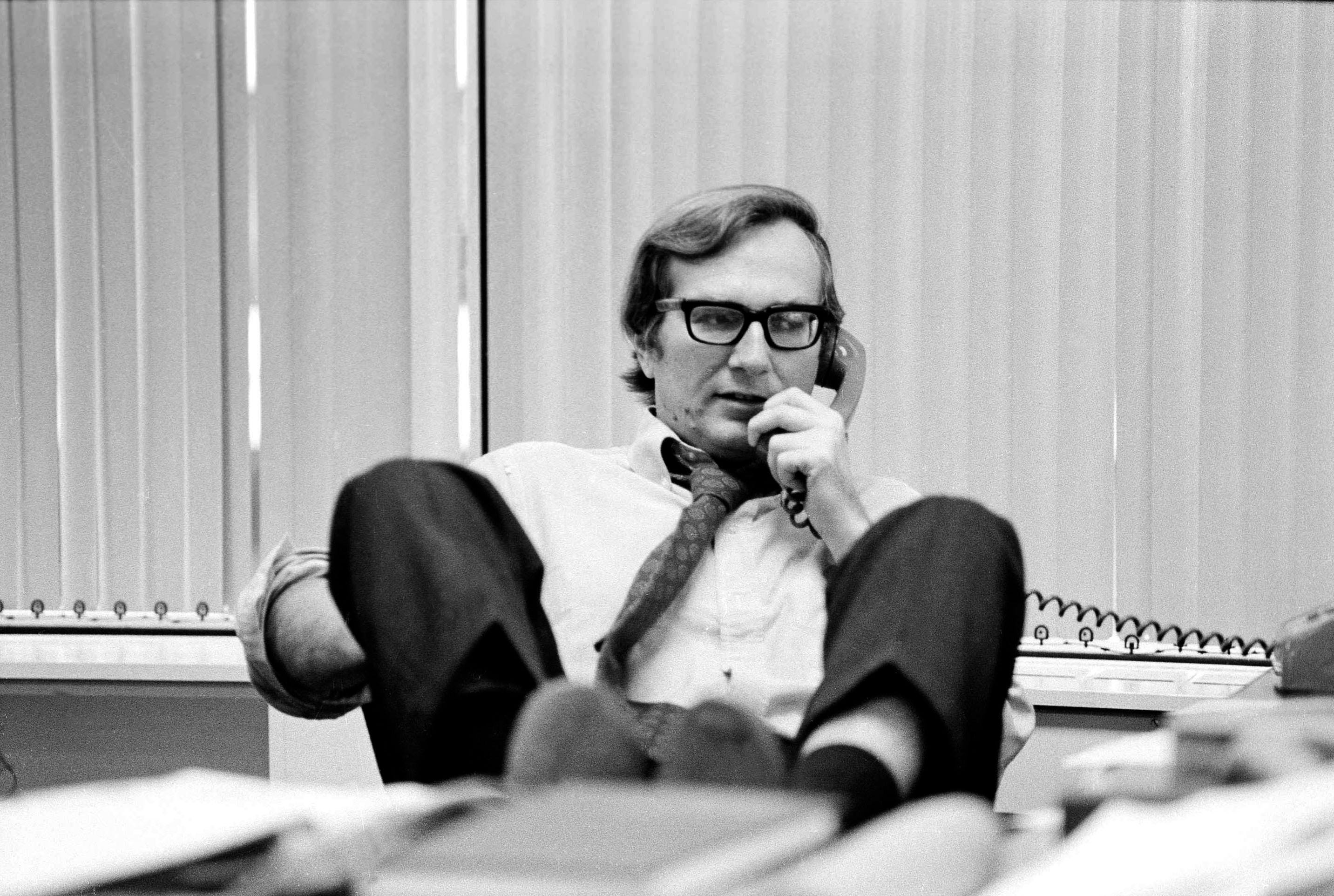
In the closing minutes of the documentary Cover-Up, Seymour Hersh, the celebrated investigative journalist who broke stories about the My Lai massacre and torture at Abu Ghraib prison, among countless other scoops, explains why he’s still at it at eighty-eight.
“You can’t have a country that does that,” he says, meaning atrocities like My Lai, in which American soldiers murdered hundreds of unarmed Vietnamese civilians in 1968. “That’s why I’ve been on the warpath ever since. You can’t just have a country that does that and looks the other way.”
Directed by Laura Poitras and Mark Obenhaus, the Nedocumentary traces Hersh’s six-decade-plus career in journalism, which began in Chicago, where he was a crime reporter covering a mobbed-up city. He eventually moved on to the New York Times, where he infiltrated an even more secretive organization, the CIA, covering its domestic spying campaign and role in the overthrow of Allende in Chile. He went on to focus on writing books and lengthier investigations for outlets like The New Yorker, which published his reporting on Abu Ghraib.
Poitras and Obenhaus ask Hersh about his method of reporting, which relies heavily on unnamed sources and sky-high stacks of (mostly illegible) notes written in longhand on yellow legal pads. “People, for a lot of reasons, they talk. They talk to me. People want to talk about stuff they do that was wrong and stupid. That’s what I always thought,” says Hersh, who is refreshingly unpretentious when discussing his craft. Recalling how he wove accounts from numerous sources into Pulitzer Prize-winning reports on My Lai, Hersh says, “All you had to do was get out of the way of the story.”
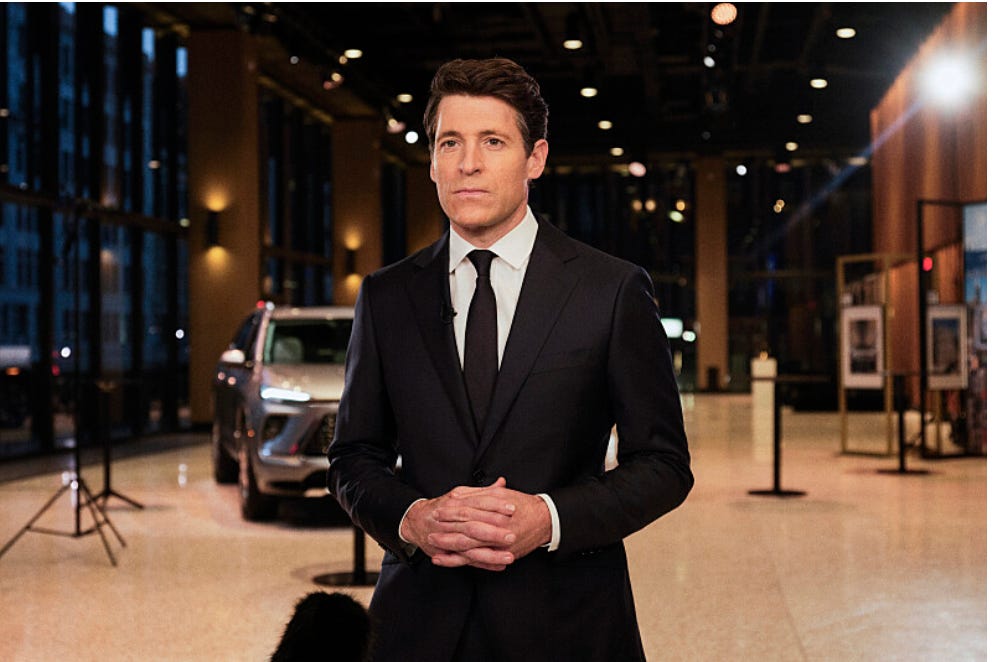
As I watched Cover-Up, it was hard not to think about the dire state of journalism in 2026, particularly at the legacy media outlets that gave rise to reporters like Hersh and are now controlled by Trump-friendly oligarchs. This week, the FBI raided the home of a Washington Post reporter, a brazen attack on press freedom that the paper’s owner, Jeff Bezos, has yet to comment on. At CBS News, the situation is arguably even worse. Since Bari Weiss took over the news division a few months ago, the anti-woke billionaire whisperer has severely damaged the reputation of a once-revered institution.
She pulled a 60 Minutes report on the abuse of detainees at CECOT, which has yet to air on CBS, but leaked online and subsequently went viral. (It even has its own Wikipedia page.) She also installed Tony Dokoupil as the new anchor of the third-place CBS Evening News and sent him on a lavish cross-country kickoff tour. The anchor, who promised to be “more transparent and more accountable” than Walter Cronkite, has so far fallen well short of that goal, committing embarrassing on-air gaffes, sending ratings into a nosedive, and conducting softball interviews with administration leaders, including Trump himself, who basically called Dokoupil a MAGA stooge right to his face.
It all feels like an impossibly far cry from Hersh’s heyday, when in fact CBS Evening News helped break the story of My Lai.
Yet one of the most urgent themes in Cover-Up is the sheer difficulty of producing journalism that holds the powerful to account within the confines of corporate media. Even harder? Delivering stories that make a long-term difference.
In 2026, it can be tempting to look back wistfully on the good ol’ days, when Americans got their news from staid TV anchors and newspapers rather than Fox News and TikTok.
But Cover-Up also forces viewers to resist such rose-tinted nostalgia. Hersh’s initial report on My Lai, conducted when he was a broke freelancer, was rejected by Look and Life magazines. It was ultimately distributed by Dispatch News Service, an anti-war news agency. Soon after, Hersh joined the New York Times, and disrupted what had been an all-too-cozy relationship between the paper and Henry Kissinger. But he also bristled at the cautious culture which prevailed at the Times.
“The biggest trouble I had was managing Sy [Hersh] at a newspaper that hated to be beaten but didn’t really want to be first,” says Bill Kovach, Hersh’s editor, in an archival interview.
This institutional skepticism grew worse when Hersh moved into covering major corporations. He and colleague Jeff Gerth repeatedly butted heads with their Times editors over a lengthy report on financial impropriety at Gulf and Western. The investigation “said things about corporate America that The New York Times, as part of corporate America, didn’t like,” Hersh says.
CBS Evening News ran a report on My Lai that helped propel Hersh’s reporting, but it took them a few decades to do so.
The film also reminds us how journalistic zeal for a scoop can occasionally cloud judgment. Hersh’s storied career has, perhaps necessarily, also included some notable missteps, like the time he was nearly fooled into publishing an entire book about JFK based on forged documents. (The Dark Side of Camelot did eventually come out, but had to be dramatically altered at the last minute.) Hersh admits that he was wrong in believing that Syrian president Bashar al-Assad was incapable of nerve-gassing his own people. When Poitras asks Hersh, who met with Assad multiple times, if that was “an example of getting too close to power,” he replies, “Of course.”
Cover-Up leaves viewers to contemplate an even larger existential question: how much impact can a single investigative reporter — even one as tenacious as Hersh — have in a society prone to cruelty? His extraordinary work on My Lai galvanized anti-war sentiment in the United States, but the conflict raged on for six more years. William Calley, the Army officer who led the massacre, was sentenced to life in prison for his crime, but served just a few days because Richard Nixon intervened to reduce his sentence.
“We are a culture of enormous violence,” Hersh says. “It’s just so brutal. There’s a level you just can’t get to.”
It was true in 1969; it’s even truer now.
Meredith Blake is the culture columnist for The Contrarian.
I do remember, and you are right, it was tough then, too. Great post.
You must see this movie, especially if you are curious about government information and the news business. It doesn't look away, and I found Hersh inspiring.