


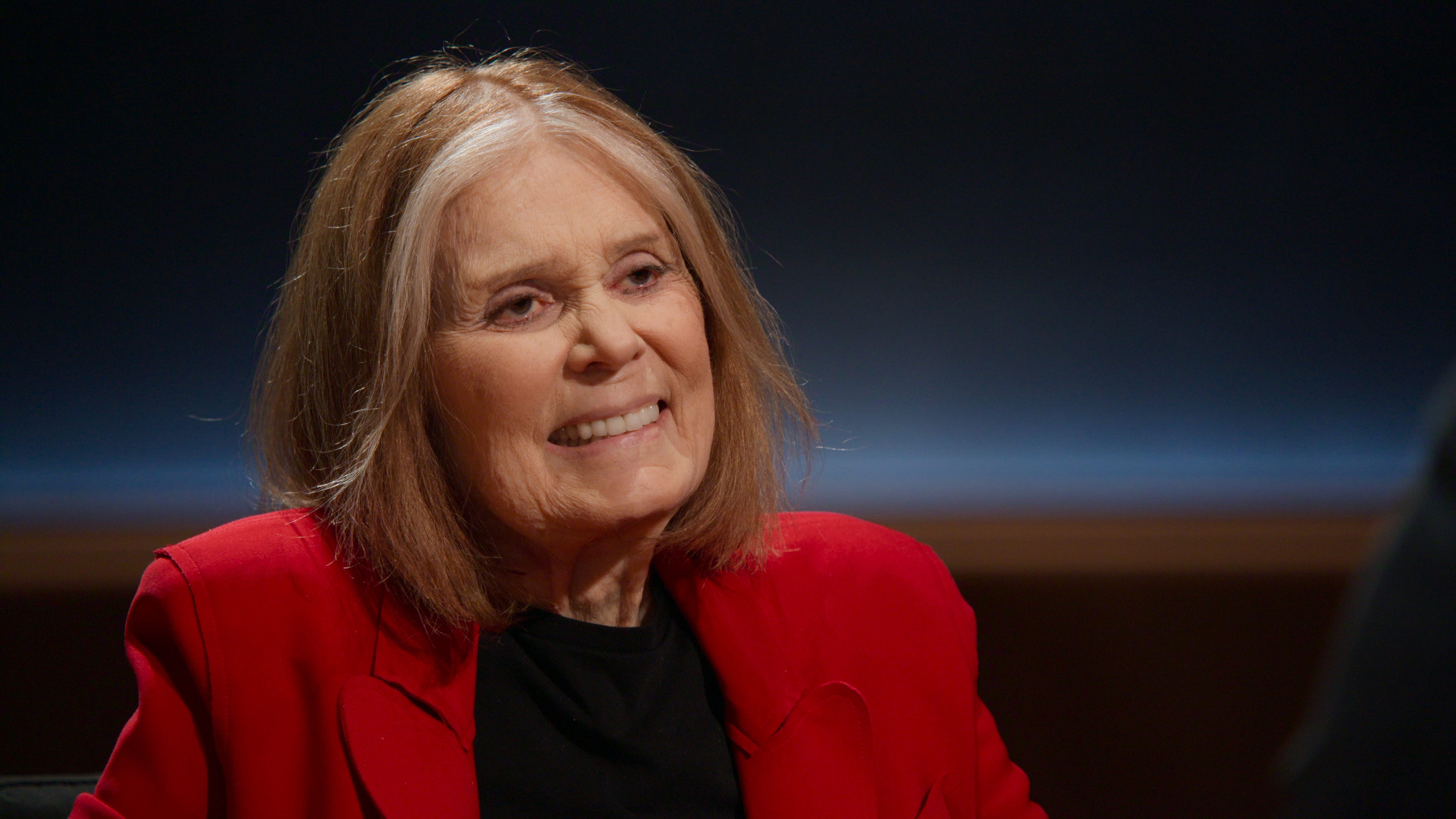
Gloria Steinem, the author, activist, Ms. magazine co-founder, and lifelong champion of women’s rights, died Wednesday at her home in Manhattan. She was ninety-two.
Though her name became synonymous with second-wave feminism, Steinem began her career as a trailblazing journalist, breaking into the boys’ club of New York media despite being constantly underestimated by her peers. (A Life magazine editor once dismissed her curtly, saying, “We don’t want a pretty girl. We want a writer.”)
She became one of the few women associated with the New Journalism movement — a new generation of swaggering writers like Tom Wolfe who applied the tools of fiction to their vivid non-fiction prose — and brought a desperately needed female perspective to the social changes of the 1960s.
Well before the rest of the world caught on, Steinem recognized that attitudes toward sex were rapidly shifting, thanks to the birth control pill. In “The Moral Disarmament of Betty Coed,” Steinem reported on the “contraceptive revolution.” Young women on college campuses, who once lived in fear of getting pregnant, could now “afford to view affairs as a natural part of their development because science has removed the physical consequences of sex.” Published by Esquire in September, 1962 — a year before the publication of Betty Friedan’s The Feminine Mystique — the piece offers a fascinating snapshot of a culture on the brink of sweeping change. It ends with a prescient warning: “The real danger of the contraceptive revolution may be the acceleration of a woman’s role-change,” she wrote, “without any corresponding change of man’s attitude toward her role.”
In the now-legendary exposė, “A Bunny’s Tale,” published in the short-lived Show magazine in 1963 (and included in Outrageous Acts and Everyday Rebellion), Steinem spent a month working undercover at the Playboy Club in New York. Using the pseudonym Marie Ochs, Steinem lied about her age — she was twenty-seven, and thus too old to be a “bunny” — and landed a coveted job serving cocktails to middle-aged businessmen. Her bunny costume dug into her ribs and revealed “a good five inches of untanned derriere.” To get the position, she had to undergo a physical exam from a creepy in-house doctor to ensure she was free from sexually transmitted disease. (Which was illegal, it turns out.)
Steinem said that after her stint at the Playboy Club, walking endlessly up and down the stairs in mandatory three-inch heels, her feet permanently grew by a half size. She also struggled, for a while, to get serious assignments because of the stigma of having been a bunny. But the story also had an undeniable impact: Hugh Hefner was forced to stop subjecting new recruits to medical exams.
In 1968, she helped launch New York magazine, where she penned a column about city politics during a turbulent era. She profiled a young Ed Koch, spoke to Vietnam vets in Queens, and reported on the city’s reaction to Martin Luther King’s assassination. In “After Black Power, Women’s Liberation,” she gave voice to frustrated young women who had participated in the civil rights and anti-war movements, only to face discrimination because of their gender.
“They have marched on Senate committees, Pentagon hawks, their own college presidents and the Chase Manhattan Bank,” she wrote. “But once back in the bosom of SDS, they found themselves typing and making coffee.” (New York has thoughtfully republished some of her columns here.)
Steinem increasingly focused on the women’s movement, and while reporting on an abortion speak-out, had what she would later describe as a feminist awakening. In 1972, she co-founded Ms. magazine because, she explained, “I realized as a journalist that there really was nothing for women to read that was controlled by women.”
The media establishment was dismissive of Steinem’s feminist media venture. TV anchor Harry Reasoner said, “I’ll give it six months before they run out of things to say.” But the magazine thrived, and remains in publication to this day.
The Writing Life
Even as she focused more on activism and organizing in later decades, Steinem continued to write because, as she was known to say, “Writing is the only thing that when I do it, I don’t feel I should be doing something else.” Steinem was a master at aphorism, with an elegant, streamlined style, a wryly funny voice, and an eye for telling detail. Unlike many of her male peers, she never overdid it on the page, and understood that a single pithy line could convey more than a rambling paragraph. She was also devastatingly funny. Case in point: “If Men Could Menstruate,” a slim but punchy essay in which she imagined a world where military leaders and right-wing politicians viewed periods as a sign of strength. (Their motto, in her vision: “You have to give blood to take blood!”)
Throughout her career, Steinem also wrote savvy profiles of such towering cultural figures as John Lennon and James Baldwin. She became a celebrity in her own right, with a signature look that cemented her status as an icon: aviator glasses, black turtleneck, face-framing highlights (inspired, she said, by Holly Golightly). She understood the power of image-making, and how women like Dolly Parton deliberately played with gender expectations.
Parton “has taken all the ridiculed modern symbols of femininity, from makeup and platform shoes to wigs and false eyelashes, and infused them with humor and a conscious power,” she wrote for Ms. in 1987. “If feminism means each of us finding our unique power, and helping other women do the same, Dolly Parton certainly has done both.”
The same year, she published Marilyn, Norma Jeane, a book of essays examining Marilyn Monroe’s posthumous fame and the vulnerabilities that many people were only able to appreciate after her death. “Her terrible openness made a connection with strangers,” she wrote. “It seems to never end.”
“Please tell your own story”
Steinem published numerous books in her lifetime, including Outrageous Acts and Everyday Rebellion, a collection of her early essays and reported dispatches, and Revolution From Within: A Book of Self-Esteem, in which she argued that female self-worth was essential to social progress and revealed some of her deepest insecurities (including that she perpetually “felt like a plump brunette from Toledo.”)
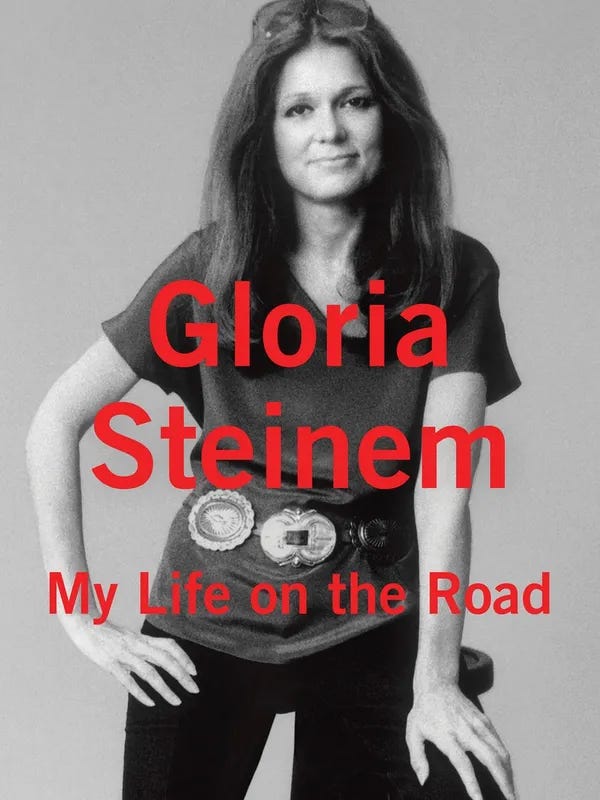
She spent nearly 20 years writing My Life on the Road, a memoir in which she recounted her vagabond childhood and her experiences speaking and organizing across the country. The book, dedicated to the physician who provided her with an illegal abortion when she was a twenty-two-year-old on her way to India for a two-year fellowship, makes the case for travel not as a luxury but a transformative act, particularly for women.
“Whatever it is you care about and are interested in, you are likely to learn more about it on the road,” she told me at the time. (The book was later made into a biopic, The Glorias, directed by Julie Taymor and starring Julianne Moore and Alicia Vikander as Steinem, and is one of several pop culture portrayals of Steinem’s life.)
A final memoir, An Unexpected Life, will be released this month.
Steinem often said she was motivated by her mother, a newspaper editor who had given up her journalism career for motherhood, then sank into debilitating depression and tranquilizer addiction. “Her inability to do what she loved was the beginning of the submersion of her true self,” Steinem told me in 2020. (I was lucky enough to interview her a few times; she was extraordinarily accessible for a living legend.)
Until the very end of her life, Steinem understood the radical power of female storytelling, of women talking about their experiences and listening as others did the same. She approached her journalism and her coalition-building activism with the same sense of curiosity and compassion, always wanting to know more and help others feel understood.
Hours after Steinem’s death was announced Thursday, Netflix released an interview she conducted for the series, Famous Last Words. In the final minute of the episode, she turns to the camera and offers some parting advice.
“Please tell your own story,” she said. “This is the most important thing we can do for each other: to know each other through stories, and I hope so much that whoever you are, listening right now, you are able to do what you love to be also the unique person you are.”
Meredith Blake is the culture columnist for The Contrarian
Thank you for this thoughtful piece. Even though I was an activist feminist and an early adopter of Ms. magazine, I had forgotten so many details of her life. That said, I wouldn't have made it through the seventies and eighties with my sanity in tact without her steady leadership and Ms. magazine, as well as the National Organization of Women. A life well lived!
May Gloria Rest In Peace! A great lady like Dolly!