

By Jeff Nesbit
For the better part of a year, the Department of Health and Human Services — thanks to President Trump’s promise to allow HHS Secretary Robert F. Kennedy Jr. to “go wild” on health policy matters — has charged through childhood vaccine schedules, federal science personnel, and biomedical research funding like a rogue elephant.
Under Kennedy, the meticulous, often boring but essential gears of public health have been ground to a halt, replaced by a governing philosophy that favors vibes, social media whims, and disruption over peer-reviewed, double-blind studies, and administrative law.
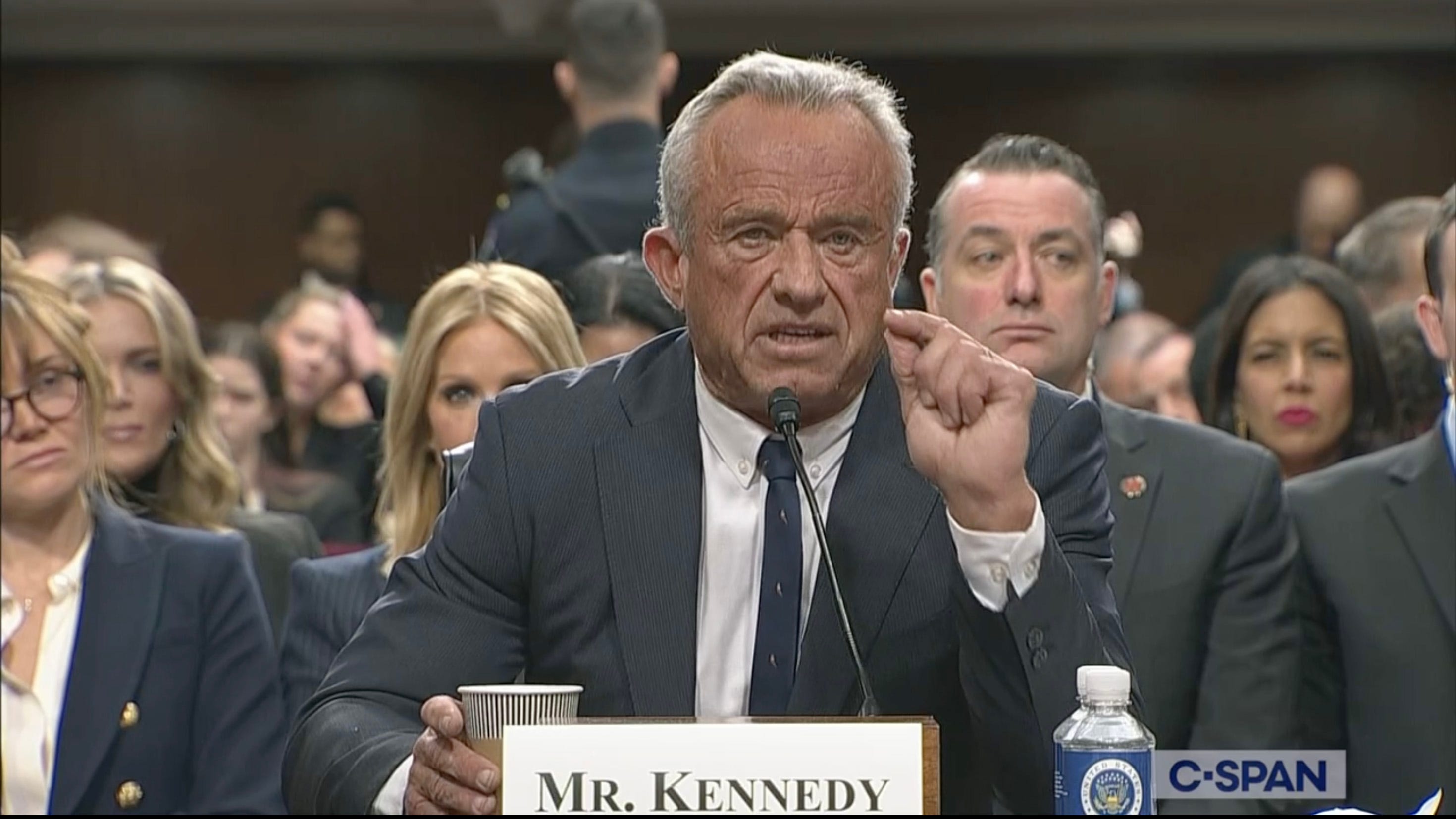
On Monday, the “Move Fast and Break Things” era of public health hit a very solid wall: the U.S. federal district court of Massachusetts. Federal Judge Brian Murphy’s temporary stay, which halts Kennedy’s radical overhaul of the childhood vaccine schedule, is being framed by some as a “pro-vax” victory.
But that misses the point. This isn’t a ruling on the biology of mRNA or the safety of aluminum adjuvants. It’s a ruling on competence. It’s a procedural guillotine dropped on an administration that mistook what it thought was a political mandate for a license to ignore the law.
At the heart of the lawsuit brought by the American Academy of Pediatrics and others is a concept that should be familiar to anyone who has spent time in the E-Ring of the Pentagon or the upper halls of the West Wing of the White House: the Administrative Procedure Act.
In a democracy, the HHS secretary doesn’t get to wake up and decide, via an X post, that the Hepatitis B vaccine is no longer recommended for newborns.
Kennedy’s first mistake was treating the Centers for Disease Control and Prevention’s Advisory Committee on Immunization Practices (ACIP) as a loyalty test.
By purging the committee of career experts and replacing them with a hand-picked roster of “skeptics” — some of whom, as Judge Murphy noted, appear “distinctly unqualified” — Kennedy didn’t just change the tone of the room. He broke the legal mechanism of the committee itself.
The ACIP exists to ensure that federal recommendations are balanced and expert-led. When you replace an immunologist with an influencer, you aren’t “broadening the debate.” You’re violating a federal charter.
The casualties of this ideological experiment aren’t just bureaucratic norms. They’re children. Kennedy and his CDC political appointees moved to slash the childhood schedule from 17 shots to 11. They did so by bypassing the ACIP entirely or relying on thin internal memos that read more like op-eds than scientific reviews.
Take the Hepatitis B recommendation. By withdrawing the “birth dose” recommendation, the Kennedy-led CDC ignored decades of data on preventing mother-to-child transmission of a virus that causes chronic liver disease and cancer.
Or look at the current confusion surrounding RSV. Because Kennedy’s newly seated committee authorized certain monoclonal antibody treatments, those life-saving shots are now in a legal gray area, potentially leaving thousands of children unprotected during a surge in respiratory illness.
This isn’t health freedom. It’s administrative malpractice.
Perhaps the most telling aspect of this saga is the Trump White House’s reaction. For weeks, the Trump administration has been trying to pivot Kennedy away from vax talk, encouraging him to focus on “Make America Healthy Again” staples: seed oils, Red 40, and unhealthy food.
Why? Because the polling is clear. The “anti-vax” energy may fuel a primary base, but it’s poison in a general election. Most American parents — regardless of their politics — want their children protected from meningitis, polio, and measles.
The Trump White House recognizes that Kennedy’s crusade is a political anchor heading into the 2026 midterms. Murphy’s ruling, while legally stinging, provides a convenient out for the Trump White House that had allowed its health secretary to go wild for far too long.
The Trump administration will likely appeal. A more conservative circuit court may even reinstate Kennedy’s changes by the end of the week. But the damage to the administration’s credibility is done.
Public health requires trust, and trust requires a process that’s transparent, rigorous, and grounded in evidence.
You can’t disrupt your way out of a measles outbreak. You can’t “innovate” your way past a legal requirement for expert deliberation.
Trump’s health secretary tried to govern by decree. He found out that, in a nation of laws, decisions by fiat and social media posts still must pass the test of the federal judiciary.
Jeff Nesbit was the assistant secretary for public affairs at HHS in the Biden administration.
Razor-sharp, Mr. Nesbit, which is what's needed to excise this cancerous growth on the body politic.
Perhaps this can be viewed as a "win", but I suspect it's a temporary win until the decision is overturned. I don't think Trump will reign in Kennedy even if his decisions are politically unpopular. I am grateful to Judge Brian Murphy for applying the law to Kennedy and his band of kooks setting policy at the CDC, but like so many of these legal battles, the decision slows down the works, but doesn't stop it. While a slow down is better than nothing, it's a low bar. Trump seems to be counting on voter suppression and election interference as his means of staying in power and the Republican party seems to be complicit with this plan. I am certainly not holding my breath that SCOTUS, given their dismal track record on voting rights, will do the right thing.
So yes, a temporary win is better than a loss. We will not solve this problem with legal wins. It will require a complete thrashing of Republicans in Congress. Democrats can't just win elections, they must win in landslides. After that they will have to show a lot more courage to address the corruption that got us in this siutation in the first place.