


This week, Dakota Johnson publicly vented about the state of the American film industry.
“In the States, it feels really grim,” said the star of the Fifty Shades of Grey film franchise.
It’s a common sentiment in Hollywood these days, at a time of rampant consolidation, cost-cutting, and runaway production driving countless writers, directors, crew members, and actors out of the business.
Johnson, who was raised in the industry (her parents are Melanie Griffith and Don Johnson, and her grandmother is Tippi Hedren, star of Alfred Hitchcock’s The Birds and Marnie), was perhaps never going to be the most effective spokesperson for the plight of struggling entertainment workers.
But her observation felt especially hollow given where she was speaking: at the Red Sea Film Festival in Jeddah, Saudi Arabia—a government-sponsored event, now in its fifth year, designed to showcase the regional film industry and promote Saudi Arabia as an emerging production hub.
Which is exactly what Johnson did next.
“Even in the less than 24 hours that I’ve been here, I have a renewed faith in cinema,” she said, prompting enthusiastic applause from the audience (even if the abashed look on her face was not entirely convincing).
Johnson is just one of dozens of Western stars appearing at this year’s festival, which concludes on Saturday. This year’s top honorees include Michael Caine, Juliette Binoche, and Sigourney Weaver.
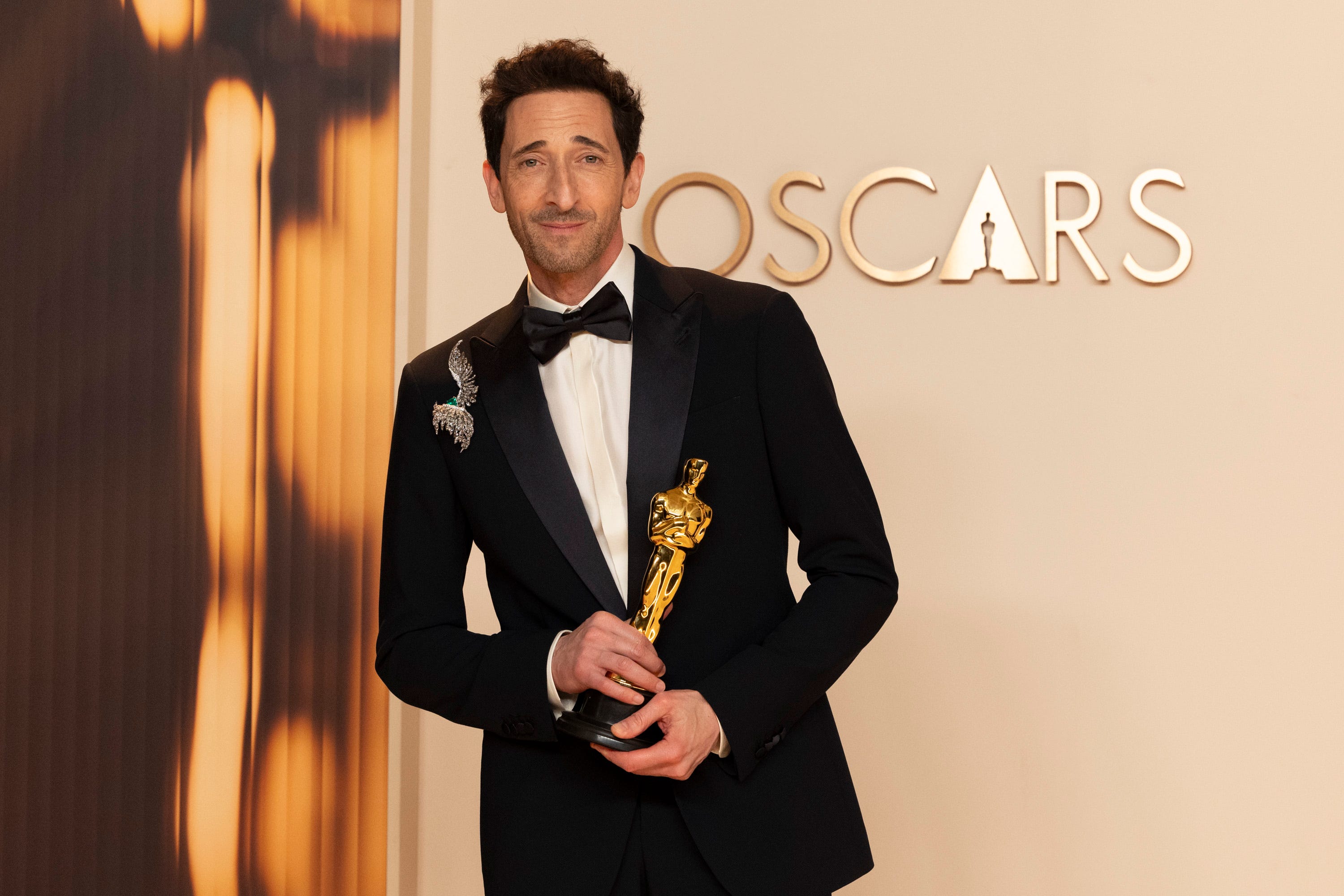
Other popular actors, some also known for their offscreen activism, are also making appearances, including two-time Oscar-winner Adrien Brody, Anthony Hopkins, Queen Latifah, Kirsten Dunst, Jessica Alba, Uma Thurman, Nicholas Hoult, Riz Ahmed, Idris Elba, and Ana de Armas.
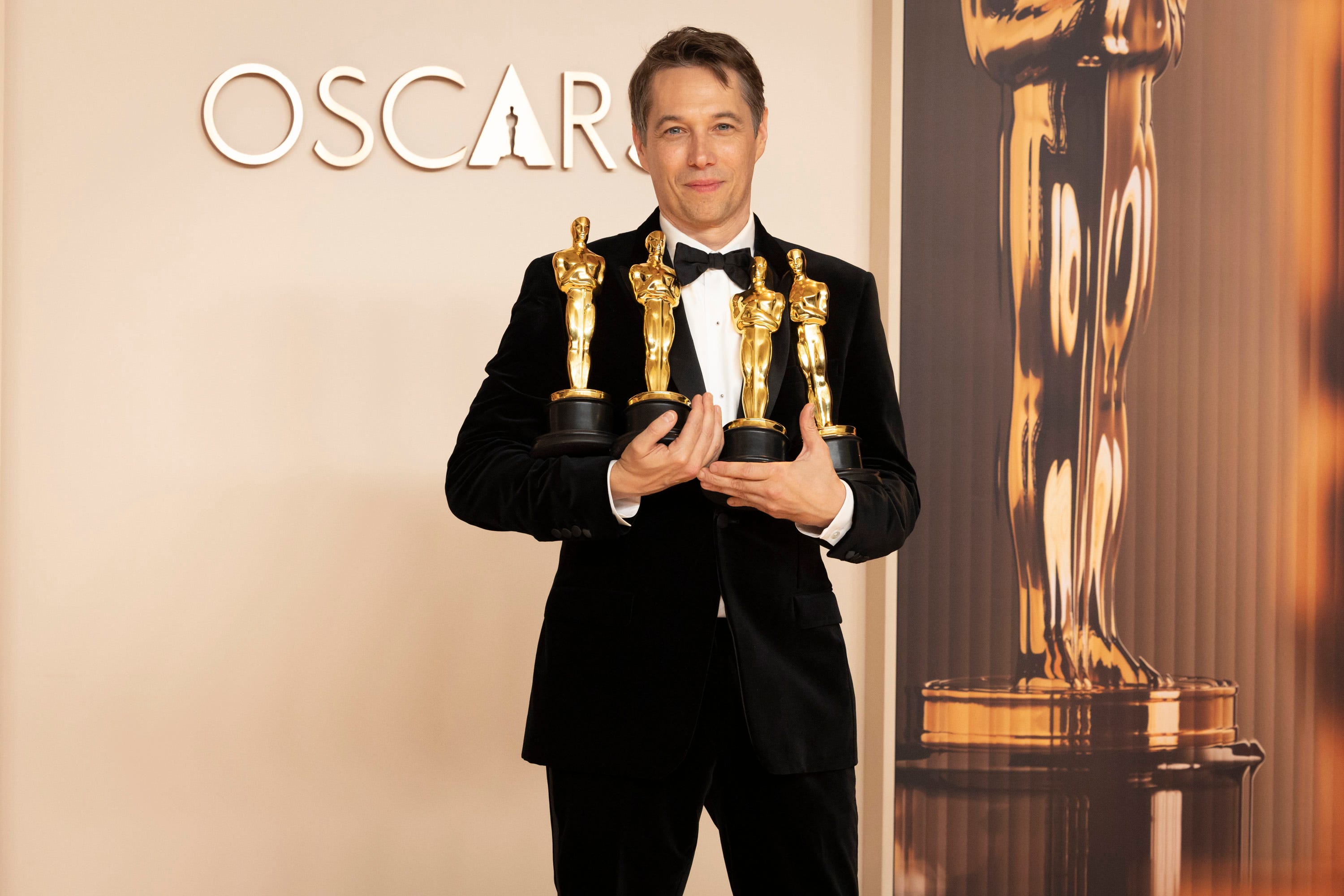
Meanwhile, Sean Baker, who made history this year by winning four Academy Awards for his film Anora, a frenetic screwball comedy about a Brooklyn stripper who marries the son of a Russian oligarch, is heading the festival’s jury. “I’ve long admired how the festival champions bold, diverse voices from across the globe,” he said in a statement.
It is hard to reconcile the cognitive dissonance of an artist like Baker, whose breakthrough 2015 film Tangerine centered on a transgender sex worker, taking part in an event that has been described as a “reputation-laundering tool” for a kingdom known for its appalling record on human rights (especially for women and the LGBTQ+ community.)
But the likely explanation is also a simple one: money.
According to numerous reports, the Red Sea Film Festival pays Hollywood A-listers big bucks to attend and foots the cost of luxury travel and accommodation. To attend in 2023, Will Smith reportedly picked up $1 million paycheck.
That’s about the going rate for stars to “put aside any concerns about human rights abuses or journalist dismembering,” according to Puck which also reported that Spike Lee made somewhere between $2.5 and $3 million for heading up last year’s jury. Dozens of other celebrities, like Gwyneth Paltrow, Michael Douglas, Johnny Depp, Emily Blunt, Michelle Williams, Cynthia Erivo, and Eva Longoria, have swung by the festival in recent years.
A representative for Baker did not respond to a request for comment from The Contrarian. Neither did publicists for numerous actors who appeared at the festival in 2025, including Johnson, Brody, Dunst, Elba, Alba, Weaver, de Armas, and Hopkins. The festival’s press office also did not respond to a query about compensation received by stars who attend.
But the solid turnout by stars—many dressed in revealing designer gowns that wouldn’t fly for local women—still seems remarkable, given the uproar over the inaugural Riyadh Comedy Festival just a few months ago.
That two-week even, also sponsored by the government, brought dozens of well-compensated Western standup stars to Saudi Arabia—and triggered a wave of social media outrage about comedians who griped about “cancel culture” but were happy to accept hefty paychecks from a kingdom known for brutal repression of free speech.
Headliners at the comedy event were reportedly paid up to $1.6 million. But the money came with strings attached, including censorship of material, according to comedian Atsuko Okatsuka, who shared a screenshot of the offer on social media.
The Riyadh Comedy Festival and the Red Sea Film Festival are part of Crown Prince Mohammed bin Salman’s Vision 2030 initiative, which aims to diversity the kingdom’s oil-dependent economy by spurring a boom in arts, tourism, culture, sports, and entertainment. In recent years, the kingdom has played host to Formula 1 races and international art fairs.
Groups like Human Rights Watch have criticized these efforts as a whitewashing campaign to remake the kingdom’s image, which was badly damaged by the 2018 murder of Jamal Khashoggi. These events have been coupled with “an intense crackdown on other basic rights and freedoms, like freedom of speech, assembly and association,” Joey Shea, Saudi Arabia researcher at Human Rights Watch, told The Contrarian in October. And they are deliberately designed to distract “from the reality of the human rights crisis on the ground. So instead of thinking of Jamal Khashoggi being murdered in a consulate in Istanbul, people think, ‘Oh, the 2034 FIFA World Cup is coming to Saudi Arabia.’” Perhaps most ironically, the crackdown has led to the persecution of homegrown writers, actors, and comedians
With an oil fortune worth billions, MBS has been trying to woo Hollywood for much of the past decade. As of mid-2018, he had made considerable inroads, meeting with industry bigwigs like Oprah Winfrey, Rupert Murdoch, and Bob Iger.
Khashoggi’s assassination in October 2018, which,U.S. intelligence believes was carried out at the behest of the Crown Prince, immediately put a damper on numerous lucrative Saudi-backed showbiz deals in the works. For a minute there, it looked like Hollywood—a town not exactly known for its moral rectitude—would take the high road.
Then came COVID, the acceleration of the streaming wars, the WGA and SAG-AFTRA strikes of 2023, and suddenly that Saudi money didn’t seem so bad after all.
The Riyadh Comedy furor might turn out to be an anomaly. Outside of a few angry Reddit posts and snarky Instagram comments, response to the Red Sea Film Festival has been much more muted. There are many possible explanations for this, starting with the whims of the algorithms that drive social media outrage and the sheer volume of things to be mad about in 2025. Some of the most vocal criticism of the Riyadh performers came from their peers in the insular, extremely online world of comedy.
There’s also the steady demise of the trade publications that once struck fear into the heart of industry power players and are now controlled by them. Variety, The Hollywood Reporter, and Deadline have provided extensive, uncritical coverage of the festivities. All three outlets are owned by billionaire Jay Penske, whose company Penske Media received $200 million in Saudi funds back in 2018. (The ethically dubious Golden Globes, which Penske acquired in 2023, also held a reception at the festival this week.)
There’s also the increasingly apocalyptic mood in the industry, which is facing the looming prospect of another mega-merger that is certain to lead to more job losses and fewer projects getting made. After months of speculation, Netflix recently announced it was acquiring Warner Bros. Discovery for $83 billion. But Paramount Skydance, led by billionaire nepo-baby and Bari Weiss superfan David Ellison, is currently staging a hostile bid to buy WBD, with backing from the sovereign wealth funds of several Gulf states, including—you guessed it—Saudi Arabia.
The bold-faced names posing for photos in Jeddah might be counting on industry turmoil—plus the buzz of an awards season in full swing—to keep everyone distracted from their presence at a questionable event.
And there’s plenty of evidence to suggest that few people will care about their jaunts to Saudi Arabia, anyway, given that the president just welcomed MBS to the White House for a state dinner—and castigated a reporter who asked about Khashoggi’s murder.
To paraphrase Dakota Johnson, things in the United States are, indeed, really grim. But a whole bunch of Saudi money can only make it worse.
Meredith Blake is The Contrarian’s culture columnist.
Very disturbing that these young actors are ahistorical and don’t comprehend the metaphoric significance of their travel to a country with an unusually sordid history.
Hey, to greedy people money is never dirty, no matter where it comes from.