


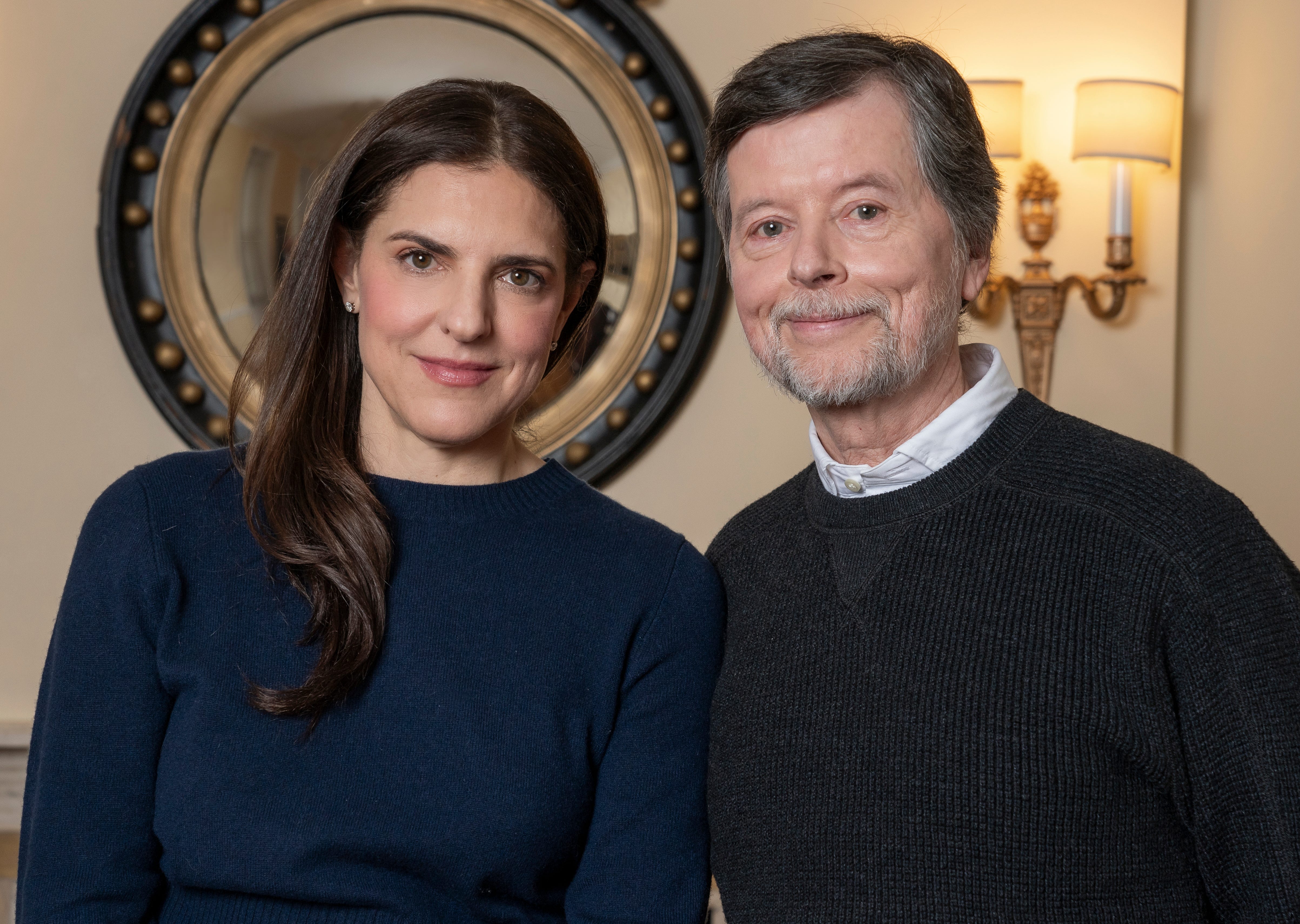
Sarah Botstein has been working with Ken Burns for nearly 30 years, and in that time has made three documentaries about wars that forever altered the course of American history. The producer-director cut her teeth on The War, the seven-episode series about World War II released in 2007, and also played an integral part in The Vietnam War, unveiled in 2017.
“Intellectually and creatively, making that series really changed my life” says Botstein, who was born in 1972 and “grew up in the shadow of Watergate and Vietnam.”
Somewhere in the process of assembling that 10-part,18-hour behemoth, Burns, perhaps the most renowned chronicler of American history, decided he was finally ready to tackle the event that started it all: the Revolutionary War.
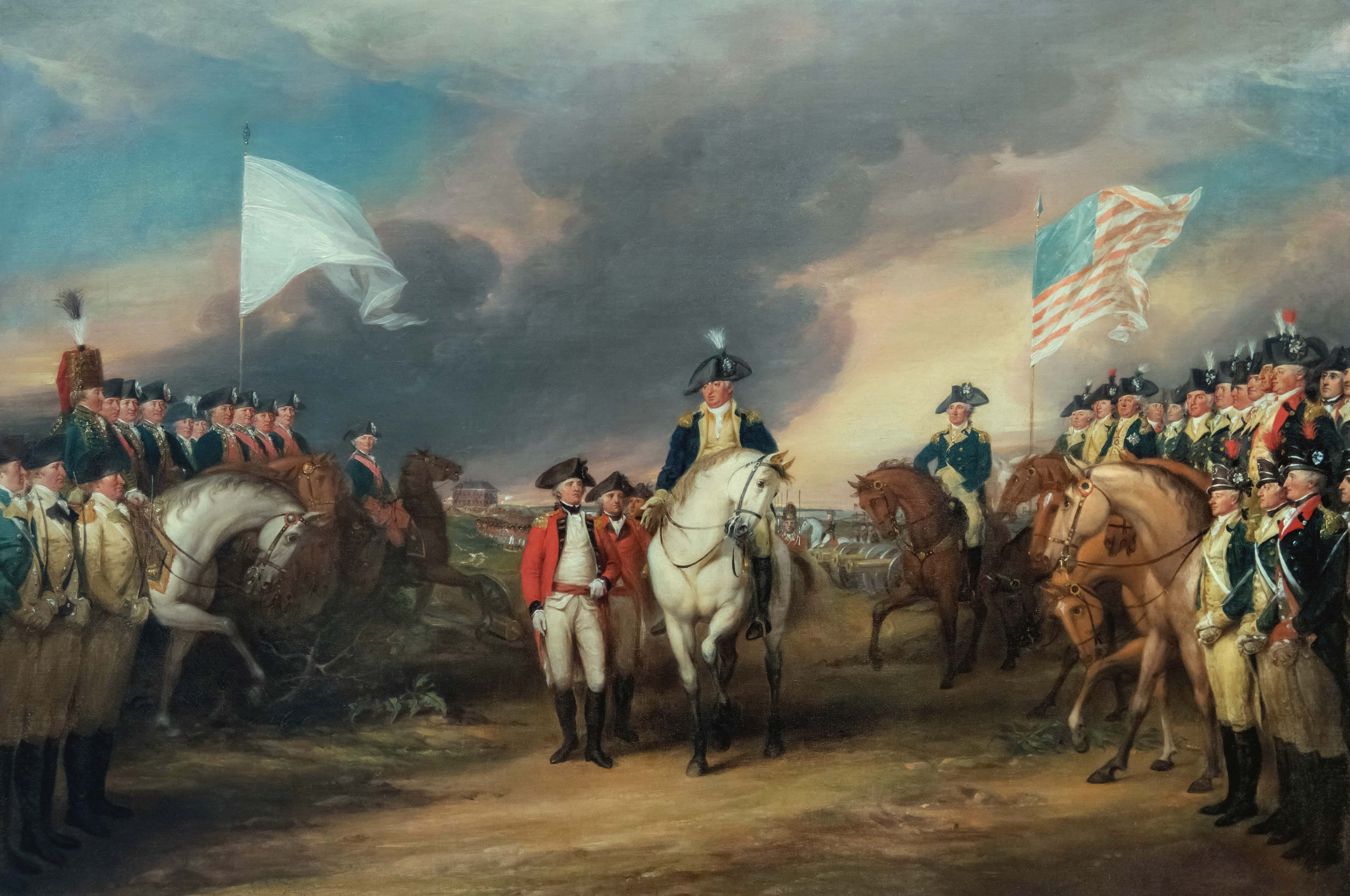
The subject presented significant storytelling challenges, starting with the obvious fact that there are no photographs or newsreels from the era.
Then there are the endless layers of mythology surrounding the Revolution — think: George Washington and his cherry tree — and the simplified version of the conflict we all learned in school. “It’s encased in amber,” says Botstein. The real war was much more complicated, embodying “the best and the worst parts of American history and human nature at the same time,” she says.
A decade in the making, The American Revolution premiered on PBS this week. Directed by Burns, Botstein, and David P. Schmidt, the six-part, 12-hour film takes an unflinching look at the violence and zealotry that have been part of the country’s story from the very beginning.
When Botstein and co. began making the show in 2015, Obama was winding down his presidency and Donald Trump had just gotten into the race for the White House. “It was just an incredible project to work on over an incredible time in our country,” Botstein says.
The series lands at a moment when democracy itself feels under siege, and the Trump administration is openly trying to rewrite national history, sanitizing the cruelty of slavery and the genocide of Indigenous Americans.
The American Revolution, by contrast, is unflinching in its portrayal of the nation’s messy origins. The timely thesis of the film is that the United States was born out of political violence and zealotry. Even after watching all 12 hours, you may not know which side you would have been on back then.
Botstein is not worried about how the film is received, merely curious. “Really, all we’re trying to do is tell the story as accurately as we can.”
“Casting” the show
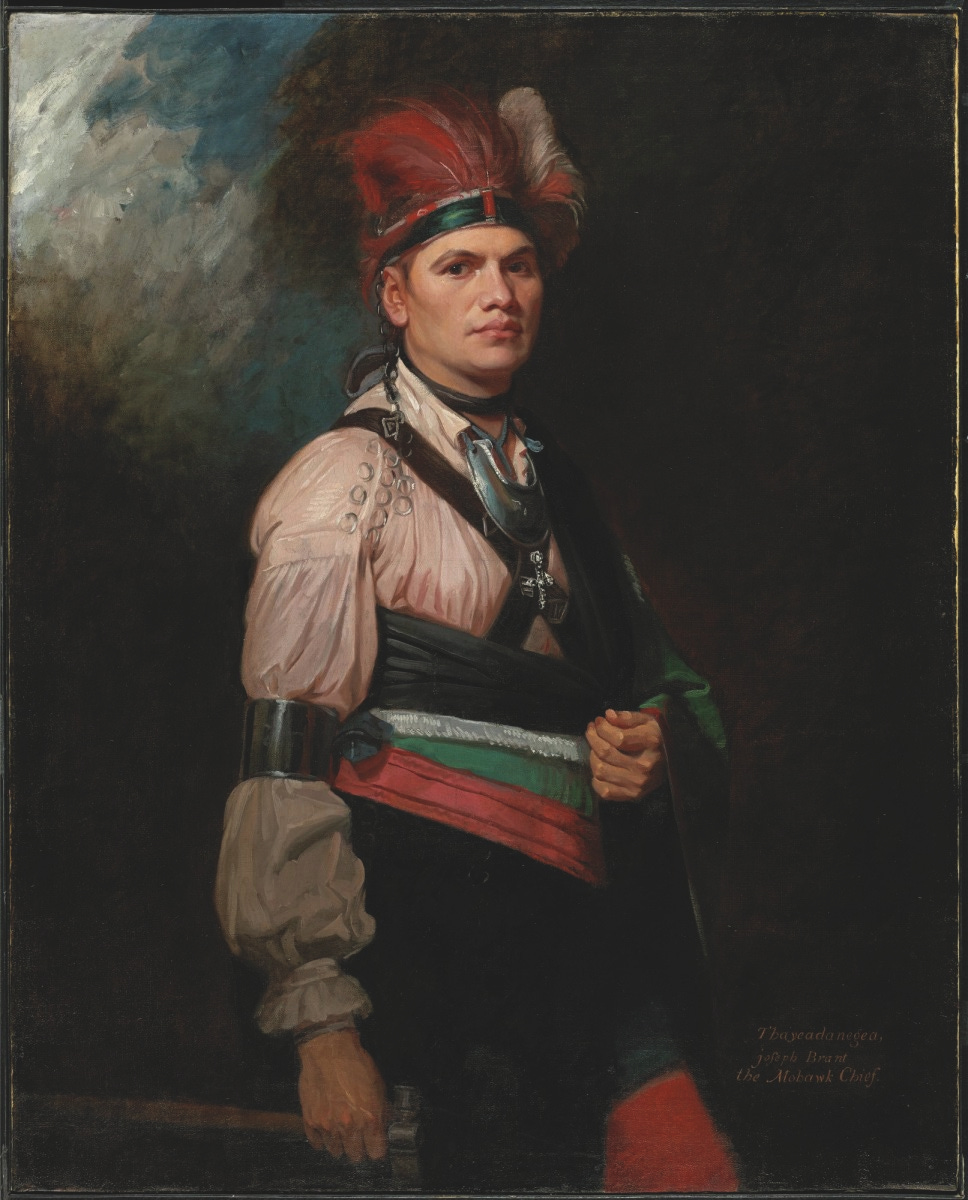
One of the most essential ingredients to a Ken Burns film is the cast of real-life characters, often lesser-known to the wider public, who bring history to life from their perspective. The American Revolution presents complicated portraits of familiar figures, especially George Washington, but also introduces a sprawling cast of fascinating individuals like Virginia teenager Betsy Ambler, Black patriot John Forten, Mohawk chief Thayendanegea (a.k.a. Joseph Brant), and author Mercy Otis Warren, who wrote one of the first histories of the war.
“We’re always interested in finding the so-called ordinary people who are affected by the big decisions that are being made around them,” Botstein says. “Any good history explores the people you don’t always hear about.”
Co-director Schmidt “deserves enormous credit for helping uncover so many of the voices that you haven’t heard of, and new quotes from George Washington,” Botstein says.
Writer Geoff Ward is “in his Upper West Side apartment, writing and reading for 10 years, basically,” Botstein says. He and Schmidt spend an inordinate amount of time “chasing down footnotes” to find interesting, overlooked figures from the era.
It helped that the bicentennial in 1976 sparked “a huge resurgence in historians looking at the lesser-known stories,” Botstein explains. “Every 50 years, historians write about [the war] anew and we were lucky enough to kind of avail ourselves of all those different historians.”
The series also features a slew of authors and academics drawn from three generations, including Alan Taylor, Vincent Brown, Christopher Brown, Annette Gordon-Reed, Maya Jasanoff, Rick Atkinson, and the late Bernard Bailyn.
“One of the top three things I love to do is figure out who to interview for any film, because you are casting them. Not every smart, interesting person is good on camera. Not every smart, interesting person wants to be on camera,” says Botstein, noting that The American Revolution is the only film she’d worked on where the cast of contributors was entirely made up of historians.
“We start with who wrote our favorite books,” she says. “So if you’re studying the American Revolution, you have to deal with Alan Taylor. You just can’t do it without him. You have to deal with Bernard Bailyn, Gordon Wood, and then the Native American piece. So there’s Ned Blackhawk, there’s Kathleen Duval. And one historian kind of leads to the other.”
The voice
Like roughly a dozen other films by Burns, The American Revolution is narrated by actor Peter Coyote, who almost never reads the scripts before recording.
For most of the filmmaking process, Burns serves as the temporary narrator. “Every time we change a sentence, it’s in Ken’s voice. In some ways, he sets the pace for how we’re editing the show.” Although the rhythms of Ward’s writing seem perfectly matched with Coyote’s cool, grainy voice, the 84-year-old actor almost never studies the scripts ahead of time. Any tricky pronunciations are written out for the actor phonetically.
“He walks in cold. He almost never has to do more than two takes. He’s a total genius at reading aloud. You’ve never seen anything like it,” Botstein says. “he will say he’s learning the story as it goes. It’s a process of discovery for all of us. We go to school with the American public every time we make a film, and Peter is part of that.”
Coyote has also shaped the films in surprising ways. While he was recording narration about the Warsaw Ghetto for The U.S. and the Holocaust, he asked Botstein if she had ever heard of the Ringelblum Archive.
“I was like, I don’t think I have,” she recalls. “So we quickly look it up, and it’s this incredible thing where the Jews in the Warsaw Ghetto decided to bury mementos of themselves to be remembered by. Kids painted pictures. They left receipts, coins, photographs, and buried them in milk cartons underground, and then they were discovered later. So we rewrote the film right there.”
An ongoing story
The final episode, called “The Most Sacred Thing: 1780 — Onward” charts the final battles of the war, the British surrender, and the drafting of the Constitution and the Bill of Rights. But, as the “onward” implies, viewers are left with a sense that the debates at the center of the war are still raging.
“The American Revolution is still alive and well in the United States, for better and for worse,” Botstein says. “ We’re still trying to figure out the balance of power, the structure of government states versus national federal government.
“There are the things that the founders were worrying about from the time they declared independence until we had a Constitution and then amended it. Benjamin Rush says, ‘The war may be over, but this experiment in a people’s Republic in a democracy is still happening.’ I certainly feel that. To me, the heart of the show is actually citizenship. That’s my takeaway from the American Revolution.”
The importance of public broadcasting
Any new Ken Burns project is a major event for PBS, which has distributed his films for more than forty years. The American Revolution arrives amid the decimation of public broadcasting by the Trump administration, resulting in the shutdown of the Corporation for Public Broadcasting and the closure of public TV and radio stations across the country, especially in rural areas.
“It will affect a lot of people and a lot of filmmakers,” Botstein says. “The first public screening that we did for the film was in Richmond, Virginia, in March, which is right around when the government was saying that they were going to defund public television. We walked out onstage and the PBS logo played, and the place erupted.”
It remains to be seen whether Burns’ work will be affected by these cuts, given his unique standing as a documentarian. “But as the media landscape has changed, I think it’s more and more important to find places like PBS,” Botstein says. “It’s free to the American public. There is not a school kid or a family or a library that cannot [access] or stream public television. It’s really important.”
Meredith Blake is the cultural columnist for The Contrarian
Smart insights and valued context for an impressive series that adds to my knowledge and patriotic pride nightly.
I particularly admire this correctness, Meredith: “Even after watching all 12 hours, you may not know which side you would have been on back then.”
A wonderful show. Everyone should see it.