


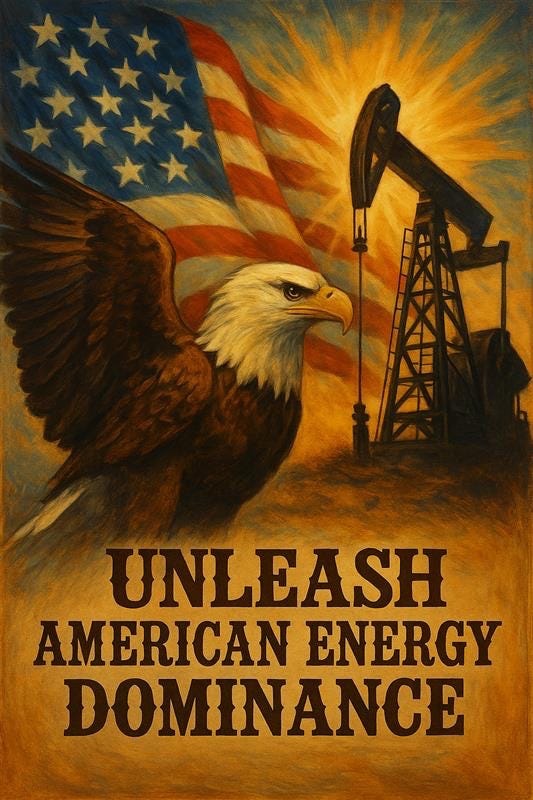
When it comes to (non-political) power, Donald Trump’s agenda is “energy dominance.”
October was dubbed “NATIONAL ENERGY DOMINANCE MONTH,” by presidential proclamation. Trump wrote of “achieving American energy dominance” in quasi-religious terms — as “our crusade.” The president insisted that his administration was “proudly” committed to “forging a future defined by three simple words: ‘Drill, baby, drill.’”
As a slogan, “energy dominance” evokes images of the United States towering over the rest of the world, with prodigious production, as what Trump calls “a global energy superpower.” But the truth of energy dominance has nothing to do with empowering folks at home.
The administration has been rigging the game in favor of dirty energy — and giving fossil-fuel producers a license to dominate American consumers. In the process, Trump is boxing U.S. households out of cleaner alternatives and leaving Americans with less choice, higher energy bills, and an overheating climate.
Worse, by hobbling America’s green-energy industries, the administration is destroying jobs, even as it clears a path for China to dominate the next generation of energy production.
“He represents the fossil-fuel industry,” said Sen. Sheldon Whitehouse (D-R.I.) at a Nov. 20 Capitol press conference, blasting Trump for boycotting international climate talks in Brazil. “He has chosen to represent his crooked billionaire donors.”
A Dirty Deal
Trump campaigned for reelection as a drill-first Republican with a govern-for-the-highest-bidder mentality. During an April 2024 gala at his Mar a Lago estate, Trump nakedly proposed to top oil and gas executives that they spend $1 billion to re-elect him. He promised, in exchange, to reverse president Joe Biden’s green policy agenda boosting renewable power, energy efficiency, and electric vehicles.
It was a preposterously large ask from Trump. And, because dark money floods our political system without names attached to campaign cash, it’s unclear exactly how much these fossil-fuel titans ponied up. (Publicly disclosed donations suggest a minimum of $75 million.) Regardless, Trump has governed like they sealed the deal.
His administration has been on a yearlong blitz, pulling tens of billions of dollars from the clean energy economy. Out of the gates, Trump sought to claw back $20 billion in Biden-era grants for renewables and efficiency. (Despite court challenges, at least $16 billion has been stalled.) More recently, under the cover of the government shutdown, the administration cancelled another $8 billion in funding for green energy projects, targeting blue states for partisan punishment.
Throttling Wind and Solar
Trump’s enmity toward clean energy is infamous. During his first term, he singled out solar panels for his now-signature tariff treatment. The president also harbors a special “hate” for windmills: “They’re ugly. They don’t work. They kill your birds,” he said at a cabinet meeting this summer, adding preposterously: “They’re bad for the environment.”
With the passage of the “One Big Beautiful Bill,” Trump axed tax credits that helped Americans afford home solar panels. Similar incentives for utility-scale solar and wind projects are now set to expire next year, instead of the 2030s. By executive order in March, Trump slashed Biden-era federal support for domestic solar manufacturers, blasting it as part of a “Green New Scam.” He has also revoked $7 billion in grants for “community solar,” meant to bring renewable power to disadvantaged communities.
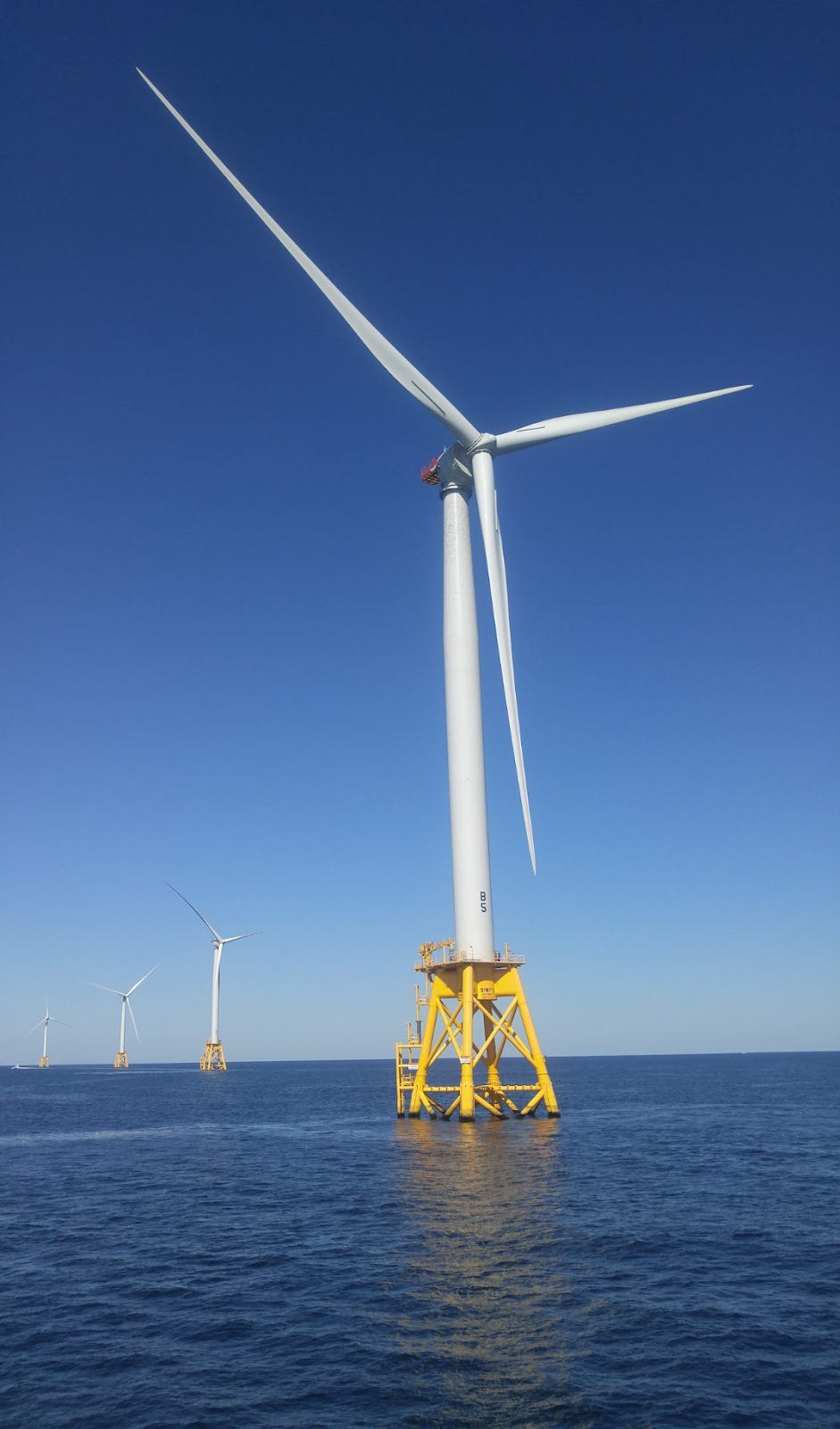
On his first day back in office, Trump blocked all federal waters for offshore wind leasing. His onshore policy is hardly better. In August, Interior Secretary Doug Burgum — ex-governor of the petrostate of North Dakota — erected permitting hurdles to block large-scale wind and solar projects on federal lands, alleging they generate insufficient energy “density” per acre. “Gargantuan, unreliable, intermittent energy projects,” Burgum insisted, “hold America back from achieving U.S. Energy Dominance.”
Hobbling Green Industry
America’s renewable energy industries, which had been going gangbusters under Biden, now find themselves staggered. They are still growing, but far more slowly. One forecast of offshore wind capacity expected to come online in the next decade has been slashed by 56 percent — with more than $100 billion in investments reportedly cancelled or delayed. The solar industry is facing a similar 27 percent decline in projected new capacity by 2030.
A study out of Princeton University finds that Trump’s signature “Beautiful Bill” will reduce capital investment in our electrical system and clean fuels by half a trillion dollars over the next decade. It will also slash future solar capacity by about 140 gigawatts and wind capacity by about 160 gigawatts. (The Hoover Dam, by comparison, has a capacity of about 2 gigawatts.)
This Trump offensive is disrupting job markets. In New England alone, Trump’s war on offshore wind has put an estimated 15,000 jobs at risk. Overall, the One Big Beautiful Bill is expected to cost 760,000 jobs by 2030, according to Energy Innovation, a non-partisan think tank.
“Republicans have taken a sledgehammer to the clean-energy economy,” Hakeem Jeffries, the Democratic House leader, told reporters at the November Capitol press conference. “That hurts our ability to deal with the climate crisis, and hurts our ability to drive down costs for everyday Americans.”
Full Speed for Fossil
Trump casts “our crusade” against green power as “ending market distorting subsidies.”
But the American energy market has long been distorted in favor of oil, gas, and coal. Even before Trump regained office, federal subsidies for fossil fuels were running about $30 billion a year. In that context, the historic investments in renewable energy championed by the Biden administration were about leveling the playing field — not giving green energy a leg up.
The passage of Trump’s “Beautiful Bill” has increased federal subsidies to the fossil fuel industry by nearly $4 billion a year, according to a report from the environmental nonprofit Oil Change International. The law included a wild list of favors for fossil-fuel producers, ranging from tax breaks for wells and pipelines, to reduced royalty payments from extractors, to opening up the Arctic National Wildlife refuge for drilling. It also cut off tax credits that helped Americans afford electric vehicles.
In late November — in a news cycle dominated by the Epstein Files and Trump’s threats to hang Democratic members of Congress — the administration announced it intends to open the coasts of California and Florida to drilling for the first time in decades. Committing to this retrograde agenda, Trump has even been championing coal power — which has been in steady decline thanks to cheaper, cleaner alternatives.
In October, the administration offered $100 million in federal funds to “modernize and refurbish” existing coal fired power plants. It has also used its authority to force utilities keep coal plants in operation long past their planned decommission dates. Trump even ordered the EPA to exempt many large coal plants from new regulations limiting neurotoxic mercury pollution.
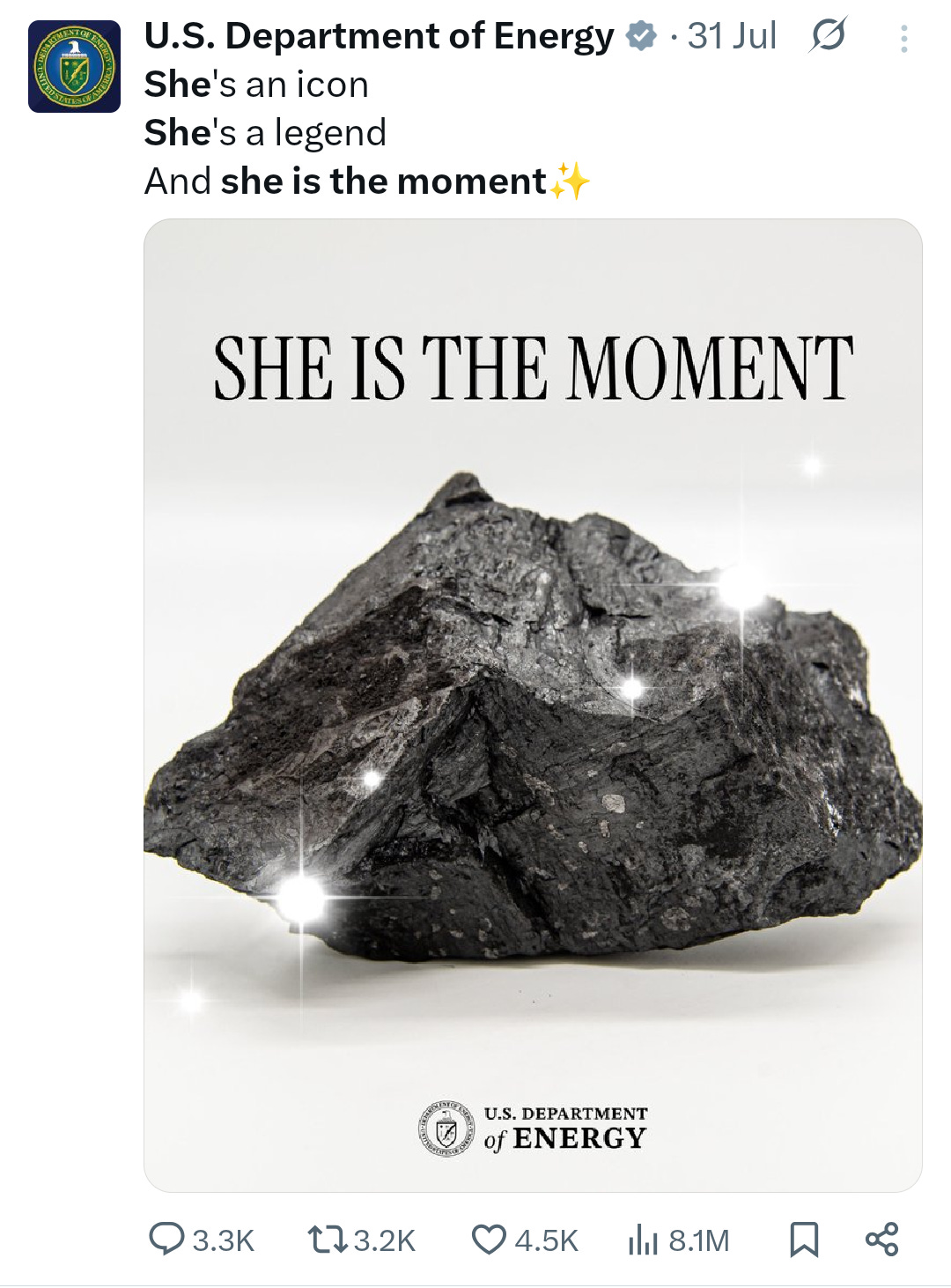
Far from letting the marketplace pick winners and losers, the president himself is becoming the filthy fuel’s biggest booster. “Coal needs a little help, public-relations-wise,” Trump said in a November speech. ‘So we refer to it as ‘clean beautiful coal.’” His Department of Energy has also been giving the dirty rock the rockstar treatment:
Climate Chaos, Consumer Pain
Trump’s agenda — simultaneously slowing clean-energy deployment while providing a new lease on life for fossil fuels — is keeping U.S. climate emissions at dangerous levels.
Upon taking office, Trump immediately withdrew from the Paris Climate Accord. And his “Beautiful Bill” ends any pretense of America meeting its emissions targets. The Princeton report finds that Trump’s law locks in large pollution increases of “190 million metric tons per year in 2030” and “470 million tons in 2035” by comparison with the Biden baseline.
Climate denial has become official policy, with the Environmental Protection Agency seeking to abolish the “endangerment finding” that enables the government to regulate carbon pollution under the Clean Air Act.
These abrupt changes will expose Americans to more frequent disasters like superstorms and urban wildfires that have already cost the country trillions this century. They also impose concrete costs on consumers and ratepayers. The Princeton study estimates that the “Beautiful Bill” will increase household energy bills by $285 a year by 2035.
Feeding the AI Beast
These higher energy prices are coming in tandem with administration policies backing artificial intelligence and cryptocurrency to the hilt. These industries’ data centers and “mining” operations have an insatiable demand for electricity, and are also driving up costs for household customers.
Under Trump, the watchdog EPA is transforming into an industry lapdog. Administrator Lee Zeldin has made “American Energy Dominance” a key “pillar” of his agenda at the agency, which also vows to “Make the United States the Artificial Intelligence Capital of the World.”
The EPA is now turning a blind eye as the AI industry and its politically wired billionaires run roughshod over human health. No surprise, Elon Musk has been at the forefront of this new wave of dirty energy dominance.
Musk has been building out xAI in Memphis, Tennessee, at a fossil-fueled facility called Colossus. This installation’s massive power needs — rivalling those of a mid-size city — have been met by an array of high-pollution, on-site methane gas generators, which have left residents of south Memphis choking on smog.
In June, local environmental groups threatened to file a federal lawsuit over the data center’s pollution, while challenging Musk’s local air permits. “Our health,” said NAACP president Derrick Johnson at the time, “shouldn’t be threatened at the hands of billionaires who circumvent the law.”
A second, much larger Colossus 2 facility is now under construction nearby. Sidestepping Tennessee regulators, Musk’s company is placing the methane generators for this data center just across state lines in Mississippi, where the company will reportedly be able to generate dirty power for 12 months without an air-emissions permit.
Bad Politics. Worse Geopolitics.
If there’s a silver lining to Trump’s war on clean energy, it is that it’s a stinker, politically.
Renewable power is no longer coded as a partisan issue. Eight of the top ten states ranked by solar installations in the first quarter of 2025 were places Trump won in 2024 — including Pennsylvania, Texas, and Idaho. Red states like Texas, Oklahoma, Iowa, and Kansas also dominate in American wind production.
Recent elections, moreover, demonstrate that voters are sensitive to soaring utility rates. Pricey energy bills loomed large in gubernatorial races won by Democrats in New Jersey and Virginia. Democrats also won big in Georgia, flipping two seats on the state’s public utility commission, which sets electric rates.
The geopolitical ramifications of Trump’s fossil-fuel first agenda are also stark. The administration is having some success boosting the sugar high of America’s oil boom. Fracking has unlocked enormous domestic petroleum reserves, and the U.S. is now the world’s leading oil producer.
But this is not sustainable, by any measure. Oil production is expected to peak as soon as 2027, declining thereafter. And by doubling down on the extraction-based economy while pulling back from renewables, the Trump administration is allowing China to dominate the next generation of clean energy and technology.
A recent cover package by The Economist underscored this dangerous trend: “China now makes a lot more from exporting wind turbines, electric cars, solar cells and the like,” it reported, “than drill-baby-drill America makes selling fossil fuels.”
So much for dominance.
Rather than a posture of strength, Trump’s energy agenda is actually a mark of an administration — and a political party — that’s been sold off to the highest bidder. Take it from Sen. Whitehouse, the ranking member of the Senate’s Environment and Public Works Committee. “Look at what they are having the Trump administration do,” he said at the Capitol press conference. “The depravity of the corruption… and the disinterest in anybody’s wellbeing other than the big donors. That’s the true face of the fossil-fuel industry.”
When my daughter and I talk about the huge problems (like energy), she always comes back to the one seemingly unsurmountable problem - the 4 year Presidential term.
With our see saw presidential politics, how can problems be tackled when past history shows that anything done toward a solution by one president can be undone by the next president.
In North Dakota, where Interior Secretary Burgum was governor, 36% of the electricity is generated with wind… sixth highest fraction of the fifty states… And compared to other states, electricity prices rank 46th.
Yet he’s quoted saying, “Gargantuan, unreliable, intermittent energy projects hold America back from achieving U.S. Energy Dominance.”
Source: https://www.eia.gov/state/?sid=ND