


This month, Immigration Customs Enforcement (ICE) officers killed another unarmed individual. Lorenzo Salgado Araujo, a 52-year-old father of three U.S. citizen children, lived in the United States for 35 years and had no criminal convictions. He was driving to a construction job site with three co-workers to build homes in Houston’s suburbs when ICE agents chased his car and shot him.
Only six days later, ICE agents again shot and killed an immigrant, this time a Colombian man in Maine as he drove to work, with his wife and daughter as witnesses to his death. One bystander told Reuters that he saw an ICE vehicle repeatedly ram into the victim’s car before an officer pulled the wounded driver from it. The administration vaguely claims that the shooting officer fired because he “fear[ed] for public safety,” not his own life — although no evidence so far supports that account.
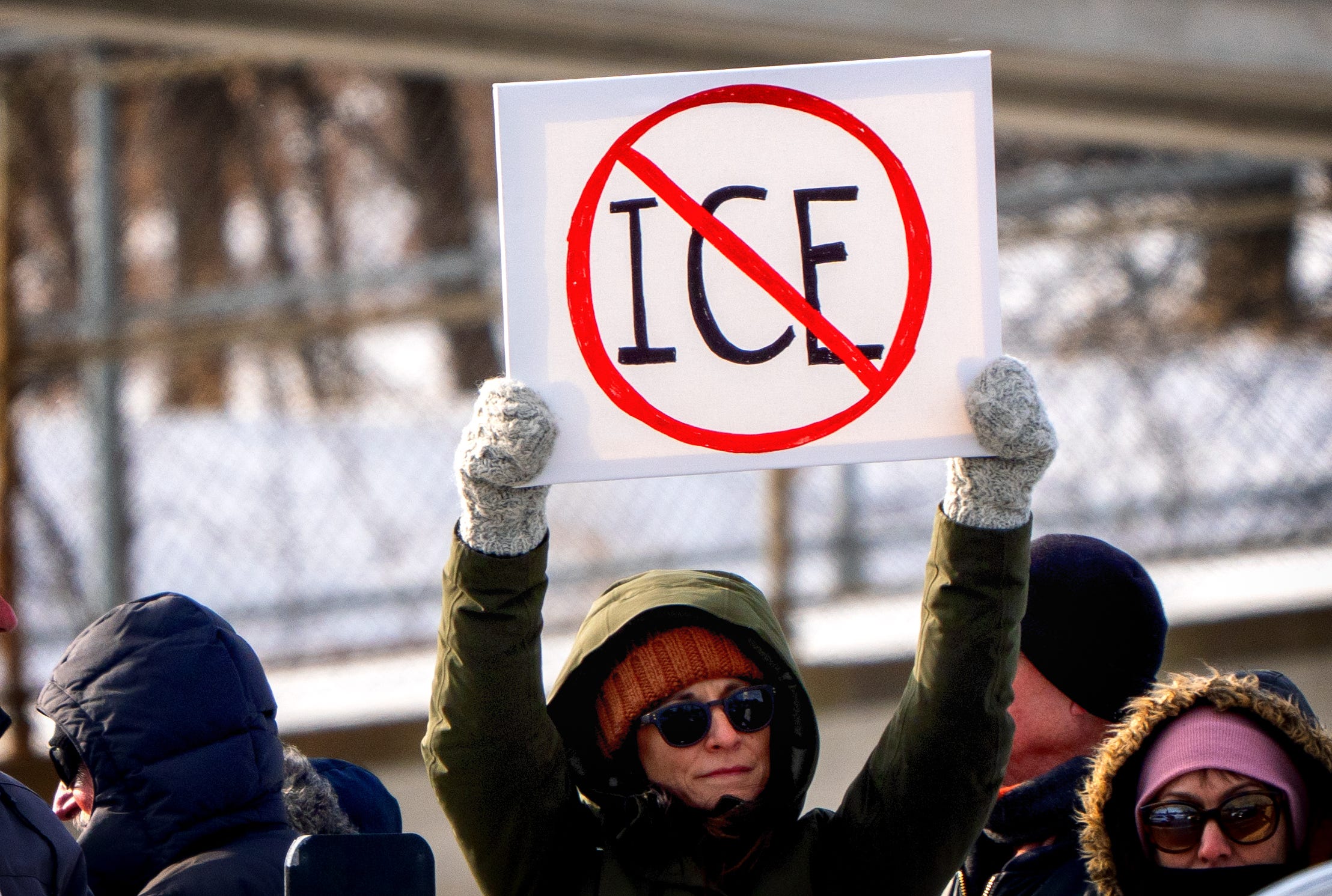
The similarity between the “official” accounts in Houston and Maine are striking: in each case, the federal government targeted Latino men with car chases and guns and claimed that the drivers posed some threat, despite witnesses saying otherwise and no body camera footage to support the agency account. So far, federal agencies appear to be resisting meaningful investigations in the Houston death.
With at least 10 people killed in encounters with immigration officials since January 2025, and a record number of deaths in immigration detention facilities, these incidents are not isolated tragedies. They reflect an increasingly violent and deadly immigration enforcement system operating with extraordinary power and growing impunity.
The Trump administration may have moved away from the more theatrical displays of force that characterized earlier operations in places like Minneapolis and Chicago, but the basic objective has not changed: expanded immigration enforcement against noncitizens who pose no safety threat, increased enforcement without accountability, and a fixation on increasing detentions and deportations simply for the sake of numbers.
The administration has made clear that sheer volume is the goal. The New York Times this month reported that the White House is aggressively pushing ICE to increase immigration enforcement by setting up a quota of 2,000 arrests per day (at times as high as 3,000). In the last five days of June, 10,000 arrests were made across the country, and the number of people detained rose sharply to above 60,000. This is an enforcement agenda set up to reward speed and scale.
At the same time, the administration has sought to remove lawful protections from large groups of immigrants, turning thousands of people living and working here legally into enforcement targets, fortified by a recent Supreme Court decision that greenlit this effort. This “delegalization” campaign — the largest in U.S. history — could ultimately strip hundreds of thousands of people of their lawful ability to work and place them at high risk of arrest and deportation despite growing protests, including from GOP officials and business leaders.
This is all facilitated by an enforcement apparatus dramatically enlarged by Congress. Last year, Congress provided roughly $170 billion in additional funding for immigration enforcement through 2029. In June, lawmakers approved approximately $70 billion more — giving immigration enforcement funding its largest purse in U.S. history and making the immigration agencies the size of a small military force. This funding comes with absolutely no guardrails for how agencies conduct arrests and no limitations on how agencies spend these taxpayer dollars — no requirement for body cameras or basic law enforcement training. It is an extraordinary arrangement: money without supervision and power without consequences.
In the short term, we can expect calls for independent local investigations into these fatal shootings. There also may be continued efforts in Congress to claw back some of these dollars. But these short-term responses cannot serve as a substitute for changing the underlying system that led to these tragedies in the first place.
A meaningful response to aggressive, indiscriminate immigration enforcement will require bold changes from Congress to the outdated laws that opened the door to the Trump administration’s mass deportation agenda. Trump’s enforcement agencies are weaponizing decades of congressional failure and taking old laws to the extreme. They have used civil immigration violations as a pretext to justify masked officers in unmarked vehicles, indiscriminate arrests, and deadly encounters on our streets.
Restoring credibility and humanity to immigration enforcement will require building a system that focuses on compliance, safety, proportionality, and accountability.
Compliance means recognizing the reality that Congress has long ignored: There are about 13 million undocumented people living in the United States, many of them longtime residents with families, jobs, and deep community ties, just like Lorenzo. Even those who have been here for decades and who pay taxes every year cannot “fix their papers” without risking permanent or near-permanent banishment. There is neither a line they can stand in nor an easy path to legal status. They have no way of getting right with the law because Congress hasn’t created any options for them.
Congress must provide immediate pathways to permanent legal status for some longtime undocumented people and create a process by which others can become compliant through penalties and vetting rather than face arrest and deportation. Poll after poll emphasize that most Americans support giving undocumented people who pose no safety threat the ability to get right with the law without facing deportation and permanent exile.
Safety means ensuring that immigration enforcement agencies don’t treat entire communities as threats. Though the Trump administration pretended it would target the “worst of the worst,” just 14 percent of people arrested by ICE in 2025 had any prior criminal charge or conviction for a violent offense. Federal agents have focused on low-level immigration violations at the expense of prioritizing bona fide public safety threats such as child trafficking, drug smuggling, and domestic terrorism.
Congress must pass laws that require the agencies to focus enforcement on real safety threats and amend old laws that sweep in people who do not. Construction workers driving to job sites or parents picking up their children at school shouldn’t be top targets for arrest. Indiscriminate enforcement undermines the credibility of law enforcement agencies, making it less likely for immigrants to report crimes or serve as witnesses — making everyone less safe.
Proportionality means ensuring that detention and deportation are not the default penalties for every immigration violation. The current system has only two settings: do nothing or deport someone and upend entire lives. That all-or-nothing approach enables mass deportation but doesn’t sit right with most Americans.
The consequences for violations of civil immigration laws should be tailored, reasonable, and humane. A noncitizen U.S. veteran with a decade-old marijuana offense should not face deportation and permanent exile; instead, he could pay a fine for his penalty and maintain his lawful status. But in our current model, detention and deportation is a one-size-fits-all punishment, regardless of a person’s history or ties to their community.
Accountability means that agents and agencies that abuse their power must be reined in or pushed out. Any death or serious use of force involving immigration agents should automatically trigger an investigation conducted by a bipartisan, independent entity outside of DHS that has power under new laws from Congress to enforce agency changes. Congress must also change the laws so that victims of racial profiling have the option to pursue legal action when federal officers violate their rights, just as they do when local police do the same.
The mark of a credible and humane system will be whether it gets more people to follow the rules, prioritizes bona fide safety threats, meets violations with appropriate consequences, and remains accountable to the public.
Lorenzo Salgado Araujo should have made it to his Houston job site that morning just like the father in Maine. But as long as immigration enforcement is driven by arrest quotas and supercharged by unprecedented funding and operates without oversight or accountability, we can expect more deaths. Until lawmakers roll back these dollars and make bold, overdue changes to our outdated immigration system, American communities will continue to suffer the inevitable consequences of a system built to maximize arrests and minimize accountability.
Nayna Gupta is policy director at the American Immigration Council.

Reasonable and fair suggestions Nayna!
May the older Trump supporters find themselves living in senior care with no one to take decent care of them. May the younger ones find that the housing shortage they're complaining about can't be addressed because of a shortage of construction workers. And all of us have to eat, right?