

By Jeff Nesbit
The killing of Renee Nicole Good—a U.S. citizen and mother of three who had just dropped her 6-year-old son at a Minneapolis school before an immigration agent shot her as she was trying to move her car from a protest—has ignited an intense, national debate over the “militarization” of domestic immigration enforcement.
Coming on the heels of a record number of deaths in Immigration and Customs Enforcement facilities last year, the Renee Good killing has also cast an intense light on President Donald Trump’s outsized surveillance and domestic security efforts—including a massive increase in ICE’s budget that the Trump White House is justifying as “wartime recruitment.”
The massive new ICE budget would increase the number of agents on the streets of U.S. cities. It is “targeting gun and military enthusiasts, people who listen to right-wing radio, who have gone to Ultimate Fighting Championship fights or shopped for guns and tactical gear, live near military bases, and attend NASCAR races,” wrote Robert Reich. “It’s calling for recruits willing to perform their ‘sacred duty’ and ‘defend the homeland’ by repelling ‘foreign invaders.’”
The Renee Good killing was horrific. Eyewitnesses and bystander videos suggest a scene of chaos and conflicting orders. Compounding the tragedy, reports indicate that ICE agents then blocked medical access for nearly five minutes, preventing a physician bystander from reaching Good as she lay dead or dying.
The Trump administration has tried to frame the shooting as a justified act of self-defense. Trump labeled Good a “professional agitator.” Department of Homeland Security Secretary Kristi Noem characterized her actions as “domestic terrorism.” Vice President JD Vance claimed the agent is entitled to “absolute immunity.”
All this chaos and turmoil around the Renee Good killing—and the record number of deaths in ICE facilities last year—dramatically increases the stakes of an impending, partisan fight in Washington, D.C., over the enormous ICE budget.
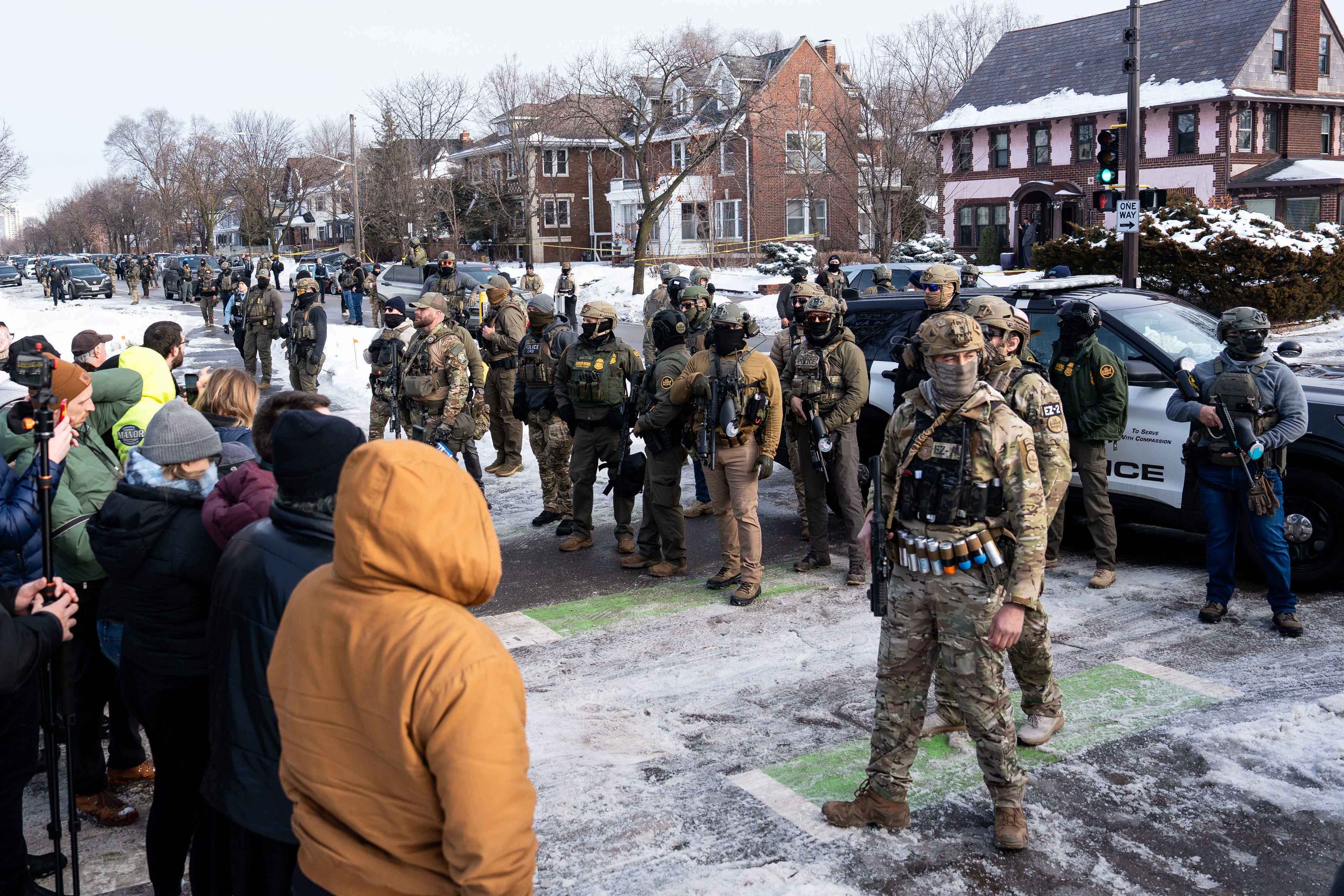
The public outrage is not merely a reaction to a single tragedy. It’s a response to the realization that a shadow army is being mobilized on American streets, an army that is increasingly lethal, largely unaccountable, and fueled by a record-breaking budget. For many, the image of masked federal agents patrolling major U.S. cities like Minneapolis, Chicago, and New York was once a dystopian fiction. Today, it is a daily reality.
This shift from border enforcement to aggressive urban policing represents an unprecedented threat to civil liberties, and the data suggests we are entering the deadliest era of immigration enforcement in modern history.
The most damning evidence of this crisis lies within the walls of ICE’s sprawling detention network. In 2025, 32 people died in ICE custody—the highest annual total in over two decades, matching the record set in 2004. These deaths aren’t just statistics; they’re the result of a system stretched past its breaking point.
As the administration ramps up detention to record levels—surpassing 68,000 people by mid- December—the human cost has spiked. According to reports from The Guardian and Reuters, the victims include:
Asylum seekers like Jean Wilson Brutus, who died one day after being taken into custody in Newark.
DACA recipients like Lorenzo Antonio Batrez Vargas, who was brought to the United States as a 5-year-old and died after weeks of detention in Arizona.
Long-term residents like Isidro Pérez, a 75-year-old mechanic who had lived in the United States for 60 years before dying three weeks after his apprehension.
The Trump White House is currently pushing for a fiscal year 2026 budget that would further balloon ICE’s reach. It is requesting funding for 44,500 detention beds, a jump from prior years, and are planning the construction of “warehouse gulags“ capable of holding 80,000 people at a time.
“Passing this bill and giving DHS more money to detain our neighbors is dangerous and may lead to irreversible harm,” immigration advocates said in a joint statement opposing the ICE budget.
The Trump White House ICE expansion is not targeting “violent criminal illegals,” as the administration’s rhetoric often suggests. In fact, nearly 75% of those held in ICE detention in mid-December 2025 had no criminal convictions.
Instead, the surge is driven by “indiscriminate ICE raids“ and “Operation Midway Blitz“ tactics that ensnare workers, parents, and community leaders who have lived in the United States for decades.
The killing of Renee Good underscores a terrifying trend: the “militarized” nature of ICE operations. When agents operate with masks and tactical gear in residential neighborhoods, the line between law enforcement and an occupying force blurs. This lack of transparency is compounded by the administration’s efforts to block oversight.
A federal judge recently intervened just to allow members of Congress to make unannounced visits to detention centers—visits that have uncovered disgusting meals, raw meat, and systemic medical neglect. When the government hides its operations from the people’s representatives, tragedies like the one in Minneapolis become inevitable.
Good’s death must be a turning point. We cannot allow the normalization of a federal police force that operates outside the bounds of traditional transparency and local cooperation.
As Congress negotiates the 2026 Homeland Security appropriations, it must choose between funding a “reckless abuse and assault on our communities” or reining in an agency that has proved it cannot safely manage the lives in its care.
The “militarized” policing of our cities does not make America safer; it only makes it more frightened. It’s time to stop the windfall of funds for a system that is creating a humanitarian catastrophe on our own soil.
Jeff Nesbit was the public affairs chief for five Cabinet secretaries or agencies under four presidents.
The remaining assets that belong to ICE must be frozen. Congress must refuse to appropriate any more funds to that department. Look how much we would be saving. How much money are these cities losing in terms of businesses not having customers because of fear from ICE occupation?
Thank you, Mr. Nesbit, for keeping this in the news cycle. We should be talking about nothing else. If you rarely have time or need to contact your Congress members, please do it now; they all have .gov sites with comment forms that track constituent opinions. It took me 5 minutes to hit both senators and my House rep.