

By Alan Light
“If you feel you’re being called to document this time, you need to document this time,” says Tori Amos. “I think some people are traumatized and others are like, ‘Look, my life’s not so bad’ — I see this all the time, people thinking, ‘I’m going to kind of sit on the sidelines here.’ I don’t believe that you can sit on the sidelines, not right now, not anymore.”
With her eighteenth album, In Times of Dragons, Amos has constructed a sprawling, powerful response to the current attacks on our freedom. She imagines a world in which, instead of marrying her real-life husband Mark Hawley (a sound engineer), “Tori” had chosen a billionaire “Lizard Demon” businessman, who has turned his focus to destroying democracy. She flees his clutches and encounters various representatives of the resistance including her estranged daughter, who lead her to enlightened activism. There’s even an “Ode to Minnesota,” added at the last minute in tribute to the ICE protests.
The pioneering and incomparable Amos, 62, says over the phone from her Florida home that the Dragons narrative is a genuine fusion of the personal and the political. “I had options in the ‘90s, and not just rock guys,” she says. “There is a side to me that might have been attracted to a guy that had game, in the finance world or the IT world, and those guys like to collect things,” whether art or stylish arm candy.
In a way, her “demon” isn’t hypothetical. As she notes, super-wealthy power brokers already have a major impact on her life — “they are affecting something that I hold very dear, which is the concept of democracy” — such that her exploration of an intimate (and toxic) relationship just takes things a step further.
With her virtuosic piano playing, dramatic dynamics, and searing lyrics that wrestle with religion and sex, Amos — whose US tour dates begin on July 7 — has been an inspiration to generations of rockers, from Alanis Morrissette and Trent Reznor to St. Vincent and Olivia Rodrigo. Her songs addressing sexual assault, including her breakthrough hit, 1991’s “Silent All These Years” (invoked on the new album), and her work with the Rape, Abuse, & Incest National Network (RAINN) were groundbreaking efforts, decades ahead of acceptance for survivors.
As for her use of the QAnon-associated “lizard people” concept on the new album, even that came from Amos’ own experience. “I’ve been accused of being a lizard, which is hilarious,” she says. “One of [her daughter] Tash’s friends said to her, ‘Oh my God, my mom comes in and goes, ‘Did you know Tori’s a lizard?’” But you know the saying, ‘If it’s too loud, turn it up?’ I kind of thought that.”
More from our conversation about In Times of Dragons and Tori’s process below:
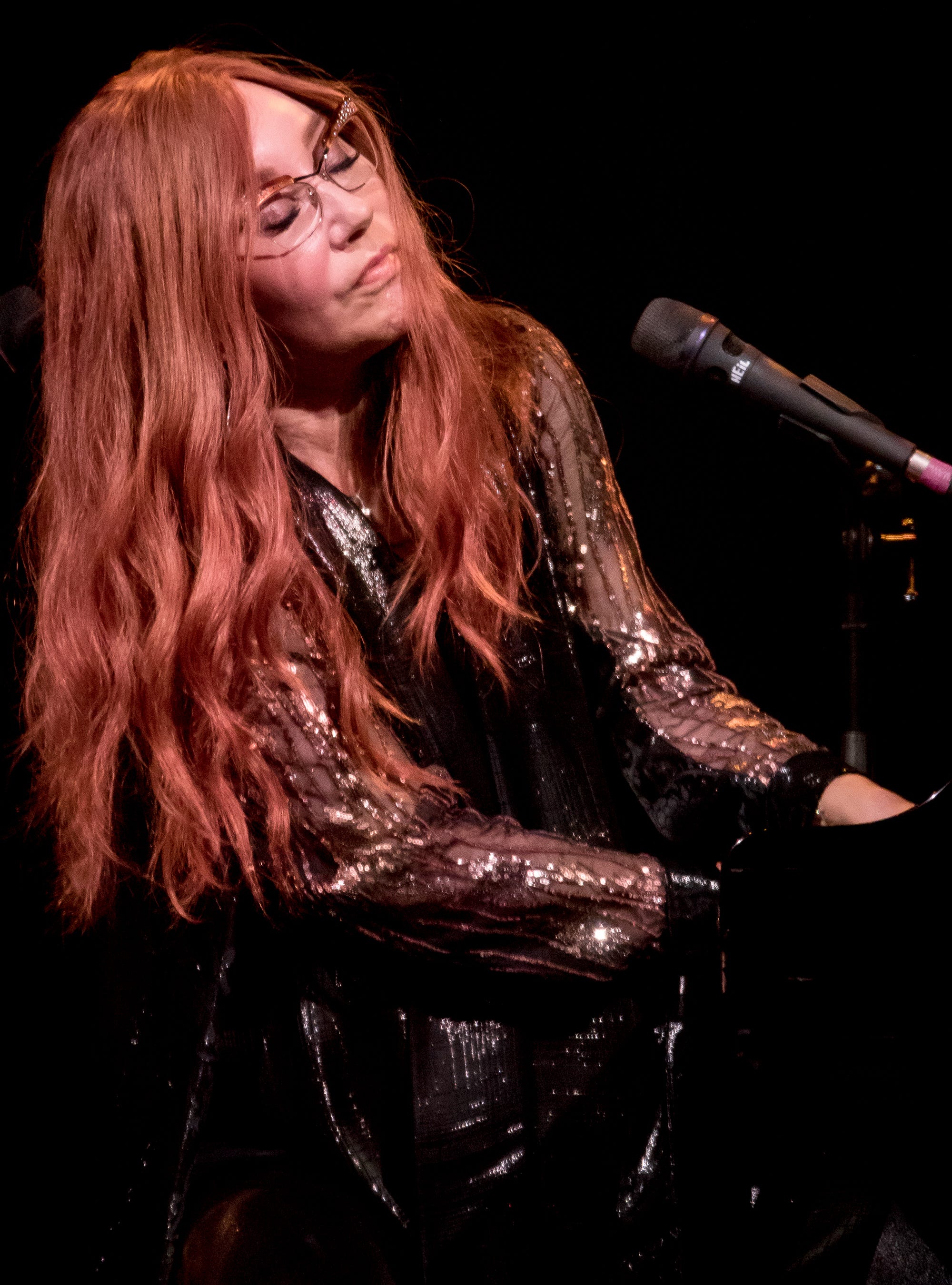
Did something specific provoke the theme of this album, or did you have a more gradual sense that there were things you needed to say?
Maybe all at the same time. Hindsight is 20-20, as we know, but it felt like there was a sense of urgency that was yanking on my sleeve. I don’t know if it’s because I have a DNA link to DC — my father was minister of Dumbarton Methodist Church when I was conceived, to playing three blocks from the White House as a teenager, at 16th and K Street, to some of the most powerful political people of the ‘70s. There is kind of a genetic songwriting link that I carry from Tip O’Neill, when he was Speaker of the House, asking me to play “Bye Bye Blackbird.” So maybe there is that unspoken something that every so often wakes up the songwriter in me and says, “Okay, trenches, now; front line, now.”
Did you map out the full narrative or did it sort of unfold as the songs were coming?
Well, again, all of the above. On one hand, I had my ear to the ground….[about] the level of freedoms that were being stripped away and the philosophies of some of these, let’s call them kingmakers behind the scenes. So that was going on while I was figuring out how to tell the story. The work starts to talk to you, and the songs started to say “This has to be as close to genuinely you and what you’re feeling. You’re going to have to open up what you’re going through during this time. You have to document yourself, too.”
You recently did a BBC performance with an orchestra, and you covered “The Times They Are a-Changing,” which is an incredibly optimistic song. Do you still feel that kind of hope?
I’m not an optimist, I’m not a pessimist. I try to be a pragmatist, and I can’t tell where we’re going. I’ve just been across England, Ireland, and Europe, and I’ve been reading the letters from hundreds and hundreds of people. I played Budapest and the Hungarian people joined together to oust that leader. There were Americans coming to the shows that could see it could be done. And yet is that the will of the people? Those are questions that I have. Is it so rigged that there won’t be a fair fight? I don’t know. I do believe, though, that people need to feel energized and not completely defeated or despairing.
You live back and forth between the UK and the US. How does that factor into your own perspective at this point? Do you feel different things in the air?
Yes, you can’t not. The world has looked to America for quite a long time for stability, and there are quite a lot of Europeans who might have come over for my shows, like they did in 2023, that are not going to because of fear. I can’t tell another person what to do, I can’t take responsibility for that. In my mind I thought they would be fine, but I can’t promise anybody. I just can’t. And that was a wake-up call for me, too — that we don’t know what’s going to happen next. We don’t know what people in power are going to do.
Music journalist and author Alan Light is the former editor in chief of Vibe and Spin magazines and a former senior writer for Rolling Stone. A frequent contributor to the New York Times and Esquire, he co-hosts the music news podcast Sound Up! Alan’s latest book is Don’t Stop: Why We (Still) Love Fleetwood Mac’s Rumours.
Should be a great album.