

By Linda Burstyn
Every day seems to bring a fresh blow to our democracy, and with it, a chorus of hand-wringing about who has the wisdom to lead us out of this mess. While legal work is crucial, the public needs a philosophical framework to give us the hope we need to move forward. Who better to provide that than women who’ve already gone to war in the political trenches and emerged victorious?
This series, The Way Forward, is about those conversations. Last time we spoke with Speaker Emerita and California Representative Nancy Pelosi. In September, I sat down with the inimitable legend, Gloria Steinem.
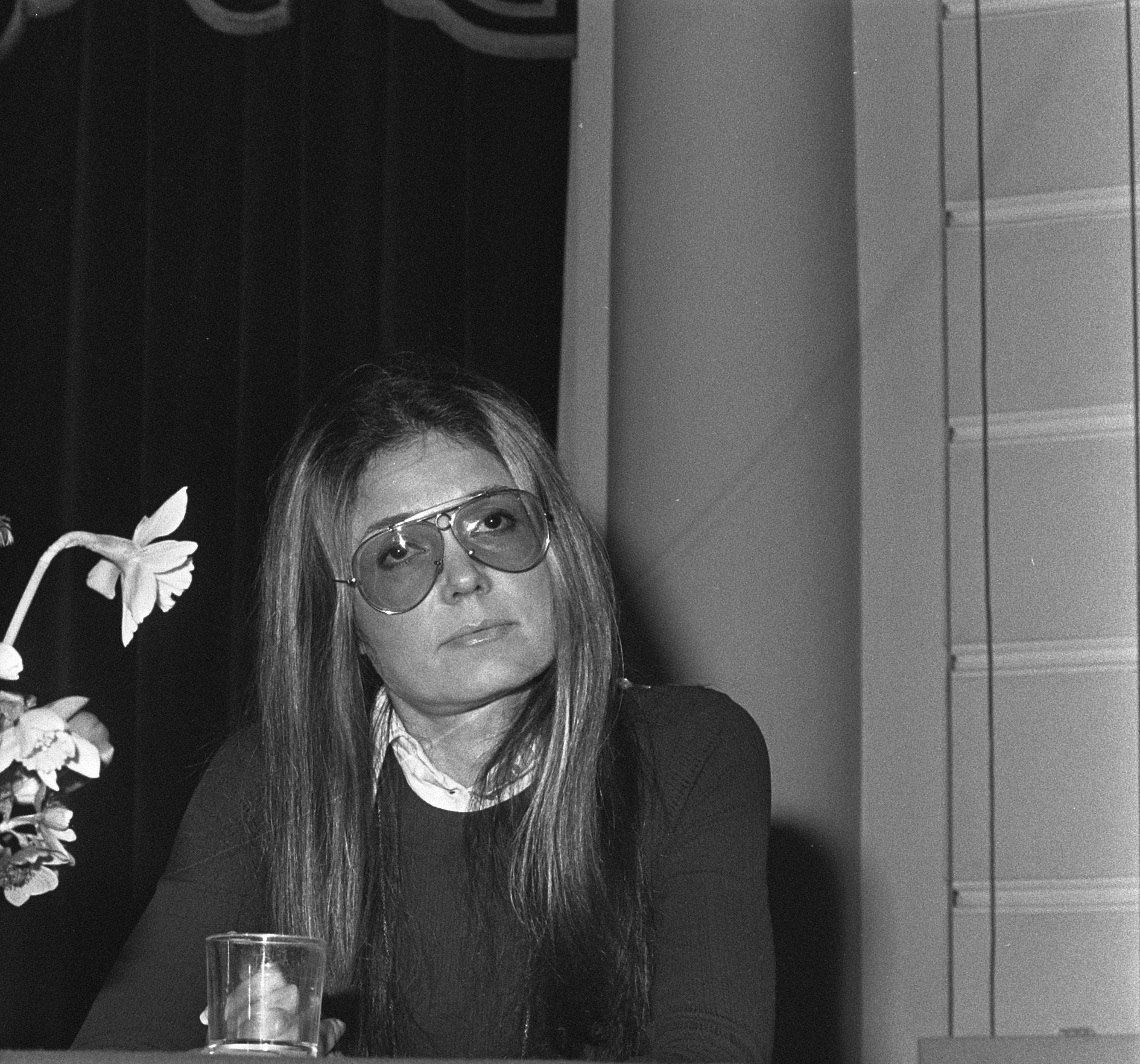
I started reading Steinem in 1980, around the time she wrote in Ms. Magazine: “However sugarcoated and ambiguous, every form of authoritarianism must start with a belief in some group’s greater right to power, whether that right is justified by sex, race, class, religion, or all four.”
She was right then, and (at ninety-one!) she’s right now, as I recently learned when I turned to her for guidance on what to do today, when the way forward seems not just obstructed, but increasingly murky.
How do you look at being alive at this moment in US history?
In my advanced age, I feel lucky to be here. It’s continuously interesting, but also enraging, since we have a leader like Trump—the most discouraging leader I’ve ever seen in the White House. But we also have ways of communicating that are new and deeply personal. The more we use those, the better off we are. Isolation is the problem; communication the cure. I suspect that it’s more how we look at our situation every day and what can we do to make progress and be helpful. It’s important to humanize in that way, within our communities. If we try to go too big, obviously we reduce the possibility of influence. If we go from us to our children, or our neighbors, or our families, our offices and factories, whatever we have influence on—then we begin to feel more powerful.
So many young people feel mistrustful and hopeless. What kind of future can we build towards/what is the vision of the future you’d like to see?
I hope that we find ways to help young people feel powerful and in charge. They are the future. The more we can pass the questions on to them and ask them for solutions, the better.
I hope that more and more people come to see we are all together on a small globe hurling through space, and that the old divisions of nation, race, and gender are always changing. Certainly, families growing smaller, men are more likely than ever to raise children along with women, and the racial balance of the world is changing. That’s part of the reason why the ‘YOU WILL NOT REPLACE US’ mob were rebelling outside the White House on January 6. They’re afraid of becoming the minority. We’re in a time of changing to a new majority, which means that we should be asking them questions. What do they want?
It helps us to feel we’re more empowered if we remember that the means are the ends, in a sense. We’re more likely to get discouraged when we think exclusively about the ends. But when we look at what we’re doing every day, we increase our feelings of empowerment and increase the likelihood of changing the future.
How do we get to a consensus on truth when so many lies are being purposely told through the internet, social media, and rightwing outlets like Fox News?
The means by which you and I understand the truth are the beginning of (and the most trustworthy basis) of communication. People in conversation. We all need to ask ourselves: are we able to tell the truth to and with our families and neighbors and relatives? Do our kids feel they can tell us the truth about their lives?
But sometimes the truths people are parroting are not truths at all. Should we bypass the internet? Go back to sticks and stones in communications? Even in political campaigns?
Probably the single most important thing we can do is speak our own truth. And put that into whatever dialog we are having because sharing our experiences is the most visceral means and the only one subject to confirmation.
Given the current information vacuum, will we ever be able to draw consensus?
It depends on what. Again, the more personal and experiential we can be, the more likely we are to get a consensus. So, whether it’s about figures in leadership or stories or what we read as sources of authoritative news, the more we say to our families and our friends: ‘this is what I think—but what do you think?’ We need to get an equal exchange.
Regarding the future of feminism, who do you see as feminist leaders that you look up to now?
Feminism has changed from a movement to a reality in a lot of people’s lives. Both parents are raising the children, as mentioned. Both are contributing to the financial welfare of the household, not just one person. We are marrying, living with, and listening to people who are different from us more than in the past, and that’s helpful. But we can increase that helpfulness by asking if there’s also that balance. Am I listening as much as I’m talking? Am I in touch with people who live differently from me or who are in a different group or race or class? By asking those questions we reduce the likelihood of being isolated.
In terms of leaders, I wish Hillary Clinton had been in the White House. She’s a good example of how we suffer when we choose our leaders only from one gender, which is what we’ve been doing.
A feminist ‘leader’ isn’t necessarily someone distant from us—it may be a relative or neighbor or several people who help form our opinions and convictions.
While in the past, to be liberal was to question the rigidity or decisions of many of our institutions. Isn’t part of the problem today the lack of trust in American/liberal institutions? There’s an effort by the rightwing to create distrust. How can we rebuild that trust (especially in the young)?
We need to remember that hope is a form of planning.
If we give up hope we have only ourselves to blame. It’s up to us and partly easier when we’re together. We’re communal animals. People need one another. We produce oxytocin (the chemical that allows us to empathize with each other) when we’re together. So don’t get isolated. Make sure you gather with people who both agree and disagree and do your best to plan positive actions that you think may appeal to a broader network of friends and colleagues.
Where do you get your news?
Mainly I read the New York Times. I look at TV news and listen to my friends who are involved in organizing in various ways. I hope and believe I have diverse news sources.
I just pay no attention to Fox News. Maybe it’s not wise, but I don’t watch it because I don’t trust it. Trust is a very precious thing that we should count in our own experience. What sources do we trust? What people do we trust? It’s very precious and important that our kids think about that, too. Who can they trust to be accurate?
If you were 20 years old now, what would you be getting involved with? Doing?
If I was on a campus, I would be learning about the past to prepare me for the future. And would also be taking an interest in issues around me. Who do the students look like? Do they look like the nation at large or are they mostly from one group? I would also travel. That’s a great way of learning. When I first graduated from college, I lived in India for two years and that was very helpful for my activism. India was just gaining independence and it was an entirely different country. Many of us worshiped Gandhi. I remember trying to write a paper about Gandhi and I interviewed people he worked with and they turned out to be almost all women who said, ‘well my dear, we taught him everything he knew.’ That was very healthy to hear.
Finally, how can we stop agencies and departments like ICE from overreach?
News should be focussed on how local groups are doing things to fight ICE. What encourages people are other people alongside them. We can at least publicize it to our friends and co-workers, name the cruelties, and refuse to go along with their rules. The power of example creates courage in other people.
Linda Burstyn is an Emmy award winning journalist and TV drama writer.
Thank you for this empowering conversation. Gloria has been one of my guiding lights since the 60’s. So glad she’s still speaking out.
So glad to hear from Gloria Steinem! I have listened to her and read her articles since the early 70’s. She has always had good ideas and communicated effectively. As she said, many people have leadership ability all around us. Now is the time to step up!❤️