

By E. Thomas Sullivan and Richard W. Painter
With the midterms less than a week away, polls are indicating a strong chance for the Democrats to win the House majority, with the Senate also within their reach. Without putting undue stock in polls close to an election, it seems reasonable to consider the consequences of bringing a divided government back to Washington.
When it comes to the healthy functioning of American democracy, a divided government has its pros and cons. Legislation enacting major structural reforms is less likely, but history has shown that when at least one of the houses of Congress is led by a party other than that of the President, this enhanced separation of powers can mean more checks and balances brought to bear in reining in the overreach and abuse of presidential power.
Nowhere is the need for federal checks and balances more pressing than at the intersection of higher education and free speech.
In the last twenty-one months, numerous actions and regulations by the Trump administration have profoundly disrupted the teaching, scholarship, and research missions of public and private institutions. Much of this has been in the form of retaliation against these institutions for allowing students, faculty and staff the right to freedom of speech.
Examples include: arbitrary cancellations of federal research funds and contracts awarded by Congress; attempts to coerce institutions into changing their curriculum; and attempts to curtail speech and assembly rights through the misinterpretation of federal statutes such as Title VI of the Civil Rights Act of 1964, which bars discrimination based on race, color, or national origin, and Title IX, which prohibits discrimination in educational programs based on sex.
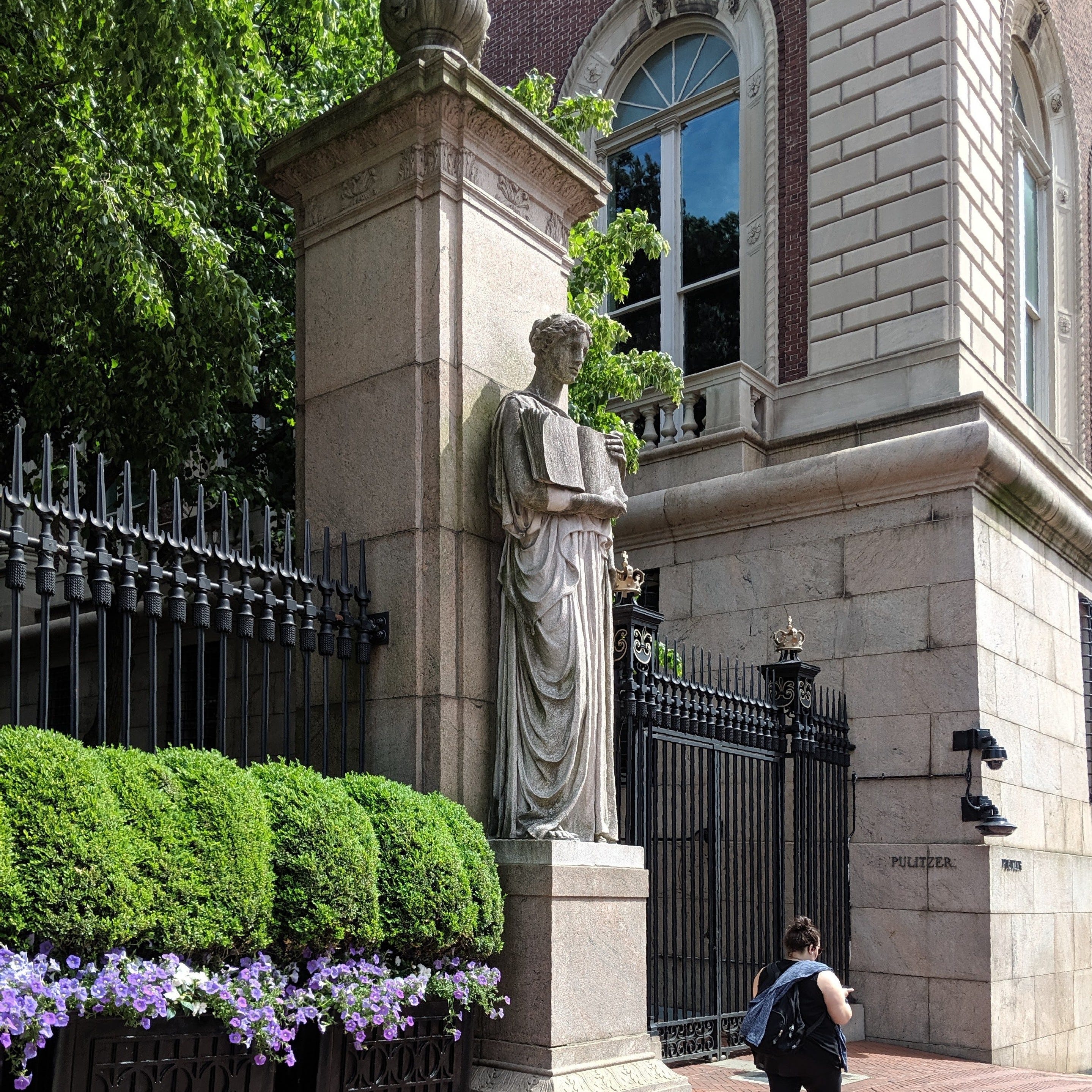

The federal government has sometimes claimed that free speech must be curtailed on campus to protect Jewish students or other minorities, but this reasoning is paradoxical and ahistorical on its face. From Tsarist Russia and Nazi Germany to modern day Iran, the most horrific forms of racial persecution almost always occur in regimes that persecute people for their speech.
Higher education institutions have further been severely affected by the federal government denying visas to international students who are enrolled or wish to enroll, and by deporting international students already on U.S. campuses—in some instances simply because these students express their views on global politics or foreign conflict.
If the Democrats elect a majority to the House of Representative next Tuesday, they will have immediate, Constitutionally-enshrined tools at their disposal to counter these destructive First Amendment violations.
The House is empowered to conduct oversight hearings and investigations, with subpoena power to require relevant documents and command witness testimony. Under Article I of the Appropriations Clause, they also have power and authority over all budgets and appropriations, through which they can serve as a watchdog over misuse or impoundment by a president of congressionally-appropriated funds. According to both Congress, via the Congressional Budget and Impoundment Control Act of 1974, and the Supreme Court, via precedent in Train v. City of New York (1975) —each 50-year-old mandates established as part of post-Watergate reforms — it is plainly illegal for the President to rejecting or redirecting funds appropriated by Congress. And of course, under Article II of the Constitution, a president has the responsibility and duty to faithfully execute all laws of the United States.
When a president’s conduct, even though executive orders, becomes a serious abuse of power with a loss of trust, the House may finally impeach a president, resulting in a trial and possible removal from office.
If the midterm elections also turn the Senate over to Democrats, they can use their Constitutional oversight responsibilities to conduct hearings and investigations and issues subpoenas like their counterparts in the House. A new Congress may even be able to override a presidential veto of legislation. This would require the support of both Democrats and Republicans, but an overwhelming majority of voters in both parties support free speech, such that a Congress no longer beholden to a president might insist that free speech rights and norms be protected against extremists of both right and left.
Ultimately, it is the Senate that sits in judgment in an impeachment trial, and the Senate which, if the president is convicted, triggers the automatic removal of the President from office. Attempted infringement on the free speech rights of Americans may not alone be an impeachable offense, but a president’s violation of courts’ orders protecting free speech or any other individual liberty most likely are an abuse of power, and a breach of his oath of office, and a violation of First Amendment freedoms.
Violation of free speech rights in American higher education, or anywhere else, is a sure way to destroy a democracy. The Founders were clear when they decided that the Executive Branch should be led by one person rather than a committee, and also that the Congress, through its own powers under Article I, should dominate over the President to ensure democratic accountability. If the present election polls prove accurate, we should all celebrate a victory for the checks and balances necessary for a functioning constitutional republic.
E. Thomas Sullivan is President Emeritus and Professor Emeritus of Law and Political Science at the University of Vermont and former Law School Dean at the University of Arizona and the University of Minnesota and former Provost at the University of Minnesota.
Richard W. Painter is the S. Walter Richey Professor of Corporate Law, University of Minnesota Law School and former Associate General Counsel to the President and Chief White House Ethics Lawyer for President George W. Bush.
Institutional references and titles are for identification purposes and do not reflect the opinions of the institutions mentioned.