


Lindsey Graham, the Republican senator from South Carolina, belonged to a generation of American politicians who believed the United States had both the capacity and the obligation to shape events beyond its shores. Few members of Congress defended that vision more consistently over the past three decades. Whether the issue was Iraq, Afghanistan, Ukraine, Israel, or Iran, Graham rarely hesitated to argue that American leadership ultimately depended on a willingness to use American power.
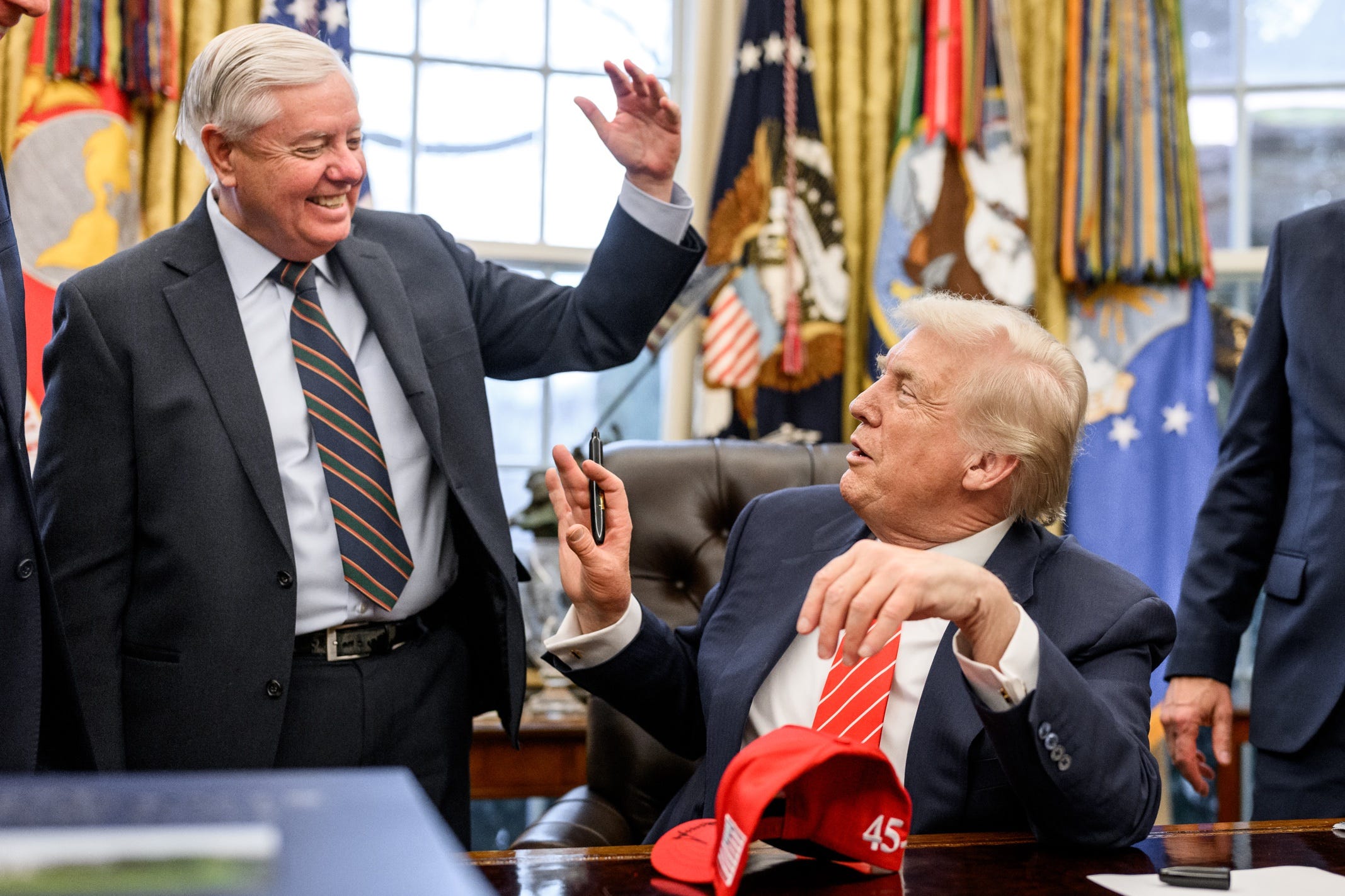
His death this weekend closes the career of one of Washington’s last unapologetic foreign-policy hawks. It also offers an opportunity to examine a strategic worldview that dominated both political parties after the Cold War and survived repeated disappointments long after many of its underlying assumptions had ceased to match strategic reality.
Graham did not create that worldview, and he did not carry it alone. But he was one of its most persistent defenders, which is why his career is useful less as a biography than as a map of the worldview itself.
Republicans championed that worldview, but many Democrats embraced it as well. The 2003 invasion of Iraq, the defining decision of the era, was ordered by a Republican president, but it rested on a broad Washington consensus. The Senate authorization passed 77 to 23. Twenty-nine Democrats voted for it, including Joe Biden, Hillary Clinton, John Kerry, and several of the party’s most experienced voices on national security. They differed over tactics and timing, but many accepted the central premise: that American military superiority could remove a dangerous regime and create the conditions for a better political order.
The premise survived the evidence against it for years, and Graham became one of its most durable defenders. He never lost faith in the coercive power of American military force. That faith was not irrational; adversaries do measure American resolve, and allies do draw conclusions from American hesitation.
But in Graham’s case, the argument too often stopped where the harder question began. He gave less attention to the widening gap between defeating an enemy’s armed forces and achieving the political outcome that supposedly justified the fighting. That was not a small omission. It was the central strategic problem of the era in which Graham became one of Washington’s most recognizable advocates of military power.
Washington could overthrow Saddam Hussein within weeks. It could not readily construct a stable Iraqi state, contain sectarian violence, prevent Iranian influence or explain how long American forces would need to remain. In Afghanistan, the United States rapidly drove the Taliban from power, then spent two decades pursuing a political settlement that disappeared almost as quickly as the troops assigned to sustain it.
This was not simply a Republican failure, which is why Graham’s career is best understood as part of a broader Washington habit rather than as a partisan exception. Democratic administrations that inherited the wars expanded some operations and launched others. Barack Obama opposed the Iraq invasion but escalated in Afghanistan and joined the intervention in Libya, which evolved into regime change without an adequate plan for the state that followed.
The error crossed party lines. American officials repeatedly assumed that military success would create political possibilities that local actors would then have reason to embrace. Instead, it often created a vacuum.
Graham remained one of the loudest voices of the worldview that produced these errors. After Sen. John McCain’s death in 2018 removed the Republican figure most closely identified with that older internationalism, Graham became one of its most visible spokesmen. He did not abandon that outlook when Donald Trump took over the party. Instead, he tried to preserve parts of it through proximity to Trump.
The senator who had once called Trump unfit for office chose influence over opposition during Trump’s first term, believing he could steer the president toward a more traditional Republican foreign policy. Graham urged Trump to keep U.S. forces in Afghanistan and Syria, defended NATO, advocated tougher policies toward Russia, and remained skeptical of North Korea’s promises to abandon its nuclear program. But that doctrine increasingly depended less on a partywide consensus about American leadership than on access to a president whose instincts were episodic, personal, and transactional.
The second Trump administration changed that relationship. Trump returned to office still promising to avoid the “forever wars,” yet he proved increasingly willing to employ military force when he believed it could produce rapid political concessions. That instinct aligned more closely with Graham’s long-standing support for confronting Iran, even if the two men viewed military power differently.
That made Graham and Trump unusual but increasingly compatible partners. Graham viewed military pressure as a means of reshaping the strategic environment over the long term. Trump viewed it primarily as leverage to force negotiations on favorable terms. Both, however, devoted less attention to the difficult political phase between military success and a durable settlement.
The consequences are now visible in Iran. The question was never whether the United States could strike Iranian targets. It was what those strikes were meant to accomplish — and what Washington would do if Tehran absorbed the punishment, delayed, escalated or refused to behave as the strategy required.
That was the recurring weakness of the warhawk imagination, and Graham remained among its fiercest advocates even after Iraq, Afghanistan, and Libya exposed its limits. It often saw threats clearly. Russia’s aggression, Iran’s nuclear and regional ambitions, jihadist networks, and authoritarian coercion are not abstractions. Power matters. Deterrence matters. Allies and adversaries measure American resolve.
But seeing threats clearly is not the same as imposing strategic discipline on the use of force. The recurring failure was the belief that the hardest part would be defeating the enemy, when the harder task was almost always what followed. The willingness to use American power is not a strategy. It is where strategy needs to begin.
Brian O’Neill, a retired senior executive from the CIA and National Counterterrorism Center, is an instructor on strategic intelligence at Georgia Tech. His Safehouse Briefing Substack looks at what’s ahead in global security, geopolitics, and national strategy.

The disingenuousness has permeated every realm of our government. Performative crap like Lindsey's false support for Ukraine... sending two Jewish real estate agents to "negotiate" with Muslim extremists... opening financial accounts for children to juice the stock market... calling voter suppression efforts fraud investigations...
It's all buillshit meant to keep folks from seeing what is really going on, and it starts at the top and trickles down to members of Congress and from there throughout society. I see otherwise well-meaning people now acting this way because they can. They'll say one thing, and then, as their interests or desires shift, pull a 180. The rot starts from the head, and Graham was just a pinky ring.
It is being reported that Ukraine lost a great supporter in Graham. I don't believe that for a minute. Graham may have acted like he strongly supported Ukraine, but in the end he always folded to his lord and master.